
Verwandte Artikel zu Strategy Strikes Back: How Star Wars Explains Modern...
Inhaltsangabe
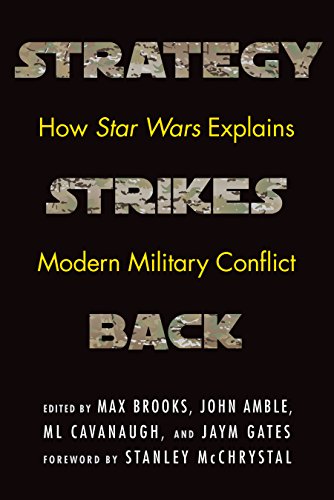
The most successful film franchise of all time, Star Wars thrillingly depicts an epic multigenerational conflict fought a long time ago in a galaxy far, far away. But the Star Wars saga has as much to say about successful strategies and real-life warfare waged in our own time and place. Strategy Strikes Back brings together over thirty of today’s top military and strategic experts, including generals, policy advisors, seasoned diplomats, counterinsurgency strategists, science fiction writers, war journalists, and ground-level military officers, to explain the strategy and the art of war by way of the Star Wars films.
Each chapter of Strategy Strikes Back provides a relatable, outside-the-box way to simplify and clarify the complexities of modern military conflict. A chapter on the case for planet building on the forest moon of Endor by World War Z author Max Brooks offers a unique way to understand our own sustained engagement in war-ravaged societies such as Afghanistan. Another chapter on the counterinsurgency waged by Darth Vader against the Rebellion sheds light on the logic behind past military incursions in Iraq. Whether using the destruction of Alderaan as a means to explore the political implications of targeting civilians, examining the pivotal decisions made by Yoda and the Jedi Council to differentiate strategic leadership in theory and in practice, or considering the ruthlessness of Imperial leaders to explain the toxicity of top-down leadership in times of war and battle, Strategy Strikes Back gives fans of Star Wars and aspiring military minds alike an inspiring and entertaining means of understanding many facets of modern warfare. It is a book as captivating and enthralling as Star Wars itself.
Each chapter of Strategy Strikes Back provides a relatable, outside-the-box way to simplify and clarify the complexities of modern military conflict. A chapter on the case for planet building on the forest moon of Endor by World War Z author Max Brooks offers a unique way to understand our own sustained engagement in war-ravaged societies such as Afghanistan. Another chapter on the counterinsurgency waged by Darth Vader against the Rebellion sheds light on the logic behind past military incursions in Iraq. Whether using the destruction of Alderaan as a means to explore the political implications of targeting civilians, examining the pivotal decisions made by Yoda and the Jedi Council to differentiate strategic leadership in theory and in practice, or considering the ruthlessness of Imperial leaders to explain the toxicity of top-down leadership in times of war and battle, Strategy Strikes Back gives fans of Star Wars and aspiring military minds alike an inspiring and entertaining means of understanding many facets of modern warfare. It is a book as captivating and enthralling as Star Wars itself.
Die Inhaltsangabe kann sich auf eine andere Ausgabe dieses Titels beziehen.
Über die Autorinnen und Autoren
Max Brooks is a writer, public speaker, nonresident fellow at the Modern War Institute at West Point, and senior resident fellow at the Atlantic Council’s Art of Future Warfare project. He is the author of World War Z: An Oral History of the Zombie War and The Harlem Hellfighters, among other works. John Amble is the editorial director of the Modern War Institute. A military intelligence officer in the U.S. Army Reserve, he is a veteran of the Iraq and Afghanistan wars. ML Cavanaugh is a nonresident fellow at the Modern War Institute and a U.S. Army strategist with global experience and assignments ranging from the Pentagon to Korea and Iraq to Army Space and Missile Defense Command. His writing has appeared in the New York Times, the Washington Post, the Wall Street Journal, and USA Today, among other publications. Jaym Gates is a science fiction editor and author, with more than a dozen anthologies to her credit. She is the coeditor of War Stories: New Military Science Fiction. Stanley McChrystal is a U.S. Army general (ret.) who led the Joint Special Operations Command in Iraq during the Persian Gulf wars and was top commander of American forces in Afghanistan.
Max Brooks is a writer, public speaker, nonresident fellow at the Modern War Institute at West Point, and senior resident fellow at the Atlantic Council's Art of Future Warfare project. He is the author of World War Z: An Oral History of the Zombie War and The Harlem Hellfighters, among other works. John Amble is the editorial director of the Modern War Institute. A military intelligence officer in the U.S. Army Reserve, he is a veteran of the Iraq and Afghanistan wars. ML Cavanaugh is a nonresident fellow at the Modern War Institute and a U.S. Army strategist with global experience and assignments ranging from the Pentagon to Korea and Iraq to Army Space and Missile Defense Command. His writing has appeared in the New York Times, the Washington Post, the Wall Street Journal, and USA Today, among other publications. Jaym Gates is a science fiction editor and author, with more than a dozen anthologies to her credit. She is the coeditor of War Stories: New Military Science Fiction. Stanley McChrystal is a U.S. Army general (ret.) who led the Joint Special Operations Command in Iraq during the Persian Gulf wars and was top commander of American forces in Afghanistan.
Auszug. © Genehmigter Nachdruck. Alle Rechte vorbehalten.
Strategy Strikes Back
How Star Wars Explains Modern Military Conflict
By Max Brooks, John Amble, ML Cavanaugh, Jaym GatesUNIVERSITY OF NEBRASKA PRESS
Copyright © 2018 Max Brooks, John Amble, ML Cavanaugh, and Jaym Gates
All rights reserved.
ISBN: 978-1-64012-033-4All rights reserved.
Contents
Foreword Stanley Mcchrystal, xi,
Preface ML Cavanaugh, xiii,
Introduction Max Brooks, xix,
PART 1. SOCIETY AND WAR,
1. The Case for Planet Building on Endor Max Brooks, 3,
2. The Jedi and the Senate Jim Golby, 7,
3. Distant Warriors: Are Clones and Troops Too Separate from the Societies They Serve? Crispin J. Burke, 17,
4. On Destroying Alderaan Mick Cook, 25,
5. Civil-Military Relationships in Star Wars Daniel D. Maurer, 32,
6. How General Grievous and Vulture Droids Foreshadow Conflict's Fast Future Raq Winchester And Fran Wilde, 45,
7. From Princess to General: The On- and Offscreen Rise of the Woman Warrior Erica Iverson, 50,
PART 2. PREPARATION FOR WAR,
8. Tarkin Doctrine: The Empire's Theory of Victory Kelsey D. Atherton, 59,
9. How Not to Build an Army: The Empire's Flawed Military Force Mick Ryan, 63,
10. The Jedi and the Profession of Arms Steve Leonard, 71,
11. The Right Fleet: Starships for Strategic Purpose BJ Armstrong, 80,
12. Why We Need Space Marines B. A. Friedman, 87,
13. Jedi Mind Tricks: From the Reel to the Real Jean Marie Ward, 95,
14. Lightsabers and Death Stars: Military-Technology Lessons from Star Wars Dan Ward, 106,
PART 3. WAGING A WAR,
15. Hybrid Star Wars: The Battle of Endor James Stavridis and Colin Steele, 115,
16. Han, Greedo, and a Strategy of Prevention Chuck Bies, 123,
17. The Logic of Strategy in Space Steve Metz, 130,
18. Darth Vader and Mission Command Jonathan Bratten, 137,
19. The Battle of Hoth: A Critical Analysis Andrew Liptak, 143,
20. Why Military Forces Adapt, Even in a Galaxy Far, Far Away Chuck Bies, 150,
21. Dispatch from Hoth: When the Blood Runs Cold August Cole, 162,
PART 4. ASSESSMENT OF WAR,
22. Darth Vader's Failed Counterinsurgency Strategy Liam Collins, 171,
23. Why the Jedi Won Fights, Not Wars John Spencer, 178,
24. Why the Galactic Republic Fell: An Imperial-Network Perspective Van Jackson, 185,
25. Why the Empire Failed Theresa Hitchens, 196,
26. Star Wars, Cyclical History, and Implications for Strategy Kathleen J. McInnis, 205,
27. Suffer, the Weak Must: A History of the Galactic Civil War Craig Whiteside, 215,
28. A Strategist, Yoda Was Not ML Cavanaugh, 224,
Epilogue: The Lessons of Star Wars ML Cavanaugh, 233,
Contributors, 239,
CHAPTER 1
The Case for Planet Building on Endor
Max Brooks
My fellow senators, I write to you on the one-year anniversary of our glorious victory over the Empire, to remind you of those forgotten allies whose courage and sacrifice made that victory possible. Many worlds rose in defiance of Emperor Palpatine's tyranny. Many cultures contributed to his downfall. And yet when the entire rebellion hinged on a final, desperate battle, one race leapt heroically into the fray to strike the critical blow for freedom. Of course it was the Ewoks of whom I speak, those eleventh-hour allies who made the difference between victory and defeat and who need our help as badly as we once needed theirs.
On that momentous day of our liberation, as cheers erupted, from Tatooine to Bespin, I danced among the bonfires of Endor, beneath stars once hidden by the looming shadow of the Death Star. With me danced our small, courageous allies, who drummed on the emptied helmets of stormtroopers as they sang songs of peace and freedom. We laughed and cheered and thanked our new comrades from the bottom of our hearts. And then we left them. No provision was made for postwar nation building. No plans were drawn for restoring their land. In our rush to return to private lives and personal interests, we abandoned a deeply traumatized world.
While the moon of Endor may still look idyllic from above, the tranquil forest canopy cloaks deep and festering scars. The horrific battle, combined with years of brutal Imperial occupation, has devastated the fragile terrestrial ecosystem. Ewoks are a subsistence-based society who now find their gathering flora poisoned and their hunting fauna massacred.
Like their environment, the Ewoks' civilization has proven too fragile for the calamity of combat. They govern by extended family groups, or "tribes," and have no concept of centralized leadership. This is why, in answer to previous queries, they have had difficulty comprehending the notion of a galactic representative to the Senate (to say nothing of electing one). Not only were a substantial number of tribal elders killed in the Battle of Endor (Ewoks always lead from the front), but those who survived the carnage have found their legitimacy threatened by the starvation and depredations that have followed.
As the delicate web of traditional order frays, corruption, intimidation, and fraternal bloodshed are now the law of the land. Younger, more militant warriors are now asserting themselves into the power vacuum. Many are veterans of the battle against the Empire, hardened by loss and tempered by violence. As I write this, my friend and former ally Wicket leads a patchwork Northern Alliance in a civil war against a growing faction of religious fanatics.
These younglings refer to themselves as "students," followers of an ancient belief we used to coerce their people to our cause. Never forget, my fellow senators, that we cynically stoked the fires of their religious faith to turn those flames against our enemy. But how quickly do flames spread out of control? Should the students defeat Wicket's Northern Alliance and seize control of Endor, we may one day find those fanatical flames before us. Control your laughter. I mean this in all sincerity.
I do not suggest the possibility of future Ewok starships emerging from hyperspace to threaten the heart of the Republic. Quite the opposite. They may never come to us, but we may have to return to them. The Republic still faces numerous threats both from rogue worlds and from non–state actors. What if the latter launches a devastating terror attack against densely populated Coruscant? And what if that attack is launched from the militarized sanctuary of Endor? What would happen to the pursuit force that attempted to land?
My fellow senators, do not for a moment underestimate the ingenuity, tenacity, and utter ferocity of the Ewoks in battle. Do not be misled by the "sticks and stones" stories of the Battle of Endor. Those primitive weapons soaked Endor's soil in the blood of the galaxy's most advanced warfighters.
Ewoks are masters of stealth and ambush. I personally witnessed a company-sized unit creep within bowshot range of an Imperial legion to launch a surprise attack. Ewoks are also superb logisticians. Without roads, without wheels, without anything but vines and muscle, they somehow managed to preposition both falling and swinging logs that destroyed two Imperial at-st Scout Walkers. While you may laugh at the story of the wood-and-hide glider that fecklessly dropped rocks on another AT-ST, remember that behind this seemingly comical device is a mind capable of comprehending the physics of flight. And it is that mind that saw two Ewoks assist my comrade Chewbacca in not only capturing another at-st but learning to operate its controls! And this, my fellow senators,...
„Über diesen Titel“ kann sich auf eine andere Ausgabe dieses Titels beziehen.
Suchergebnisse für Strategy Strikes Back: How Star Wars Explains Modern...

Foto des Verkäufers
Strategy Strikes Back: How Star Wars Explains Modern Military Conflict
Anbieter: Dream Books Co., Denver, CO, USA
Verkäuferbewertung 5 von 5 Sternen

Zustand: good. Gently used with minimal wear on the corners and cover. A few pages may contain light highlighting or writing, but the text remains fully legible. Dust jacket may be missing, and supplemental materials like CDs or codes may not be included. May be ex-library with library markings. Ships promptly! Artikel-Nr. DBV.1640120335.G
Gebraucht kaufen
EUR 3,97
Versand gratis
Versand innerhalb von USA
Versand innerhalb von USA
Anzahl: 1 verfügbar
Beispielbild für diese ISBN
Strategy Strikes Back: How Star Wars Explains Modern Military Conflict
Anbieter: World of Books (was SecondSale), Montgomery, IL, USA
Verkäuferbewertung 5 von 5 Sternen
Zustand: Good. Item in good condition. Textbooks may not include supplemental items i.e. CDs, access codes etc. Artikel-Nr. 00108155730
Gebraucht kaufen
EUR 5,38
Versand gratis
Versand innerhalb von USA
Versand innerhalb von USA
Anzahl: 1 verfügbar
Beispielbild für diese ISBN
Strategy Strikes Back: How Star Wars Explains Modern Military Conflict
Anbieter: ThriftBooks-Dallas, Dallas, TX, USA
Verkäuferbewertung 5 von 5 Sternen
Hardcover. Zustand: Very Good. No Jacket. Former library book; May have limited writing in cover pages. Pages are unmarked. ~ ThriftBooks: Read More, Spend Less. Artikel-Nr. G1640120335I4N10
Gebraucht kaufen
EUR 5,99
Versand gratis
Versand innerhalb von USA
Versand innerhalb von USA
Anzahl: 1 verfügbar
Beispielbild für diese ISBN
Strategy Strikes Back : How Star Wars Explains Modern Military Conflict
Verlag:
Potomac Books, Incorporated, 2018
ISBN 10: 1640120335
ISBN 13: 9781640120334
Gebraucht
Hardcover
Anbieter: Better World Books, Mishawaka, IN, USA
Verkäuferbewertung 5 von 5 Sternen
Zustand: Good. Pages intact with minimal writing/highlighting. The binding may be loose and creased. Dust jackets/supplements are not included. Stock photo provided. Product includes identifying sticker. Better World Books: Buy Books. Do Good. Artikel-Nr. 17178744-6
Gebraucht kaufen
EUR 6,59
Versand gratis
Versand innerhalb von USA
Versand innerhalb von USA
Anzahl: 2 verfügbar
Beispielbild für diese ISBN
Strategy Strikes Back : How Star Wars Explains Modern Military Conflict
Verlag:
Potomac Books, Incorporated, 2018
ISBN 10: 1640120335
ISBN 13: 9781640120334
Gebraucht
Hardcover
Anbieter: Better World Books, Mishawaka, IN, USA
Verkäuferbewertung 5 von 5 Sternen
Zustand: Very Good. Pages intact with possible writing/highlighting. Binding strong with minor wear. Dust jackets/supplements may not be included. Stock photo provided. Product includes identifying sticker. Better World Books: Buy Books. Do Good. Artikel-Nr. 17195146-6
Gebraucht kaufen
EUR 6,59
Versand gratis
Versand innerhalb von USA
Versand innerhalb von USA
Anzahl: 2 verfügbar
Beispielbild für diese ISBN
Strategy Strikes Back : How Star Wars Explains Modern Military Conflict
Verlag:
Potomac Books, Incorporated, 2018
ISBN 10: 1640120335
ISBN 13: 9781640120334
Gebraucht
Hardcover
Anbieter: Better World Books: West, Reno, NV, USA
Verkäuferbewertung 5 von 5 Sternen
Zustand: Good. Former library copy. Pages intact with minimal writing/highlighting. The binding may be loose and creased. Dust jackets/supplements are not included. Includes library markings. Stock photo provided. Product includes identifying sticker. Better World Books: Buy Books. Do Good. Artikel-Nr. 41161956-6
Gebraucht kaufen
EUR 6,59
Versand gratis
Versand innerhalb von USA
Versand innerhalb von USA
Anzahl: 1 verfügbar
Beispielbild für diese ISBN
Strategy Strikes Back : How Star Wars Explains Modern Military Conflict
Verlag:
Potomac Books, Incorporated, 2018
ISBN 10: 1640120335
ISBN 13: 9781640120334
Gebraucht
Hardcover
Anbieter: Better World Books, Mishawaka, IN, USA
Verkäuferbewertung 5 von 5 Sternen
Zustand: Good. Former library copy. Pages intact with minimal writing/highlighting. The binding may be loose and creased. Dust jackets/supplements are not included. Includes library markings. Stock photo provided. Product includes identifying sticker. Better World Books: Buy Books. Do Good. Artikel-Nr. 41161956-6
Gebraucht kaufen
EUR 6,59
Versand gratis
Versand innerhalb von USA
Versand innerhalb von USA
Anzahl: 1 verfügbar
Foto des Verkäufers
Strategy Strikes Back: How Star Wars Explains Modern Military Conflict
Verlag:
POTOMAC BOOKS, 2018
ISBN 10: 1640120335
ISBN 13: 9781640120334
Gebraucht
Hardcover
Erstausgabe
Anbieter: Southampton Books, Sag Harbor, NY, USA
Verkäuferbewertung 5 von 5 Sternen
Hardcover. Zustand: Like New. First Edition. First Edition, First Printing. Not price-clipped. Published by Potomac Books, 2018. Octavo. Hardcover. Book is like new. Dust jacket is like new.100% positive feedback. 30 day money back guarantee. NEXT DAY SHIPPING! Excellent customer service. Please email with any questions. All books packed carefully and ship with free delivery confirmation/tracking. All books come with free bookmarks. Ships from Sag Harbor, New York. Artikel-Nr. 379945
Gebraucht kaufen
EUR 17,95
EUR 4,35 Versand
Versand innerhalb von USA
Versand innerhalb von USA
Anzahl: 1 verfügbar
Beispielbild für diese ISBN
Strategy Strikes Back; How Star Wars Explains Modern Military Conflict
ISBN 10: 1640120335
ISBN 13: 9781640120334
Gebraucht
Hardcover
Erstausgabe
Anbieter: Ground Zero Books, Ltd., Silver Spring, MD, USA
Verkäuferbewertung 5 von 5 Sternen
Hardcover. Zustand: Very good. Zustand des Schutzumschlags: Good. Presumed First Edition, First printing. xx, [2], 246, [4] pages. DJ has some wear, tears, and soiling. Foreword by Stanley McCrystal. Notes. Contributors. Maximillian Michael Brooks (born May 22, 1972) is an American actor and author. He is the son of comedy filmmaker Mel Brooks and actress Anne Bancroft. He is a senior fellow at the Modern War Institute at West Point, New York. John Amble is the editorial director of the Modern War Institute at West Point and co-director of the Urban Warfare Project. He is also a military intelligence officer in the US Army Reserve and a veteran of both Iraq and Afghanistan. He holds a BA from the University of Minnesota and an MA in Intelligence and International Security from King's College London, and has conducted Ph.D. research within the Institute of Middle Eastern Studies at King's College London. His work has appeared in academic journals and books published by the academic press. He is the co-editor of Strategy Strikes Back: How Star Wars Explains Modern Military Conflict. Lieutenant Colonel ML (Matt) Cavanaugh, Ph.D., is an active duty US Army Strategist with experience in 11 countries and assignments ranging from Iraq to the Pentagon and Korea to New Zealand. He has recently been named a Professor of Practice with the Arizona State University School of Politics & Global Studies, and is a co-founder of and a Senior Fellow with the Modern War Institute at West Point. Jaym Gates is an author and editor whose focus ranges from futurism consulting to disaster response. The most successful film franchise of all time, Star Wars thrillingly depicts an epic multigenerational conflict fought a long time ago in a galaxy far, far away. But the Star Wars saga has as much to say about successful strategies and real-life warfare waged in our own time and place. Strategy Strikes Back brings together over thirty of today's top military and strategic experts, including generals, policy advisors, seasoned diplomats, counterinsurgency strategists, science fiction writers, war journalists, and ground-level military officers, to explain the strategy and the art of war by way of the Star Wars films. Each chapter of Strategy Strikes Back provides a relatable, outside-the-box way to simplify and clarify the complexities of modern military conflict. A chapter on the case for planet building on the forest moon of Endor by World War Z author Max Brooks offers a unique way to understand our own sustained engagement in war-ravaged societies such as Afghanistan. Another chapter on the counterinsurgency waged by Darth Vader against the Rebellion sheds light on the logic behind past military incursions in Iraq. Whether using the destruction of Alderaan as a means to explore the political implications of targeting civilians, examining the pivotal decisions made by Yoda and the Jedi Council to differentiate strategic leadership in theory and in practice, or considering the ruthlessness of Imperial leaders to explain the toxicity of top-down leadership in times of war and battle, Strategy Strikes Back gives fans of Star Wars and aspiring military minds alike an inspiring and entertaining means of understanding many facets of modern warfare. It is a book as captivating and enthralling as Star Wars itself. Artikel-Nr. 83138
Gebraucht kaufen
EUR 31,41
EUR 4,36 Versand
Versand innerhalb von USA
Versand innerhalb von USA
Anzahl: 1 verfügbar
Beispielbild für diese ISBN
Strategy Strikes Back: How Star Wars Explains Modern Military Conflict
Anbieter: Revaluation Books, Exeter, Vereinigtes Königreich
Verkäuferbewertung 5 von 5 Sternen
Hardcover. Zustand: Brand New. 246 pages. 9.25x6.25x1.00 inches. In Stock. Artikel-Nr. 1640120335
Neu kaufen
EUR 52,53
EUR 14,58 Versand
Versand von Vereinigtes Königreich nach USA
Versand von Vereinigtes Königreich nach USA
Anzahl: 1 verfügbar