
Verwandte Artikel zu The Divine Mind: Exploring the Psychological History...
Inhaltsangabe
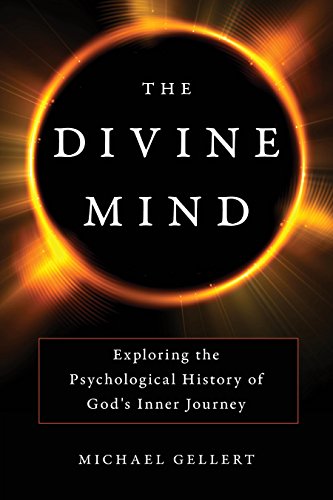
A Jungian psychoanalyst with a background in Judaism and Zen Buddhism explores the history of God concepts in the Judeo-Christian and Islamic traditions.
This book is about the Abrahamic God’s inner journey, an epic that begins in the Hebrew Bible—the common source of Judaism, Christianity, and Islam. This God emerges as a living, textured personality as tormented as a Shakespearean character and as divided against humanity as the devil who personifies his dark side. Yet in heroic fashion, he embarks on a journey to greater consciousness, stretching into himself in the Talmud, New Testament, Qur’an, and Gnostic writings. Then finally, with and through the Jewish, Christian, and Islamic mystics, he discovers his true self as the absolute Godhead. He takes up residence in their psyches as their own Divine Mind or true self. The book suggests that what God learned from his journey might be something that we in turn could learn from and that could help us at the dawn of the twenty-first century. In this way, God’s inner journey becomes a metaphor for our own.
Michael Gellert, a Jungian psychoanalyst, treats this story and the sacred writings that convey it as psychological facts—as expressions of the human psyche—regardless of whether or not God actually exists. He shows how the Hebrew Bible presents God as a primitive, barbaric tribal war god while centuries later the mystics portray him as their innermost essence and emptied of all projected, external, anthropomorphic images. Thus, God’s inner journey and the evolution of human consciousness—his story and ours—parallel each other and are integrally related.
Rich in historical detail and psychological insights, this is a book that will be welcomed by seekers of every background and orientation.
Die Inhaltsangabe kann sich auf eine andere Ausgabe dieses Titels beziehen.
Über die Autorin bzw. den Autor
Michael Gellert is a Jungian analyst practicing in Los Angeles and Pasadena, California. He was formerly Director of Training at the C.G. Jung Institute of Los Angeles and a humanities professor at Vanier College, Montreal. He also supervised a mental health program for employees of the City of New York and has served as a consultant to various organizations, including the University of Southern California and Time magazine. He has lived in Japan, where he trained with a Zen master. The author of Modern Mysticism, The Fate of America, and The Way of the Small, he lectures widely on psychology, religion, and contemporary culture.
Auszug. © Genehmigter Nachdruck. Alle Rechte vorbehalten.
From the Introduction
"Whether true or not, men have always believed in “unscientific concepts,” and these beliefs often are the real “facts” which shape their destiny." —Max I. Dimont
When I was a child, I was taught to worship the God of the Hebrew Bible. In Jewish school, I learned of his extraordinary feats in a three-volume set of books called Children’s History of Israel. With chapter titles such as “Israel Conquers!,” “Saul to the Rescue!,” “The Wonderful Prince,” “The Romance of Ruth,” “The Bravest Boy in Israel,” “The Battle with the Giant,” “Hunted!,” and “Treachery!,” I was rapt in awe. History was alive, and God was its powerful mover and shaker. He was a flawless, heroic superbeing who ended the sufferings of his enslaved people and championed them through arid years in the desert and against formidable enemies in the Promised Land of Canaan.
In later years, I discovered that this God wasn’t so one-sidedly wonderful. I saw the other side of something that glitters. Learning of my father’s experiences in the concentration camps of Hungary shook up my views not only of the world but of its maker. The so-called Holocaust theologians whom I then read raised the burning question: where was God when six million were gassed, executed in mass shootings, and killed in other horrific ways? The Bible itself confirmed God’s dark side through a multitude of condemning episodes. He meted out fatal punishments for trivial violations of his Law. His ferocious temper would erupt when his chosen people threatened his sovereignty over them by worshipping other gods. He was, by his own admission, a jealous God. To help them win the land he promised them, he literally went into battle with them as their commander-in-chief.
He was, the Book of Exodus tells us, a “man of war.” He would spearhead military campaigns that would result in what today could only be described as wholesale genocides, and his inclination toward ethnic cleansing, one gathers, served the purpose of eliminating not only Israel’s enemies but the foreign gods he was in competition with. As the people continued to fall prey to idolatry and to violate his Law, he eventually resorted to apocalyptic measures, and not for the first time in his history, as Noah’s flood confirms. He inspired the Assyrian and Babylonian Empires to invade Israel, resulting in the Babylonian exile that deprived the land of its most prominent people. He was relentless in his ambition to get his way, whatever the cost. He was, at least in the early phase of his development, a primitive and psychologically young God, and not the omniscient, always loving, equanimous being many today look to in their faith.
However, I also discovered that he did not stay young forever. Centuries later, Jewish, Christian, and Islamic mystics, all sharing the same Abrahamic God, would encounter him in a very different way and yet identically to each other. They would experience him very intimately but not as a kind of “superperson” the way scripture usually portrays him, with anthropomorphic features including a masculine gender (which incidentally is how we shall refer to “him,” since we will be dealing largely with scripture and tradition). Rather, they would understand him as a phenomenon that is infinite and not limited by form, present in all things, and ultimately changeless even though those things change. God would be revealed to them in his original condition before creation, before time and the universe existed. Their eyes would see through his eyes, and they would grasp his eternity as their own. They’d perceive him as a state of pure awareness identical to theirs, as beyond good and evil and all the other opposites that riddle human life, and as consisting of essentially nothing. To the mystics, this latter quality would imply a pregnant nothingness much like the emptiness or Void of the Buddhists, and not the static, nihilistic nothingness of existentialists like Sartre. One wonders, did God mature or did we — or both?
............................................................
This book is about God’s journey from the Hebrew Bible (or what many call the Old Testament) to the mystics of the Middle Ages and onward to modern times. Following the tracks of God forward from his first encounters with humankind, it aims to show where he came from and where he went, as this journey is one thing that distinguishes him from other gods: he was going somewhere; he was on a mission. Of what value is it for us to retrace his steps? To begin, his journey is interesting. It is a historical, psychological, and spiritual adventure. By recounting it, we will be invited to peek into his inner transformation process. Furthermore, and perhaps most importantly, this process may be very similar to our own, and possibly God can teach us a few things by virtue of his own story. The exploration of matters of ultimate truth, in any case, deepens and prepares us for the challenges of our own journey. We may discover what is humanly possible. Finally, we currently live in a world where one of the three Abrahamic traditions —Islam— is undergoing, for lack of a better term, an identity crisis that is affecting all of us. It may be helpful to learn about the core identity of both Islam’s tradition and its God, who happens to also be the God of Judaism and Christianity. This may empower us to deal more authentically with our confusing, troubled times by giving us a larger religious or spiritual context to view them in.
Our approach to God’s journey will revolve around the principle that the statements humans make about him reflect their experience of him, experience that, history reveals, changes over the course of time and tends to become psychologically more sophisticated. In telling his tale, I wish to preserve the magical way the biblical authors experienced him—namely, as an omnipotent, miraculous being, albeit one plagued with anxiety and dark moods that he acts out on. At the same time, I want to convey the gravitas of God as he evolves in the other Abrahamic scriptures and sacred writings that followed the Hebrew Bible. The profound intellect and wise heart of the mystics in particular give the impression that they pierced into his true nature. However, all statements about God must in the end be treated as expressions only of the human experience of him, since this is all we can truly know about him. As Jung was repeatedly compelled to say, the experience of God is a psychological fact regardless of whether or not he exists. Neither scripture nor mysticism provides irrefutable proof of the existence or nature of God; they only prove our experience of something we call “God.” Our inquiry will thus be concerned only with what we can verify about him, and that indeed is only our experiences.
God mirrors the psyche that experiences him, another psychological fact worth mentioning. For example, both the biblical God and the ancient Israelites were tribal in their thinking and values, and not particularly philosophical. Both were fierce, brutal, and barbaric. This raises the question, who was created in the image of whom? It is apparent that Yahweh — God’s name in ancient Hebrew, meaning “I Am Who I Am” and sometimes mispronounced as “Jehovah” — was pictured with anthropomorphic imagery. (This was not only in the visual sense of sometimes having a human form but with respect to his other human traits too.) This is to be expected given the common view that the only way we can begin to comprehend the unknown is by proceeding from the known (and the Hebrew Bible...
„Über diesen Titel“ kann sich auf eine andere Ausgabe dieses Titels beziehen.
Suchergebnisse für The Divine Mind: Exploring the Psychological History...

Beispielbild für diese ISBN
Divine Mind: Exploring the Psychological History of God's Inner Journey
Anbieter: World of Books (was SecondSale), Montgomery, IL, USA
Verkäuferbewertung 5 von 5 Sternen

Zustand: Good. Item in good condition. Textbooks may not include supplemental items i.e. CDs, access codes etc. Artikel-Nr. 00110312637
Gebraucht kaufen
EUR 4,41
Versand gratis
Versand innerhalb von USA
Versand innerhalb von USA
Anzahl: 1 verfügbar
Beispielbild für diese ISBN
Divine Mind : Exploring the Psychological History of God's Inner Journey
Verlag:
Prometheus Books, Publishers, 2018
ISBN 10: 1633883175
ISBN 13: 9781633883178
Gebraucht
Hardcover
Anbieter: Better World Books, Mishawaka, IN, USA
Verkäuferbewertung 5 von 5 Sternen
Zustand: Very Good. Pages intact with possible writing/highlighting. Binding strong with minor wear. Dust jackets/supplements may not be included. Stock photo provided. Product includes identifying sticker. Better World Books: Buy Books. Do Good. Artikel-Nr. 14908848-6
Gebraucht kaufen
EUR 6,59
Versand gratis
Versand innerhalb von USA
Versand innerhalb von USA
Anzahl: 1 verfügbar
Beispielbild für diese ISBN
Divine Mind: Exploring the Psychological History of God's Inner Journey
Anbieter: ThriftBooks-Dallas, Dallas, TX, USA
Verkäuferbewertung 5 von 5 Sternen
Hardcover. Zustand: Very Good. No Jacket. May have limited writing in cover pages. Pages are unmarked. ~ ThriftBooks: Read More, Spend Less. Artikel-Nr. G1633883175I4N00
Gebraucht kaufen
EUR 8,02
Versand gratis
Versand innerhalb von USA
Versand innerhalb von USA
Anzahl: 1 verfügbar
Beispielbild für diese ISBN
Divine Mind: Exploring the Psychological History of God's Inner Journey
Anbieter: ThriftBooks-Atlanta, AUSTELL, GA, USA
Verkäuferbewertung 5 von 5 Sternen
Hardcover. Zustand: Good. No Jacket. Former library book; Pages can have notes/highlighting. Spine may show signs of wear. ~ ThriftBooks: Read More, Spend Less. Artikel-Nr. G1633883175I3N10
Gebraucht kaufen
EUR 8,02
Versand gratis
Versand innerhalb von USA
Versand innerhalb von USA
Anzahl: 1 verfügbar
Beispielbild für diese ISBN
The Divine Mind: Exploring the Psychological History of God's Inner Journey
Anbieter: Wonder Book, Frederick, MD, USA
Verkäuferbewertung 5 von 5 Sternen
Zustand: Very Good. Very Good condition. Like New dust jacket. A copy that may have a few cosmetic defects. May also contain light spine creasing or a few markings such as an owner's name, short gifter's inscription or light stamp. Artikel-Nr. P11J-02690
Gebraucht kaufen
EUR 9,76
Versand gratis
Versand innerhalb von USA
Versand innerhalb von USA
Anzahl: 1 verfügbar
Beispielbild für diese ISBN
Divine Mind: Exploring the Psychological History of God's Inner Journey
Anbieter: WorldofBooks, Goring-By-Sea, WS, Vereinigtes Königreich
Verkäuferbewertung 5 von 5 Sternen
Paperback. Zustand: Very Good. The book has been read, but is in excellent condition. Pages are intact and not marred by notes or highlighting. The spine remains undamaged. Artikel-Nr. GOR012702008
Gebraucht kaufen
EUR 18,65
EUR 6,53 Versand
Versand von Vereinigtes Königreich nach USA
Versand von Vereinigtes Königreich nach USA
Anzahl: 1 verfügbar
Foto des Verkäufers
The divine mind : exploring the psychological history of God's inner journey / by Michael Gellert
Verlag:
Amherst : Prometheus Books, 2018
ISBN 10: 1633883175
ISBN 13: 9781633883178
Gebraucht
Hardcover
Erstausgabe
Anbieter: MW Books, New York, NY, USA
Verkäuferbewertung 5 von 5 Sternen
First Edition. Near fine cloth copy in a near-fine, somewhat edge-bumped and dust-dulled dust-wrapper. Remains well-preserved overall. Not price-clipped. Physical description; 286 pages. Contents; In the beginning -- The irrational nature of God -- Divine wrath -- Divine genocide -- God's Apocalyptic fever -- God's wake-up call -- The return of wisdom -- God's PTSD and other afflictions -- From trauma to redemption -- In the middle -- The flowering of wisdom -- The kingdom of God within -- The face that is everywhere -- The rock of the self -- And in the endlessness -- The splendor of absolute nothingness -- The Incarnation that is always happening -- The beloved -- Reframing the problem of evil -- God's journey as a metaphor of our own -- God in the Hebrew Bible vs. the Old Testament -- Why was nothingness first discovered in the east? Subjects; God. Psychology, Religious. God Psychology. Jungian psychology Religious aspects. Wisdom Religious aspects. Suffering Religious aspects. 1 Kg. Artikel-Nr. 485693
Gebraucht kaufen
EUR 27,45
Versand gratis
Versand innerhalb von USA
Versand innerhalb von USA
Anzahl: 1 verfügbar