
Verwandte Artikel zu Booklovers' Guide To Wine: An Introduction to the...
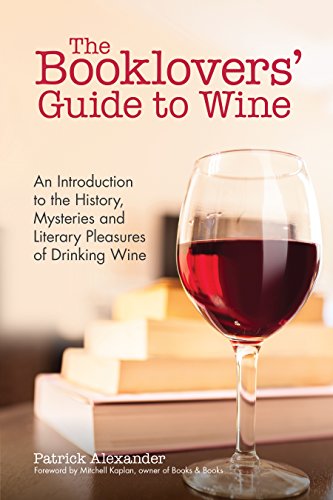
Booklovers' Guide To Wine: An Introduction to the History, Mysteries and Literary Pleasures of Drinking Wine (Wine Book, Guide to Wine) - Softcover
Inhaltsangabe
Great Wines and Great Writers are a Wonderful Blend
“Guides to the wide world of wine are many but this is the first book on the market to pair books with wine by an author who is a preeminent expert on both.” —Thriftbooks.com
#1 Best Seller in Wine & Spirits Buying Guides
A fact-filled, jargon free guide to wine, bursting with entertaining anecdotes, literary quotes and compelling humor that teaches you everything you always wanted to learn about wine but were too scared to ask.
The pleasures of great wine and great writers. Under the careful guidance of his father, Patrick Alexander began drinking wine with his meals at the age of five. At the same age, encouraged by his mother, he began a lifelong love-affair with books. The twin pleasures of wine and writing remained his passion up to this day. He has raised his own children in many of the world’s great wine growing regions, from Bordeaux and Piedmont in Europe to the Santa Cruz mountains of California while researching and writing his definitive guide to the novels of Marcel Proust.
History of wine and some of the best wines. For several years, Patrick has been teaching a sold-out wine appreciation class at the nation’s No.1 independent bookstore, Books & Books in Coral Gables, Florida. The Booklovers' Guide to Wine is based on this very successful class and blends Patrick’s passion for the culture and history of wine and his love of literature for the world's great writers. A literary twist on traditional food and wine pairings, this book explores how great wines and great writers can be combined to enhance the enjoyment of both. The book describes the history of wine from the time of Noah to the birth of two-buck Chuck.
If you are a fan of wine books such as Cork Dork, Wine Folly, Wine Simple, or The Wine Bible, and appreciate great literature, you will love The Booklovers’ Guide to Wine.
Die Inhaltsangabe kann sich auf eine andere Ausgabe dieses Titels beziehen.
Über die Autorinnen und Autoren
Patrick Alexander originally developed the Wine Appreciation program when he worked at the University of Miami as Director of the Office of Professional Advancement. In the summer of 2011, after Patrick had left UM in order to focus on writing, Mitchell Kaplan suggested he offer his program at Books & Books during the quiet summer months. “It seems a pity to waste all that research” Mitchell said “and you never know; our book customers might enjoy learning about wine.” Four years, nineteen sold-out classes, and three-hundred satisfied students later, Patrick Alexander's Wine Appreciation Program has become one of the highlights of Books & Books event programming. Previously Director of the Wine Appreciation program at the University of Miami and a judge for the Florida International Wine Challenge, Patrick Alexander has been teaching these wildly popular and critically acclaimed classes at Books & Books for over four years. Patrick is also a published author and his writings include "Marcel Proust’s Search for Lost Time" and "The Nigerian Letter."
Mitchell is a co-founder of Miami Book Fair International and serves as the Chairperson of its Board of Directors. He also serves on the steering committee of the Florida Center for the Literary Arts, Miami-Dade College's literary center. Mitchell recently served a two-year term as President of the American Booksellers Association (ABA) and continues an active involvement with the organization. He also serves on the Board of ABFFE, the American Booksellers Foundation for Free Expression.
Auszug. © Genehmigter Nachdruck. Alle Rechte vorbehalten.
The Booklover's Guide to Wine
An introductory guide to the history, mysteries, and literary pleasures of drinking wine
By Patrick AlexanderMango Media, Inc.
Copyright © 2017 Patrick Alexander
All rights reserved.
ISBN: 978-1-63353-606-7All rights reserved.
CHAPTER 1
WINE
"Give me books, French wine, fruit, fine weather and a little music played out of doors by somebody I do not know." – John Keats
What is Wine?
Wine is made from the fermented juice of fruit. Any fruit can be used to make wine, and some of it is no doubt delicious. However, for the purpose of this book, our discussion of wine is limited to the fermented juice of grapes made from the Vitis vinifera vine which is native to the Eastern Mediterranean but is now planted worldwide.
Fermentation is a naturally occurring process in which the yeast found in the grapes converts the natural sugars into alcohol. The more sugar the grape contains, the higher the level of alcohol.
There are seven basic categories of wine:
Red Wine: Made from dark-skinned grapes when the skins remain with the juice during fermentation.
White Wine: Made from grapes with the (usually pale) skins removed before fermentation.
Rosé Wine: Made from dark-skinned grapes when skins have been allowed brief contact with the juice during fermentation. Obviously, the longer the contact, the deeper the color will be.
Sparkling Wine: Wines which contain small bubbles of carbon dioxide, either as a result of a secondary natural fermentation or through post-fermentation injection. The most famous come from the Champagne region of Northeast France.
Distilled Wine: Brandy is made from fermented wines which have been distilled to 35-60 percent alcohol, and the name comes from the Dutch word brandewijn, "burnt wine." The best-known brandies are Cognac and Armagnac, two regions in Southwest France.
Fortified Wine: Made from fermented wine to which some brandy has been added, raising the alcohol level to about 18-20 percent. The most famous fortified wines are from Jerez (Sherry) in Southern Spain and Porto (Port) in Northern Portugal.
Raisinated Wine: Rather than fermenting the juice of the freshly picked fruit, the grapes are allowed to dry in the sun, becoming more like raisins before they are crushed and allowed to ferment. This process, which is called appassimento in Italian, concentrates the sugars and thus results in a far higher alcohol level as well as a sweeter wine. Historically, all the best and most expensive wines used to be made this way.
These different categories will be examined in more detail in the chapter on "How Wine is Made."
There are three external factors which affect the taste of wine:
Chemical: Perhaps the most important factor is the chemical composition of the wine. In fact, if the wine is bad, then all the other factors are irrelevant. But assuming the wine is good, that "goodness" is composed of all sorts of qualities, ranging from the type of grape to the minerals from which the roots have derived their taste, and the balance between the sweetness of the residual sugars and the acids and tannins of the skin.
Physical: Even a great wine will be disappointing if it is served at the wrong temperature, while an otherwise mediocre wine, served at the correct temperature and accompanied with food, will taste much better.
Mechanical: As a certain well-known glass manufacturer, Riedel, never fails to remind us in their advertising, each wine improves in the "correct" glass. Certainly, any wine will taste better in a wine glass that tapers toward the opening, rather than one that widens towards the top. The correctly-shaped glass is widest in the middle, where the maximum surface of wine is exposed to the oxygen in the air, releasing the volatile aromatic molecules that rise towards the top of the glass which, tapering to a narrowed opening, concentrates them for the human nose. In order to focus on the color and pleasures of the wine itself, the glass should be clear, un-decorated and certainly not colored.
Alright — four external factors: Dishwashing liquid! Assuming that you follow all the advice and suggestions in this book and put them into practice with a carefully selected wine in an expensive crystal glass, it will all be meaningless if the glass has not been properly rinsed. Wine glasses should be washed by hand if possible, using only the tiniest hint of dishwashing liquid, and then thoroughly rinsed so that no residue remains. The smallest hint of soap in a glass will destroy even the most robust and expensive of wines.
The moment the cork is pulled and the first glass is poured, chemical changes begin which will ultimately affect our appreciation of the wine. As soon as the wine is exposed to the air, it begins to oxidize and evaporate as tiny molecules of aroma are released into the air and give the wine its bouquet.
Tasting Wine
While it is true that the satisfying "pop" of a cork being withdrawn from a bottle, the clink of glasses, the charming gurgle of wine being poured, or the gentle fizz of bubbles in a flute of champagne all involve our sense of hearing, it is the other four senses which are more important for the appreciation of wine: sight, smell, taste, and touch. In my wine class, I make my students follow the same noisy ritual for every glass of wine we taste: swirl, snort, slurp, and slosh. It makes for a somewhat raucous and inelegant class, but establishes good tasting habits which can eventually be discreetly modified to socially acceptable levels.
It is very important to remember that just as we all differ in size, height, weight, hair color, and skin color, so too each one of us has a unique sense of taste. About 20 percent of the population have 150 tastebuds on each square centimeter of tongue. They are known as Supertasters; they react badly to any taste of bitterness and are very sensitive, usually avoiding most red wines and preferring sweet whites. At the other extreme, 20 percent of the population have only fifty tastebuds per square centimeter, and they are very tolerant of tannins and bitter tastes, usually preferring "big" red wines. Most of us are somewhere in the middle, with about one hundred tastebuds per square centimeter. We are known as "tasters" and can enjoy both sweet and bitter tastes, both red and white. Because of these fundamental and natural differences between us, when it comes to wine tasting, there are no "correct" tastes and no "correct" answers. Do not feel bad if your experience is different from your friends or from an "expert." Vive la difference!
Eyes / Sight (Swirl)
Our first contact with a glass of wine is with our eyes, which tell us immediately if it is red or white (or rosé). Sight is the most superficial of our senses, but, even before we taste the wine, our eyes give us a hint of the grape the wine is made from and also its age. Pick up your glass and swirl the wine around as you look at it. (Novices may want to practice swirling while the glass sits on the table, moving it in a circular motion so that the wine swirls around, but without spilling over the glass onto a smart white dress or shirtfront.) First look down into the glass, and then tilt it away from you at an angle, preferably against a white background.
By tilting your glass, you will see the variations in color from the center, where the wine is deepest...
„Über diesen Titel“ kann sich auf eine andere Ausgabe dieses Titels beziehen.
Suchergebnisse für Booklovers' Guide To Wine: An Introduction to the...

Beispielbild für diese ISBN
The Booklovers' Guide to Wine: An Introduction to the History, Mysteries and Literary Pleasures of Drinking Wine (Wine Book, Guide to Wine)
Anbieter: ThriftBooks-Atlanta, AUSTELL, GA, USA
Verkäuferbewertung 5 von 5 Sternen

Paperback. Zustand: Very Good. No Jacket. Former library book; May have limited writing in cover pages. Pages are unmarked. ~ ThriftBooks: Read More, Spend Less. Artikel-Nr. G1633536068I4N10
Gebraucht kaufen
EUR 6,04
Versand gratis
Versand innerhalb von USA
Versand innerhalb von USA
Anzahl: 1 verfügbar
Beispielbild für diese ISBN
The Booklovers' Guide to Wine: An Introduction to the History, Mysteries and Literary Pleasures of Drinking Wine (Wine Book, Guide to Wine)
Anbieter: ThriftBooks-Atlanta, AUSTELL, GA, USA
Verkäuferbewertung 5 von 5 Sternen
Paperback. Zustand: Good. No Jacket. Former library book; Pages can have notes/highlighting. Spine may show signs of wear. ~ ThriftBooks: Read More, Spend Less. Artikel-Nr. G1633536068I3N10
Gebraucht kaufen
EUR 6,04
Versand gratis
Versand innerhalb von USA
Versand innerhalb von USA
Anzahl: 1 verfügbar
Beispielbild für diese ISBN
The Booklovers' Guide to Wine : An Introduction to the History, Mysteries and Literary Pleasures of Drinking Wine (Wine Book, Guide to Wine)
Anbieter: Better World Books: West, Reno, NV, USA
Verkäuferbewertung 5 von 5 Sternen
Zustand: Good. Former library copy. Pages intact with minimal writing/highlighting. The binding may be loose and creased. Dust jackets/supplements are not included. Includes library markings. Stock photo provided. Product includes identifying sticker. Better World Books: Buy Books. Do Good. Artikel-Nr. 53370148-6
Gebraucht kaufen
EUR 6,65
Versand gratis
Versand innerhalb von USA
Versand innerhalb von USA
Anzahl: 1 verfügbar
Beispielbild für diese ISBN
The Booklovers' Guide to Wine : An Introduction to the History, Mysteries and Literary Pleasures of Drinking Wine (Wine Book, Guide to Wine)
Anbieter: Better World Books, Mishawaka, IN, USA
Verkäuferbewertung 5 von 5 Sternen
Zustand: Good. Former library copy. Pages intact with minimal writing/highlighting. The binding may be loose and creased. Dust jackets/supplements are not included. Includes library markings. Stock photo provided. Product includes identifying sticker. Better World Books: Buy Books. Do Good. Artikel-Nr. 53370148-6
Gebraucht kaufen
EUR 6,65
Versand gratis
Versand innerhalb von USA
Versand innerhalb von USA
Anzahl: 1 verfügbar
Beispielbild für diese ISBN
Booklovers' Guide to Wine: An Introduction to the History, Mysteries and Literary Pleasures of Drinking Wine
Anbieter: Magers and Quinn Booksellers, Minneapolis, MN, USA
Verkäuferbewertung 5 von 5 Sternen
paperback. Zustand: Very Good. May have light to moderate shelf wear and/or a remainder mark. Complete. Clean pages. Artikel-Nr. 1530898
Gebraucht kaufen
EUR 6,78
EUR 3,51 Versand
Versand innerhalb von USA
Versand innerhalb von USA
Anzahl: 1 verfügbar
Beispielbild für diese ISBN
The Booklovers' Guide To Wine: A Celebration of the History, the Mysteries and the Literary Pleasures of Drinking Wine (Wine Book, Wine Guide, and for Fans of The Wine Bible or Sommelier Books)
Verlag:
Mango Media, United States, FL, 2017
ISBN 10: 1633536068
ISBN 13: 9781633536067
Gebraucht
Paperback
Anbieter: WorldofBooks, Goring-By-Sea, WS, Vereinigtes Königreich
Verkäuferbewertung 5 von 5 Sternen
Paperback. Zustand: Very Good. Great Wines and Great Writers are a Wonderful BlendGuides to the wide world of wine are many but this is the first book on the market to pair books with wine by an author who is a preeminent expert on both. Thriftbooks.com#1 Best Seller in Wine & Spirits Buying GuidesA fact-filled, jargon free guide to wine, bursting with entertaining anecdotes, literary quotes and compelling humor that teaches you everything you always wanted to learn about wine but were too scared to ask.The pleasures of great wine and great writers.Under the careful guidance of his father, Patrick Alexander began drinking wine with his meals at the age of five. At the same age, encouraged by his mother, he began a lifelong love-affair with books. The twin pleasures of wine and writing remained his passion up to this day. He has raised his own children in many of the worlds great wine growing regions, from Bordeaux and Piedmont in Europe to the Santa Cruz mountains of California while researching and writing his definitive guide to the novels of Marcel Proust.History of wine and some of the best wines.For severalyears, Patrick has been teaching a sold-out wine appreciation class at the nations No.1 independent bookstore, Books & Books in Coral Gables, Florida.The Booklovers' Guide to Wineis based on this very successful class and blends Patricks passion for the culture and history of wine and his love of literature for the world's great writers. A literary twist on traditional food and wine pairings, this book explores how great wines and great writers can be combined to enhance the enjoyment of both. The book describes the history of wine from the time of Noah to the birth of two-buck Chuck.If you are a fan of wine books such as Cork Dork, Wine Folly, Wine Simple, or The Wine Bible, and appreciate greatliterature, you will love The Booklovers Guide to Wine. The book has been read, but is in excellent condition. Pages are intact and not marred by notes or highlighting. The spine remains undamaged. Artikel-Nr. GOR009674137
Gebraucht kaufen
EUR 3,86
EUR 6,50 Versand
Versand von Vereinigtes Königreich nach USA
Versand von Vereinigtes Königreich nach USA
Anzahl: 4 verfügbar
Beispielbild für diese ISBN
The Booklovers' Guide To Wine: An Introduction to the History, Mysteries and Literary Pleasures of Drinking Wine (Wine Book, Gui
Anbieter: Robinson Street Books, IOBA, Binghamton, NY, USA
Verkäuferbewertung 4 von 5 Sternen

Paperback. Zustand: Used: Very Good. Prompt Shipment, shipped in Boxes, Tracking PROVIDEDCooking & Food HistoryVery good condition, minor wear to edges, bumped tips, prompt shipping with tracking. Artikel-Nr. BlueRoughRoom1IB185
Gebraucht kaufen
EUR 12,23
EUR 8,35 Versand
Versand innerhalb von USA
Versand innerhalb von USA
Anzahl: 1 verfügbar
Beispielbild für diese ISBN
The Booklovers' Guide To Wine
Anbieter: PBShop.store US, Wood Dale, IL, USA
Verkäuferbewertung 5 von 5 Sternen
PAP. Zustand: New. New Book. Shipped from UK. Established seller since 2000. Artikel-Nr. CX-9781633536067
Beispielbild für diese ISBN
The Booklovers' Guide To Wine: An Introduction to the History, Mysteries and Literary Pleasures of Drinking Wine (Wine Book, Guide to Wine)
Anbieter: HR1 Books, Hereford, Vereinigtes Königreich
Verkäuferbewertung 5 von 5 Sternen
paperback. Zustand: Very Good. Same / next day dispatch (Monday - Friday), Artikel-Nr. mon0000132801
Gebraucht kaufen
EUR 4,97
EUR 18,00 Versand
Versand von Vereinigtes Königreich nach USA
Versand von Vereinigtes Königreich nach USA
Anzahl: 1 verfügbar
Beispielbild für diese ISBN
The Booklovers' Guide To Wine
Anbieter: PBShop.store UK, Fairford, GLOS, Vereinigtes Königreich
Verkäuferbewertung 5 von 5 Sternen
PAP. Zustand: New. New Book. Shipped from UK. Established seller since 2000. Artikel-Nr. CX-9781633536067
Neu kaufen
EUR 17,63
EUR 5,83 Versand
Versand von Vereinigtes Königreich nach USA
Versand von Vereinigtes Königreich nach USA
Anzahl: 15 verfügbar