
Verwandte Artikel zu Artist Toolbox: Surfaces & Supports: A Practical...
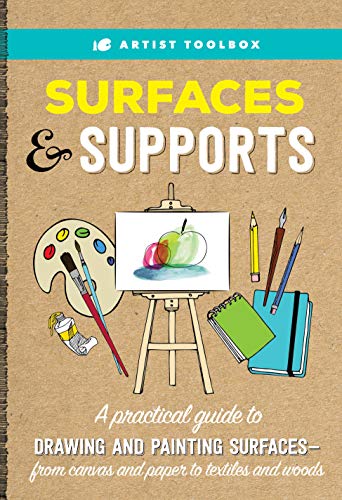
Artist Toolbox: Surfaces & Supports: A Practical Guide to Drawing and Painting Surfaces -- From Canvas and Paper to Textiles and Woods - Softcover
Inhaltsangabe
Artist Toolbox: Surfaces & Supports explores a wide range of drawing and painting surfaces and the unique effects they have on a variety of media.
The surface you draw or paint on impacts everything in your artwork, from its texture and brightness to color and durability. Artist Toolbox: Surfaces & Supports covers the drawing and painting surfaces and supports that all artists should know. With this art book, you'll learn the basics and finer points of working on:
- Canvas
- Paper
- Panels
- Textiles
- Metal
- Glass
- Stone
Artist Toolbox: Surfaces & Supports is packed with visual examples, step-by-step tutorials, and demonstrations on the practical aspects of working with graphite and colored pencils;charcoal and pastel;and watercolor, acrylic, and oilpaints. With this reference guide that no artist's library should be without, you can also learn how each support will take a medium.
The Artist Toolbox series presents practical reference guides designed for beginning artists interested in fully understanding the focus and function of essential art tools of the trade.
Die Inhaltsangabe kann sich auf eine andere Ausgabe dieses Titels beziehen.
Über die Autorinnen und Autoren
Elizabeth T. Gilbert earned a BA in English from the University of San Diego in 2003, where she also studied art and anthropology. Elizabeth spent the next eight years as an editor, writer, and in-house artist for Walter Foster Publishing. In 2009, she co-authored The Daily Book of Art (Walter Foster Publishing). She's also the author of Walter Foster Publishing's The Fine Artist's Guide to Tools & Materials and Walter Foster Jr.'s The Big Book of Art: Draw! Paint! Create! Elizabeth lives in Colorado Springs, Colorado.
Blakely Little is based in Charleston, South Carolina, where she uses a mixture of acrylic and oil paints, as well as crayons, to create bright and modern artwork. Blakely enjoys playing with vibrant colors and patterns and has been featured in Glitter Guide, Country Living magazine, Coastal Style Magazine, among others. She's created art for businesses and organizations in South Carolina, including the American Heart Association. Learn more at blakelymade.com.
Auszug. © Genehmigter Nachdruck. Alle Rechte vorbehalten.
Surfaces & Supports
A practical guide to Drawing and Painting Surfaces—from Canvas and Paper to Textiles and Woods
By Elizabeth T. Gilbert, Candice BohannonThe Quarto Group
Copyright © 2019 Quarto Publishing Group USA Inc.
All rights reserved.
ISBN: 978-1-63322-608-1All rights reserved.
Contents
INTRODUCTION,
MEET THE ARTISTS,
CHAPTER 1: PAPER,
CHAPTER 2: CANVAS,
CHAPTER 3: PANELS,
CHAPTER 4: TEXTILES,
CHAPTER 5: ALTERNATIVE SURFACES,
CHAPTER 6: SELECTING & PREPARING YOUR SURFACE,
CHAPTER 7: DEMONSTRATIONS,
CONCLUSION,
CHAPTER 1
Paper
Over the years, paper has become an invaluable tool for recordkeeping and artmaking. Today, a variety of papers are both affordable and readily available. In the pages that follow, we'll look at the papers that offer the most practical surfaces for drawing and painting.
PAPER PROPERTIES
Material The majority of paper today is made out of cellulose fibers derived from wood pulp, cotton, or a blend of the two. Generally speaking, the higher the cotton content, the higher the paper quality. Papers made of 100-percent cotton are more durable and less likely to become brittle or yellow over time. Papers made from cotton rags are called "rag paper"; these strong sheets are made up of the longest cotton fibers. However, most cotton paper is made of cotton linter (shorter fibers) or a combination of rag and linter. Wood pulp paper is more affordable than cotton paper, and modern techniques for reducing the acid content make this option more appealing to artists.
Some papers are manufactured with an ingredient called "sizing" or "size." Sizing — which is usually gelatin or animal glue — changes the way a paper accepts a medium. The more sizing a paper has, the less likely it is to absorb moisture and pigment. Papers made specifically for ink or marker often have a good amount of internal sizing, which means that the sizing is mixed in with the pulp before the paper dries. This makes the ink less likely to bleed through or across the paper while keeping the color vibrant. Many watercolor papers are also coated with surface sizing, giving the artist control over the washes. (See "Sizing," here.) Sizing also keeps the paper from buckling under moisture.
Weight Paper weight is measured in either pounds (lb) per ream (500 sheets) or grams per square meter (gsm or g/m2). The measurement system of pounds depends on a sheet's size and varies between paper types, so there is no "across the board" conversion method for matching lb. and gsm. Using gsm to describe a paper's weight is more consistent and perhaps more descriptive; however, the pound system is more common in the United States. Below are some of the most readily available paper types and weights, listed in both lb and approximate gsm. Remember: The greater the lb or gsm, the thicker the paper.
Go Acid-Free! You may notice that some papers and canvases are labeled "acid-free." This desirable quality will help your artwork stand the test of time. Technically speaking, an acid-free surface has a pH of 7 or higher. To the artist, this means that the surface will not yellow or deteriorate as time passes. Some papers are buffered, which means they were manufactured with an alkaline additive to neutralize the paper. Unless you're drafting rough sketches, make it a point to work on acid-free surfaces. You never know which pieces you'll want to last!
BRIGHTNESS & COLOR
Art papers are available in nearly every color imaginable. However, most artists work on papers that range from bright white to cream, which provide light, clean surfaces that contrast well with graphite, charcoal, and other dark media. The brighter the surface, the brighter your colors and highlights will appear in the final work. You can also subtly alter the temperature of your overall work by choosing a paper that leans warm or cool. Remember that any medium you use will be influenced by the brightness and color of the support beneath.
Some artists like working on toned paper, with the most common choices being gray and tan. Artists use the tone of the paper as a middle value and apply the highlights and shadows using charcoal or Conté crayon. This is a quick way to develop a drawing that often produces dramatic results.
Texture & Finish To understand texture and finish, run your finger across several different papers. They can be glossy, bumpy, smooth, or ribbed. Aside from the actual feel of the paper, the surface quality plays a role in how the paper responds to and accepts the medium. Below are the most common terms relating to texture and finish.
Smooth, Medium & Rough Paper textures are generally described as smooth, medium, or rough. Rough papers have a prominent tooth, which refers to the bumps and grooves on the paper's surface. These raised areas catch your medium as you stroke across the paper. Smooth papers have little to no tooth, and medium papers have a tooth somewhere between rough and smooth. Dry mediums, such as pencil, charcoal, and pastel, rely on some tooth in order to adhere to the paper. The more tooth a paper has, the rougher your pencil or brushstroke will be and the more medium will catch on the paper. Papers with a fine tooth yield rich, dark colors when working with dry media; rough papers with a large tooth yield coarse strokes and complement an expressive, painterly style. However, more tooth is not necessarily better. Papers with minimal tooth are best for artists who work in fine detail, as smooth surfaces give artists more control over their media.
MEDIA ON PAPER TEXTURES
Laid-Finish Paper Papers with a laid finish feature fine, parallel grooves that simulate "chain lines" characteristic of old pressed, handmade papers. The grooves catch the drawing medium and give the artwork a ribbed texture. Charcoal, pastel, Conté crayon, chalk, and soft graphite work well with laid surfaces.
Wove Finish Papers with a wove finish are smooth with a subtle woven or mesh pattern. It is the standard finish for papers used for printing and writing, such as stationery. The uniform surface affords artists a good amount of control over a medium.
Matte vs. Gloss Two common words used to describe the finish of a paper are "matte" and "gloss." In almost all cases, artist paper has a matte or "uncoated" finish, which is nonreflective and receptive to wet and dry media. Gloss paper is slick and reflective; the lack of friction makes it difficult to accept and control a medium. It can also cause smearing and show fingerprints. Gloss paper can work for calligraphy or pen and ink, but it is mainly used for printing purposes. If you want your artwork to have a gloss finish, consider working on matte paper and then sealing your drawing with a gloss varnish.
FORMATS
Paper comes in a variety of formats, and your choice should depend on your requirements and personal taste. Below is a breakdown of available formats.
Pads & Books Paper pads consist of a stack of papers on a firm cardboard backing, which allows you to sketch without a table if needed. The papers are attached along one edge with tape, glue, or a plastic or metal spiral. These formats are available in a range of manageable sizes that suit artists on-the-go. However, many artists choose to remove single sheets and work on another surface to prevent indentations transferring to the papers beneath.
Rolls Paper is available in rolls, often a cheaper option per square inch...
„Über diesen Titel“ kann sich auf eine andere Ausgabe dieses Titels beziehen.
Suchergebnisse für Artist Toolbox: Surfaces & Supports: A Practical...

Beispielbild für diese ISBN
Artist Toolbox: Surfaces & Supports: A practical guide to drawing and painting surfaces -- from canvas and paper to textiles and woods
Verlag:
Walter Foster Publishing (edition ), 2019
ISBN 10: 1633226085
ISBN 13: 9781633226081
Gebraucht
Paperback
Anbieter: BooksRun, Philadelphia, PA, USA
Verkäuferbewertung 5 von 5 Sternen

Paperback. Zustand: Very Good. It's a well-cared-for item that has seen limited use. The item may show minor signs of wear. All the text is legible, with all pages included. It may have slight markings and/or highlighting. Artikel-Nr. 1633226085-8-1
Gebraucht kaufen
EUR 4,36
Versand gratis
Versand innerhalb von USA
Versand innerhalb von USA
Anzahl: 1 verfügbar
Beispielbild für diese ISBN
Artist Toolbox: Surfaces & Supports: A practical guide to drawing and painting surfaces -- from canvas and paper to textiles and woods
Verlag:
Walter Foster Publishing (edition ), 2019
ISBN 10: 1633226085
ISBN 13: 9781633226081
Gebraucht
Paperback
Anbieter: BooksRun, Philadelphia, PA, USA
Verkäuferbewertung 5 von 5 Sternen
Paperback. Zustand: Very Good. It's a well-cared-for item that has seen limited use. The item may show minor signs of wear. All the text is legible, with all pages included. It may have slight markings and/or highlighting. Artikel-Nr. 1633226085-11-1
Gebraucht kaufen
EUR 4,67
Versand gratis
Versand innerhalb von USA
Versand innerhalb von USA
Anzahl: 1 verfügbar
Beispielbild für diese ISBN
Artist Toolbox: Surfaces & Sup
Verlag:
Walter Foster Publishing, 2019
ISBN 10: 1633226085
ISBN 13: 9781633226081
Gebraucht
Softcover
Anbieter: World of Books (was SecondSale), Montgomery, IL, USA
Verkäuferbewertung 5 von 5 Sternen
Zustand: Very Good. Item in very good condition! Textbooks may not include supplemental items i.e. CDs, access codes etc. Artikel-Nr. 00103407812
Gebraucht kaufen
EUR 5,38
Versand gratis
Versand innerhalb von USA
Versand innerhalb von USA
Anzahl: 1 verfügbar
Beispielbild für diese ISBN
Artist Toolbox: Surfaces & Sup
Verlag:
Walter Foster Publishing, 2019
ISBN 10: 1633226085
ISBN 13: 9781633226081
Gebraucht
Softcover
Anbieter: World of Books (was SecondSale), Montgomery, IL, USA
Verkäuferbewertung 5 von 5 Sternen
Zustand: Good. Item in good condition. Textbooks may not include supplemental items i.e. CDs, access codes etc. Artikel-Nr. 00104444673
Gebraucht kaufen
EUR 5,38
Versand gratis
Versand innerhalb von USA
Versand innerhalb von USA
Anzahl: 1 verfügbar
Beispielbild für diese ISBN
Artist Toolbox: Surfaces & Supports: A Practical Guide to Drawing and Painting Surfaces -- From Canvas and Paper to Textiles and Woods
Verlag:
Walter Foster Publishing, 2019
ISBN 10: 1633226085
ISBN 13: 9781633226081
Gebraucht
Paperback
Anbieter: ThriftBooks-Dallas, Dallas, TX, USA
Verkäuferbewertung 5 von 5 Sternen
Paperback. Zustand: Very Good. No Jacket. May have limited writing in cover pages. Pages are unmarked. ~ ThriftBooks: Read More, Spend Less. Artikel-Nr. G1633226085I4N00
Gebraucht kaufen
EUR 5,99
Versand gratis
Versand innerhalb von USA
Versand innerhalb von USA
Anzahl: 1 verfügbar
Beispielbild für diese ISBN
Artist Toolbox: Surfaces & Supports: A practical guide to drawing and painting surfaces -- from canvas and paper to textiles and woods
Verlag:
Walter Foster Publishing, 2019
ISBN 10: 1633226085
ISBN 13: 9781633226081
Gebraucht
Softcover
Anbieter: Wonder Book, Frederick, MD, USA
Verkäuferbewertung 5 von 5 Sternen
Zustand: As New. Like New condition. A near perfect copy that may have very minor cosmetic defects. Artikel-Nr. Z03A-04779
Gebraucht kaufen
EUR 6,27
Versand gratis
Versand innerhalb von USA
Versand innerhalb von USA
Anzahl: 1 verfügbar
Beispielbild für diese ISBN
Artist Toolbox: Surfaces and Supports : A Practical Guide to Drawing and Painting Surfaces -- from Canvas and Paper to Textiles and Woods
Verlag:
Quarto Publishing Group USA, 2019
ISBN 10: 1633226085
ISBN 13: 9781633226081
Gebraucht
Softcover
Anbieter: Better World Books, Mishawaka, IN, USA
Verkäuferbewertung 5 von 5 Sternen
Zustand: Good. Former library copy. Pages intact with minimal writing/highlighting. The binding may be loose and creased. Dust jackets/supplements are not included. Includes library markings. Stock photo provided. Product includes identifying sticker. Better World Books: Buy Books. Do Good. Artikel-Nr. 39817119-6
Gebraucht kaufen
EUR 6,41
Versand gratis
Versand innerhalb von USA
Versand innerhalb von USA
Anzahl: 1 verfügbar
Beispielbild für diese ISBN
Artist Toolbox: Surfaces and Supports : A Practical Guide to Drawing and Painting Surfaces -- from Canvas and Paper to Textiles and Woods
Verlag:
Quarto Publishing Group USA, 2019
ISBN 10: 1633226085
ISBN 13: 9781633226081
Gebraucht
Softcover
Anbieter: Better World Books, Mishawaka, IN, USA
Verkäuferbewertung 5 von 5 Sternen
Zustand: Very Good. Pages intact with possible writing/highlighting. Binding strong with minor wear. Dust jackets/supplements may not be included. Stock photo provided. Product includes identifying sticker. Better World Books: Buy Books. Do Good. Artikel-Nr. 18619941-6
Gebraucht kaufen
EUR 6,41
Versand gratis
Versand innerhalb von USA
Versand innerhalb von USA
Anzahl: 1 verfügbar
Beispielbild für diese ISBN
Artist Toolbox: Surfaces & Supports: A practical guide to drawing and painting surfaces -- from canvas and paper to textiles and woods
Verlag:
Walter Foster Publishing, 2019
ISBN 10: 1633226085
ISBN 13: 9781633226081
Gebraucht
Paperback
Anbieter: WorldofBooks, Goring-By-Sea, WS, Vereinigtes Königreich
Verkäuferbewertung 5 von 5 Sternen
Paperback. Zustand: Very Good. The book has been read, but is in excellent condition. Pages are intact and not marred by notes or highlighting. The spine remains undamaged. Artikel-Nr. GOR012127082
Gebraucht kaufen
EUR 8,17
EUR 6,52 Versand
Versand von Vereinigtes Königreich nach USA
Versand von Vereinigtes Königreich nach USA
Anzahl: 4 verfügbar
Beispielbild für diese ISBN
Artist Toolbox: Surfaces and Supports: A practical guide to drawing and painting surfaces -- from canvas and paper to textiles and woods
Verlag:
Walter Foster Publishing, 2019
ISBN 10: 1633226085
ISBN 13: 9781633226081
Gebraucht
paperback
Anbieter: Reuseabook, Gloucester, GLOS, Vereinigtes Königreich
Verkäuferbewertung 5 von 5 Sternen
paperback. Zustand: Used; Like New. Dispatched, from the UK, within 48 hours of ordering. This book is in mint condition. Both the pages and the cover are completely intact, without zero sign of previous usage. Artikel-Nr. CHL9614213
Gebraucht kaufen
EUR 6,05
EUR 11,64 Versand
Versand von Vereinigtes Königreich nach USA
Versand von Vereinigtes Königreich nach USA
Anzahl: Mehr als 20 verfügbar