
Verwandte Artikel zu Think Like an Entrepreneur, Act Like a CEO: 50 Indispensable...
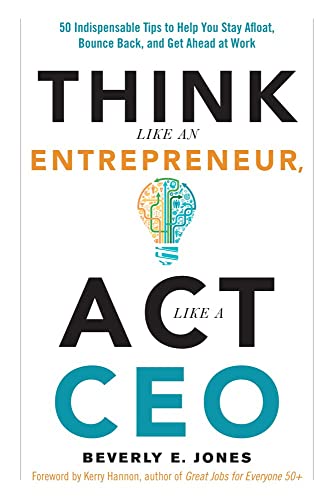
Think Like an Entrepreneur, Act Like a CEO: 50 Indispensable Tips to Help You Stay Afloat, Bounce Back, and Get Ahead at Work - Softcover
Inhaltsangabe
Education plus experience once guaranteed a successful career, but no more! Today, success depends on your ability to adapt. You must be agile, willing to adjust your professional expectations, and able to respond quickly to opportunities and threats.
In Think Like an Entrepreneur, Act Like a CEO you will learn practical ways to handle vexing workplace challenges. Each chapter uses true stories to illustrate the answers to common questions, including:
How to leave your old job smoothly and start your new one with confidence and flair.
How to gracefully accept praise for your work.
How to recover from stress, setbacks, or the upheaval of a major project.
How to stay steady in the midst of endless change.
It's not enough to know how to manage common work-life challenges; you must also deal with the uncommon ones. Think Like an Entrepreneur, Act Like a CEO gives you proven, easy, go-to techniques for handling even the biggest career surprises, one step at a time.
In Think Like an Entrepreneur, Act Like a CEO you will learn practical ways to handle vexing workplace challenges. Each chapter uses true stories to illustrate the answers to common questions, including:
It's not enough to know how to manage common work-life challenges; you must also deal with the uncommon ones. Think Like an Entrepreneur, Act Like a CEO gives you proven, easy, go-to techniques for handling even the biggest career surprises, one step at a time.
Die Inhaltsangabe kann sich auf eine andere Ausgabe dieses Titels beziehen.
Über die Autorin bzw. den Autor
Beverly Jones, MBA, JD, PCC, is a master of reinvention. She led university programs for women before trailblazing her career as a Washington lawyer and Fortune 500 energy executive. For 40 years she has helped other professionals and leaders survive and thrive.
Since 2002, Jones has built a respected executive coaching and consulting practice, leading retreats and mentoring professionals of all ages to advance their careers, shift directions, or boost their productivity. Based in the nation's capital, she works with accomplished leaders in Congress, at major federal agencies, NGOs, universities, and large corporations. She is a popular blogger, and her podcasts are distributed through public media.
Since 2002, Jones has built a respected executive coaching and consulting practice, leading retreats and mentoring professionals of all ages to advance their careers, shift directions, or boost their productivity. Based in the nation's capital, she works with accomplished leaders in Congress, at major federal agencies, NGOs, universities, and large corporations. She is a popular blogger, and her podcasts are distributed through public media.
Auszug. © Genehmigter Nachdruck. Alle Rechte vorbehalten.
Think Like An Entrepreneur, Act Like A CEO
50 Indispensable Tips to Help You Stay Afloat, Bounce Back, and Get Ahead at Work
By Beverly E. Jones, Roger SheetyRed Wheel/Weiser, LLC
Copyright © 2016 Beverly E. Jones
All rights reserved.
ISBN: 978-1-63265-017-7All rights reserved.
Contents
Foreword By Kerry Hannon,
Introduction,
Chapter 1. To Launch Something New, You Need a Good Plan,
Chapter 2. Think Like an Entrepreneur, Wherever You Are,
Chapter 3. Listening Is Your Sure Fire, Go-to Career Strategy,
Chapter 4. Tweak Your Brand to Send Clear Messages,
Chapter 5. Start Now to Build Leadership into Your Brand,
Chapter 6. Power up by Tweaking Your Personal Style,
Chapter 7. Talk Back to the Voice in Your Head,
Chapter 8. How Do Other People Get Self-Discipline?,
Chapter 9. How and Why to Keep Smiling,
Chapter 10. The Real Meaning of "Networking" May Surprise You,
Chapter 11. What to Say When Your Work Is Praised,
Chapter 12. Give Positive Feedback in Smart Ways,
Chapter 13. Get Over Your Fear of Looking Like a Suck-Up,
Chapter 14. Use Games to Create Power and Direction,
Chapter 15. Be Prepared with Clever Ways to Brag,
Chapter 16. Get the "It" Factor: Create Presence,
Chapter 17. To Make a Career Shift, Start with One Grain of Sugar,
Chapter 18. How to Take a Career Side Step, One Sugar Grain at a Time,
Chapter 19. Those Annoying Speech Habits May Cost You,
Chapter 20. Does Your Calendar Support Your Success?,
Chapter 21. Prioritize Your Priorities,
Chapter 22. Getting Your Boss to Listen,
Chapter 23. Leading Upward: Manage the Boss, in a Good Way,
Chapter 24. The Jimmy Fallon Touch: Good Manners Help You Shine,
Chapter 25. Do's and Don'ts of Saying "Sorry",
Chapter 26. Find the Magic 20 Percent,
Chapter 27. How to Create Mentoring that Works Both Ways,
Chapter 28. Don't Be Sabotaged by Your Own Frustration,
Chapter 29. Yes, You Can Do Something about Difficult Colleagues,
Chapter 30. Find or Build Communities,
Chapter 31. Make Your Meeting Time More Productive,
Chapter 32. How to Love Your Work Again,
Chapter 33. Make Social Media Work for You,
Chapter 34. Stress Is Contagious and Debilitating—but Manageable,
Chapter 35. Snap Out of It: Coping with Career Rejection,
Chapter 36. How to Foster Great Teams, Even If You're Not the Leader,
Chapter 37. Celebrate Your Wins and Theirs,
Chapter 38. It's (Usually) Not Okay to Be Late,
Chapter 39. Measuring Progress Makes Your Goals Powerful,
Chapter 40. Use Those Amazing Checklists,
Chapter 41. Overcome Big Project Letdown,
Chapter 42. Know When to Forget about Status,
Chapter 43. To Lead without Authority, Know How to Herd Cats,
Chapter 44. How Bigger Goals Can Take You Further,
Chapter 45. You Might Hesitate, but Keep Going,
Chapter 46. Ageism Is Real: Deal With It Sooner than Later,
Chapter 47. How to Stay Steady When Change Is Constant,
Chapter 48. Art Can Boost Your Creativity at Work,
Chapter 49. The Right Way to Move On,
Chapter 50. Choose to Be an Optimist,
Bibliography,
Index,
About the Author,
CHAPTER 1
To Launch Something New, You Need a Good Plan
Your long and varied career is likely to include a series of new jobs and other fresh starts. In 2014, the median time workers had been with their current employer was 4.6 years, according to the U.S. Bureau of Labor Statistics. And even if you defy the odds and stay with the same employer for much of your work life, your positions will change; you'll take on new projects, clients, or assignments; and your entire organization could be repeatedly transformed.
What I learned from my worst first day at work
My worst first day was 30 years ago, but it remains a vivid memory. I was a few years out of law school and shifting to a new firm in the nation's capital. The title on my business card read "partner" instead of "associate," in recognition of the clients I was able to bring along with me.
On my first day, I arrived in a new suit, with an empty briefcase, eager to make a good impression in the Washington office of this Virginia firm. But the attorneys who had interviewed me were all out of the office that day, and nobody else seemed pleased to meet me.
I found my way to the most senior Washington partner and introduced myself. He was curt: "At the interviews they all thought you were so great, but frankly I don't see it. You're going to have to prove yourself before anybody here gives you work."
The first friendly word was from the kind firm administrator who took me to lunch and warned me about a few things. She told me that there had been controversy over my title. And she hinted that in this male-dominated firm, both attorneys and support staff would need some time to get used to the idea of working with a woman lawyer.
The cool welcome was a challenge, but the most uncomfortable part of the day was that I had absolutely nothing to do. Well in advance, I had caught up with work for the clients I was bringing with me. This was back before there was a Web to surf, and I struggled to look busy. Instead of hustling over the weekend to finish my client work, I should have prepared a long list of things to do.
That night, I called my father, holding back tears. To cheer me up, he described his experience with new jobs: "The first day is always the worst day. The first week is always the worst week. The first month is the worst month. And the first year is the worst year."
I don't buy into the pessimism embedded in Dad's view of new jobs. But in that case he was prophetic. Within days the partners who had hired me returned to the office and greeted me with enthusiasm. And in successive weeks, months, and years I found my niche in the firm and eventually felt fully accepted.
My immediate anxieties were eased when I connected with colleagues who were more welcoming than the ones I encountered on that first day. But my time at the firm improved largely because I learned a critical lesson on Day One: nobody else was in charge of making me successful. That was my job. I went to work on my second day with the beginnings of a plan for how I would keep busy, take care of my clients, find new ones, and market my services to other lawyers in the firm. I never again assumed that the leadership would carry the responsibility for my success.
How to get off to a great start
These days it's hard to imagine that any established business would make so little effort on employee orientation. Often, in a process human resource experts call "onboarding," organizations develop elaborate plans to ensure that a new hire can quickly get to know key insiders and stakeholders, learn about performance expectations, and become familiar with the internal culture. Leaders may work hard to help recruits get a feel for the environment and develop realistic expectations about their roles.
But even when you're supported by onboarding pros and a welcoming boss, you're wise to have your own plan for starting your new job or assignment. Whether you are joining a different company, changing slots in the same outfit, or launching a new project, consider these tips as you lay out your plan:
->Learn what your boss wants. Initially, your manager may be vague about what she wants you to do. Of course, you should ask about your expected deliverables and the...
„Über diesen Titel“ kann sich auf eine andere Ausgabe dieses Titels beziehen.
Suchergebnisse für Think Like an Entrepreneur, Act Like a CEO: 50 Indispensable...

Beispielbild für diese ISBN
Think Like An Entrepreneur Act
Anbieter: World of Books (was SecondSale), Montgomery, IL, USA
Verkäuferbewertung 5 von 5 Sternen

Zustand: Good. Item in good condition. Textbooks may not include supplemental items i.e. CDs, access codes etc. Artikel-Nr. 00108335676
Gebraucht kaufen
EUR 3,47
Versand gratis
Versand innerhalb von USA
Versand innerhalb von USA
Anzahl: 1 verfügbar
Beispielbild für diese ISBN
Think Like an Entrepreneur, ACT Like a CEO: 50 Indispensable Tips to Help You Stay Afloat, Bounce Back, and Get Ahead at Work
Anbieter: ThriftBooks-Atlanta, AUSTELL, GA, USA
Verkäuferbewertung 5 von 5 Sternen
Paperback. Zustand: As New. No Jacket. Pages are clean and are not marred by notes or folds of any kind. ~ ThriftBooks: Read More, Spend Less. Artikel-Nr. G1632650177I2N00
Gebraucht kaufen
EUR 6,42
Versand gratis
Versand innerhalb von USA
Versand innerhalb von USA
Anzahl: 1 verfügbar
Beispielbild für diese ISBN
Think Like an Entrepreneur, ACT Like a CEO: 50 Indispensable Tips to Help You Stay Afloat, Bounce Back, and Get Ahead at Work
Anbieter: ThriftBooks-Reno, Reno, NV, USA
Verkäuferbewertung 5 von 5 Sternen
Paperback. Zustand: Good. No Jacket. Former library book; Pages can have notes/highlighting. Spine may show signs of wear. ~ ThriftBooks: Read More, Spend Less. Artikel-Nr. G1632650177I3N10
Gebraucht kaufen
EUR 6,42
Versand gratis
Versand innerhalb von USA
Versand innerhalb von USA
Anzahl: 1 verfügbar
Beispielbild für diese ISBN
Think Like an Entrepreneur, ACT Like a CEO: 50 Indispensable Tips to Help You Stay Afloat, Bounce Back, and Get Ahead at Work
Anbieter: ThriftBooks-Dallas, Dallas, TX, USA
Verkäuferbewertung 5 von 5 Sternen
Paperback. Zustand: Fair. No Jacket. Readable copy. Pages may have considerable notes/highlighting. ~ ThriftBooks: Read More, Spend Less. Artikel-Nr. G1632650177I5N00
Gebraucht kaufen
EUR 6,42
Versand gratis
Versand innerhalb von USA
Versand innerhalb von USA
Anzahl: 1 verfügbar
Beispielbild für diese ISBN
Think Like an Entrepreneur, ACT Like a CEO: 50 Indispensable Tips to Help You Stay Afloat, Bounce Back, and Get Ahead at Work
Anbieter: ThriftBooks-Dallas, Dallas, TX, USA
Verkäuferbewertung 5 von 5 Sternen
Paperback. Zustand: Good. No Jacket. Pages can have notes/highlighting. Spine may show signs of wear. ~ ThriftBooks: Read More, Spend Less. Artikel-Nr. G1632650177I3N00
Gebraucht kaufen
EUR 6,42
Versand gratis
Versand innerhalb von USA
Versand innerhalb von USA
Anzahl: 1 verfügbar
Beispielbild für diese ISBN
Think Like an Entrepreneur, ACT Like a CEO: 50 Indispensable Tips to Help You Stay Afloat, Bounce Back, and Get Ahead at Work
Anbieter: ThriftBooks-Atlanta, AUSTELL, GA, USA
Verkäuferbewertung 5 von 5 Sternen
Paperback. Zustand: Very Good. No Jacket. Former library book; May have limited writing in cover pages. Pages are unmarked. ~ ThriftBooks: Read More, Spend Less. Artikel-Nr. G1632650177I4N10
Gebraucht kaufen
EUR 6,42
Versand gratis
Versand innerhalb von USA
Versand innerhalb von USA
Anzahl: 1 verfügbar
Beispielbild für diese ISBN
Think Like an Entrepreneur, ACT Like a CEO: 50 Indispensable Tips to Help You Stay Afloat, Bounce Back, and Get Ahead at Work
Anbieter: ThriftBooks-Atlanta, AUSTELL, GA, USA
Verkäuferbewertung 5 von 5 Sternen
Paperback. Zustand: Very Good. No Jacket. May have limited writing in cover pages. Pages are unmarked. ~ ThriftBooks: Read More, Spend Less. Artikel-Nr. G1632650177I4N00
Gebraucht kaufen
EUR 6,42
Versand gratis
Versand innerhalb von USA
Versand innerhalb von USA
Anzahl: 1 verfügbar
Beispielbild für diese ISBN
Think Like an Entrepreneur, Act Like a CEO : 50 Indispensable Tips to Help You Stay Afloat, Bounce Back, and Get Ahead at Work
Anbieter: Better World Books: West, Reno, NV, USA
Verkäuferbewertung 5 von 5 Sternen
Zustand: Good. Former library copy. Pages intact with minimal writing/highlighting. The binding may be loose and creased. Dust jackets/supplements are not included. Includes library markings. Stock photo provided. Product includes identifying sticker. Better World Books: Buy Books. Do Good. Artikel-Nr. 12953663-75
Gebraucht kaufen
EUR 8,35
Versand gratis
Versand innerhalb von USA
Versand innerhalb von USA
Anzahl: 1 verfügbar
Beispielbild für diese ISBN
Think Like an Entrepreneur, Act Like a CEO : 50 Indispensable Tips to Help You Stay Afloat, Bounce Back, and Get Ahead at Work
Anbieter: Better World Books: West, Reno, NV, USA
Verkäuferbewertung 5 von 5 Sternen
Zustand: Very Good. Former library copy. Pages intact with possible writing/highlighting. Binding strong with minor wear. Dust jackets/supplements may not be included. Includes library markings. Stock photo provided. Product includes identifying sticker. Better World Books: Buy Books. Do Good. Artikel-Nr. 50709114-6
Gebraucht kaufen
EUR 8,35
Versand gratis
Versand innerhalb von USA
Versand innerhalb von USA
Anzahl: 1 verfügbar
Beispielbild für diese ISBN
Think Like an Entrepreneur, Act Like a CEO
Anbieter: PBShop.store UK, Fairford, GLOS, Vereinigtes Königreich
Verkäuferbewertung 5 von 5 Sternen
PAP. Zustand: New. New Book. Shipped from UK. Established seller since 2000. Artikel-Nr. FC-9781632650177
Neu kaufen
EUR 15,59
EUR 4,91 Versand
Versand von Vereinigtes Königreich nach USA
Versand von Vereinigtes Königreich nach USA
Anzahl: 15 verfügbar