
Inhaltsangabe
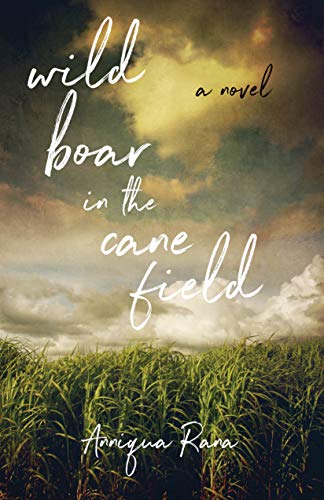
One day, a baby girl, Tara, is found, abandoned and covered in flies. She is raised by two mothers in a community rife with rituals and superstition. As she grows, Tara pursues acceptance at all costs. Saffiya, her adoptive mother, and Bhaggan, Saffiya’s maidservant, are victims of the men in their community, and the two women, in turn, struggle and live short but complicated lives. The only way for the villagers to find solace is through the rituals of ancient belief systems. Tara lives in a village that could be any village in South Asia, and she dies, like many young women in the area, during childbirth. Her short life is dedicated to her efforts to find happiness, despite the fact that she has no hope of going to school or making any life choices in the feudal, patriarchal world in which she finds herself. Poignant and compelling, Wild Boar in the Cane Field depicts the tragedy that often characterizes the lives of those who live in South Asia—and demonstrates the heroism we are all capable of even in the face of traumatic realities.
Die Inhaltsangabe kann sich auf eine andere Ausgabe dieses Titels beziehen.
Über die Autorin bzw. den Autor
Anniqua lives in California with her husband and two sons. When she’s not working as an educator in the community college system, she visits her family in Pakistan and England. The rest of the time, she reads, cooks, travels, and enjoys mystical music and poetry and does whatever it takes to keep her grounded and happy.
Auszug. © Genehmigter Nachdruck. Alle Rechte vorbehalten.
In the Beginning My mothers found me a week after I was born. By then, I had lost a week’s worth of maternal love that I would never reclaim, no matter how hard I tried. My birth mother must have thought she had left me with enough love to last till Bibi Saffiya and Amman Bhaggan dis- covered me on the train, wrapped in rags and covered in flies. Bibi Saffiya isn’t my real mother, and neither is Bhaggan, but when one of them nearly sat on me in the ladies’ compartment on the train to the village in Punjab, they chose to pick me up and make me theirs. To most, that did not make either of them my mother, nor did it make me their daughter, but to Amman Bhaggan, that was all it took to belong. “I know you never believe me, but Bibi Saffiya cried when she saw you lying there, covered in flies. As if she had felt the pain of bringing you into this world and the joy of seeing your eyes look into hers. Now she is bitter and old and has no one to care for her, but then she was young and frail. Her husband had just died, and she and I were returning from the city on a hot summer day to her father’s village, banished from her dead husband’s home by his sisters, who blamed her for his death.” Even at twelve, as I sweated in the kitchen, finishing my chores, I chose not to believe her. Every time she told me the story, she adjusted it. Granted, they were only minor changes, but I noticed them. Bhaggan might not have realized, but I remembered details. In every telling, she had always been traveling with Saffiya when they found me, but sometimes it was summer and other times spring. The inconsistencies irritated me when I was younger, but now I chose to lose myself in my own thoughts. Bibi Saffiya, the sole owner of this village, was recognized for her enormous house, encircled by acres of land, which produced everything we needed for all of our meals. We never bought any food from the stores in the city. It was all grown, or made in the village. Saffiya was the only woman in the area who owned such extensive property without having to answer to a male relative. At least, that’s what Bhaggan told me. The garden surrounding her house was filled with oranges, bananas, pomegranates, lychees, and guavas. In the fields closer to the house, ginger, garlic, and onions were harvested from smaller patches. Buffalo, goats, and chicken closer to the house were protected from the evil eye of neighboring landowners and the slaughtering ax of roaming bandits. And on the distant periphery, all the way to the road to the city, crossing the large irrigation canal, stretched alfalfa, wheat, and cane fields. Despite my better judgment, I let myself pretend that I had been born to Saffiya. I imagined a prosperous life as her only daughter. I dreamed of inheriting the property and ordering my hordes of farmworkers to plant and harvest the crops, and to shoot clay pellets at sparrows when sweetened guavas en- ticed. When the neighboring farmers requested water from my tube wells and canals, I would charge them twice the rates and become even richer and more powerful. Like Saffiya, I would hire armed guards to deter cattle thieves and to shoot wild boar when the sugarcane ripened. Amman Bhaggan’s voice interrupted my daydreams, and her story continued, returning me to the kitchen. “Flies up your nostrils, on your eyes. Whirling like dervishes at a shrine. You didn’t cry. You lay there with your tiny fist clenching one of those wretched flies as if it were a rattle your mother had left you.” In the kitchen, Amman Bhaggan sat on her peerhi close to the clay stove, while Maria and I sat to the right on a long wooden pallet near the sole window, waiting for a breeze to dry our sweat-drenched clothes. I shifted away from Maria, and, as if by reflex, she moved closer. If Bibi Saffiya was like my mother, Maria was like a younger sister to me. Younger by five years. We had spent most of the past seven years together. We even slept on the same charpoy in Amman Bhaggan’s room. She was my shadow; her existence depended on mine. For reasons that I could not fathom, Maria was persistent in hearing the retelling of my story. For me, the narration was a reminder that I had no parents. No one behind, no one ahead. So Bibi Saffiya had made me her daughter. That meant nothing. But maybe Bibi Saffiya’s discovery of me on the train seemed more miraculous to Maria than her own, desolate story. Maria’s mother, Jannat, was crazy. She had killed her babies because they’d been born too early. At least, that was what everyone in the village said. Maria’s elder sister, Stella, was a year older than I but had been afflicted by a leg-shortening disease when she was still a baby. Amman Bhaggan, oblivious to the heat, continued my story as she threw the thinly sliced onions into the sizzling ghee. “Bibi Saffiya told me to pick up the baby and throw the rag out of the window.” The caramelizing onions sputtered in the heat. “I never challenged her. The flies exploded in a frenzy. The rag might have been your birth mother’s dopatta, but it was no cover for a baby. Your cord was still hanging off you like a piece of uncooked fat on cut meat. You were maybe a day or two old, or at the most a week.” Amman Bhaggan told many stories, but of all her stories, I hated mine the most. My birth story was not one of hope and love. It was not one of family anticipation. It was of desertion. The woman who had held me inside her body, close to her heart, for nine months had chosen to abandon me in a grimy carriage. Had she looked at my face and decided I was not pretty enough? Had she heard my cries and decided they were not sweet enough? Had she touched my tiny body and decided it wasn’t worth being covered with more than a rag? She had left me with flies as company. Granted, Bibi Saffiya and her trusted maid, Amman Bhaggan, had wrapped me up and saved me, but for what? For this life as a nobody? I sat in the kitchen filth, peeling a basketful of garlic to grind into paste for the biryani Bhaggan would cook the next day, to take as an offering to the shrine of Sain Makhianwala. I would try to hide the stench of garlic by rinsing my hands in lemon juice, but the odor, like my story, stayed with me. My own tattered dopatta, stretched over my nose and mouth, made it difficult to breathe. The kitchen was melting hot on that early evening. Amman Bhaggan’s recollection did little to relieve the oppressive present, as it only reminded me of my pitiful beginning. For the past twelve years, I had worked hard to demonstrate the terrible mistake my birth mother had made in disowning me on the train. I would have been the envy of any mother. I helped Bhaggan with all the kitchen work, organized Bibi Saffiya’s closet, color coordinating all her outfits, and cared for Maria, who was really a pest. I cleaned all the rooms and made the windows shine. The rotis I made in the tandoor were nearly as round as the ones that Amman Bhaggan made. In fact, just the other day, when the maulvi had stayed for dinner, instead of returning to eat with his wife at home, he had eaten a roti that I had made, and he hadn’t believed me when I told him I had cooked it. He had given me a coin and complimented me: “It tastes and looks just like the ones your Amman Bhaggan makes.” But Amman Bhaggan had ignored the maulvi’s praise of my cooking, and now she focused on how Saffiya had saved me. Maybe she thought it made me feel loved, but one day I would gather the courage to tell her the truth about how this story really made me feel. Not today. She was in a better mood, praising our mistress, even though her lifetime of servitude was quickly demolished to insults if Saffiya was unhappy with the meal. “Bibi Saffiya wanted to make you her daughter as soon as she saw you. She named you...
„Über diesen Titel“ kann sich auf eine andere Ausgabe dieses Titels beziehen.
Suchergebnisse für Wild Boar in the Cane Field: A Novel

Beispielbild für diese ISBN
ÂWild Boar in the Cane Field : A Novel
Anbieter: Better World Books, Mishawaka, IN, USA
Verkäuferbewertung 5 von 5 Sternen

Zustand: Very Good. Former library copy. Pages intact with possible writing/highlighting. Binding strong with minor wear. Dust jackets/supplements may not be included. Includes library markings. Stock photo provided. Product includes identifying sticker. Better World Books: Buy Books. Do Good. Artikel-Nr. 18220641-6
Gebraucht kaufen
EUR 9,81
Versand gratis
Versand innerhalb von USA
Versand innerhalb von USA
Anzahl: 2 verfügbar
Beispielbild für diese ISBN
ÃÂWild Boar in the Cane Field : A Novel
Anbieter: Better World Books: West, Reno, NV, USA
Verkäuferbewertung 5 von 5 Sternen
Zustand: Very Good. Pages intact with possible writing/highlighting. Binding strong with minor wear. Dust jackets/supplements may not be included. Stock photo provided. Product includes identifying sticker. Better World Books: Buy Books. Do Good. Artikel-Nr. 50876205-75
Gebraucht kaufen
EUR 9,81
Versand gratis
Versand innerhalb von USA
Versand innerhalb von USA
Anzahl: 1 verfügbar
Beispielbild für diese ISBN
Wild Boar in the Cane Field
Anbieter: ThriftBooks-Atlanta, AUSTELL, GA, USA
Verkäuferbewertung 5 von 5 Sternen
Paperback. Zustand: Very Good. No Jacket. Former library book; May have limited writing in cover pages. Pages are unmarked. ~ ThriftBooks: Read More, Spend Less. Artikel-Nr. G1631526685I4N10
Gebraucht kaufen
EUR 9,90
Versand gratis
Versand innerhalb von USA
Versand innerhalb von USA
Anzahl: 1 verfügbar
Beispielbild für diese ISBN
Wild Boar in the Cane Field
Anbieter: Revaluation Books, Exeter, Vereinigtes Königreich
Verkäuferbewertung 5 von 5 Sternen
Paperback. Zustand: Brand New. 238 pages. 8.50x5.50x0.75 inches. In Stock. Artikel-Nr. x-1631526685
Neu kaufen
EUR 17,68
EUR 11,58 Versand
Versand von Vereinigtes Königreich nach USA
Versand von Vereinigtes Königreich nach USA
Anzahl: 2 verfügbar
Beispielbild für diese ISBN
Wild Boar in the Cane Field: A Novel
Anbieter: Ria Christie Collections, Uxbridge, Vereinigtes Königreich
Verkäuferbewertung 5 von 5 Sternen
Zustand: New. In. Artikel-Nr. ria9781631526688_new
Neu kaufen
EUR 17,70
EUR 13,87 Versand
Versand von Vereinigtes Königreich nach USA
Versand von Vereinigtes Königreich nach USA
Anzahl: Mehr als 20 verfügbar