
Verwandte Artikel zu The New Adapters: Shaping Ideas to Fit Your Congregation
Inhaltsangabe
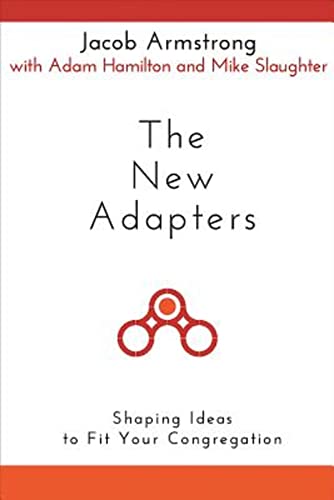
Learn how new and young pastors from across the country are translating eight time-tested principles of church leadership. Adam Hamilton and Mike Slaughter introduce each principle and discuss its importance in their ministries. Author Jacob Armstrong then shows how the principle works in new contexts today. The New Adapters is full of energy, wisdom, and stories of hope.
Die Inhaltsangabe kann sich auf eine andere Ausgabe dieses Titels beziehen.
Über die Autorin bzw. den Autor
Jacob Armstrong is the founding pastor of Providence Church in Mt. Juliet, Tennessee. Providence's vision is to see those who are disconnected from God and the church to find hope, healing, and wholeness in Jesus Christ. Jacob is the author of Renovate, A New Playlist, Treasure, The God Story, Upside Down, Loving Large, Interruptions, and The New Adapters.
Auszug. © Genehmigter Nachdruck. Alle Rechte vorbehalten.
The New Adapters
Shaping Ideas to Fit Your Congregation
By Jacob Armstrong, Adam Hamilton, Mike SlaughterAbingdon Press
Copyright © 2015 Abingdon Press
All rights reserved.
ISBN: 978-1-63088-323-2All rights reserved.
Contents
"Introduction",
"Chapter One" The Vision Must Fit the Mission Field,
"Chapter Two" It Has to Be Good News to the Poor,
"Chapter Three" New Spaces for New People,
"Chapter Four" Adaptive Worship,
"Chapter Five" Conflict and Criticism,
"Chapter Six" Good-Bye to the Solo, Heroic Leader,
"Chapter Seven" No More Turf,
"Chapter Eight" Raising Up New and Young Leaders,
"Closing" Isn't She Lovely?,
CHAPTER 1
THE VISION MUST FIT THE MISSION FIELD
God called me to be a missionary.
And then sent me to suburbia.
I was just sure God had somewhere exotic for me. Somewhere that would require one of those planes that land in the water to get there. I would probably have to wear an Indiana Jones hat. A beard would be a must. Rachel and I applied with a mission organization. We flew to Monterrey, Mexico, and saw where our placement would be. We cried as we considered how God might use us to reach that city with the love of Jesus.
We came home and told our parents, our kids, and our church that God was calling us to Mexico.
Then it all fell apart.
Everything that needed to happen for us to be able to go to Mexico unraveled before our eyes. Funding, language school admittance, denominational permissions. No, no, no.
I was confused.
Shortly after our last no (or not right now), I flew to the Church of the Resurrection for a denominational conference. While there I was approached by some leaders from my home conference who asked me if I had heard of the new church that was being proposed back in Tennessee.
I had not.
It would be in the Providence area of Mt. Juliet, a new urbanism development that would double the size of the city. "Have you heard of the area?" they asked.
I had. It was my hometown.
Then they told me I was being considered as the pastor to start it.
I was confused.
I got in my rented minivan (I drive a minivan all the time now, but back then it was a novelty) and went for a drive. I still remember the exit that I took off the interstate: Gardner, Kansas.
I pulled over and in a cornfield on the side of the road got on my knees and prayed. (I know it sounds Field of Dreams-ish; it was really kind of itchy.)
Why? I wondered. Why would God do all this missionary stuff in my heart? Why would God break my heart for Monterrey, Mexico? Why all of this if I am to go to my hometown and start a new church?
I heard God's voice in my heart say, Because I wanted you to have that heart for your town. I wanted you to cry over that city and instead you were on your way to becoming a fairly average religious professional. Well, I'm not sure God said it exactly like that, but that's what I heard.
Three months later I had moved and was the pastor of a new church with no name, no place to meet, and, oh yeah, no people.
It was a city that looked much different from Monterrey, Mexico. Financial poverty was harder to find; spiritual poverty was rampant. They spoke my language if I mean English, but they didn't speak Christianese or all the other church languages I had studied for so long. The people looked a lot like me, but they were diverse in the way they viewed God and in their experience of church.
What I realized is that I would have to learn from and listen to the people of Mt. Juliet, Tennessee, in much the same way I would have learned from and listened to the people of a foreign land.
I learned that I did in fact bring many preconceived notions of what they needed and what I wanted in a church. I learned that I knew them only slightly better than I knew the people of Monterrey, Mexico. I learned that a danger in church work is creating a church in my mind and assuming that it will fit the mission field to which I am assigned by God (and my denomination). I learned that no matter how savvy, well-read, and well-trained I may be, there is no substitute to learning, knowing, and loving the community to which I have been sent. The vision has to fit the mission field. I would have never dreamed of creating a worship service or a church experience in Mexico that fit my preferences. The music would have been indigenous, the dress would have fit the culture, and the language would have been understandable to the people of that place. Things that would in no way compromise the message would be shaped to fit the context. Adaptive work would be essential.
It is strange, then, that we regularly skip that step when we try to do ministry in areas where people look like us. One of the biggest mistakes I find in working with church planters and those starting new ministries in existing churches is when we create a vision that fits our preferences and likes and ignores those we are really trying to reach.
This usually happens when we skip the important step of listening to and learning from our community and simply create a cool experience for those we already have.
Listening to and Learning from Your Community
The vision must fit the mission field, and the first step to having this congruity is prayer. We must begin by asking God to show us what he sees in the communities to which we have been sent. When we get serious about reaching our communities, it is tempting to forget to pray. There is so much to do and there seems to be little time to do it in. When we become New Adapters who are willing to take risks and be courageous, one of the first things we often do is seek out ideas from the experts. We read the hottest books in church growth, missional church, evangelism—or whatever word is the buzz at the time—categories (thanks for reading this book by the way). We attend the conferences of the leading churches that we admire (this, too, is a good idea). And we forget to pray, like really pray.
First we should pray, and pray together. Nothing will substitute for a season of prayer among a group of Jesus followers who want to see God work in and transform their community. I am reminded of Nehemiah's prayer before he went to Jerusalem to rebuild the wall. Before he gathered his team and discussed tactics. Before he went to the king to ask permission. Before any of the action, he prayed. He mourned and fasted and prayed. There is no substitute for that spiritual work. It aligns our hearts and our ears and our eyes with what God wants us to do. So before you plan your worship service, before you discuss what to name it and who your drummer will be, ask God to give you a vision for your community and then ask God to give you ears to listen to your community. If possible, do this with a team of people who likewise want to see the church prevail in your town. I recommend these questions coming out of that season of prayer and discovery:
• What unique opportunities does your community present?
• What unique challenges does your community present?
• What are the hopes and dreams of the people in your community?
• What is breaking their hearts?
• What is breaking God's heart?
• What is unique about what you (your church) have to offer to your community?
When we were forming the people who would become Providence Church, we spent some time listening. Some months. Before we talked about worship style or where we would meet or what we...
„Über diesen Titel“ kann sich auf eine andere Ausgabe dieses Titels beziehen.
Suchergebnisse für The New Adapters: Shaping Ideas to Fit Your Congregation

Beispielbild für diese ISBN
The New Adapters: Shaping Ideas to Fit Your Congregation
Anbieter: World of Books (was SecondSale), Montgomery, IL, USA
Verkäuferbewertung 5 von 5 Sternen

Zustand: Good. Item in good condition. Textbooks may not include supplemental items i.e. CDs, access codes etc. Artikel-Nr. 00096689008
Gebraucht kaufen
EUR 4,41
Versand gratis
Versand innerhalb von USA
Versand innerhalb von USA
Anzahl: 1 verfügbar
Beispielbild für diese ISBN
The New Adapters: Shaping Ideas to Fit Your Congregation
Verlag:
Abingdon Press (edition Illustrated), 2015
ISBN 10: 1630883239
ISBN 13: 9781630883232
Gebraucht
Paperback
Anbieter: BooksRun, Philadelphia, PA, USA
Verkäuferbewertung 5 von 5 Sternen
Paperback. Zustand: Very Good. Illustrated. It's a well-cared-for item that has seen limited use. The item may show minor signs of wear. All the text is legible, with all pages included. It may have slight markings and/or highlighting. Artikel-Nr. 1630883239-11-1
Gebraucht kaufen
EUR 4,42
Versand gratis
Versand innerhalb von USA
Versand innerhalb von USA
Anzahl: 1 verfügbar
Beispielbild für diese ISBN
The New Adapters: Shaping Ideas to Fit Your Congregation
Anbieter: ThriftBooks-Atlanta, AUSTELL, GA, USA
Verkäuferbewertung 5 von 5 Sternen
Paperback. Zustand: Very Good. No Jacket. May have limited writing in cover pages. Pages are unmarked. ~ ThriftBooks: Read More, Spend Less. Artikel-Nr. G1630883239I4N00
Gebraucht kaufen
EUR 6,42
Versand gratis
Versand innerhalb von USA
Versand innerhalb von USA
Anzahl: 1 verfügbar
Beispielbild für diese ISBN
The New Adapters: Shaping Ideas to Fit Your Congregation
Anbieter: Wonder Book, Frederick, MD, USA
Verkäuferbewertung 5 von 5 Sternen
Zustand: Good. Good condition. A copy that has been read but remains intact. May contain markings such as bookplates, stamps, limited notes and highlighting, or a few light stains. Artikel-Nr. S16E-02195
Gebraucht kaufen
EUR 6,43
Versand gratis
Versand innerhalb von USA
Versand innerhalb von USA
Anzahl: 1 verfügbar
Beispielbild für diese ISBN
The New Adapters : Shaping Ideas to Fit Your Congregation
Anbieter: Better World Books, Mishawaka, IN, USA
Verkäuferbewertung 5 von 5 Sternen
Zustand: Fine. Used book that is in almost brand-new condition. May contain a remainder mark. Better World Books: Buy Books. Do Good. Artikel-Nr. 18162115-6
Gebraucht kaufen
EUR 6,57
Versand gratis
Versand innerhalb von USA
Versand innerhalb von USA
Anzahl: 1 verfügbar
Beispielbild für diese ISBN
The New Adapters : Shaping Ideas to Fit Your Congregation
Anbieter: Better World Books, Mishawaka, IN, USA
Verkäuferbewertung 5 von 5 Sternen
Zustand: Good. Pages intact with minimal writing/highlighting. The binding may be loose and creased. Dust jackets/supplements are not included. Stock photo provided. Product includes identifying sticker. Better World Books: Buy Books. Do Good. Artikel-Nr. 57962568-6
Gebraucht kaufen
EUR 6,57
Versand gratis
Versand innerhalb von USA
Versand innerhalb von USA
Anzahl: 1 verfügbar
Beispielbild für diese ISBN
The New Adapters : Shaping Ideas to Fit Your Congregation
Anbieter: Better World Books, Mishawaka, IN, USA
Verkäuferbewertung 5 von 5 Sternen
Zustand: Very Good. Pages intact with possible writing/highlighting. Binding strong with minor wear. Dust jackets/supplements may not be included. Stock photo provided. Product includes identifying sticker. Better World Books: Buy Books. Do Good. Artikel-Nr. 9111858-6
Gebraucht kaufen
EUR 6,57
Versand gratis
Versand innerhalb von USA
Versand innerhalb von USA
Anzahl: 1 verfügbar
Beispielbild für diese ISBN
The New Adapters: Shaping Ideas to Fit Your Congregation
Anbieter: Ria Christie Collections, Uxbridge, Vereinigtes Königreich
Verkäuferbewertung 5 von 5 Sternen
Zustand: New. In English. Artikel-Nr. ria9781630883232_new
Neu kaufen
EUR 19,82
EUR 11,07 Versand
Versand von Vereinigtes Königreich nach USA
Versand von Vereinigtes Königreich nach USA
Anzahl: Mehr als 20 verfügbar
Beispielbild für diese ISBN
The New Adapters: Shaping Ideas to Fit Your Congregation
Anbieter: Revaluation Books, Exeter, Vereinigtes Königreich
Verkäuferbewertung 5 von 5 Sternen
Paperback. Zustand: Brand New. 120 pages. 9.50x6.25x0.50 inches. In Stock. Artikel-Nr. x-1630883239
Neu kaufen
EUR 19,78
EUR 11,82 Versand
Versand von Vereinigtes Königreich nach USA
Versand von Vereinigtes Königreich nach USA
Anzahl: 2 verfügbar