
Verwandte Artikel zu Archive That, Comrade!: Left Legacies and the Counter...
Archive That, Comrade!: Left Legacies and the Counter Culture of Remembrance (Kairos) - Softcover
Buch 8 von 28: Kelman Library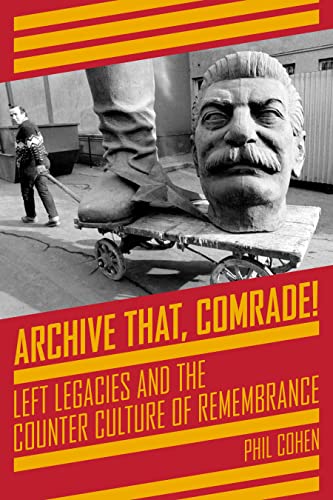
Inhaltsangabe
Archive That, Comrade! explores issues of archival theory and practice that arise for any project aspiring to provide an open-access platform for political dialogue and democratic debate. It is informed by the author’s experience of writing a memoir about his involvement in the London underground scene of the 1960s, the London street commune movement, and the occupation of 144 Piccadilly, an event that hit the world’s headlines for ten days in July 1969.
After a brief introduction that sets the contemporary scene of ‘archive fever,’ the book considers what the political legacy of 1960s counter culture reveals about the process of commemoration. The argument then opens out to discuss the notion of historical legacy and its role in the ‘dialectic of generations’. How far can the archive serve as a platform for dialogue and debate between different generations of activists in a culture that fetishises the evanescent present, practices a profound amnesia about its past, and forecloses the sociological imagination of an alternative future? The following section looks at the emergence of a complex apparatus of public fame and celebrity around the spectacle of dissidence and considers whether the Left has subverted or merely mirrored the dominant forms of reputation-making and public recognition. Can the Left establish its own autonomous model of commemoration?
The final section takes up the challenge of outlining a model for the democratic archive as a revisionary project, creating a resource for building collective capacity to sustain struggles of long duration. A postscript examines how archival strategies of the alt-right have intervened at this juncture to elaborate a politics of false memory.
Die Inhaltsangabe kann sich auf eine andere Ausgabe dieses Titels beziehen.
Über die Autorin bzw. den Autor
Phil Cohen played a key role in the London counter culture scene of the 1960s. As “Dr John” he was the public face of the London street commune movement and the occupation of 144 Piccadilly in July 1969. He subsequently became an urban ethnographer, and for the past forty years he has been involved with working-class communities in East London documenting the impact of structural and demographic change on their livelihoods, lifestyles, and life stories. Currently he is research director of Livingmaps, a network of activists, artists, and academics developing a creative and critical approach to social mapping. He is also a professor emeritus at the University of East London and a research fellow of the Young Foundation.
Auszug. © Genehmigter Nachdruck. Alle Rechte vorbehalten.
Archive That, Comrade!
Left Legacies and the Counter Culture of Remembrance
By Phil CohenPM Press
Copyright © 2018 PM Press
All rights reserved.
ISBN: 978-1-62963-506-4All rights reserved.
Contents
LIST OF ILLUSTRATIONS,
ACKNOWLEDGEMENTS,
PREFACE,
Moot Points,
Archive Fever: Coming in from the Cold?,
Counter Culture: Then and Now,
Ten Days That Shook My World: Remembering 144 Piccadilly between Spectacle and Trauma,
In My End Is Others' Beginning: Left Legacy Politics and the Dialectic of Generations,
Winners and Losers,
Let Us Now Praise Famous People: Paradigms of Remembrance and the Twin Cultures of Modernity,
Fame Academies,
On Memes and other Mnemonic Devices,
Technologies of Immortality,
Towards a Theory of Archival Genres,
A Tale of Two Archives,
Between Realpolitik and Dingpolitik: The Living Archive in a 'Post-information' Age,
The Adoptive Archive: A Thought Experiment,
Left Field and the Quest for Uncommon Ground,
Lest We Remember, Lest We Forget: On Iconoclasm and the Problematics of Silence,
Archival In/Disciplines,
Curating the Anarchive,
Not Everyone Will Be Taken into the Future,
The Arc of Memory,
Postscript: The Politics of False Memory in the Age of 'Post-Truth',
NOTES,
FURTHER READING,
ABOUT THE AUTHOR,
INDEX,
CHAPTER 1
Moot Points
archive: 1. From Greek arkheia, things kept at the public office, derived from arche, beginning, government; 2. A collection of documents such as letters, official papers, photographs or recorded material kept for their historical interest; 3. Backup computer file, kept often in compressed form on tape or disk for long-term storage; a directory of files that Internet users can access using File Transfer Protocol. — Encarta World English Dictionary
Ark: something that affords protection and safety; a chest or cupboard holding the scrolls of the Torah in a synagogue; a low hut used to house livestock; a ship or boat. — Oxford English Dictionary
An archive is where Mr and Mrs Noah and all the animals went to get out of the rain, but it rained and rained for 40 days and nights, so they just stayed put, luckily they had taken lots of story and picture books along with them so they weren't bored. — primary school pupil
It takes time for what has been erased to surface. Traces survive in registers, and nobody knows where these registers are hidden, and who has custody of them, and whether or not their custodians are willing to let you see them. Or perhaps they have forgotten that such registers exist. — Patrick Modiano, Search Warrant
Just as voluntary memory and utter oblivion belong together, so organised fame and remembrance lead ineluctably to nothingness. — Theodor Adorno, Minima Moralia
Modern memory is above all archival. It relies entirely on the materialities of the trace, the immediacy of records, the visibility of the image. What began as writing ends in high fidelity and tape recording. No longer living memories, more or less intended remainders, the archive has become the deliberate and calculated secretion of lost memory. It adds to life, itself often a function of its own recording, a secondary memory, a prosthesis-memory. — Pierre Nora, Les Lieux de mémoire
The starting point of critical elaboration is the question of what one really is, 'knowing thyself' as a product of historical processes to date which have deposited in you an infinity of traces, without leaving an inventory — therefore it is imperative at the outset to compile such an inventory. — Antonio Gramsci, The Prison Notebooks
The function of the archive, as of art, is to hold unlikely things. ... The primary operations of the archive are no longer the contents of its files but rather their logistical interlinking, just as the Web is not primarily defined by its contents but by its protocols. — Wolfgang Ernst, Digital Memory and the Archive
The question of the archive is not a question of the past. ... It is a question of the future, the question of the future itself, the question of a response, of a promise, and of a responsibility for tomorrow. ... Effective democratization can always be measured by this essential criterion: the participation in and the access to the archive. — Jacques Derrida, Archive Fever
We should not be deceived into thinking that heritage is an acquisition, a possession that grows and solidifies; rather it is an unstable assemblage of faults, fissures, and heterogeneous layers that threaten the fragile inheritor from within or from underneath. — Michel Foucault, 'Nietzsche, Genealogy, History'
The old word 'thing' or 'ding' originally meant a certain type of assembly. The point of reviving this old notion of assembly in a contemporary notion of assemblage, is that we don't assemble because we agree, look alike, feel good, are socially compatible, but because we are brought together by divisive matters of concern into some neutral isolated place in order to arrive at some sort of provisional makeshift (dis)agreement. — Bruno Latour, 'From Realpolitik to Dingpolitik or How to Make Things Public'
Moot
Noun: 1) An assembly held for debate in Anglo-Saxon and mediaeval times
2) A mock proceeding set up to examine a hypothetical case as an academic exercise
Verb: To raise or broach a question or topic for discussion
Adjective: 1) Subject to debate, dispute, uncertainty
2) Having little or no practical relevance
Archive Fever: Coming in from the Cold?
The child's confusion of the Ark with the archive in the preceding quote makes us smile, as if it were no more than a charming elision of sounds and meaning, but the association of the two words points to a significant but often overlooked point of connection between them. The archive is a safe harbour for all manner of materials, artefacts, texts, images, documents, which might otherwise perish, whether from neglect or active suppression. It is an affordance of memory which may be a container of profane narratives or holy scripts, bureaucratic protocols or autobiographical memories, but it restores their capacity to survive the storms of history which produced them. The archive is an ark of the covenant we all make with the world in which we struggle to make our mark on posterity. What might appear initially to be a mere container of accidental traces of the past turns out, on closer inspection, to be an object of calculation, even intervention, albeit one that is largely disavowed.
Yet this arch-mnemonic can also be a trap, a siren call to unwary historians, a seductive invitation to immerse themselves in an oceanic feeling of omniscience about the past or, conversely, to drown in sea of nostalgic identification with lives other than their own. The archive can be a talisman for the multifarious desire to 'get to the bottom of things' which may start off with innocent acts of curiosity but all too often ends by being driven by an obsessive ambition to capture and sum up the world. Patrick Modiano draws our attention to an even less attractive face of the archive, its capacity to conceal, to resist disclosure, to obfuscate, even to cover its own tracks so that its existence is either unknown or mere rumour. So it is not only a question of what is lost by being excluded from the archive, but also...
„Über diesen Titel“ kann sich auf eine andere Ausgabe dieses Titels beziehen.
Suchergebnisse für Archive That, Comrade!: Left Legacies and the Counter...

Beispielbild für diese ISBN
Archive That, Comrade!: Left Legacies and the Counter Culture of Remembrance
Anbieter: Revaluation Books, Exeter, Vereinigtes Königreich
Verkäuferbewertung 5 von 5 Sternen

Paperback. Zustand: Brand New. 134 pages. 8.75x6.00x0.50 inches. In Stock. Artikel-Nr. __1629635065
Neu kaufen
EUR 16,91
EUR 11,82 Versand
Versand von Vereinigtes Königreich nach USA
Versand von Vereinigtes Königreich nach USA
Anzahl: 2 verfügbar
Beispielbild für diese ISBN
Archive That, Comrade!
Anbieter: PBShop.store UK, Fairford, GLOS, Vereinigtes Königreich
Verkäuferbewertung 5 von 5 Sternen
PAP. Zustand: New. New Book. Shipped from UK. Established seller since 2000. Artikel-Nr. GB-9781629635064
Neu kaufen
EUR 25,93
EUR 3,89 Versand
Versand von Vereinigtes Königreich nach USA
Versand von Vereinigtes Königreich nach USA
Anzahl: 1 verfügbar
Beispielbild für diese ISBN
Archive That, Comrade!: Left Legacies and the Counter Culture of Remembrance
Anbieter: Kennys Bookstore, Olney, MD, USA
Verkäuferbewertung 5 von 5 Sternen
Zustand: New. 2018. Paperback. . . . . . Books ship from the US and Ireland. Artikel-Nr. V9781629635064
Neu kaufen
EUR 27,12
EUR 9,38 Versand
Versand innerhalb von USA
Versand innerhalb von USA
Anzahl: 1 verfügbar
Foto des Verkäufers
Archive That, Comrade!
Anbieter: moluna, Greven, Deutschland
Verkäuferbewertung 5 von 5 Sternen
Zustand: New. Über den AutorPhil Cohen played a key role in the London counter culture scene of the 1960s. As Dr John he was the public face of the London street commune movement and the occupation of 144 Piccadilly in July 1969. He subseque. Artikel-Nr. 596465567
Neu kaufen
EUR 27,66
EUR 48,99 Versand
Versand von Deutschland nach USA
Versand von Deutschland nach USA
Anzahl: 1 verfügbar
Foto des Verkäufers
Archive That, Comrade! | Left Legacies and the Counter Culture of Remembrance
Anbieter: preigu, Osnabrück, Deutschland
Verkäuferbewertung 5 von 5 Sternen
Taschenbuch. Zustand: Neu. Archive That, Comrade! | Left Legacies and the Counter Culture of Remembrance | Phil Cohen | Taschenbuch | Kartoniert / Broschiert | Englisch | 2018 | PM Press | EAN 9781629635064 | Verantwortliche Person für die EU: Libri GmbH, Europaallee 1, 36244 Bad Hersfeld, gpsr[at]libri[dot]de | Anbieter: preigu. Artikel-Nr. 132995487
Neu kaufen
EUR 31,85
EUR 70,00 Versand
Versand von Deutschland nach USA
Versand von Deutschland nach USA
Anzahl: 1 verfügbar