
Inhaltsangabe
WINNER OF THE PULITZER PRIZE
WINNER OF THE NATIONAL BOOK CRITICS CIRCLE AWARD
ONE OF THE NEW YORK TIMES BOOK REVIEW'S 10 BEST BOOKS OF THE YEAR
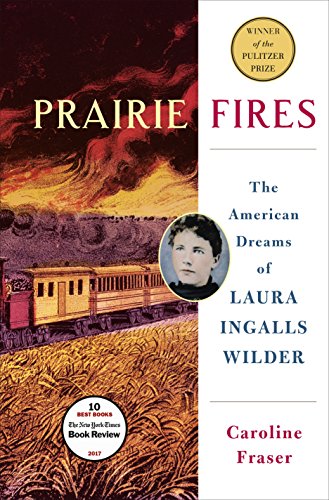
The first comprehensive historical biography of Laura Ingalls Wilder, the beloved author of the Little House on the Prairie books
Millions of readers of Little House on the Prairie believe they know Laura Ingalls—the pioneer girl who survived blizzards and near-starvation on the Great Plains, and the woman who wrote the famous autobiographical books. But the true saga of her life has never been fully told. Now, drawing on unpublished manuscripts, letters, diaries, and land and financial records, Caroline Fraser—the editor of the Library of America edition of the Little House series—masterfully fills in the gaps in Wilder’s biography. Revealing the grown-up story behind the most influential childhood epic of pioneer life, she also chronicles Wilder's tumultuous relationship with her journalist daughter, Rose Wilder Lane, setting the record straight regarding charges of ghostwriting that have swirled around the books.
The Little House books, for all the hardships they describe, are paeans to the pioneer spirit, portraying it as triumphant against all odds. But Wilder’s real life was harder and grittier than that, a story of relentless struggle, rootlessness, and poverty. It was only in her sixties, after losing nearly everything in the Great Depression, that she turned to children’s books, recasting her hardscrabble childhood as a celebratory vision of homesteading—and achieving fame and fortune in the process, in one of the most astonishing rags-to-riches episodes in American letters.
Spanning nearly a century of epochal change, from the Indian Wars to the Dust Bowl, Wilder’s dramatic life provides a unique perspective on American history and our national mythology of self-reliance. With fresh insights and new discoveries, Prairie Fires reveals the complex woman whose classic stories grip us to this day.
Die Inhaltsangabe kann sich auf eine andere Ausgabe dieses Titels beziehen.
Über die Autorin bzw. den Autor
Caroline Fraser is the editor of the Library of America edition of Laura Ingalls Wilder’s Little House books, and the author of Rewilding the World and God’s Perfect Child. Her writing has appeared in The New York Review of Books, The New Yorker, The Atlantic, the Los Angeles Times, and the London Review of Books, among other publications. She lives in New Mexico.
Auszug. © Genehmigter Nachdruck. Alle Rechte vorbehalten.
Prairie Fires
The American Dreams of Laura Ingalls Wilder
By Caroline FraserHenry Holt and Company
Copyright © 2017 Caroline Fraser
All rights reserved.
ISBN: 978-1-62779-276-9All rights reserved.
Contents
Title Page,
Copyright Notice,
Dedication,
Epigraph,
A Note on Quotations,
Map,
Introduction,
On the Frontier,
PART I: THE PIONEER,
1. Maiden Rock,
2. Indian Summers,
3. Crying Hard Times,
4. God Hates a Coward,
5. Don't Leave the Farm, Boys,
PART II: THE EXILE,
6. A World Made,
7. As a Farm Woman Thinks,
8. The Absent Ones,
9. Pioneer Girl,
PART III: THE DREAM,
10. A Ruined Country,
11. Dusty Old Dust,
12. We Are All Here,
13. Sunshine and Shadow,
14. There Is Gold in the Farm,
Epilogue,
Notes,
Index,
Photos,
Acknowledgments,
Also by Caroline Fraser,
About the Author,
Copyright,
CHAPTER 1
Maiden Rock
The Legend
"I was born in a log house within ... miles of legend-haunted Lake Pepin," Laura Ingalls Wilder would write.
The lake was legendary before she was born. Where the Mississippi swallows the Chippewa, a wide tributary flowing sluggishly out of great Wisconsin pine forests to the north, the river swells at the delta, like a snake that has just devoured something. That swollen spot, widest on the Mississippi, is Lake Pepin.
Its dark waters are presided over by Maiden Rock, an immense four-hundred-foot limestone bluff so visually arresting that everyone had a story to tell about it. Like everything else, the story belonged to the Indians: Maiden Rock was a lover's leap, they said, where a Dakota girl in love with a young man leapt impetuously to her death rather than marry another. Those who passed at dusk were said to hear her sorrowful song.
Whites would tell and retell the story until it had been rubbed smooth, playing up its romanticism, painting the scene in gloomy olives and mauves. George Catlin camped for days along Lake Pepin, hauling his canoe out of the water and gathering colorful pebbles by the handful, "precious gems ... rich agates." Catlin told the story, and so did Mark Twain and the poet William Cullen Bryant, who specialized in brooding Indians.
Maiden Rock captured the imagination of Charles Ingalls, who told his daughters stories about the rock, the lake, and the Indians. On one memorable occasion, he brought them to the beach bordering the town of Pepin, just across the water from Minnesota, where they discovered the same pebbles, "pretty pebbles that had been rolled back and forth by the waves until they were polished smooth."
Like Catlin, Wilder as a tiny girl gathered them by the handful, stuffing so many in her pocket that they tore her dress. Her mother gently reproved her for being so greedy. But as Wilder chose to remember it, her father just laughed, delighted.
She loved both her parents, but her primary, overwhelming identification was with her father. Charles had brown hair and blue eyes, just as she did. Whenever she did something naughty, even as he punished her he had a glint in his eye that told her it would be all right, that he was moments away from holding her on his knee and telling her how bad he himself had been as a boy. He was charming, cheerful, and musical, playing by ear songs that would lift his family's spirits — and he was an incomparable storyteller.
All of her stories begin with him, all of her memories. Her first, she would say later, was "of my Father always," carrying her in his arms, rocking her to sleep. "The feeling, the voice and the dim light over the log wall make a picture that will never fade," she wrote.
* * *
Discovering how Charles Ingalls and his family came to find themselves a few miles from the shores of Lake Pepin, just a few years after Pepin County was first marked on a map, is a detective story tracking generations into the past. Pieces of the family portrait survive, but the whole remains elusive, obscured under the soot of time. It may never be complete.
That is always a problem, in writing about poor people. The powerful, the rich and influential, tend to have a healthy sense of their self-importance. They keep things: letters, portraits, and key documents, such as the farm record of Thomas Jefferson, which preserved the number and identity of his slaves. No matter how far they may travel, people of high status and position are likely to be rooted by their very wealth, protecting fragile ephemera in a manse or great home. They have a Mount Vernon, a Monticello, a Montpelier.
But the Ingallses were not people of power or wealth. Generation after generation, they traveled light, leaving things behind. Looking for their ancestry is like looking through a glass darkly, images flickering in obscurity. As far as we can tell, from the moment they arrived on this continent they were poor, restless, struggling, constantly moving from one place to another in an attempt to find greater security from hunger and want. And as they moved, the traces of their existence were scattered and lost. Sometimes their lives vanish from view, as if in a puff of smoke.
So as we look back across the ages, trying to find what made Laura's parents who they were, imagine that we're on a prairie in a storm. The wind is whipping past and everything is obscured. But there are the occasional bright, blinding moments that illuminate a face here and there. Sometimes we hear a voice, a song snatched out of the air.
That Poverty Beat
Charles Ingalls was born at a crossroads. As if to fulfill the prophecy in that, he would always be a wanderer, propelled by hopes of a better future farther on.
But his rootlessness was not simply the sign of a "wandering foot," as his daughter would suggest. It reflected generations of struggle, trying to break through, hoping to latch on to land. He would be among the first to make his way west, but he was not the first to know poverty. From the family's earliest beginnings in Puritan New England, that was all they would ever know. And the life of the previous generations had been even harder than Charles's own.
When Charles's father was a young boy, Charles told his daughters, he and his brothers labored for six days a week, Monday through Saturday. During the winter, they got up in the dark, did their chores by lamplight, and worked until the sun went down, going to bed directly after supper. For play, they had a few hours off on Saturday afternoons. At sundown on Saturday, the "Puritan Sabbath" would begin.
On the Sabbath, all recreational pursuits, indeed all activities other than going to church or praying or studying a catechism, were strictly forbidden. There was no visiting, no sweeping, no gardening, no hunting, no haying, no fishing, no frivolous talk, no writing of notes or cutting of hair or kissing of children. Hot meals could not be prepared and horses could not be hitched to the wagon. To obey the Sabbath, the Ingalls family walked, reverently, to church. To break the Sabbath was a grave, even criminal offense, punishable by fines, public censure, or imprisonment.
A flash of lightning in history's darkness gives us a glimpse of one such Sunday, more than two centuries before Laura's birth. Family lore has long maintained that the very first member of the Ingalls clan on this continent, Edmund Ingalls, arrived in Salem Harbor in 1628 with the expedition of John Endecott, first governor of the Massachusetts Bay Colony. We know...
„Über diesen Titel“ kann sich auf eine andere Ausgabe dieses Titels beziehen.
Weitere beliebte Ausgaben desselben Titels

Suchergebnisse für Prairie Fires: The American Dreams of Laura Ingalls...

Foto des Verkäufers
Prairie Fires: The American Dreams of Laura Ingalls Wilder
Anbieter: Dream Books Co., Denver, CO, USA
Verkäuferbewertung 5 von 5 Sternen

Zustand: good. Gently used with minimal wear on the corners and cover. A few pages may contain light highlighting or writing, but the text remains fully legible. Dust jacket may be missing, and supplemental materials like CDs or codes may not be included. May be ex-library with library markings. Ships promptly! Artikel-Nr. DBV.1627792767.G
Gebraucht kaufen
EUR 5,85
Versand gratis
Versand innerhalb von USA
Versand innerhalb von USA
Anzahl: 1 verfügbar
Beispielbild für diese ISBN
Prairie Fires The Life and Tim
Anbieter: World of Books (was SecondSale), Montgomery, IL, USA
Verkäuferbewertung 5 von 5 Sternen
Zustand: Acceptable. Item in acceptable condition! Textbooks may not include supplemental items i.e. CDs, access codes etc. Artikel-Nr. 00103251334
Gebraucht kaufen
EUR 6,06
Versand gratis
Versand innerhalb von USA
Versand innerhalb von USA
Anzahl: 1 verfügbar
Beispielbild für diese ISBN
Prairie Fires The Life and Tim
Anbieter: World of Books (was SecondSale), Montgomery, IL, USA
Verkäuferbewertung 5 von 5 Sternen
Zustand: Good. Item in good condition. Textbooks may not include supplemental items i.e. CDs, access codes etc. Artikel-Nr. 00103591655
Gebraucht kaufen
EUR 6,06
Versand gratis
Versand innerhalb von USA
Versand innerhalb von USA
Anzahl: 2 verfügbar
Beispielbild für diese ISBN
Prairie Fires: The American Dreams of Laura Ingalls Wilder
Verlag:
Metropolitan Books (edition First Edition), 2017
ISBN 10: 1627792767
ISBN 13: 9781627792769
Gebraucht
Hardcover
Erstausgabe
Anbieter: BooksRun, Philadelphia, PA, USA
Verkäuferbewertung 5 von 5 Sternen
Hardcover. Zustand: Fair. First Edition. With dust jacket. The item might be beaten up but readable. May contain markings or highlighting, as well as stains, bent corners, or any other major defect, but the text is not obscured in any way. Artikel-Nr. 1627792767-7-1-29
Gebraucht kaufen
EUR 6,79
Versand gratis
Versand innerhalb von USA
Versand innerhalb von USA
Anzahl: 1 verfügbar
Beispielbild für diese ISBN
Prairie Fires : The American Dreams of Laura Ingalls Wilder
Verlag:
Holt & Company, Henry, 2017
ISBN 10: 1627792767
ISBN 13: 9781627792769
Gebraucht
Hardcover
Erstausgabe
Anbieter: Better World Books: West, Reno, NV, USA
Verkäuferbewertung 5 von 5 Sternen
Zustand: Good. 1st. Pages intact with minimal writing/highlighting. The binding may be loose and creased. Dust jackets/supplements are not included. Stock photo provided. Product includes identifying sticker. Better World Books: Buy Books. Do Good. Artikel-Nr. 13895853-6
Gebraucht kaufen
EUR 7,80
Versand gratis
Versand innerhalb von USA
Versand innerhalb von USA
Anzahl: 1 verfügbar
Beispielbild für diese ISBN
Prairie Fires : The American Dreams of Laura Ingalls Wilder
Verlag:
Holt & Company, Henry, 2017
ISBN 10: 1627792767
ISBN 13: 9781627792769
Gebraucht
Hardcover
Erstausgabe
Anbieter: Better World Books, Mishawaka, IN, USA
Verkäuferbewertung 5 von 5 Sternen
Zustand: Very Good. 1st. Pages intact with possible writing/highlighting. Binding strong with minor wear. Dust jackets/supplements may not be included. Stock photo provided. Product includes identifying sticker. Better World Books: Buy Books. Do Good. Artikel-Nr. 13812768-75
Gebraucht kaufen
EUR 7,80
Versand gratis
Versand innerhalb von USA
Versand innerhalb von USA
Anzahl: 1 verfügbar
Beispielbild für diese ISBN
Prairie Fires : The American Dreams of Laura Ingalls Wilder
Verlag:
Holt & Company, Henry, 2017
ISBN 10: 1627792767
ISBN 13: 9781627792769
Gebraucht
Hardcover
Erstausgabe
Anbieter: Better World Books: West, Reno, NV, USA
Verkäuferbewertung 5 von 5 Sternen
Zustand: Good. 1st. Former library copy. Pages intact with minimal writing/highlighting. The binding may be loose and creased. Dust jackets/supplements are not included. Includes library markings. Stock photo provided. Product includes identifying sticker. Better World Books: Buy Books. Do Good. Artikel-Nr. 14983368-75
Gebraucht kaufen
EUR 7,80
Versand gratis
Versand innerhalb von USA
Versand innerhalb von USA
Anzahl: 1 verfügbar
Beispielbild für diese ISBN
Prairie Fires : The American Dreams of Laura Ingalls Wilder
Verlag:
Holt & Company, Henry, 2017
ISBN 10: 1627792767
ISBN 13: 9781627792769
Gebraucht
Hardcover
Erstausgabe
Anbieter: Better World Books, Mishawaka, IN, USA
Verkäuferbewertung 5 von 5 Sternen
Zustand: Good. 1st. Former library copy. Pages intact with minimal writing/highlighting. The binding may be loose and creased. Dust jackets/supplements are not included. Includes library markings. Stock photo provided. Product includes identifying sticker. Better World Books: Buy Books. Do Good. Artikel-Nr. 14983368-75
Gebraucht kaufen
EUR 7,80
Versand gratis
Versand innerhalb von USA
Versand innerhalb von USA
Anzahl: 3 verfügbar
Beispielbild für diese ISBN
Prairie Fires : The American Dreams of Laura Ingalls Wilder
Verlag:
Holt & Company, Henry, 2017
ISBN 10: 1627792767
ISBN 13: 9781627792769
Gebraucht
Hardcover
Erstausgabe
Anbieter: Better World Books, Mishawaka, IN, USA
Verkäuferbewertung 5 von 5 Sternen
Zustand: Good. 1st. Pages intact with minimal writing/highlighting. The binding may be loose and creased. Dust jackets/supplements are not included. Stock photo provided. Product includes identifying sticker. Better World Books: Buy Books. Do Good. Artikel-Nr. 13895853-6
Gebraucht kaufen
EUR 7,80
Versand gratis
Versand innerhalb von USA
Versand innerhalb von USA
Anzahl: 2 verfügbar
Beispielbild für diese ISBN
Prairie Fires: The American Dreams of Laura Ingalls Wilder
Anbieter: BookOutlet, Jefferson City, TN, USA
Verkäuferbewertung 5 von 5 Sternen
Hardcover. Zustand: New. Hardcover. Publisher overstock, may contain remainder mark on edge. Artikel-Nr. 9781627792769B
Neu kaufen
EUR 8,77
EUR 2,77 Versand
Versand innerhalb von USA
Versand innerhalb von USA
Anzahl: Mehr als 20 verfügbar