
Verwandte Artikel zu The British Are Coming: The War for America, Lexington...
The British Are Coming: The War for America, Lexington to Princeton, 1775-1777 (Revolution Trilogy) - Hardcover
Buch 1 von 2: The Revolution Trilogy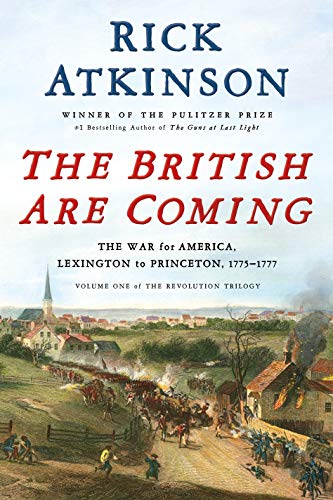
Inhaltsangabe
Winner of the George Washington Prize
Winner of the Barbara and David Zalaznick Book Prize in American History
Winner of the Excellence in American History Book Award
Winner of the Fraunces Tavern Museum Book Award
From the bestselling author of the Liberation Trilogy comes the extraordinary first volume of his new trilogy about the American Revolution
Die Inhaltsangabe kann sich auf eine andere Ausgabe dieses Titels beziehen.
Über die Autorin bzw. den Autor
Rick Atkinson is the bestselling author of the Liberation Trilogy--An Army at Dawn (winner of the Pulitzer Prize for History), The Day of Battle, and The Guns at Last Light--as well as The Long Gray Line and other books. His many additional awards include a Pulitzer Prize in journalism, a George Polk Award, and the Pritzker Military Library Literature Award. A former staff writer and senior editor at The Washington Post, he lives in Washington, D.C.
Auszug. © Genehmigter Nachdruck. Alle Rechte vorbehalten.
The British Are Coming
The War of America, Lexington to Princeton, 1775-1777
By Rick AtkinsonHenry Holt and Company
Copyright © 2019 Rick Atkinson
All rights reserved.
ISBN: 978-1-62779-043-7All rights reserved.
Contents
TITLE PAGE,
COPYRIGHT NOTICE,
DEDICATION,
EPIGRAPH,
LIST OF MAPS,
MAP LEGEND,
LIST OF ILLUSTRATIONS,
PROLOGUE, England, June 1773–March 1775,
1. Inspecting the Fleet,
2. Avenging the Tea,
3. Preparing for War,
Part One,
1. GOD HIMSELF OUR CAPTAIN Boston, March 6–April 17, 1775,
2. MEN CAME DOWN FROM THE CLOUDS Lexington and Concord, April 18–19, 1775,
3. I WISH THIS CURSED PLACE WAS BURNED Boston and Charlestown, May–June 1775,
4. WHAT SHALL WE SAY OF HUMAN NATURE? Cambridge Camp, July–October 1775,
5. I SHALL TRY TO RETARD THE EVIL HOURInto Canada, October–November 1775,
6. AMERICA IS AN UGLY JOB London, October–November 1775,
7. THEY FOUGHT, BLED, AND DIED LIKE ENGLISHMEN Norfolk, Virginia, December 1775,
8. THE PATHS OF GLORY Quebec, December 3, 1775–January 1, 1776,
Part Two,
9. THE WAYS OF HEAVEN ARE DARK AND INTRICATE Boston, January–February 1776,
10. THE WHIPPING SNAKE Cork, Ireland, and Moore's Creek, North Carolina, January–March 1776,
11. CITY OF OUR SOLEMNITIES Boston, March 1776,
12. A STRANGE REVERSE OF FORTUNE Quebec, April–June 1776,
13. SURROUNDED BY ENEMIES, OPEN AND CONCEALED New York, June 1776,
14. A DOG IN A DANCING SCHOOL Charleston, South Carolina, June 1776,
15. A FIGHT AMONG WOLVES New York, July–August 1776,
16. A SENTIMENTAL MANNER OF MAKING WAR New York, September 1776,
Part Three,
17. MASTER OF THE LAKES Lake Champlain, October 1776,
18. THE RETROGRADE MOTION OF THINGS New York, October–November 1776,
19. A QUAKER IN PARIS France, November–December 1776,
20. FIRE-AND-SWORD MEN New Jersey, December 1776,
21. THE SMILES OF PROVIDENCE Trenton, December 24–26, 1776,
22. THE DAY IS OUR OWN Trenton and Princeton, January 1777,
EPILOGUE, England and America, 1777,
Photographs,
AUTHOR'S NOTE,
NOTES,
SOURCES,
ACKNOWLEDGMENTS,
INDEX,
ALSO BY RICK ATKINSON,
ABOUT THE AUTHOR,
COPYRIGHT,
CHAPTER 1
God Himself Our Captain
BOSTON, MARCH 6 — APRIL 17, 1775
The mildest winter in living memory had yielded to an early spring. Not once had the Charles River iced over, and even now whispers of green could be seen on the Common sward and across the tumbling hills to the north. By reducing the need for firewood, this "extraordinary weather for warlike preparations," as one pugnacious clergyman called it, had preserved Boston from even greater suffering in the nine months since British warships had closed the port. Still, warehouses stood vacant, shipyards idle, wharves deserted, shop shelves barren. The only topsail vessels in view were the eight Royal Navy men-of-war plugging the harbor approaches. "It is now a very gloomy place, the streets almost empty," a woman wrote an English friend in early March 1775. "Many families have removed from it, & the inhabitants are divided. ... Some appear desponding, others full of rage."
Only a bountiful local crop of lambs and charity from other colonies preserved Boston from hunger: fish and flour from elsewhere in New England, rice from the Carolinas, rye from Baltimore, a thousand bushels of wheat from Quebec, cash from Delaware and Montreal. By British decree, provisions arriving by sea were unloaded in Marblehead and carted twenty miles to Boston, an expensive, tedious detour. Town selectmen launched projects to employ the unemployed — street paving, well digging, building a new brickyard. But gangs of idle sailors, longshoremen, ropemakers, riggers, and carpenters could often be found loitering by the docks or in the town's ninety taverns.
Even in better days, Boston had known ample misery — smallpox and measles epidemics, Quaker and witch hangings. For the past three decades the population had stagnated at fifteen thousand people, all of them wedged into a pear-shaped, thousand-acre peninsula with seventeen churches, no banks, no theaters, and a single concert hall, in a room above a shop. Puritan severity was not far removed. A generation earlier, both actors and theatergoers could be fined for "immorality, impiety, and a contempt for religion"; other miscreants were branded alphabetically —"A" for adulterers, "B" for burglars, "F" for forgers. Counterfeiters who escaped a scorching "C" might be nailed to the pillory by their ears. But never had the town seemed more abject or more menacing; these days there were as many British soldiers in Boston as adult male civilians. One resident watching the regiments at drill lamented that the Common "glows with warlike red."
On Monday morning, March 6, the "gloomy place" abruptly sprang to life. Hundreds and then thousands filled the streets, most of them walking, since by ordinance no carriage or wagon could be driven at speeds faster than "foot pace" without risk of a ten-shilling fine. The annual commemoration of the 1770 Boston Massacre would be held a day late this year to avoid profaning the Sabbath, and Dr. Joseph Warren, a prominent local physician, intended to deliver a speech titled "The Baleful Influence of Standing Armies in Time of Peace." An "immense concourse of people," as one witness described it, made for Milk and Marlborough Streets, where an octagonal steeple rose 180 feet above the Old South Meeting House, with its distinctive Flemish-bond brick walls, enormous clock, and split-banner weathervane. By eleven a.m., five thousand packed the place to the double rafters and cambered tie beams. More than a hundred box pews filled Old South's floor, with high paneled sides to block chilly drafts and wooden writing arms for those inclined to take notes on the day's sermon. An upper gallery with benches wrapped around the second floor. Between the arched compass-headed windows rose a high pulpit, now draped in black and crowned with a sounding board.
"People's expectations are alive for the oration," the lawyer John Adams had recently written. An uneasy murmur rose from the congregants, along with the smell of damp wool, perspiration, and badly tanned shoe leather. It was rumored that mass arrests were likely this morning, and that British officers had agreed that if the king were insulted they would draw swords and slaughter the offenders. "We may possibly be attacked in our trenches," Samuel Adams had warned, and a witness reported that almost every man in attendance "had a short stick, or bludgeon in his hand." The murmur in Old South grew louder when several dozen red-coated officers clumped through the door and stood in the aisles.
Samuel Adams was ready for them. An undistinguished petty official who had squandered a family malthouse fortune, Adams ran an impressive political organization, deftly shaping public opinion through a newspaper syndicate that for years had told other colonies — often with lurid hyperbole — what life was like in a free town occupied by combat troops. "He eats little, drinks little, sleeps little, thinks much," an adversary later wrote, "and is most decisive and indefatigable." Now fifty-two and afflicted with a pronounced tremor in his head and hands, he often stood on his toes when excited, and surely he was on his toes now. He quickly cleared...
„Über diesen Titel“ kann sich auf eine andere Ausgabe dieses Titels beziehen.
Suchergebnisse für The British Are Coming: The War for America, Lexington...

Foto des Verkäufers
The British Are Coming: The War for America, Lexington to Princeton, 1775-1777 (The Revolution Trilogy, 1)
Anbieter: Dream Books Co., Denver, CO, USA
Verkäuferbewertung 5 von 5 Sternen

Zustand: acceptable. This copy has clearly been enjoyedâ"expect noticeable shelf wear and some minor creases to the cover. Binding is strong, and all pages are legible. May contain previous library markings or stamps. Artikel-Nr. 4EKTGN0013R0_ns
Gebraucht kaufen
EUR 7,76
Versand gratis
Versand innerhalb von USA
Versand innerhalb von USA
Anzahl: 1 verfügbar
Beispielbild für diese ISBN
The British Are Coming : The War for America, Lexington to Princeton, 1775-1777
Anbieter: Better World Books, Mishawaka, IN, USA
Verkäuferbewertung 5 von 5 Sternen
Zustand: Good. Former library copy. Pages intact with minimal writing/highlighting. The binding may be loose and creased. Dust jackets/supplements are not included. Includes library markings. Stock photo provided. Product includes identifying sticker. Better World Books: Buy Books. Do Good. Artikel-Nr. 18274316-6
Gebraucht kaufen
EUR 10,15
Versand gratis
Versand innerhalb von USA
Versand innerhalb von USA
Anzahl: 1 verfügbar
Beispielbild für diese ISBN
The British Are Coming : The War for America, Lexington to Princeton, 1775-1777
Anbieter: Better World Books, Mishawaka, IN, USA
Verkäuferbewertung 5 von 5 Sternen
Zustand: Good. Pages intact with minimal writing/highlighting. The binding may be loose and creased. Dust jackets/supplements are not included. Stock photo provided. Product includes identifying sticker. Better World Books: Buy Books. Do Good. Artikel-Nr. 17895725-6
Gebraucht kaufen
EUR 10,15
Versand gratis
Versand innerhalb von USA
Versand innerhalb von USA
Anzahl: 3 verfügbar
Beispielbild für diese ISBN
The British Are Coming : The War for America, Lexington to Princeton, 1775-1777
Anbieter: Better World Books: West, Reno, NV, USA
Verkäuferbewertung 5 von 5 Sternen
Zustand: Good. Pages intact with minimal writing/highlighting. The binding may be loose and creased. Dust jackets/supplements are not included. Stock photo provided. Product includes identifying sticker. Better World Books: Buy Books. Do Good. Artikel-Nr. 17895725-6
Gebraucht kaufen
EUR 10,98
Versand gratis
Versand innerhalb von USA
Versand innerhalb von USA
Anzahl: 1 verfügbar
Beispielbild für diese ISBN
The British Are Coming: The War for America, Lexington to Princeton, 1775-1777
Anbieter: World of Books (was SecondSale), Montgomery, IL, USA
Verkäuferbewertung 5 von 5 Sternen
Hardback. Zustand: Good. Winner of the George Washington Prize Winner of the Barbara and David Zalaznick Book Prize in American History Winner of the Excellence in American History Book Award Winner of the Fraunces Tavern Museum Book Award From the bestselling author of the Liberation Trilogy comes the extraordinary first volume of his new trilogy about the American Revolution Rick Atkinson, author of the Pulitzer Prize-winning An Army at Dawn and two other superb books about World War II, has long been admired for his deeply researched, stunningly vivid narrative histories. Now he turns his attention to a new war, and in the initial volume of the Revolution Trilogy he recounts the first twenty-one months of America's violent war for independence. From the battles at Lexington and Concord in spring 1775 to those at Trenton and Princeton in winter 1777, American militiamen and then the ragged Continental Army take on the world's most formidable fighting force. It is a gripping saga alive with astonishing characters: Henry Knox, the former bookseller with an uncanny understanding of artillery; Nathanael Greene, the blue-eyed bumpkin who becomes a brilliant battle captain; Benjamin Franklin, the self-made man who proves to be the wiliest of diplomats; George Washington, the commander in chief who learns the difficult art of leadership when the war seems all but lost. The story is also told from the British perspective, making the mortal conflict between the redcoats and the rebels all the more compelling. Full of riveting details and untold stories, The British Are Coming is a tale of heroes and knaves, of sacrifice and blunder, of redemption and profound suffering. Rick Atkinson has given stirring new life to the first act of our country's creation drama. Artikel-Nr. 00107280129
Gebraucht kaufen
EUR 11,07
Versand gratis
Versand innerhalb von USA
Versand innerhalb von USA
Anzahl: 11 verfügbar
Beispielbild für diese ISBN
The British Are Coming. The War for America, Lexington to Princeton, 1775-1777 (Revolution Trilogy)
Anbieter: WorldofBooks, Goring-By-Sea, WS, Vereinigtes Königreich
Verkäuferbewertung 5 von 5 Sternen
Paperback. Zustand: Fair. A readable copy of the book which may include some defects such as highlighting and notes. Cover and pages may be creased and show discolouration. Artikel-Nr. GOR013760814
Gebraucht kaufen
EUR 14,86
EUR 6,59 Versand
Versand von Vereinigtes Königreich nach USA
Versand von Vereinigtes Königreich nach USA
Anzahl: 1 verfügbar
Beispielbild für diese ISBN
The British Are Coming. The War for America, Lexington to Princeton, 1775-1777 (Revolution Trilogy)
Anbieter: WorldofBooks, Goring-By-Sea, WS, Vereinigtes Königreich
Verkäuferbewertung 5 von 5 Sternen
Paperback. Zustand: Very Good. The book has been read, but is in excellent condition. Pages are intact and not marred by notes or highlighting. The spine remains undamaged. Artikel-Nr. GOR010175294
Gebraucht kaufen
EUR 14,86
EUR 6,59 Versand
Versand von Vereinigtes Königreich nach USA
Versand von Vereinigtes Königreich nach USA
Anzahl: 3 verfügbar
Foto des Verkäufers
The British Are Coming. The War for America, Lexington to Princeton, 1775-1777 (Revolution Trilogy)
Anbieter: WeBuyBooks, Rossendale, LANCS, Vereinigtes Königreich
Verkäuferbewertung 5 von 5 Sternen
Zustand: Very Good. Most items will be dispatched the same or the next working day. A copy that has been read, but is in excellent condition. Pages are intact and not marred by notes or highlighting. The spine remains undamaged. Artikel-Nr. rev8990020288
Gebraucht kaufen
EUR 15,66
EUR 12,88 Versand
Versand von Vereinigtes Königreich nach USA
Versand von Vereinigtes Königreich nach USA
Anzahl: 2 verfügbar
Beispielbild für diese ISBN
British Are Coming: The War for America, Lexington to Princeton, 1775-1777
Verlag:
Henry Holt & Company May 2019, 2019
ISBN 10: 1627790438
ISBN 13: 9781627790437
Gebraucht
Hardcover
Anbieter: Old Goat Books, Waterloo, ON, Kanada
Verkäuferbewertung 3 von 5 Sternen

Hardcover. Zustand: Near Fine. Zustand des Schutzumschlags: Near Fine. Artikel-Nr. 21915
Gebraucht kaufen
EUR 21,97
EUR 16,00 Versand
Versand von Kanada nach USA
Versand von Kanada nach USA
Anzahl: 1 verfügbar
Foto des Verkäufers
The British Are Coming The War for America, Lexington to Princeton, 1775-1777 (Revolution Trilogy #1)
Verlag:
Henry Holt and Company, 2019
ISBN 10: 1627790438
ISBN 13: 9781627790437
Gebraucht
Hardcover
Erstausgabe
Anbieter: River House Books, San Antonio, TX, USA
Verkäuferbewertung 5 von 5 Sternen
Hard. Zustand: Very Good. Zustand des Schutzumschlags: Very Good. 22. Inventory ID 658173 Hardcover Cloth 776 pages. Condition Very Good Dust Jacket Very Good. Stated first edition Second printing 2019 with corresponding number line. Handsome blue boards and sliver embossing spotlights this Clean tight square copy with no marks highlights or bookplates. Book Well kept and carefully stored in unread condition. No shelf wear. with undamaged corners. An unclipped dust jacket smooth clean and brilliant with no shelf wear - a few tears wrinkles and chips. Not an ex-library book club or remainder copy. In the initial volume of the Revolution Trilogy Rick Atkinson recounts the first twenty-one months of America's violent war for independence. From the battles at Lexington and Concord in spring 1775 to those at Trenton and Princeton in winter 1777, American militiamen and then the ragged Continental Army take on the world's most formidable fighting force. It is a saga alive with astonishing characters: Henry Knox, the former bookseller with an uncanny understanding of artillery; Nathanael Greene, the bumpkin who becomes a brilliant battle captain; Benjamin Franklin, who proves to be the wiliest of diplomats; George Washington, the commander in chief who learns the difficult art of leadership when the war seems all but lost. The story is also told from the British perspective, making the mortal conflict between the redcoats and the rebels all the more compelling. Rick Atkinson is the #1 New York Times bestselling author of seven works of history, including The Long Gray Line, the Liberation Trilogy (An Army at Dawn, The Day of Battle, and The Guns at Last Light), and The British Are Coming, the first volume of the Revolution Trilogy. His work as a historian and journalist has won numerous awards, including three Pulitzer Prizes. Artikel-Nr. 658173
Gebraucht kaufen
EUR 32,95
EUR 7,11 Versand
Versand innerhalb von USA
Versand innerhalb von USA
Anzahl: 1 verfügbar