
Verwandte Artikel zu Reconsidering Intellectual Disability: L'Arche,...
Reconsidering Intellectual Disability: L'Arche, Medical Ethics, and Christian Friendship (Moral Traditions) - Softcover
Buch 44 von 60: Moral Traditions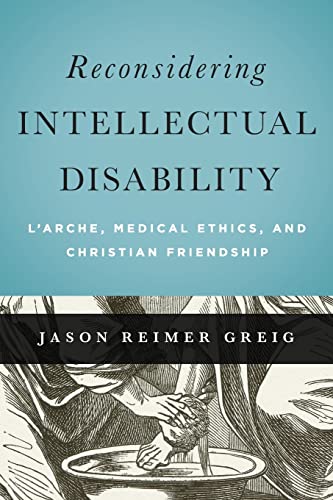
Inhaltsangabe
Drawing on the controversial case of "Ashley X," a girl with severe developmental disabilities who received interventionist medical treatment to limit her growth and keep her body forever small-a procedure now known as the "Ashley Treatment"-Reconsidering Intellectual Disability explores important questions at the intersection of disability theory, Christian moral theology, and bioethics.
What are the biomedical boundaries of acceptable treatment for those not able to give informed consent? Who gets to decide when a patient cannot communicate their desires and needs? Should we accept the dominance of a form of medicine that identifies those with intellectual impairments as pathological objects in need of the normalizing bodily manipulations of technological medicine?
In a critical exploration of contemporary disability theory, Jason Reimer Greig contends that L'Arche, a federation of faith communities made up of people with and without intellectual disabilities, provides an alternative response to the predominant bioethical worldview that sees disability as a problem to be solved. Reconsidering Intellectual Disability shows how a focus on Christian theological tradition's moral thinking and practice of friendship with God offers a way to free not only people with intellectual disabilities but all people from the objectifying gaze of modern medicine. L'Arche draws inspiration from Jesus's solidarity with the "least of these" and a commitment to Christian friendship that sees people with profound cognitive disabilities not as anomalous objects of pity but as fellow friends of God. This vital act of social recognition opens the way to understanding the disabled not as objects to be fixed but as teachers whose lives can transform others and open a new way of being human.
Die Inhaltsangabe kann sich auf eine andere Ausgabe dieses Titels beziehen.
Über die Autorin bzw. den Autor
Jason Reimer Greig spent eleven years with L'Arche, an international federation of Christian communities supporting people with intellectual disabilities, as a house assistant and spiritual life coordinator. He holds an MDiv from Anabaptist Mennonite Biblical Seminary and is working on his PhD in theology at VU Free University of Amsterdam.
„Über diesen Titel“ kann sich auf eine andere Ausgabe dieses Titels beziehen.
Suchergebnisse für Reconsidering Intellectual Disability: L'Arche,...

Beispielbild für diese ISBN
Reconsidering Intellectual Disability: L'Arche, Medical Ethics, and Christian Friendship (Moral Traditions)
Verlag:
Georgetown University Press, 2015
ISBN 10: 1626162433
ISBN 13: 9781626162433
Gebraucht
Softcover
Anbieter: World of Books (was SecondSale), Montgomery, IL, USA
Verkäuferbewertung 5 von 5 Sternen

Zustand: Very Good. Item in very good condition! Textbooks may not include supplemental items i.e. CDs, access codes etc. Artikel-Nr. 00103873187
Gebraucht kaufen
EUR 11,15
Versand gratis
Versand innerhalb von USA
Versand innerhalb von USA
Anzahl: 1 verfügbar
Beispielbild für diese ISBN
Reconsidering Intellectual Disability : L'Arche, Medical Ethics, and Christian Friendship
Verlag:
Georgetown University Press, 2015
ISBN 10: 1626162433
ISBN 13: 9781626162433
Gebraucht
Softcover
Anbieter: Better World Books, Mishawaka, IN, USA
Verkäuferbewertung 5 von 5 Sternen
Zustand: Very Good. Pages intact with possible writing/highlighting. Binding strong with minor wear. Dust jackets/supplements may not be included. Stock photo provided. Product includes identifying sticker. Better World Books: Buy Books. Do Good. Artikel-Nr. 17381687-6
Gebraucht kaufen
EUR 11,16
Versand gratis
Versand innerhalb von USA
Versand innerhalb von USA
Anzahl: 2 verfügbar
Beispielbild für diese ISBN
Reconsidering Intellectual Disability: L'arche, Medical Ethics, and Christian Friendship
Anbieter: Revaluation Books, Exeter, Vereinigtes Königreich
Verkäuferbewertung 5 von 5 Sternen
Paperback. Zustand: Brand New. 304 pages. 8.90x6.00x0.90 inches. In Stock. Artikel-Nr. x-1626162433
Neu kaufen
EUR 60,49
EUR 11,66 Versand
Versand von Vereinigtes Königreich nach USA
Versand von Vereinigtes Königreich nach USA
Anzahl: 2 verfügbar
Beispielbild für diese ISBN
Reconsidering Intellectual Disability: L Arche, Medical Ethics, and Christian Friendship
Anbieter: Kennys Bookstore, Olney, MD, USA
Verkäuferbewertung 5 von 5 Sternen
Zustand: New. What are the biomedical boundaries of acceptable treatment for those not able to give informed consent? Who gets to decide when a patient cannot communicate their desires and needs? This book answers these questions. Series: Moral Traditions Series. Num Pages: 304 pages. BIC Classification: HRAM1; HRAM3; HRCM; PSAD. Category: (P) Professional & Vocational; (U) Tertiary Education (US: College). Dimension: 229 x 152 x 23. Weight in Grams: 408. . 2015. Paperback. . . . . Books ship from the US and Ireland. Artikel-Nr. V9781626162433
Neu kaufen
EUR 63,56
EUR 9,17 Versand
Versand innerhalb von USA
Versand innerhalb von USA
Anzahl: Mehr als 20 verfügbar