
Verwandte Artikel zu Health Revelations from Heaven and Earth: 8 Divine...
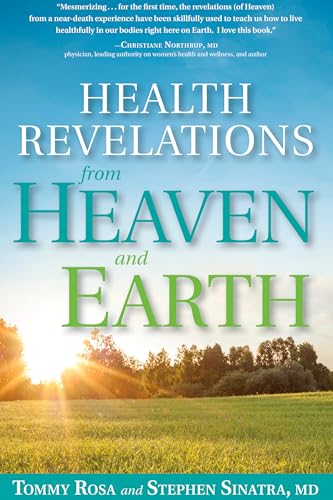
Health Revelations from Heaven and Earth: 8 Divine Teachings from a Near Death Experience - Hardcover
Inhaltsangabe
In 1999, Bronx-born plumber Tommy Rosa died in a hit-and-run incident. Lying by the road, he felt a tug whisking him off into a tunnel of light to meet his Divine Teacher in Heaven. After several weeks in a coma, Tommy returned to Earth with a new, heightened sense of connection to the other side.
Around the same time, Dr. Stephen Sinatra, an integrative cardiologist, was dismantling the prevailing ideas of preventive pharmacology with his holistic approach to treatment. When a chance meeting brought the two men together, they realized that the revelations of healing that Tommy had received in Heaven aligned with the groundbreaking results Dr. Sinatra was seeing in his own practice and scientific research.
In Health Revelations from Heaven and Earth, Tommy reveals his 8 Revelations, gleaned from God, that will lead you toward revitalized health, a newfound sense of purpose, and spiritual balance—fully corroborated by Dr. Sinatra's four decades of medical expertise—bringing Heaven and Earth a little bit closer.
Die Inhaltsangabe kann sich auf eine andere Ausgabe dieses Titels beziehen.
Über die Autorin bzw. den Autor
Tommy Rosa is a spiritual counselor who helps people conquer their fear of death. He is also the founder of the Unicorn Foundation in Stuart, Florida, a nonprofit foundation dedicated to educational endeavors and community outreach projects. He lives in Stuart, FL.
Stephen T. Sinatra, MD, FACC, is a cardiologist and psychotherapist with 40 years of clinical experience treating heart disease. He is the host of the HeartMDInstitute website. He lives in St. Petersburg, FL, and Manchester, CT.
Auszug. © Genehmigter Nachdruck. Alle Rechte vorbehalten.
CHAPTER 1
IT WAS AN ACCIDENT--OR WAS IT?
I never saw it coming.
At around 9:00 p.m. on a chilly March evening in 1999, I was headed home after buying a loaf of bread from a neighborhood corner store a few blocks from my apartment. I had walked this route every day for 10 years. I always needed one thing or another, and I liked to walk in the evenings to unwind after 12-hour days working as a plumber. The store stayed open until 10:00 p.m. every night, so it was the perfect destination whenever I wanted some fresh air. These streets were safe, not known for criminal activity, though crazy, in-a-hurry drivers sometimes blew through stop signs or ran red lights.
I consider myself a pretty observant guy. I was always on the go in my city- -the Bronx--and usually on foot. I had developed a habit of looking both ways when I crossed busy streets.
But that night was different. Maybe I was lost in my thoughts, thinking about the next day's plumbing job. To be honest, I don't remember walking at all. By the time I realized what was happening, it was already too late.
I was standing at the curb, about to cross the street, when a car with no lights on came out of nowhere. It plowed into me, and I went hurtling into the air. After I smacked down, my legs, trunk, shoulders, and head skidded on the asphalt. The friction nearly ground my skin and muscle to the bone.
I didn't see the driver. I couldn't tell you the make, model, or even the color of the car. All I can tell you is that I was 40 years old when I died.
Up until that horrible accident, I lived a pretty ordinary life. I was born into an Italian-Catholic family. We attended church regularly and observed all the traditional Catholic holidays.
I grew up in Riverdale, an Irish-Jewish neighborhood in the northwest Bronx. Riverdale is a sliver of land along the Hudson River that sits on hilly ground. Most people think of the Bronx as being a war zone with crime, drugs, and poverty--but not Riverdale. It was a tree-filled place of single-family homes, nice apartments--even mansions--with great views of the river. Riverdale provided a strong sense of community to those of us who grew up there. Today the neighborhood is filled with expensive condos and has become a very trendy place to live.
I went to Catholic school and was a pretty good student despite not studying much. After school, my friends and I hung out together. Nowadays kids don't go out; they stay glued to computer and TV screens and cell phones. It was sure different back then. With few organized activities and no hovering parents to schedule us, we took to the streets to create our own fun. It was a world of baseball, football, street hockey, and bike riding. We'd get frustrated if cars came by. I developed very muscular calves from riding my bike up and down the hills of Riverdale about an hour and a half every day.
My family lived in a two-story building, and we occupied the second floor. Next to the building was an empty lot. My friends and I used to play out there all the time. One of the trees had a swing that was a lot of fun. Riverdale was a great place for us kids.
I'd stay out until five o'clock, when my parents wanted me to come in for supper. My mom was and still is an excellent Italian cook who took great pleasure in making meals for her family. That translates into "Clean up your plate. I worked hard on this meal!" Her rich, sauce-laden dinners; the piles of bread and pasta; and our nightly desserts didn't help my waistline. I had the kind of body that used to be referred to as "husky," which is a polite way of saying "fat." Being an overweight kid made shopping for school clothes a nightmare.
My old school photos tell the story. Back then, I favored stripes paired with bold, solid colors. So you could say that as a kid, I was fat, not very stylish, and apparently somewhat color-blind.
During the summer, I'd be sent to the Catholic school camp. But I'd run away. I didn't like structure. I preferred to spend time at the swim club in my neighborhood, where there was an Olympic-size outdoor pool. My friends had the keys to open and close the place, so I got to swim after work. I swam in some local races and even won a few gold medals. The pool was a comfortable place for me. When you're overweight, water keeps you buoyant. Floating in water, you don't feel as big as you do walking on land in a giant body.
I was always an industrious kid because I liked having my own money, and I wanted to save for a car. When I was 11 years old, I got a paper route. I developed 60 to 70 regular subscribers. They liked my dependability and tipped me well. I had to get up at 5:30 a.m. to prepare my papers for delivery, so I got used to a rigorous work schedule before I was even a teenager. The papers had to be on everyone's doorstep by 7:00 a.m. I learned to work hard and fast, delivering papers by bike and sometimes on foot.
The newspaper franchise was owned by a man who was an alcoholic. He would drink away all the profits each week. Frustrated, his wife asked me to collect the money, and then lock it up for safekeeping so he couldn't get to it. I did what she asked and gave him only $50 a week. I became the gatekeeper of the profits because she trusted me.
After my paper route, I would hurry home to get ready for school. I had a long bus ride every morning, and I used that time to cram in any homework I hadn't finished the night before.
In the winter, the swim club turned into a skating rink. That's where, at age 14, I got my next job. I always loved to work, and I learned how to do every job that needed doing at the rink. I drove the power sweeper, which was great fun. I helped everyone out with their skate rentals. I sold pizza and soda at the concession stand.
The rink was the popular local hangout. Families from around the neighborhood, both parents and kids, would crowd the rink on the weekends. This was the '70s, and it was a place of carefree escapism. Back then, New York City and the surrounding boroughs were in a state of decline, with cutbacks in quality-of-life services such as the police department, the parks department, and schools. This was the era of the blackouts, too, when the power system of the city just collapsed, and millions of people were plunged into darkness. Looting erupted all over, and many buildings were burned down.
So people came to the rink to forget and have fun. I can close my eyes and it's like I'm back there. I can still hear the metal blades churning up fresh ice. I can see kids lacing up their skates. I can see girlfriends and boyfriends happily gliding hand in hand to the rich sounds of old-fashioned organ music. No one had to worry about anything. The rink was a respite--a winter wonderland in the middle of an often-chaotic city.
Through my job at the rink, I discovered that I really liked working with the public. You could say that I'm a people person: I was never too shy to strike up a conversation with a stranger, and I'm like that now. I'll talk to anybody! So it didn't take very long before I knew just about everyone who came to the rink. I enjoyed watching the good skaters practice their tricks on the ice. As for me, I was an awful skater.
My parents were diligent savers and definitely instilled in me a strong work ethic and sense of independence. They didn't believe in credit and bought only things they could afford to pay for with cash. They raised me to be the same way. I saved all my paper route money. But I knew that if I was going to buy that car someday, I needed to keep my paper route, plus work at the skating rink to speed up my savings plan.
It worked. Within weeks of getting my driver's license, I bought my dream car: a silver 1976 Mercury Cougar--a real beauty! I paid cash for it with my earnings from both jobs. It felt great to be...
„Über diesen Titel“ kann sich auf eine andere Ausgabe dieses Titels beziehen.
Suchergebnisse für Health Revelations from Heaven and Earth: 8 Divine...

Beispielbild für diese ISBN
Health Revelations from Heaven and Earth: 8 Divine Teachings from a Near Death Experience
Anbieter: World of Books (was SecondSale), Montgomery, IL, USA
Verkäuferbewertung 5 von 5 Sternen

Hardback. Zustand: Good. Fifteen years ago, Bronx-born plumber Tommy Rosa died in a hit-and-run incident. Lying by the road, he felt a tug whisking him off into a tunnel of light to meet his divine teacher in heaven. After several weeks in a coma, Tommy returned to earth to walk again with a heightened sense of connection to one and all.Around the same time, Dr. Stephen Sinatra, an integrative cardiologist, was dismantling the prevailing ideas of preventive pharmacology with his holistic approach to treatment. In their first encounter, Tommy got the intuitive message that Dr. Sinatra had an infection in his hip. Tommy's insight confirmed Dr. Sinatra's own suspicion. When Tommy shared with Dr. Sinatra the divine revelations of healing that he had learned, Dr. Sinatra was shocked--the keys to solving the imbalance of energy that he had identified as the cause of most chronic illnesses were the same as those Tommy was relating.From this intersection of the divine and the scientific, Tommy Rosa and Dr. Sinatra began writing a prescriptive guide for healthy living. In Health Revelations from Heaven and Earth, Tommy Rosa reveals the eight revelations, gleaned from God, that will lead you toward revitalized health, a newfound sense of purpose, and spiritual balance--fully corroborated by Dr. Sinatra's four decades of medical expertise--bringing heaven and earth a little bit closer. Artikel-Nr. 00103774182
Gebraucht kaufen
EUR 4,19
Versand gratis
Versand innerhalb von USA
Versand innerhalb von USA
Anzahl: 6 verfügbar
Beispielbild für diese ISBN
Health Revelations from Heaven and Earth: 8 Divine Teachings from a Near Death Experience
Anbieter: World of Books (was SecondSale), Montgomery, IL, USA
Verkäuferbewertung 5 von 5 Sternen
Hardback. Zustand: Very Good. Fifteen years ago, Bronx-born plumber Tommy Rosa died in a hit-and-run incident. Lying by the road, he felt a tug whisking him off into a tunnel of light to meet his divine teacher in heaven. After several weeks in a coma, Tommy returned to earth to walk again with a heightened sense of connection to one and all.Around the same time, Dr. Stephen Sinatra, an integrative cardiologist, was dismantling the prevailing ideas of preventive pharmacology with his holistic approach to treatment. In their first encounter, Tommy got the intuitive message that Dr. Sinatra had an infection in his hip. Tommy's insight confirmed Dr. Sinatra's own suspicion. When Tommy shared with Dr. Sinatra the divine revelations of healing that he had learned, Dr. Sinatra was shocked--the keys to solving the imbalance of energy that he had identified as the cause of most chronic illnesses were the same as those Tommy was relating.From this intersection of the divine and the scientific, Tommy Rosa and Dr. Sinatra began writing a prescriptive guide for healthy living. In Health Revelations from Heaven and Earth, Tommy Rosa reveals the eight revelations, gleaned from God, that will lead you toward revitalized health, a newfound sense of purpose, and spiritual balance--fully corroborated by Dr. Sinatra's four decades of medical expertise--bringing heaven and earth a little bit closer. Artikel-Nr. 00103597431
Gebraucht kaufen
EUR 4,19
Versand gratis
Versand innerhalb von USA
Versand innerhalb von USA
Anzahl: 3 verfügbar
Beispielbild für diese ISBN
Health Revelations from Heaven and Earth: 8 Divine Teachings from a Near Death Experience
Anbieter: ThriftBooks-Phoenix, Phoenix, AZ, USA
Verkäuferbewertung 5 von 5 Sternen
Hardcover. Zustand: Good. No Jacket. Former library book; Pages can have notes/highlighting. Spine may show signs of wear. ~ ThriftBooks: Read More, Spend Less. Artikel-Nr. G1623366240I3N10
Gebraucht kaufen
EUR 6,09
Versand gratis
Versand innerhalb von USA
Versand innerhalb von USA
Anzahl: 1 verfügbar
Beispielbild für diese ISBN
Health Revelations from Heaven and Earth: 8 Divine Teachings from a Near Death Experience
Anbieter: ThriftBooks-Reno, Reno, NV, USA
Verkäuferbewertung 5 von 5 Sternen
Hardcover. Zustand: Good. No Jacket. Pages can have notes/highlighting. Spine may show signs of wear. ~ ThriftBooks: Read More, Spend Less. Artikel-Nr. G1623366240I3N00
Gebraucht kaufen
EUR 6,09
Versand gratis
Versand innerhalb von USA
Versand innerhalb von USA
Anzahl: 1 verfügbar
Beispielbild für diese ISBN
Health Revelations from Heaven and Earth: 8 Divine Teachings from a Near Death Experience
Anbieter: ThriftBooks-Phoenix, Phoenix, AZ, USA
Verkäuferbewertung 5 von 5 Sternen
Hardcover. Zustand: Good. No Jacket. Pages can have notes/highlighting. Spine may show signs of wear. ~ ThriftBooks: Read More, Spend Less. Artikel-Nr. G1623366240I3N00
Gebraucht kaufen
EUR 6,09
Versand gratis
Versand innerhalb von USA
Versand innerhalb von USA
Anzahl: 1 verfügbar
Beispielbild für diese ISBN
Health Revelations from Heaven and Earth: 8 Divine Teachings from a Near Death Experience
Anbieter: ThriftBooks-Dallas, Dallas, TX, USA
Verkäuferbewertung 5 von 5 Sternen
Hardcover. Zustand: Good. No Jacket. Missing dust jacket; Pages can have notes/highlighting. Spine may show signs of wear. ~ ThriftBooks: Read More, Spend Less. Artikel-Nr. G1623366240I3N01
Gebraucht kaufen
EUR 6,12
Versand gratis
Versand innerhalb von USA
Versand innerhalb von USA
Anzahl: 1 verfügbar
Beispielbild für diese ISBN
Health Revelations from Heaven and Earth: 8 Divine Teachings from a Near Death Experience
Anbieter: ThriftBooks-Dallas, Dallas, TX, USA
Verkäuferbewertung 5 von 5 Sternen
Hardcover. Zustand: Good. No Jacket. Former library book; Pages can have notes/highlighting. Spine may show signs of wear. ~ ThriftBooks: Read More, Spend Less. Artikel-Nr. G1623366240I3N10
Gebraucht kaufen
EUR 6,12
Versand gratis
Versand innerhalb von USA
Versand innerhalb von USA
Anzahl: 1 verfügbar
Beispielbild für diese ISBN
Health Revelations from Heaven and Earth: 8 Divine Teachings from a Near Death Experience
Anbieter: ThriftBooks-Atlanta, AUSTELL, GA, USA
Verkäuferbewertung 5 von 5 Sternen
Hardcover. Zustand: As New. No Jacket. Pages are clean and are not marred by notes or folds of any kind. ~ ThriftBooks: Read More, Spend Less. Artikel-Nr. G1623366240I2N00
Gebraucht kaufen
EUR 6,12
Versand gratis
Versand innerhalb von USA
Versand innerhalb von USA
Anzahl: 1 verfügbar
Beispielbild für diese ISBN
Health Revelations from Heaven and Earth: 8 Divine Teachings from a Near Death Experience
Anbieter: ThriftBooks-Dallas, Dallas, TX, USA
Verkäuferbewertung 5 von 5 Sternen
Hardcover. Zustand: Very Good. No Jacket. May have limited writing in cover pages. Pages are unmarked. ~ ThriftBooks: Read More, Spend Less. Artikel-Nr. G1623366240I4N00
Gebraucht kaufen
EUR 6,12
Versand gratis
Versand innerhalb von USA
Versand innerhalb von USA
Anzahl: 1 verfügbar
Beispielbild für diese ISBN
Health Revelations from Heaven and Earth: 8 Divine Teachings from a Near Death Experience
Anbieter: ThriftBooks-Atlanta, AUSTELL, GA, USA
Verkäuferbewertung 5 von 5 Sternen
Hardcover. Zustand: Very Good. No Jacket. May have limited writing in cover pages. Pages are unmarked. ~ ThriftBooks: Read More, Spend Less. Artikel-Nr. G1623366240I4N00
Gebraucht kaufen
EUR 6,12
Versand gratis
Versand innerhalb von USA
Versand innerhalb von USA
Anzahl: 1 verfügbar