
Verwandte Artikel zu The New Puberty: How to Navigate Early Development...
Inhaltsangabe
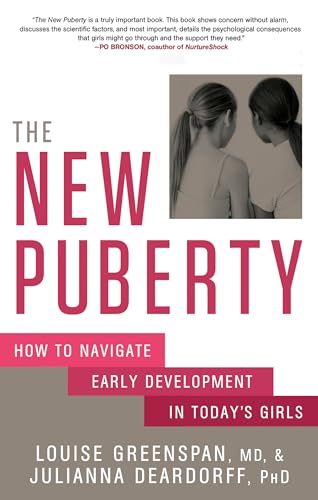
A generation ago, fewer than 5 percent of girls started puberty before the age of 8; today, that percentage has more than doubled. Early puberty is not just a matter of physical transformation—it’s also deeply psychological, with a myriad of effects that can put a girl at higher risk for behavioral problems and long-term health challenges.
In this reassuring and empowering guide, Louise Greenspan, MD, and Julianna Deardorff, PhD—two leading experts on the root causes and potential consequences of early puberty in girls—deliver vital advice on how to prevent and manage early puberty. They explain surprising triggers—from excess body fat to hormone-mimicking chemicals to emotional stressors in a girl’s home and family life—and offer highly practical strategies, including how to limit exposure to certain ingredients in personal care and household products, which foods to eat and which to avoid, ways to improve a child’s sleep routine to promote healthy biology, and more.
The New Puberty is an engaging, urgently needed road map to helping young girls move forward with confidence, ensuring their future well-being.
Die Inhaltsangabe kann sich auf eine andere Ausgabe dieses Titels beziehen.
Über die Autorin bzw. den Autor
Louise Greenspan, MD, and Julianna Deardorff, PhD, won the 2013 Community Breast Cancer Research Award from Zero Breast Cancer. They have contributed to Time, Science, New York Times Magazine, US News and World Report, Good Morning America, and NPR. They live in San Francisco.
Auszug. © Genehmigter Nachdruck. Alle Rechte vorbehalten.
CHAPTER ONE
MOVE OVER, JUDY BLUME
How We Define Puberty Today
TAKE A MOMENT TO CAST your mind back to the days of your puberty. Can you remember the first signs? How about when your body started to change in ways that made you feel awkward? Did you wish puberty had occurred sooner, later, moved faster, or perhaps taken longer? Most of us hardly remember the nuances of the transition we made long ago unless it was a traumatic one. Women might be able to reminisce vaguely about buying their first bra and deodorant, talking about crushes with their friends, and wondering when they'd get their first period. Men often recall the year they outgrew all of their clothing and shoes as they gained several inches in height, followed by a significant deepening of the pitch of their voice. But most of us don't have a detailed enough memory of the process our pubescent bodies went through to feel confident about how to advise our children on it--or to know how worried we should be--if they experience puberty at an early age, before they're 10 years old.
As doctors who have dedicated much of our lives to the study of adolescence and in particular to the science of early puberty, we talk all the time with confused adults who seem to feel so far removed from the pubertal process that it's as if they never experienced it themselves. Whether we're talking with parents or principals, child advocates or other medical professionals, we're constantly reassuring them that in a lot of ways, puberty is still very much the same. It's a rite of passage that everyone goes through, one that is marked by dramatic physical, neurodevelopmental, and emotional changes that forever shift our physiology, psychology, and behavior. It's that inevitable stage in our lives when we transition from childhood to adulthood through a gradually progressing phase we traditionally call adolescence.
And for girls, puberty is unique. It not only foments a complex array of emotional issues but also heralds the development of visual cues of sexuality (e.g., breasts, wider hips) to a degree that boys just don't experience. Now that we're seeing more girls going through puberty at younger and younger ages, though, parents and teachers must address a constellation of challenges sooner than most are ready for. One can hardly call a 7- or 8-year-old a preteen, much less an adolescent, but when puberty comes knocking on a girl's door at this tender age, we as a society are compelled to redefine what it means to grow up. Unbeknownst to her, she is also forcing scientists to revise medical texts.
That's exactly what makes today's puberty unlike that of generations past. The subtle but undeniable features of puberty--usually breast buds and pubic hair--are appearing earlier in contemporary girls than they did in typical girls growing up just a generation ago. And the dynamics related to this change have been altered as well. While you might recall upgrading your wardrobe to reflect trends in the juniors department at roughly the same time that you noticed boys and your body began to look and feel different, today's young girls are experiencing an extended interval between the start of physical development and the emotional maturity to even harbor thoughts of dating.
For centuries, coming-of-age stories have been a popular subject for authors, playwrights, and entertainers. From Shakespeare to Louisa May Alcott, writers have shared the pains of growing up through stories of vivid characters that readers can relate to. Judy Blume may have made today's grown women blush when they first read her novels in the 1970s and '80s, but today, the changed facts of puberty for many young girls call for a whole new series designed especially for 8- and 9-year-olds. And many young girls now are probably discovering authors like Judy Blume after they've already started puberty.
Until the 20th century, puberty tended to coincide with a girl's teenage years, as her body and brain developed relatively in sync. But over the past 100 years, and particularly in the past 2 decades, the trajectory of the body's development began changing--making the process of beginning puberty at age 7 or 8 highly unsettling for a girl and for her caregivers (from parents to teachers to even medical professionals). Today, the same girl who's playing with dolls is also shopping for bras and asking questions about body odor and hair. And the adults in these young girls' lives are asking us if they should be thinking of these girls as tweens at these very tender ages and letting them buy into the entire tween culture. Or do they continue to treat their girls like the children they actually are? No wonder so many people are confused and uncomfortable about dealing with this topic.
JUST WHAT IS PUBERTY?
As with many words that are used in both medical and lay circles, "puberty" is a loaded term. And further confusing its definition are the subtle differences among what's considered normal, early, and abnormal.
Contrary to popular belief, puberty in a girl doesn't commence with menstruation. Scientifically speaking, puberty reflects the beginning of hormonal secretions from the pituitary--an exceedingly complex gland deep in the brain--leading to physiological changes that include the "turning on" of the sex organs to the point where the individual can procreate. But this obviously doesn't happen overnight, and the process varies enormously from girl to girl. Puberty is actually difficult to study; while a girl's age when she gets her first period is a clear benchmark, other steps in the development of young bodies--especially the changes that occur early on-- are more gradual.
NEW PUBERTY FACT
A girl's first period doesn't signal the start of puberty. Puberty commences silently in the brain long before menstruation begins.
In other words, puberty is not like a single doorway to adulthood; instead, it's a long hallway. It's a process rather than a threshold. Every girl follows her own individual pathway. Some start with breast budding, while others sprout pubic hair first. In fact, the pubertal process happens twice in human development. In the womb, a girl's hormonal circuitry is first turned on and then turned off a few months after birth. We don't know the function of this "infant puberty," but we think it may prepare the endocrine (hormonal) system for reactivation in adolescence. Girls are born with their eggs in a sort of suspended animation in the ovaries until menarche.
From a scientific perspective, our understanding of puberty expanded over the past century, thanks to new technologies and pioneering doctors. During that same period, society changed dramatically as advances in medicine afforded us longer lives than any previous generation had. Once antibiotics and vaccines were introduced and our food supply multiplied thanks to the development of agricultural and manufacturing technologies, we grew taller and lived longer. Of course, greater access to foodstuffs and the rapid growth of the processed food industry also made for some unwanted outcomes, namely an escalating problem with overweight and obesity. Now the obesity epidemic has struck our children, too, and one of its manifestations appears to be the earlier onset of puberty, as we'll soon see.
Anyone who chronicles the subject of puberty usually starts the tale with the groundbreaking work in the 1940s of the late James M. Tanner, MD, an English pediatrician who is credited with creating modern standards for measuring a child's development. We still use his terminology in medicine today. Following Dr. Tanner's death at the age of 90 in 2010, Bruce Weber wrote about him for the New York Times in a beautiful essay that read like an ode: "Dr. Tanner was equal parts meticulous researcher and creative thinker whose interests lay where the fields of biology, psychology, and...
„Über diesen Titel“ kann sich auf eine andere Ausgabe dieses Titels beziehen.
Suchergebnisse für The New Puberty: How to Navigate Early Development...

Beispielbild für diese ISBN
The New Puberty: How to Navigate Early Development in Today's Girls
Anbieter: World of Books (was SecondSale), Montgomery, IL, USA
Verkäuferbewertung 5 von 5 Sternen

Paperback. Zustand: Fair. A generation ago, fewer than 5 percent of girls started puberty before the age of 8; today, that percentage has more than doubled. Early puberty is not just a matter of physical transformation-it's also deeply psychological, with a myriad of effects that can put a girl at higher risk for behavioral problems and long-term health challenges. In this reassuring and empowering guide, Louise Greenspan, MD, and Julianna Deardorff, PhD-two leading experts on the root causes and potential consequences of early puberty in girls-deliver vital advice on how to prevent and manage early puberty. They explain surprising triggers-from excess body fat to hormone-mimicking chemicals to emotional stressors in a girl's home and family life-and offer highly practical strategies, including how to limit exposure to certain ingredients in personal care and household products, which foods to eat and which to avoid, ways to improve a child's sleep routine to promote healthy biology, and more. The New Puberty is an engaging, urgently needed road map to helping young girls move forward with confidence, ensuring their future well-being. Artikel-Nr. 00109895982
Gebraucht kaufen
EUR 3,80
Versand gratis
Versand innerhalb von USA
Versand innerhalb von USA
Anzahl: 1 verfügbar
Beispielbild für diese ISBN
The New Puberty: How to Navigate Early Development in Today's Girls
Anbieter: World of Books (was SecondSale), Montgomery, IL, USA
Verkäuferbewertung 5 von 5 Sternen
Paperback. Zustand: Good. A generation ago, fewer than 5 percent of girls started puberty before the age of 8; today, that percentage has more than doubled. Early puberty is not just a matter of physical transformation-it's also deeply psychological, with a myriad of effects that can put a girl at higher risk for behavioral problems and long-term health challenges. In this reassuring and empowering guide, Louise Greenspan, MD, and Julianna Deardorff, PhD-two leading experts on the root causes and potential consequences of early puberty in girls-deliver vital advice on how to prevent and manage early puberty. They explain surprising triggers-from excess body fat to hormone-mimicking chemicals to emotional stressors in a girl's home and family life-and offer highly practical strategies, including how to limit exposure to certain ingredients in personal care and household products, which foods to eat and which to avoid, ways to improve a child's sleep routine to promote healthy biology, and more. The New Puberty is an engaging, urgently needed road map to helping young girls move forward with confidence, ensuring their future well-being. Artikel-Nr. 00101371181
Gebraucht kaufen
EUR 3,80
Versand gratis
Versand innerhalb von USA
Versand innerhalb von USA
Anzahl: 1 verfügbar
Beispielbild für diese ISBN
The New Puberty: How to Navigate Early Development in Today's Girls
Anbieter: World of Books (was SecondSale), Montgomery, IL, USA
Verkäuferbewertung 5 von 5 Sternen
Paperback. Zustand: Very Good. A generation ago, fewer than 5 percent of girls started puberty before the age of 8; today, that percentage has more than doubled. Early puberty is not just a matter of physical transformation-it's also deeply psychological, with a myriad of effects that can put a girl at higher risk for behavioral problems and long-term health challenges. In this reassuring and empowering guide, Louise Greenspan, MD, and Julianna Deardorff, PhD-two leading experts on the root causes and potential consequences of early puberty in girls-deliver vital advice on how to prevent and manage early puberty. They explain surprising triggers-from excess body fat to hormone-mimicking chemicals to emotional stressors in a girl's home and family life-and offer highly practical strategies, including how to limit exposure to certain ingredients in personal care and household products, which foods to eat and which to avoid, ways to improve a child's sleep routine to promote healthy biology, and more. The New Puberty is an engaging, urgently needed road map to helping young girls move forward with confidence, ensuring their future well-being. Artikel-Nr. 00100406121
Gebraucht kaufen
EUR 3,80
Versand gratis
Versand innerhalb von USA
Versand innerhalb von USA
Anzahl: 3 verfügbar
Beispielbild für diese ISBN
The New Puberty: How to Navigate Early Development in Today's Girls
Verlag:
Harmony/Rodale/Convergent (edition Reprint), 2015
ISBN 10: 1623365988
ISBN 13: 9781623365981
Gebraucht
Paperback
Anbieter: BooksRun, Philadelphia, PA, USA
Verkäuferbewertung 5 von 5 Sternen
Paperback. Zustand: Fair. Reprint. The item might be beaten up but readable. May contain markings or highlighting, as well as stains, bent corners, or any other major defect, but the text is not obscured in any way. Artikel-Nr. 1623365988-7-1
Gebraucht kaufen
EUR 4,74
Versand gratis
Versand innerhalb von USA
Versand innerhalb von USA
Anzahl: 1 verfügbar
Beispielbild für diese ISBN
The New Puberty: How to Navigate Early Development in Today's Girls
Verlag:
Harmony/Rodale/Convergent (edition Reprint), 2015
ISBN 10: 1623365988
ISBN 13: 9781623365981
Gebraucht
Paperback
Anbieter: BooksRun, Philadelphia, PA, USA
Verkäuferbewertung 5 von 5 Sternen
Paperback. Zustand: Very Good. Reprint. It's a well-cared-for item that has seen limited use. The item may show minor signs of wear. All the text is legible, with all pages included. It may have slight markings and/or highlighting. Artikel-Nr. 1623365988-11-1
Gebraucht kaufen
EUR 4,87
Versand gratis
Versand innerhalb von USA
Versand innerhalb von USA
Anzahl: 1 verfügbar
Beispielbild für diese ISBN
The New Puberty: How to Navigate Early Development in Today's Girls
Verlag:
Harmony/Rodale/Convergent, 2015
ISBN 10: 1623365988
ISBN 13: 9781623365981
Gebraucht
Softcover
Anbieter: Wonder Book, Frederick, MD, USA
Verkäuferbewertung 5 von 5 Sternen
Zustand: Very Good. Very Good condition. A copy that may have a few cosmetic defects. May also contain light spine creasing or a few markings such as an owner's name, short gifter's inscription or light stamp. Artikel-Nr. J00B-02005
Gebraucht kaufen
EUR 6,33
Versand gratis
Versand innerhalb von USA
Versand innerhalb von USA
Anzahl: 1 verfügbar
Beispielbild für diese ISBN
The New Puberty : How to Navigate Early Development in Today's Girls
Verlag:
Potter/Ten Speed/Harmony/Rodale, 2015
ISBN 10: 1623365988
ISBN 13: 9781623365981
Gebraucht
Softcover
Anbieter: Better World Books, Mishawaka, IN, USA
Verkäuferbewertung 5 von 5 Sternen
Zustand: Good. Pages intact with minimal writing/highlighting. The binding may be loose and creased. Dust jackets/supplements are not included. Stock photo provided. Product includes identifying sticker. Better World Books: Buy Books. Do Good. Artikel-Nr. 6278820-20
Gebraucht kaufen
EUR 6,47
Versand gratis
Versand innerhalb von USA
Versand innerhalb von USA
Anzahl: 2 verfügbar
Beispielbild für diese ISBN
The New Puberty : How to Navigate Early Development in Today's Girls
Verlag:
Potter/Ten Speed/Harmony/Rodale, 2015
ISBN 10: 1623365988
ISBN 13: 9781623365981
Gebraucht
Softcover
Anbieter: Better World Books, Mishawaka, IN, USA
Verkäuferbewertung 5 von 5 Sternen
Zustand: Fine. Used book that is in almost brand-new condition. May contain a remainder mark. Better World Books: Buy Books. Do Good. Artikel-Nr. 15751618-6
Gebraucht kaufen
EUR 6,47
Versand gratis
Versand innerhalb von USA
Versand innerhalb von USA
Anzahl: 1 verfügbar
Beispielbild für diese ISBN
The New Puberty : How to Navigate Early Development in Today's Girls
Verlag:
Potter/Ten Speed/Harmony/Rodale, 2015
ISBN 10: 1623365988
ISBN 13: 9781623365981
Gebraucht
Softcover
Anbieter: Better World Books, Mishawaka, IN, USA
Verkäuferbewertung 5 von 5 Sternen
Zustand: Very Good. Pages intact with possible writing/highlighting. Binding strong with minor wear. Dust jackets/supplements may not be included. Stock photo provided. Product includes identifying sticker. Better World Books: Buy Books. Do Good. Artikel-Nr. 18917453-75
Gebraucht kaufen
EUR 6,47
Versand gratis
Versand innerhalb von USA
Versand innerhalb von USA
Anzahl: 1 verfügbar
Beispielbild für diese ISBN
The New Puberty : How to Navigate Early Development in Today's Girls
Verlag:
Potter/Ten Speed/Harmony/Rodale, 2015
ISBN 10: 1623365988
ISBN 13: 9781623365981
Gebraucht
Softcover
Anbieter: Better World Books: West, Reno, NV, USA
Verkäuferbewertung 5 von 5 Sternen
Zustand: Good. Pages intact with minimal writing/highlighting. The binding may be loose and creased. Dust jackets/supplements are not included. Stock photo provided. Product includes identifying sticker. Better World Books: Buy Books. Do Good. Artikel-Nr. 6278820-20
Gebraucht kaufen
EUR 6,47
Versand gratis
Versand innerhalb von USA
Versand innerhalb von USA
Anzahl: 1 verfügbar