
Verwandte Artikel zu The Sunshine Crust Baking Factory: A Novel
Inhaltsangabe
"Wakefield wrote an intrepid nonfiction book about modern squatting, Not for Rent (1996), and now vividly fictionalizes the experience, portraying various oddball characters in her charmingly laid-back, dialogue-rich first novel with empathy and insight." --Booklist
"Wakefield . . . draws on personal experience for this colorful and entertaining depiction. . . . the sentiment of the nomadic community in New York in the '90s comes alive through historical references and Sid's journey as she forges a network of like-minded individuals." --Publishers Weekly
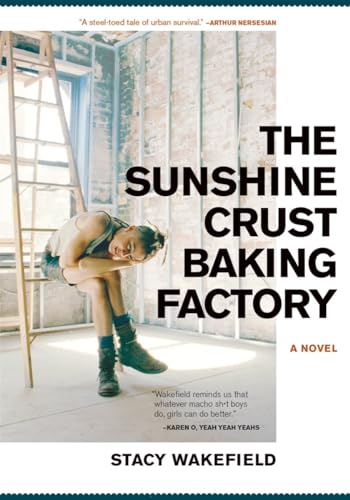
Sid arrives in New York City in 1995 eager to join the anarchist squatting scene. She's got a tattoo, she listens to the right bands . . . so why would she get a job and rent some tiny shoe-box apartment when she could take over a whole building with a gang of wild young pirates? But the Lower East Side is changing; there are no more empty buildings, the squats are cliquey and full.
Sid teams up with a musician from Mexico and together they find their way across the bridge to Williamsburg, Brooklyn. Packs of wild dogs roam the waterfront and the rough building in which they finally find space is occupied by misfits who don't know anything about the Manhattan squatting scene, Food Not Bombs, Critical Mass, or hardcore punk. But this is Sid's chance and she's determined to make a home for herself--no matter what.
Wakefield spent years living in squatted buildings in Europe and New York and brings firsthand knowledge to Sid's story: how urban homesteaders lived without plumbing or electricity, how they managed their semilegal status, and what they cared about and fought for. With Sid, Wakefield has created a character who belongs to that world and is also entirely relatable. Sid is a resourceful, intrepid young woman with a wry sense of humor; she's great company on our journey into the lost world of New York City's recent past.
Die Inhaltsangabe kann sich auf eine andere Ausgabe dieses Titels beziehen.
Über die Autorin bzw. den Autor
STACY WAKEFIELD's artist books, published for many years under the imprint Evil Twin, have been collected by institutions include the Museum of Modern Art in New York and London's Tate Modern. She runs a studio dedicated solely to book design and production. Her first novel, The Sunshine Crust Baking Factory, was published by Akashic in 2015. She lives in the Catskills and Brooklyn. Her other collaborations with Akashic are Please Take Me Off the Guest List and 131 Different Things, both with Zachary Lipez and Nick Zinner.
Auszug. © Genehmigter Nachdruck. Alle Rechte vorbehalten.
The Sunshine Crust Baking Factory
By Stacy WakefieldAkashic Books
Copyright © 2014 Stacy Wakefield
All rights reserved.
ISBN: 978-1-61775-303-9All rights reserved.
CHAPTER 1
When I showed up in New York with my dog-eared copy of Hopping Freight Trains and my new tattoo, I thought getting a room at a squat would be a cinch. These were my people, right?
My dad had been worried by the tattoo. He'd asked if it might make it harder for me to find a job. But that was the whole point. People spent all their time working stupid jobs so they could buy a bunch of crap they didn't need. The whole routine was for suckers. I wouldn't need money when I was a squatter, and to join the squatters, I had to mark myself as rejecting mainstream society and its ass-backward priorities. The tattoo was a better investment than college. I could have convinced him if his new wife hadn't been looking over his shoulder making that face.
Anyway, it turned out getting into a squat was harder than joining a sorority: hopeless. I went to every show, every workday, every Food Not Bombs and Critical Mass, but the squats were all full. I'd had some vague idea about squatting my own building, but my older friend Donny, who was like my squatting mentor, said I'd never find an empty building on the Lower East Side now—I was ten years too late. He said to check out Brooklyn. But who wanted to go to Brooklyn? I didn't come all the way to New York City to live out in the middle of nowhere.
Then I met Lorenzo.
He was sleeping on the roof of ABC No Rio like me and a bunch of other summer campers and transients. It was tent city up there. I'd seen him around and knew who he was. I had his band's first seven-inch and I'd even interviewed the singer for the zine I did in high school. That was just a few months before they'd broken up after a fight so spectacular it resulted in a fire and ten arrests at a squat in Berlin on the last show of their tour. Everyone knew the story; they were notorious.
One night he was sitting near the edge of the roof drinking a forty and I went and said hi and we got to talking. It was too hot to sleep; the air was thick and oily. Lorenzo told me about the music scene in Mexico City where he grew up, about the squats his band played at in Europe, and how he'd come to New York to start a new band. He wanted to squat a building too, so I told him what Donny had said about Brooklyn, about all the empty buildings out there. I repeated what Donny had told me, that a new building had been squatted just this year in an area called Williamsburg. I liked sounding like I knew a thing or two about New York already. Lorenzo had this amused look, like life was a big messy show put on for his entertainment. The way he told stories about cops attacking a squat he was staying at in Bologna or getting strip-searched by border guards in Switzerland or hitchhiking through Spain—it seemed like he never took anything too seriously. He made me want to go on adventures with him. And okay, he was seriously good-looking. He had dark eyes and a sly smile and a Crass tattoo. I was flattered by how he took for granted that I knew the bands and cities he mentioned, talking low so all the people sleeping around us couldn't hear.
Lorenzo was into it and suddenly being out in Brooklyn didn't sound so bad. He said it'd be so much better to start a building ourselves and invite in who we wanted, instead of kissing ass at the established squats. He said a German dude had told him how to figure out if a building was abandoned: you hide a matchstick in the doorframe, and if it's still there a week later you know no one is going in or out. He knew all kinds of tricks like that. I got my map out of my bag. Williamsburg was right over the river. It was the new frontier. We agreed to go explore after dark one night. I could hardly believe my luck. Lorenzo from Disguerro! He was so cool! We were going to be a team!
I didn't see him the next day. When night fell, I went up and sat on the roof to wait for him. The later it got, the more I worried. Maybe I'd misunderstood. Maybe he meant another day. Then it was midnight and I started thinking I'd gotten carried away. Probably he was just talking. Why would a guy like Lorenzo move all the way out to Brooklyn? Maybe he'd gotten offered another place to live. Or even worse: maybe he could see I liked him even though I'd tried to be cool and it scared him off. That had happened before. Guys think I'm great because I'm not girly, we like the same bands and talk about records, and they really like me, but when it comes down to it, they can't deal with the size of my ass. He'd probably hooked up with one of these skinny waitresses with a Betty Page haircut and tattoos. They were all over the neighborhood and they had apartments with air-conditioning. Lorenzo was probably somewhere like that right now, watching cable TV. He looked like a glue-sniffing badass from Mexico City, but he'd let some things slip last night—like how his sister did ballet ... I stopped myself. He was gone one night and I was turning on him like a crazy person. Take a breath, Sid, I told myself. Go to bed.
The next day I distracted myself by drawing in my sketchbook. I only worked one day a week, running Donny's record and zine table at hardcore matinees at ABC No Rio, so I didn't have anything I had to do. I drew Mohawked punks getting chased by cops. Riot grrrls beating perverts with their little purses. Yuppies being devoured by their designer furniture. When I was immersed in a drawing I forgot about everything else—like the fact that summer was going to be over soon and if I didn't find someplace to live I was going to have to take a bus back to New England and beg my old boss to give me my stupid job at the comic store back.
Then, on the third night, Lorenzo showed up after midnight. He whispered, "C'mon," and I jumped out of my sleeping bag and laced up my boots.
Delancey Street was just one block south of ABC No Rio. And there it was: the Williamsburg Bridge. I'd never thought about where it went. Squatters never left the Lower East Side, never took the subway. Everyone bragged about how many years it had been since they'd gone above 14th Street. The bridge rose huge and monstrous with a wide iron staircase right in the middle, traffic sweeping around on both sides.
We climbed up the stairs and the walkway twisted and turned and got really narrow. I was hyper-alert but Lorenzo seemed relaxed, humming a bass line under his breath. He wasn't a big guy, he was just a little taller than me, compact and scrappy, with black dreadlocks that grew forward over his face. Above the river the walkway widened.
"What's that one?" Lorenzo pointed up the East River.
"Queensboro Bridge."
We were up high enough now to see past the projects and tenements on the East River to the lights of Midtown. The Empire State Building was lit red, white, and blue for the Fourth of July. I bit my tongue to keep from pointing it out, afraid I'd sound like a tour guide. I was so relieved Lorenzo was back, I had to watch it or I'd gush.
Across the water, the Domino Sugar factory smoldered on the river, smelling like burnt toast. The rest of Williamsburg was in shadow. Low buildings, dark. We climbed down rickety caged stairs under a dripping highway overpass and now we were in Brooklyn, with none of the fanfare of the Manhattan side. Donny had said Williamsburg had once been a thriving industrial area but now most of the factories facing the bridge were boarded up and derelict.
Lorenzo walked back toward the water, staying close to the bridge. A mangy dog with no collar passed,...
„Über diesen Titel“ kann sich auf eine andere Ausgabe dieses Titels beziehen.
Suchergebnisse für The Sunshine Crust Baking Factory: A Novel

Beispielbild für diese ISBN
The Sunshine Crust Baking Factory
Verlag:
Akashic Books, Ltd. (edition ), 2015
ISBN 10: 1617753033
ISBN 13: 9781617753039
Gebraucht
Paperback
Anbieter: BooksRun, Philadelphia, PA, USA
Verkäuferbewertung 5 von 5 Sternen

Paperback. Zustand: Very Good. It's a well-cared-for item that has seen limited use. The item may show minor signs of wear. All the text is legible, with all pages included. It may have slight markings and/or highlighting. Artikel-Nr. 1617753033-11-1
Gebraucht kaufen
EUR 4,64
Versand gratis
Versand innerhalb von USA
Versand innerhalb von USA
Anzahl: 1 verfügbar
Beispielbild für diese ISBN
The Sunshine Crust Baking Factory
Anbieter: ThriftBooks-Atlanta, AUSTELL, GA, USA
Verkäuferbewertung 5 von 5 Sternen
Paperback. Zustand: Good. No Jacket. Pages can have notes/highlighting. Spine may show signs of wear. ~ ThriftBooks: Read More, Spend Less. Artikel-Nr. G1617753033I3N00
Gebraucht kaufen
EUR 6,62
Versand gratis
Versand innerhalb von USA
Versand innerhalb von USA
Anzahl: 1 verfügbar
Beispielbild für diese ISBN
The Sunshine Crust Baking Factory
Anbieter: Better World Books, Mishawaka, IN, USA
Verkäuferbewertung 5 von 5 Sternen
Zustand: Good. Pages intact with minimal writing/highlighting. The binding may be loose and creased. Dust jackets/supplements are not included. Stock photo provided. Product includes identifying sticker. Better World Books: Buy Books. Do Good. Artikel-Nr. 5747079-6
Gebraucht kaufen
EUR 7,20
Versand gratis
Versand innerhalb von USA
Versand innerhalb von USA
Anzahl: 1 verfügbar