
Verwandte Artikel zu Ghost Month
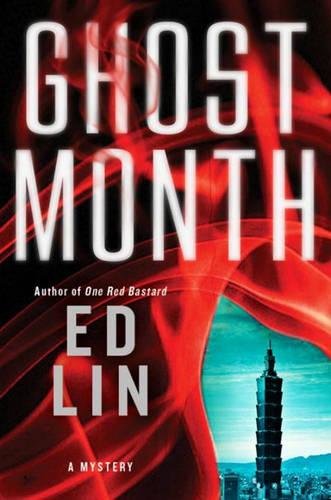
Inhaltsangabe
Welcome to Unknown Pleasures, a food stand in Taipei's night market named after a Joy Division album, and also the location for a big-hearted new mystery set in the often undocumented Taiwan.
August is Ghost Month in Taiwan—a time to pay respects to the dead and avoid unlucky omens. Jing-nan, who runs a food stand in a bustling Taipei night market, isn’t superstitious, but this August will haunt him. He learns that his high school sweetheart has been murdered—found scantily clad near a highway where she was selling betel nuts. “Betel nut beauties” are typically women in desperate circumstances, but Julia Huang was high school valedictorian, and the last time Jing-nan spoke to her, she was far away, happily enrolled in NYU’s honor program. The facts don’t add up. Julia’s parents don’t think so, either, but the police seem to have closed the case without asking any questions. The Huangs beg Jing-nan to do some investigating, but nothing can prepare him for what he is about to learn, or how it will change his life.
Die Inhaltsangabe kann sich auf eine andere Ausgabe dieses Titels beziehen.
Über die Autorin bzw. den Autor
is a journalist by training and an all-around stand-up kinda guy. He’s the author of several books:Waylaid, his literary debut, and his Robert Chow crime series, set in 1970s Manhattan Chinatown:This Is a Bust, Snakes Can’t Run, and One Red Bastard. Lin, who is of Taiwanese and Chinese descent, is the first author to win three Asian American Literary Awards. Lin lives in New York with his wife, actress Cindy Cheung.
Auszug. © Genehmigter Nachdruck. Alle Rechte vorbehalten.
Chapter One
When I found out the girl I was going to marry had been murdered, I was sitting on a foldout stool at a sidewalk noodle shop in Taipei’s Da’an District. My mouth went dry, my eyes blurred and I couldn’t stop shaking. It was the hottest day in July, and the island’s humidity was draped over me like a mourning veil, yet my body went cold and sweaty. Even my skin was crying.
I was somehow able to hold the newspaper still in my hands while reading and rereading the entire story of Julia Huang. It was only three paragraphs long. She had been shot in the head. She hadn’t been wearing much. She had been working at an unlicensed betel-nut stand in Hsinchu City, an hour outside of Taipei. The surveillance camera—Taiwan’s top crime-fighting tool—had malfunctioned, and no footage of the crime had been recorded.
I sighed and slumped over. I wished it hadn’t been my Julia. I wished it had been almost anybody else. I thought about some of our old classmates I didn’t care for. Why not one of them? But it was definitely my Julia. I touched the three Chinese characters of her name as I read them. Her name, Huang Zheng-lian, meant “positive light.” Everything she did I’d always seen in a positive light.
I hadn’t seen her in seven years, when I had left for UCLA and she for NYU. I hadn’t even known she was here in Taipei.
The two of us had grown up together, Jing-nan and Zhenglian, who became Johnny and Julia, two Taiwanese sweethearts with the same American dream. Our families had been friends for at least three generations, so it had been predestined that we would be close. As soon as Julia and I could talk, we talked to each other. We went to the same school and the same cheap cram schools and worked at our respective family night-market stalls, which changed locations over the years but were always near each other.
We did everything together. Everything. We knew we were in love by third grade. We knew we were going to get married by the fifth.
Next door to the noodle shop where I sat with my paper, in a store that sold altars, gods and goods for the next world, a man set up burning incense sticks at the feet of several deities. He brought a folding table out to the sidewalk, and I watched him set up offerings for human spirits: a three-layer pyramid of oranges, a bulk pack of instant noodles, a six-pack of Coca-Cola, a six-pack of Sprite and boxes of cookies and crackers. He slid a plastic bucket of water and a small towel underneath the table, so the ghosts could wash up before and after eating. He lit up incense for the table and sneezed hard twice. Finally, he touched his lighter to a sheaf of paper and dropped it in a metal bucket to the right of the table. Black smoke from the burning money for the dead snaked toward me.
A motorcycle-repair shop on the north side of the noodle shop simultaneously set up its offerings table. Judging by the outsized table and offerings, the owner was either less lucky or more fearful than the guy who ran the gods store. Incense smoke as thick as a movie special effect streamed out of a censer on his table.
The makeshift offering tables were meant to appease not only the spirits of one’s ancestors, but also those of people who died with no heirs. Supposedly if no one was around to pray for you and offer money and food throughout the year, you really suffered in the afterlife. You might be pierced with hooks, hung upside down and set on fire, depending on what your specific beliefs were. After eleven months of pain and hunger, these ghosts were looking to take out their wrath upon anybody alive.
I looked over at the gods next door and choked on the spiced air.
This morning, each of the seven twenty-four-hour news channels had been going off on the betel-nut girl who was shot and killed, replaying computer-animated reenactments of the crime. If the surveillance-camera footage had been available, that would have been played in endless loops, too.
I had watched the cartoon shooting with indifference, numbed to the over-the-top violence, sex and sexual violence the news channels served up to compete for eyeballs. The woman in the animated reenactment looked more like a strung-out Marge Simpson than Julia. One version featured the gunman killing the woman and then spitting betel-nut juice on her face as a final act of indecency.
The girls who work at betel-nut stalls are usually in tough circumstances. It pays well and doesn’t require a college degree. You just have to be willing to wear next to nothing and to let the occasional big tipper conduct your breast exam.
How many disgusting men with ugly, red-stained teeth drove up to the stand and tried to grab you when you handed them their betel-nut chew, Julia? Did you fight back? Is that why he shot you?
Betel nut, or binlang, is a stimulant grubby Taiwanese men can’t get enough of. Binlang is utterly unacceptable in most social settings—even in easygoing Taipei—because users constantly spit out the bloody juice as it collects in the mouth, staining the teeth and gums. If you want to chew binlang, you have to not care what you
look like.
There are many benefits to chewing binlang, though. It’s better than coffee at keeping drivers alert, which is why it’s so often associated with taxi, bus and truck drivers. It has a flavor that outlasts any gum, and it tops cigarettes in terms of effectively delivering mouth cancer to its users.
Best of all are the barely legal, barely dressed women who work at the betel-nut stands, the “betel-nut beauties,” or binlang xishi. Community standards and furious wives have kept betel-nut stands outside the city limits, relegating them to highways and off- and on-ramps. At night drivers will see stretches of young women in swimsuits and lingerie in their glass-enclosed stands. Visitors to Taiwan think all the women are prostitutes. As I understand it, only the less reputable stands are fronts for hookers, who also sell illegal drugs.
Nonetheless, religious and political leaders have often called for regulation in the industry. A Christian coalition called upon the women to completely cover the three Bs: breasts, butts and bellies. But then the tips wouldn’t be as good. Anyway, some of the privileged young women at Taipei’s throbbing nightclubs weren’t dressed that differently from socially and educationally disadvantaged betel-nut beauties.
Are the binlang xishi exploited or are they empowered? Maybe a combination of the two? It’s hard to say. Many of the women who work at the stands are from broken and poor families. Some stands employ aboriginal girls for a touch of the exotic. The income they earn is on the high side, but they are typically supporting an entire household. One thing is quite clear, though. There is money in it, and the binlang stands have a steady inflow from lonely betel-nut addicts. Drugs, tits and asses are recession-proof, and even the most forlorn binlang outposts are always hiring. I didn’t chew binlang, I didn’t go to the stands and I hadn’t cared about the undeniably
seedy world that they operated...
„Über diesen Titel“ kann sich auf eine andere Ausgabe dieses Titels beziehen.
Suchergebnisse für Ghost Month

Beispielbild für diese ISBN
Ghost Month
Verlag:
Soho Press, Incorporated, 2014
ISBN 10: 1616953268
ISBN 13: 9781616953263
Gebraucht
Hardcover
Anbieter: Better World Books: West, Reno, NV, USA
Verkäuferbewertung 5 von 5 Sternen

Zustand: Very Good. Former library copy. Pages intact with possible writing/highlighting. Binding strong with minor wear. Dust jackets/supplements may not be included. Includes library markings. Stock photo provided. Product includes identifying sticker. Better World Books: Buy Books. Do Good. Artikel-Nr. 1549989-6
Gebraucht kaufen
EUR 7,48
Versand gratis
Versand innerhalb von USA
Versand innerhalb von USA
Anzahl: 1 verfügbar
Beispielbild für diese ISBN
Ghost Month
Verlag:
Soho Press, Incorporated, 2014
ISBN 10: 1616953268
ISBN 13: 9781616953263
Gebraucht
Hardcover
Anbieter: Better World Books, Mishawaka, IN, USA
Verkäuferbewertung 5 von 5 Sternen
Zustand: Good. Former library copy. Pages intact with minimal writing/highlighting. The binding may be loose and creased. Dust jackets/supplements are not included. Includes library markings. Stock photo provided. Product includes identifying sticker. Better World Books: Buy Books. Do Good. Artikel-Nr. 1549987-75
Gebraucht kaufen
EUR 7,48
Versand gratis
Versand innerhalb von USA
Versand innerhalb von USA
Anzahl: 1 verfügbar
Beispielbild für diese ISBN
Ghost Month (A Taipei Night Market Novel)
Anbieter: ThriftBooks-Dallas, Dallas, TX, USA
Verkäuferbewertung 5 von 5 Sternen
Hardcover. Zustand: Very Good. No Jacket. Former library book; May have limited writing in cover pages. Pages are unmarked. ~ ThriftBooks: Read More, Spend Less. Artikel-Nr. G1616953268I4N10
Gebraucht kaufen
EUR 9,23
Versand gratis
Versand innerhalb von USA
Versand innerhalb von USA
Anzahl: 1 verfügbar
Beispielbild für diese ISBN
Ghost Month (A Taipei Night Market Novel)
Anbieter: ThriftBooks-Atlanta, AUSTELL, GA, USA
Verkäuferbewertung 5 von 5 Sternen
Hardcover. Zustand: Very Good. No Jacket. Former library book; May have limited writing in cover pages. Pages are unmarked. ~ ThriftBooks: Read More, Spend Less. Artikel-Nr. G1616953268I4N10
Gebraucht kaufen
EUR 9,25
Versand gratis
Versand innerhalb von USA
Versand innerhalb von USA
Anzahl: 1 verfügbar
Beispielbild für diese ISBN
Ghost Month (A Taipei Night Market Novel)
Anbieter: ThriftBooks-Atlanta, AUSTELL, GA, USA
Verkäuferbewertung 5 von 5 Sternen
Hardcover. Zustand: Fair. No Jacket. Readable copy. Pages may have considerable notes/highlighting. ~ ThriftBooks: Read More, Spend Less. Artikel-Nr. G1616953268I5N00
Gebraucht kaufen
EUR 9,25
Versand gratis
Versand innerhalb von USA
Versand innerhalb von USA
Anzahl: 1 verfügbar
Beispielbild für diese ISBN
Ghost Month (A Taipei Night Market Novel)
Anbieter: Books From California, Simi Valley, CA, USA
Verkäuferbewertung 4 von 5 Sternen

hardcover. Zustand: Good. Artikel-Nr. mon0004118898
Gebraucht kaufen
EUR 9,82
EUR 4,33 Versand
Versand innerhalb von USA
Versand innerhalb von USA
Anzahl: 1 verfügbar