
Verwandte Artikel zu Ratlines
Inhaltsangabe
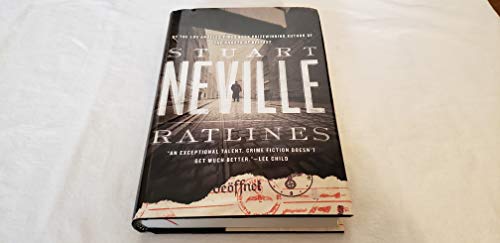
Ireland 1963. As the Irish people prepare to welcome President John F. Kennedy to the land of his ancestors, a German national is murdered in a seaside guesthouse. Lieutenant Albert Ryan, Directorate of Intelligence, is ordered to investigate. The German is the third foreigner to die within a few days, and Minister for Justice Charles Haughey wants the killing to end lest a shameful secret be exposed: the dead men were all Nazis granted asylum by the Irish government in the years following World War II.
A note from the killers is found on the dead German's corpse, addressed to Colonel Otto Skorzeny, Hitler's favorite commando, once called the most dangerous man in Europe. The note simply says: "We are coming for you."
As Albert Ryan digs deeper into the case he discovers a network of former Nazis and collaborators, all presided over by Skorzeny from his country estate outside Dublin. When Ryan closes in on the killers, his loyalty is torn between country and conscience. Why must he protect the very people he fought against twenty years before? Ryan learns that Skorzeny might be a dangerous ally, but he is a deadly enemy.
Die Inhaltsangabe kann sich auf eine andere Ausgabe dieses Titels beziehen.
Über die Autorin bzw. den Autor
Stuart Neville is the author of three previous books, Collusion, Stolen Souls, and The Ghosts of Belfast, winner of the 2010 LA Times Book Prize and the Spinetingler Award for Best First Novel, and a finalist for the Macavity Award, the Barry Award, and Anthony Award for Best First Novel. Stuart has taught at Trinity College in Dublin and appeared on the Late Late Show with Craig Ferguson. He lives in Armagh, Northern Ireland.
Auszug. © Genehmigter Nachdruck. Alle Rechte vorbehalten.
CHAPTER ONE
“You don’t look like a Jew,” Helmut Krauss said to the man
reflected in the window pane.
Beyond the glass, rolling white waves threw themselves
against the rocks of Galway Bay, the Atlantic glowering
beyond. The guesthouse in Salthill was basic, but clean. The
small seaside town outside Galway City hosted families from
all over Ireland seeking a few days of salt air and sunshine
during the summer months. Sometimes it provided beds for
unmarried couples, fornicators and adulterers with the nerve
to bluff their way past the morally upright proprietors of such
establishments.
Krauss knew so because he had enjoyed the company of several
ladies in guesthouses like this one, taking bracing walks along
the seafront, enduring overcooked meals in mostly empty dining
rooms, then finally rattling the headboard of whatever bed they
had taken. He carried a selection of wedding rings in his pocket,
alongside the prophylactics.
This dreary island, more grey than green, so choked by the
Godly, provided him few pleasures. So why not enjoy the odd
sordid excursion with a needful woman?
Perhaps Krauss should have allowed himself the luxury of a
decent hotel in the city, but a funeral, even if for a close friend,
did not seem a fitting occasion. The security might have been
better, though, and this visitor might not have gained entry so
easily. For a moment, Krauss felt an aching regret, but immediately
dismissed it as foolishness. Had he been the kind of man
who submitted to regret, he would have hanged himself ten
years ago.
“Are you a Jew?” Krauss asked.
The reflection shifted. “Maybe. Maybe not.”
“I saw you at the funeral,” Krauss said. “It was a beautiful
service.”
“Very,” the reflection said. “You wept.”
“He was a good man,” Krauss said. He watched seagulls as
they skated the updrafts.
“He was a murderer of women and children,” the reflection
said. “Like you.”
“Murderer,” Krauss said. “Your accent is British. For many
people in Ireland, you British are murderers. Oppressors.
Imperialists.”
The reflection swelled on the glass as the man approached.
“You hide your accent well.”
“I enjoy the spoken word. To a fault, perhaps, but I spend time
refining and practicing my speech. Besides, a German accent still
draws attention, even in Ireland. They shelter me, but not all
make me welcome. Some cling to their British overmasters like a
child too old for the teat.”
Krauss had felt the weight of his age more frequently in recent
times. His thick black hair had greyed, the sculpted features
turned cragged. The veins in his nose had begun to rupture
with the vodka and wine. Women no longer stared at him with
hungry eyes when he took his afternoon walks through Dublin’s
Ringsend Park. But he still had good years ahead of him, however
few. Would this man steal them from him?
“Have you come to kill me too?” he asked.
“Maybe. Maybe not,” the reflection said.
“May I take a drink, perhaps smoke a cigarette?”
“You may.”
Krauss turned to him. A man of middle age, between forty
and forty five, old enough to have served in the war. He had
looked younger across the cemetery, dressed in the overalls of a
gravedigger, but proximity showed the lines on his forehead and
around his eyes. Sand-coloured hair strayed beneath the woollen
cap on his head. He held a pistol, a Browning fitted with a suppressor,
aimed squarely at Krauss’s chest. It shook.
“Would you care for a small vodka?” Krauss asked. “Perhaps it
will steady your nerve.”
The man considered for a few seconds. “All right,” he said.
Krauss went to the nightstand where a bottle of imported
vodka and a tea making set waited next to that morning’s Irish
Times. The front page carried a headline about the forthcoming
visit of President John F Kennedy, a story concerning a
request by the Northern Irish government that he should venture
across the border during his days on the island. The Irish
worshipped the American leader because he was one of theirs,
however many generations removed, and anticipation of his
arrival had reached a point of near hysteria. Krauss intended
to avoid all radio and television broadcasts for the duration of
Kennedy’s stay.
Not that it mattered now.
Krauss turned two white teacups over and poured a generous
shot into each. He went to soften one with water from a jug, but
the man spoke.
“No water, thank you.”
Krauss smiled as he handed a cup to the man. “No glasses, I’m
afraid. I hope you don’t mind.”
The man nodded his thanks as he took the cup with his left
hand. Undiluted vodka spilled over the lip. He took a sip and
coughed.
Krauss reached into the breast pocket of his best black suit.
The man’s knuckle whitened beneath the trigger guard. Krauss
slowed the movement of his hand and produced a gold cigarette
case. He opened it, and extended it to the man.
“No, thank you.” The man did not flinch at the engraved
swastika as Krauss had hoped. Perhaps he wasn’t a Jew, just some
zealous Briton.
Krauss took a Peter Stuyvesant, his only concession to
Americanism, and gripped it between his lips as he snapped the
case closed and returned it to his pocket. He preferred Marlboro,
but they were too difficult to come by in this country. He took
the matching lighter from his trouser pocket and sucked the
petrol taste from its flame. The set had been a Christmas gift
from Wilhelm Frick. Krauss treasured it. Blue smoke billowed
between the men.
“Please sit,” Krauss said, indicating the chair in the corner.
He lowered himself onto the bed and drew deeply on the cigarette,
letting the heat fill his throat and chest. “May I know your
name?” he asked.
“You may not,” the man said.
“All right. So why?”
The man took another sip, grimaced at the taste, and placed
the cup on the windowsill to his left. “Why what?”
“Why kill me?”
“I haven’t decided if I’ll kill you or not, yet. I want to ask a few
questions first.”
Krauss sighed and leaned back against the headboard, crossing
his legs on the lumpy mattress. “Very well.”
“Who was the well-dressed Irishman you spoke with?”
“An insultingly junior civil servant,” Krauss said.
Eoin Tomalty had given Krauss’s hand a firm shake after the
ceremony. “The minister sends his condolences,” Tomalty had
said. “I’m sure you’ll understand why he was unable to attend in
person.”
Krauss had smiled and nodded, yes, of course he understood.
“A civil servant?” the man asked. “The government actually
sent a...
„Über diesen Titel“ kann sich auf eine andere Ausgabe dieses Titels beziehen.
Suchergebnisse für Ratlines

Beispielbild für diese ISBN
Ratlines
Anbieter: World of Books (was SecondSale), Montgomery, IL, USA
Verkäuferbewertung 5 von 5 Sternen

Hardback. Zustand: Fair. Artikel-Nr. 00105884342
Gebraucht kaufen
EUR 4,39
Versand gratis
Versand innerhalb von USA
Versand innerhalb von USA
Anzahl: 1 verfügbar
Beispielbild für diese ISBN
Ratlines
Anbieter: World of Books (was SecondSale), Montgomery, IL, USA
Verkäuferbewertung 5 von 5 Sternen
Hardback. Zustand: Very Good. Artikel-Nr. 00109857457
Gebraucht kaufen
EUR 4,39
Versand gratis
Versand innerhalb von USA
Versand innerhalb von USA
Anzahl: 1 verfügbar
Beispielbild für diese ISBN
Ratlines
Anbieter: World of Books (was SecondSale), Montgomery, IL, USA
Verkäuferbewertung 5 von 5 Sternen
Hardback. Zustand: Good. Artikel-Nr. 00104608590
Gebraucht kaufen
EUR 4,39
Versand gratis
Versand innerhalb von USA
Versand innerhalb von USA
Anzahl: 2 verfügbar
Beispielbild für diese ISBN
Ratlines
Verlag:
Soho Press, Incorporated, 2013
ISBN 10: 1616952040
ISBN 13: 9781616952044
Gebraucht
Hardcover
Anbieter: Better World Books, Mishawaka, IN, USA
Verkäuferbewertung 5 von 5 Sternen
Zustand: Good. First Edition, First Printing. Former library copy. Pages intact with minimal writing/highlighting. The binding may be loose and creased. Dust jackets/supplements are not included. Includes library markings. Stock photo provided. Product includes identifying sticker. Better World Books: Buy Books. Do Good. Artikel-Nr. GRP97865477
Gebraucht kaufen
EUR 6,34
Versand gratis
Versand innerhalb von USA
Versand innerhalb von USA
Anzahl: 2 verfügbar
Beispielbild für diese ISBN
Ratlines
Verlag:
Soho Press, Incorporated, 2013
ISBN 10: 1616952040
ISBN 13: 9781616952044
Gebraucht
Hardcover
Anbieter: Better World Books, Mishawaka, IN, USA
Verkäuferbewertung 5 von 5 Sternen
Zustand: Good. First Edition, First Printing. Pages intact with minimal writing/highlighting. The binding may be loose and creased. Dust jackets/supplements are not included. Stock photo provided. Product includes identifying sticker. Better World Books: Buy Books. Do Good. Artikel-Nr. 4196353-75
Gebraucht kaufen
EUR 6,34
Versand gratis
Versand innerhalb von USA
Versand innerhalb von USA
Anzahl: 1 verfügbar
Beispielbild für diese ISBN
Ratlines
Verlag:
Soho Crime (edition First Edition), 2013
ISBN 10: 1616952040
ISBN 13: 9781616952044
Gebraucht
Hardcover
Erstausgabe
Anbieter: BooksRun, Philadelphia, PA, USA
Verkäuferbewertung 5 von 5 Sternen
Hardcover. Zustand: Very Good. First Edition. With dust jacket. It's a well-cared-for item that has seen limited use. The item may show minor signs of wear. All the text is legible, with all pages included. It may have slight markings and/or highlighting. Artikel-Nr. 1616952040-11-1-29
Gebraucht kaufen
EUR 6,48
Versand gratis
Versand innerhalb von USA
Versand innerhalb von USA
Anzahl: 1 verfügbar
Beispielbild für diese ISBN
Ratlines
Anbieter: Books From California, Simi Valley, CA, USA
Verkäuferbewertung 4 von 5 Sternen

Hardcover. Zustand: Very Good. First Edition. 1st edition/1st printing. Artikel-Nr. mon0002996281
Gebraucht kaufen
EUR 8,89
EUR 4,44 Versand
Versand innerhalb von USA
Versand innerhalb von USA
Anzahl: 1 verfügbar
Beispielbild für diese ISBN
Ratlines
Anbieter: The Book Scouts, Hamilton, ON, Kanada
Verkäuferbewertung 4 von 5 Sternen
HARDCOVER. Zustand: Fine. Zustand des Schutzumschlags: Near Fine. First Edition. We're always buying collectible book collections. Contact us for details. We're happy to provide pictures of any book priced at $10 or more, please just ask! American first edition, first printing. Contains number line 1 2 3 4 5 6 7 8 9 10. Virtually no wear to jacket. Jacket is NOT price clipped. Covers are clean and bright. Edges are sharp. No tears or creases. The book itself is in Near Fine condition. The binding is straight and tight. Remainder mark. Artikel-Nr. sku520010978
Gebraucht kaufen
EUR 6,60
EUR 8,90 Versand
Versand von Kanada nach USA
Versand von Kanada nach USA
Anzahl: 1 verfügbar
Beispielbild für diese ISBN
Ratlines
Anbieter: Round Table Books, LLC, Gurnee, IL, USA
Verkäuferbewertung 5 von 5 Sternen
Hard Cover. Zustand: Fine. Zustand des Schutzumschlags: No Dust Jacket. advance edition. Ireland prepares for President John F. Kennedy's arrival when three murders of Nazis granted asylum in Ireland must be solved. FINE. 8vo 8" - 9" tall. 355 pp. Artikel-Nr. 17996
Gebraucht kaufen
EUR 11,01
EUR 5,79 Versand
Versand innerhalb von USA
Versand innerhalb von USA
Anzahl: 1 verfügbar
Beispielbild für diese ISBN
Ratlines
Verlag:
U.S.A.: Soho Crime, 2013
ISBN 10: 1616952040
ISBN 13: 9781616952044
Gebraucht
Hardcover
Erstausgabe
Signiert
Anbieter: Jackson Street Booksellers, Omaha, NE, USA
Verkäuferbewertung 5 von 5 Sternen
Hardcover. Zustand: As New. Zustand des Schutzumschlags: As New. 1st Edition. As New in As New Jacket. 1st printing. Signed by Neville on the title page. Mystery. Signed by Author(s). Artikel-Nr. 131206
Gebraucht kaufen
EUR 22,94
EUR 5,79 Versand
Versand innerhalb von USA
Versand innerhalb von USA
Anzahl: 1 verfügbar