
Verwandte Artikel zu The Fall of Princes: A Novel
Inhaltsangabe
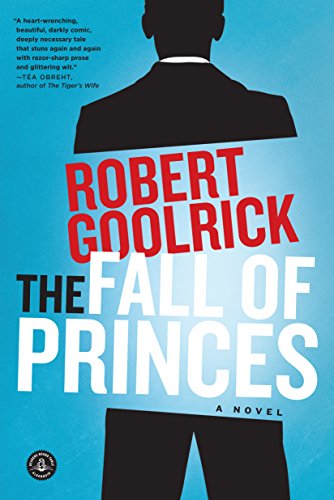
“A heart-wrenching, beautiful, darkly comic, deeply necessary tale that stuns again and againwith razor-sharp prose and glittering wit.” —Téa Obreht, author of The Tiger’s Wife
“A dark, intoxicating morality tale . . . A world of excess and decadence and the price paid by some—but by no means all . . . Seductive and provocative.” —Garth Stein, author of A Sudden Light and The Art of Racing in the Rain
In the spellbinding new novel from #1 New York Times bestselling author Robert Goolrick, 1980s Manhattan shimmers like the mirage it was, as money, power, and invincibility seduce a group of young Wall Street turks. Together they reach the pinnacle, achieving the kind of wealth that grants them access to anything--and anyone. Until, one by one, they fall. The Fall of Princes takes readers on a journey that is both starkly revealing and dazzlingly entertaining.
“Each chapter is haunting and compulsively readable, written in a bold, brash voice that aims for over-the-top and miraculously sticks the landing.” —Entertainment Weekly
“While [Goolrick] describes a way of life that may never be possible again, he also manages to convey its beautiful, tragic appeal in an unforgettable rush of prose . . . Irresistible, bittersweet.” —The Boston Globe
“Compelling, wholly seductive.” —Booklist
“Brilliantly well done.” —New York Daily News
“A vivid writer with a penchant for electric scenes.” —Minneapolis Star Tribune
“While The Fall of Princes patrols territory marked by Tom Wolfe,Jay McInerney and Michael Lewis, Goolrick writes with an immediacyand precision that make this world feel as if it is all his own . . . Painfully beautiful.” —The Washington Post
“A dark, intoxicating morality tale . . . A world of excess and decadence and the price paid by some—but by no means all . . . Seductive and provocative.” —Garth Stein, author of A Sudden Light and The Art of Racing in the Rain
In the spellbinding new novel from #1 New York Times bestselling author Robert Goolrick, 1980s Manhattan shimmers like the mirage it was, as money, power, and invincibility seduce a group of young Wall Street turks. Together they reach the pinnacle, achieving the kind of wealth that grants them access to anything--and anyone. Until, one by one, they fall. The Fall of Princes takes readers on a journey that is both starkly revealing and dazzlingly entertaining.
“Each chapter is haunting and compulsively readable, written in a bold, brash voice that aims for over-the-top and miraculously sticks the landing.” —Entertainment Weekly
“While [Goolrick] describes a way of life that may never be possible again, he also manages to convey its beautiful, tragic appeal in an unforgettable rush of prose . . . Irresistible, bittersweet.” —The Boston Globe
“Compelling, wholly seductive.” —Booklist
“Brilliantly well done.” —New York Daily News
“A vivid writer with a penchant for electric scenes.” —Minneapolis Star Tribune
“While The Fall of Princes patrols territory marked by Tom Wolfe,Jay McInerney and Michael Lewis, Goolrick writes with an immediacyand precision that make this world feel as if it is all his own . . . Painfully beautiful.” —The Washington Post
Die Inhaltsangabe kann sich auf eine andere Ausgabe dieses Titels beziehen.
Über die Autorin bzw. den Autor
In addition to his most recent novel, The Fall of Princes, Robert Goolrick is the author of three other books: The End of the World as We Know It, a memoir; his first novel, A Reliable Wife, with sales of more than 1 million copies; and his second novel, Heading Out to Wonderful. He lives in Virginia.
Auszug. © Genehmigter Nachdruck. Alle Rechte vorbehalten.
CHAPTER SIX
One Reason I Don’t Go to the Beach Anymore
More than a decade ago, a lifetime ago, really, I rented a lovely summer house by the sea. Not exactly by the sea, but close enough, and it had a big pool and five bedrooms and a sunroom and an English box garden and you could see the ocean from a widow’s walk on the roof. It was owned by these two interior decorators so everything was just so and it was all kind of perfectly done in an English-country-house kind of way and filled with light and shadow. It was everything my apartment in town wasn’t and it was just swell.
It was like being in an episode of Masterpiece Theater. All you needed was an under housemaid arranging flowers in cut glass vases.
This was just as the great tailgate party was coming to an end, and I had an almost infinite amount of money. Or so it seemed.
I worked on The Street, and while I didn’t particularly enjoy helping rich people shift money around every minute of every day so that they could get even richer at the expense of people who had no money and never would—I was wracked with guilt at the same time I was insane with adrenaline and raging testosterone—the money was fantastic and the roll, the flow of it, was like mainlining every day. The roll smelled like money. You could feel the poison boiling through your veins. Money was the big news, the lifeblood of the decade, and I was in it up to my elbows.
I worked in a big room that was basically like a casino; there were no windows, no clocks, nothing but the relentless flicker of financial news on dozens of TV sets. It was both timeless and relentless. The days were vicious, but the nights were filled with fat stogies in the cigar room at Frank’s and big steaks and then on to clubs where we swaggered in our monogrammed Sea Island cotton shirts and $200 scarf ties from Hermès and sat in the VIP section and ran up $2,000 bar bills and took town cars home at three in the morning when we had to be back at the office at seven-thirty. We did things like write our phone numbers on girls’ tits with Mont Blanc pens, and they always called us back. Always.
You could smoke then, that’s how long ago it was.
This was life. This was everyday life, and we didn’t understand people who didn’t live like this. We were the pulse, the heartbeat, of the decade and we were all young and mostly good-looking and we all found time to work out like dogs, weird times like six in the morning, so we had these fantastic bodies, well, not all of us had fantastic bodies, some had the spindly hollow-eyed stares of junkies and some topped three hundred pounds and smoked three packs of cigarettes a day; but I’m thinking about the guys who came to the house that summer, we were all in perfect shape and had the kind of women you get when you have a fantastic body and a wad of cash and the utter arrogance that comes with having the big dog on the leash.
We were the people people wrote about when they wrote about the evils of contemporary society. We made too much money. We spent too much money. We didn’t do a single thing to help the less fortunate, which included most of the people on the planet. We drank too much. We did too many drugs. We had eighteen-year-old kids with rasta braids coming to drop shit off in the middle of the day. We went to Alphabet City the minute we got into our black town cars at the end of a stressful day. We felt not one ounce of remorse. We only felt pity for the rest of the gray masses. All of these things were true. But, man, did we have fun. It was like a giant testosterone flambé.
Bonuses were a big thing. Bonuses were given out around Christmastime, in yards, a yard being a million dollars. People would say, sucking on a big fat Cubano, that they got a yard or a yard and a half. Everybody lied, of course, but everybody got a lot and it was a big deal.
I wasn’t necessarily the brightest nickel in the bag, but I had the best education, and I was as aggressive as a pit bull, I could trade shit for silk, and so I was good for half a yard at least. I was thirty-one.
After I paid off the taxes and my enormous bills—I owed Bergdorf’s $12,000, which was basically three suits, two cashmere sweaters, and a bottle of Acqua di Parma, the same cologne Cary Grant wore—I still had quite a pile, and I decided to get my own house in the Hamptons. Not just any house, the house.
I had shared before. Little bungalows on Gin Lane. I had gone through the ritual of being a houseguest—my mother once said, when you’re a houseguest, don’t ring the doorbell with anything but your elbow, so I took cases of champagne and new badminton sets from Hammacher Schlemmer—so I knew what I wanted was a palace of my own, where I could invite people every weekend, and have them bring me lavish and largely unusable stuff.
I looked at six houses. I took the sixth one. It was chintzed and striped and leopard-printed, stuff that would charm women, and it had a grand piano and a deck from which you could smell the sea, and the pool and the garden and service for thirty. It was English aristocracy without the dog shit and the cigarette burns in the upholstery.
Someone witty once said to me that living in a castle wasn’t all it was cracked up to be. “Darling,” she said, “you still have to wash your hair in the bathtub.”
I had never been in an English country house. I thought this was the real thing. I rented it immediately. It cost $96,000, Memorial Day to Labor Day, and I wrote a check. The house came with a maid, so the owners could feel safe about their fabulous stuff, and she cost another $800 a week, which I also paid by check, and I leased a car for the summer, a deeply impressive convertible Mercedes, midnight black, with every accoutrement you could wish for and the smell of brand-new leather and a top that slid back with the touch of a button, slid back as silently as a snake through the grass. This was a very nice car. I gave them my platinum card.
I bought sheets in the city for every bedroom, from Frette, since the sheets that were there were the kind of clever pastiche designed to make you think maybe Kmart was a good idea after all. My guests would sleep in thousand-thread-count cotton, white with scalloped borders, so the cool night air could pass over their bodies like a lover’s kiss.
I still have the sheets. Quality lasts.
I found a huge Moroccan tent in the city and bought it for $25,000 and had it put up on the lawn and filled with benches and silk pillows and those low kind of Moroccan tables and hung with chandeliers so it was like being in a fantasy seraglio, all about sex. It was hot as hell in there, like being at a rinky-dink circus on a July afternoon in Reno, Nevada, but it was lavishly and painstakingly embroidered and dotted with thousands of tiny little mirrors and it was breathtakingly beautiful.
From the second story of the house, you looked down at the roof of it, or whatever tents have, and it was like looking down at the stars, with all the mirrors twinkling and the candles glowing softly through the canvas.
The first weekend, I invited my main buddies from The Firm—George, who was hysterical, and Frank, who was enormous, 6’4”, just to show I wasn’t filled with self-doubt, and Fanelli and Trotmeier. I took two days off from work to stock the house, bread and desserts from the Barefoot Contessa, $30-a-pound lobster salad from Loaves and Fishes, and all kinds of salads and...
One Reason I Don’t Go to the Beach Anymore
More than a decade ago, a lifetime ago, really, I rented a lovely summer house by the sea. Not exactly by the sea, but close enough, and it had a big pool and five bedrooms and a sunroom and an English box garden and you could see the ocean from a widow’s walk on the roof. It was owned by these two interior decorators so everything was just so and it was all kind of perfectly done in an English-country-house kind of way and filled with light and shadow. It was everything my apartment in town wasn’t and it was just swell.
It was like being in an episode of Masterpiece Theater. All you needed was an under housemaid arranging flowers in cut glass vases.
This was just as the great tailgate party was coming to an end, and I had an almost infinite amount of money. Or so it seemed.
I worked on The Street, and while I didn’t particularly enjoy helping rich people shift money around every minute of every day so that they could get even richer at the expense of people who had no money and never would—I was wracked with guilt at the same time I was insane with adrenaline and raging testosterone—the money was fantastic and the roll, the flow of it, was like mainlining every day. The roll smelled like money. You could feel the poison boiling through your veins. Money was the big news, the lifeblood of the decade, and I was in it up to my elbows.
I worked in a big room that was basically like a casino; there were no windows, no clocks, nothing but the relentless flicker of financial news on dozens of TV sets. It was both timeless and relentless. The days were vicious, but the nights were filled with fat stogies in the cigar room at Frank’s and big steaks and then on to clubs where we swaggered in our monogrammed Sea Island cotton shirts and $200 scarf ties from Hermès and sat in the VIP section and ran up $2,000 bar bills and took town cars home at three in the morning when we had to be back at the office at seven-thirty. We did things like write our phone numbers on girls’ tits with Mont Blanc pens, and they always called us back. Always.
You could smoke then, that’s how long ago it was.
This was life. This was everyday life, and we didn’t understand people who didn’t live like this. We were the pulse, the heartbeat, of the decade and we were all young and mostly good-looking and we all found time to work out like dogs, weird times like six in the morning, so we had these fantastic bodies, well, not all of us had fantastic bodies, some had the spindly hollow-eyed stares of junkies and some topped three hundred pounds and smoked three packs of cigarettes a day; but I’m thinking about the guys who came to the house that summer, we were all in perfect shape and had the kind of women you get when you have a fantastic body and a wad of cash and the utter arrogance that comes with having the big dog on the leash.
We were the people people wrote about when they wrote about the evils of contemporary society. We made too much money. We spent too much money. We didn’t do a single thing to help the less fortunate, which included most of the people on the planet. We drank too much. We did too many drugs. We had eighteen-year-old kids with rasta braids coming to drop shit off in the middle of the day. We went to Alphabet City the minute we got into our black town cars at the end of a stressful day. We felt not one ounce of remorse. We only felt pity for the rest of the gray masses. All of these things were true. But, man, did we have fun. It was like a giant testosterone flambé.
Bonuses were a big thing. Bonuses were given out around Christmastime, in yards, a yard being a million dollars. People would say, sucking on a big fat Cubano, that they got a yard or a yard and a half. Everybody lied, of course, but everybody got a lot and it was a big deal.
I wasn’t necessarily the brightest nickel in the bag, but I had the best education, and I was as aggressive as a pit bull, I could trade shit for silk, and so I was good for half a yard at least. I was thirty-one.
After I paid off the taxes and my enormous bills—I owed Bergdorf’s $12,000, which was basically three suits, two cashmere sweaters, and a bottle of Acqua di Parma, the same cologne Cary Grant wore—I still had quite a pile, and I decided to get my own house in the Hamptons. Not just any house, the house.
I had shared before. Little bungalows on Gin Lane. I had gone through the ritual of being a houseguest—my mother once said, when you’re a houseguest, don’t ring the doorbell with anything but your elbow, so I took cases of champagne and new badminton sets from Hammacher Schlemmer—so I knew what I wanted was a palace of my own, where I could invite people every weekend, and have them bring me lavish and largely unusable stuff.
I looked at six houses. I took the sixth one. It was chintzed and striped and leopard-printed, stuff that would charm women, and it had a grand piano and a deck from which you could smell the sea, and the pool and the garden and service for thirty. It was English aristocracy without the dog shit and the cigarette burns in the upholstery.
Someone witty once said to me that living in a castle wasn’t all it was cracked up to be. “Darling,” she said, “you still have to wash your hair in the bathtub.”
I had never been in an English country house. I thought this was the real thing. I rented it immediately. It cost $96,000, Memorial Day to Labor Day, and I wrote a check. The house came with a maid, so the owners could feel safe about their fabulous stuff, and she cost another $800 a week, which I also paid by check, and I leased a car for the summer, a deeply impressive convertible Mercedes, midnight black, with every accoutrement you could wish for and the smell of brand-new leather and a top that slid back with the touch of a button, slid back as silently as a snake through the grass. This was a very nice car. I gave them my platinum card.
I bought sheets in the city for every bedroom, from Frette, since the sheets that were there were the kind of clever pastiche designed to make you think maybe Kmart was a good idea after all. My guests would sleep in thousand-thread-count cotton, white with scalloped borders, so the cool night air could pass over their bodies like a lover’s kiss.
I still have the sheets. Quality lasts.
I found a huge Moroccan tent in the city and bought it for $25,000 and had it put up on the lawn and filled with benches and silk pillows and those low kind of Moroccan tables and hung with chandeliers so it was like being in a fantasy seraglio, all about sex. It was hot as hell in there, like being at a rinky-dink circus on a July afternoon in Reno, Nevada, but it was lavishly and painstakingly embroidered and dotted with thousands of tiny little mirrors and it was breathtakingly beautiful.
From the second story of the house, you looked down at the roof of it, or whatever tents have, and it was like looking down at the stars, with all the mirrors twinkling and the candles glowing softly through the canvas.
The first weekend, I invited my main buddies from The Firm—George, who was hysterical, and Frank, who was enormous, 6’4”, just to show I wasn’t filled with self-doubt, and Fanelli and Trotmeier. I took two days off from work to stock the house, bread and desserts from the Barefoot Contessa, $30-a-pound lobster salad from Loaves and Fishes, and all kinds of salads and...
„Über diesen Titel“ kann sich auf eine andere Ausgabe dieses Titels beziehen.
Suchergebnisse für The Fall of Princes: A Novel

Beispielbild für diese ISBN
The Fall of Princes: A Novel
Anbieter: World of Books (was SecondSale), Montgomery, IL, USA
Verkäuferbewertung 5 von 5 Sternen

Paperback. Zustand: Very Good. ?A heart-wrenching, beautiful, darkly comic, deeply necessary tale that stuns again and againwith razor-sharp prose and glittering wit.? ?Téa Obreht, author of The Tiger?s Wife ?A dark, intoxicating morality tale . . . A world of excess and decadence and the price paid by some?but by no means all . . . Seductive and provocative.? ?Garth Stein, author of A Sudden Light and The Art of Racing in the Rain In the spellbinding new novel from #1 New York Times bestselling author Robert Goolrick, 1980s Manhattan shimmers like the mirage it was, as money, power, and invincibility seduce a group of young Wall Street turks. Together they reach the pinnacle, achieving the kind of wealth that grants them access to anything--and anyone. Until, one by one, they fall. The Fall of Princes takes readers on a journey that is both starkly revealing and dazzlingly entertaining. ?Each chapter is haunting and compulsively readable, written in a bold, brash voice that aims for over-the-top and miraculously sticks the landing.? ?Entertainment Weekly ?While [Goolrick] describes a way of life that may never be possible again, he also manages to convey its beautiful, tragic appeal in an unforgettable rush of prose . . . Irresistible, bittersweet.? ?The Boston Globe ?Compelling, wholly seductive.? ?Booklist ?Brilliantly well done.? ?New York Daily News ?A vivid writer with a penchant for electric scenes.? ?Minneapolis Star Tribune ?While The Fall of Princes patrols territory marked by Tom Wolfe,Jay McInerney and Michael Lewis, Goolrick writes with an immediacyand precision that make this world feel as if it is all his own . . . Painfully beautiful.? ?The Washington Post. Artikel-Nr. 00075571939
Gebraucht kaufen
EUR 3,17
Versand gratis
Versand innerhalb von USA
Versand innerhalb von USA
Anzahl: 2 verfügbar
Beispielbild für diese ISBN
The Fall of Princes : A Novel
Verlag:
Algonquin Books of Chapel Hill, 2016
ISBN 10: 1616206039
ISBN 13: 9781616206031
Gebraucht
Softcover
Anbieter: Better World Books: West, Reno, NV, USA
Verkäuferbewertung 5 von 5 Sternen
Zustand: Good. Pages intact with minimal writing/highlighting. The binding may be loose and creased. Dust jackets/supplements are not included. Stock photo provided. Product includes identifying sticker. Better World Books: Buy Books. Do Good. Artikel-Nr. 9414860-75
Gebraucht kaufen
EUR 6,09
Versand gratis
Versand innerhalb von USA
Versand innerhalb von USA
Anzahl: 1 verfügbar
Beispielbild für diese ISBN
The Fall of Princes : A Novel
Verlag:
Algonquin Books of Chapel Hill, 2016
ISBN 10: 1616206039
ISBN 13: 9781616206031
Gebraucht
Softcover
Anbieter: Better World Books: West, Reno, NV, USA
Verkäuferbewertung 5 von 5 Sternen
Zustand: Very Good. Former library copy. Pages intact with possible writing/highlighting. Binding strong with minor wear. Dust jackets/supplements may not be included. Includes library markings. Stock photo provided. Product includes identifying sticker. Better World Books: Buy Books. Do Good. Artikel-Nr. GRP92921127
Gebraucht kaufen
EUR 6,09
Versand gratis
Versand innerhalb von USA
Versand innerhalb von USA
Anzahl: 1 verfügbar
Beispielbild für diese ISBN
The Fall of Princes
Anbieter: ThriftBooks-Atlanta, AUSTELL, GA, USA
Verkäuferbewertung 5 von 5 Sternen
Paperback. Zustand: Good. No Jacket. Pages can have notes/highlighting. Spine may show signs of wear. ~ ThriftBooks: Read More, Spend Less. Artikel-Nr. G1616206039I3N00
Gebraucht kaufen
EUR 8,21
Versand gratis
Versand innerhalb von USA
Versand innerhalb von USA
Anzahl: 1 verfügbar
Beispielbild für diese ISBN
The Fall of Princes
Anbieter: ThriftBooks-Atlanta, AUSTELL, GA, USA
Verkäuferbewertung 5 von 5 Sternen
Paperback. Zustand: Very Good. No Jacket. May have limited writing in cover pages. Pages are unmarked. ~ ThriftBooks: Read More, Spend Less. Artikel-Nr. G1616206039I4N00
Gebraucht kaufen
EUR 8,21
Versand gratis
Versand innerhalb von USA
Versand innerhalb von USA
Anzahl: 1 verfügbar
Foto des Verkäufers
The Fall of Princes
Anbieter: The Haunted Bookshop, LLC, Iowa City, IA, USA
Verkäuferbewertung 5 von 5 Sternen
Paperback. Zustand: Very Good. Artikel-Nr. 00092645
Gebraucht kaufen
EUR 7,20
EUR 4,84 Versand
Versand innerhalb von USA
Versand innerhalb von USA
Anzahl: 1 verfügbar
Beispielbild für diese ISBN
The Fall of Princes
Verlag:
Algonquin Books (division of Workman), 2016
ISBN 10: 1616206039
ISBN 13: 9781616206031
Neu
PAP
Anbieter: PBShop.store UK, Fairford, GLOS, Vereinigtes Königreich
Verkäuferbewertung 5 von 5 Sternen
PAP. Zustand: New. New Book. Shipped from UK. Established seller since 2000. Artikel-Nr. L2-9781616206031
Neu kaufen
EUR 15,07
EUR 4,85 Versand
Versand von Vereinigtes Königreich nach USA
Versand von Vereinigtes Königreich nach USA
Anzahl: Mehr als 20 verfügbar
Beispielbild für diese ISBN
The Fall of Princes: A Novel
Anbieter: medimops, Berlin, Deutschland
Verkäuferbewertung 5 von 5 Sternen
Zustand: good. Befriedigend/Good: Durchschnittlich erhaltenes Buch bzw. Schutzumschlag mit Gebrauchsspuren, aber vollständigen Seiten. / Describes the average WORN book or dust jacket that has all the pages present. Artikel-Nr. M01616206039-G
Gebraucht kaufen
EUR 13,59
EUR 10,00 Versand
Versand von Deutschland nach USA
Versand von Deutschland nach USA
Anzahl: 1 verfügbar
Beispielbild für diese ISBN
The Fall of Princes: A Novel
Anbieter: Ria Christie Collections, Uxbridge, Vereinigtes Königreich
Verkäuferbewertung 5 von 5 Sternen
Zustand: New. In English. Artikel-Nr. ria9781616206031_new
Neu kaufen
EUR 17,39
EUR 10,92 Versand
Versand von Vereinigtes Königreich nach USA
Versand von Vereinigtes Königreich nach USA
Anzahl: Mehr als 20 verfügbar
Beispielbild für diese ISBN
The Fall of Princes
Anbieter: Revaluation Books, Exeter, Vereinigtes Königreich
Verkäuferbewertung 5 von 5 Sternen
Paperback. Zustand: Brand New. reprint edition. 306 pages. 8.25x5.75x0.75 inches. In Stock. Artikel-Nr. x-1616206039
Neu kaufen
EUR 25,17
EUR 11,66 Versand
Versand von Vereinigtes Königreich nach USA
Versand von Vereinigtes Königreich nach USA
Anzahl: 2 verfügbar