
Verwandte Artikel zu All This Talk of Love: A Novel
Inhaltsangabe
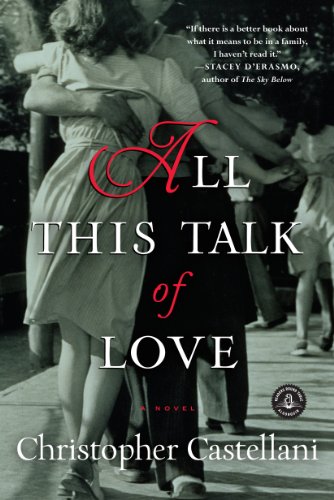
It's been fifty years since Antonio Grasso married Maddalena and brought her to America. That was the last time she saw her parents, her sisters and brothers-everything she knew and loved in the village of Santa Cecilia, Italy. Maddalena sees no need to open the door to the past and let the emotional baggage and unmended rifts of another life spill out.But Prima was raised on the lore of the Old Country. And as she sees her parents aging, she hatches the idea to take the entire family back to Italy-hoping to reunite Maddalena with her estranged sister and let her parents see their homeland one last time. It is an idea that threatens to tear the Grasso family apart, until fate deals them some unwelcome surprises, and their trip home becomes a necessary journey.All This Talk of Love is an incandescent novel about sacrifice and hope, loss and love, myth and memory.
Die Inhaltsangabe kann sich auf eine andere Ausgabe dieses Titels beziehen.
Über die Autorin bzw. den Autor
Christopher Castellani has published two previous novels with Algonquin—A Kiss from Maddalena, which won the Massachusetts Books Award for Fiction; and The Saint of Lost Things. He lives in Arlington, Massachusetts, where he is the artistic director of Grub Street, the Boston-based non-profit creative writing center. Author website: www.christopher castellani.com
Auszug. © Genehmigter Nachdruck. Alle Rechte vorbehalten.
All This Talk of Love
A NOVEL
By Christopher CastellaniALGONQUIN BOOKS OF CHAPEL HILL
Copyright © 2013 Christopher Castellani
All rights reserved.
ISBN: 978-1-61620-170-8All rights reserved.
CHAPTER 1
La Famiglia Grasso
Frankie grasso and his mother watch the same soap, butthey root for different women. He likes the deranged ones: thepregnancy fakers, the poisoners, the tramps. They are necessary researchfor his chapter on the legacy of the gothic in the constructionof female identity. His mother favors the patient, dutiful wives—theyof the shellacked hair and pantsuits and unshakable faith—and looksto them as examples of proper behavior in 1990s America. Frankieshouldn't be surprised. His mother's life has been a jeremiad in twolanguages and two countries, and her seventy-two years have taughther to distrust romantic passion. Precious minutes on the phone withFrankie she spends wishing doom on the amoral women of daytime,shocked that some network executive has allowed them to stray sofar from decency in the middle of the afternoon. "In life," she says tonight,after Frankie praises the pregnancy faker for her resourcefulnessin finding her long-lost identical twin sister and persuading herto carry the baby she can't admit she lost, "you have the truth or youhave nothing," and what he wants to tell her is, by that formulation,not a single member of the Grasso family, not to mention anyone heknows, has a blessed thing.
Instead he says, "I'm exhausted. I've been working all night on thischapter. My phone bill's ten pages long. Wait until she has that baby,then we'll see."
"I call you back right now," she says. "I have the money. Daddy putme on a plan: ten cents a minute. If you can call your cousin in Avezzanotwice a week, I tell him, I can call Boston for a few dimes."
"I need sleep," Frankie says. Then: "All right, call me back." Hehangs up and takes a sip of whiskey. The light comes on in the windowof his neighbor's house, an identical triple-decker but bettermaintained. Recently, in his German immersion course, Frankie inventedthe adjective zusammengedrängt, or "thrown together crowdedly,"to describe his neighborhood. He loves his word, which looksand sounds like the claustrophobia it conveys, and connotes the grimeand desperation of those thickly settled towns that surround a city.His street is populated mostly by low(er)-class Italian and Irish familiesjealous of their countrymen in the North End or Charlestown,who step from their front doors onto charming streets lit with gaslamps and lined with exposed-brick restaurants.
"This is your home now," his mother said the one time she visited.She stood on his crumbling front stoop with her arms outstretched,facing the vista of chain-link fences and vinyl siding. "It's ugly, but it'syours. You'll never want to leave."
"It's only a six-hour drive," he said. "I'll be back all the time." Insteadthey settle for Frankie's nightly phone call at 11:01 no matter where heis in the world, one of their many promises to each other.
Frankie's friends call their parents once a month and fly hometwice a year, less often if they can swing it. Like him, they toil in obscurityin the service of literary scholarship. They have advanced degreesand drug habits and a love affair with irony. Unlike him, thetoil (or is it the obscurity?) has soured them on distractions like familyand authentic human connection. "You really talk to your motherevery single night?" they ask him. "How? Why?"
"Because she's alive," he says.
"But what do you talk about? I haven't spoken an honest word tomy mother since kindergarten."
"Who said anything about honesty?"
He lets the phone ring five or six times, imagining his mother onthe other end staring into the receiver. When he finally picks up, shesays, "What's wrong with you?" and though he thinks of three thingsoff the bat, he treats the question as rhetorical and lets her talk.
Maddalena Grasso switches the phone to her left ear and againtakes up her husband's pants, which she has been hemming off and onfor hours. She's been on the phone since eight o'clock: first with herdaughter, then her friend Arlene from the dance studio, then SisterMary asking another favor for the church, then a wrong number witha friendly voice, and now, finally, always finally, her Frankie.
"Your sister was here this afternoon," she says. "You should haveseen: she had my old sweat suit on, the pink one with the rhinestoneson the cuffs your zia Ida gave me thirty years ago. She's like ahurricane, your sister, never any time to sit and have a conversation.She ate a bowl of soup and some pasta leftover standing in front ofthe sink the whole time like a peasant. I said, 'Sit down one second!It's not good always to rush,' but she has no time. She's going to callyou this week, she said. She's going to tell you she and Tom got thatplot, the one with the water. They had the meeting with the builder,and they got it."
"The lot, you mean," says Frankie. "Not the plot."
"Lot, plot, whatever. And you know the land next to it, you saw itlast time, it doesn't have any water, but it has those tall trees like youlike. It's an acre, almost, for sale. And I was thinking, Daddy, too,how beautiful it would be for you to live next door to your sister. Andyou won't have to throw away your money on rent anymore."
"Who's got that kind of cash?" Frankie says, though if he doesn'tshut her down now, she will offer at least a down payment, a cut ofthe money she and his father have been saving in his name since thenight of his conception—a night she's told him about in more detailthan was necessary. For a moment, Frankie allows himself to imaginethe unimaginable: he and his girlfriend, Professor Birch, clearingthe brush from their little strip of yard, she in her tank top andhairy armpits and army-issue boots, waving to his sister and brother-in-lawfrom across a koi pond. Professor Birch is not the type for bigSunday dinners cooked and served and cleared by women, for sharedacreage, for lawn care. She is the type who phones her husband whileFrankie's inside her to remind him to mail the insurance bill, whomakes Frankie call her Professor even when she's naked and sulliedand rummaging under his bed for her socks. She is exactly the type ofwoman his mother was afraid he'd meet in the big city.
With or without Professor Birch, Frankie has no plans to moveback to the suburbs of Wilmington, Delaware, a fact he can never admitto his mother. He has been called to a bigger and deeper life, farfrom the narrow bed in which he was planted. And yet it is a stipulationof his unspoken contract with his parents that he treat this stintas a graduate student in Boston as temporary—a regrettable but necessaryperiod of time away from home that will allow him to returnin triumph as a doctor of philosophy in English literature, secure ahighly paid professorship at the university, marry a sweet Italian girl,and start a family like his sister did and his older brother would havedone, had he lived.
When Frankie is quiet for too long, Maddalena worries: he is jealousof his sister and brother-in-law and all their money, he is fallingin love with Boston and will never come home, he is too young andconfused to think about plots. Let him be, she thinks, but how impossiblethat is! So she tells him her stories over and over again, in differentwords but with the same lesson at the end of them, stories abouthow it was for her to be brought to America from her village acrossthe ocean like a piece of furniture, in love with one man but marriedto another, a...
„Über diesen Titel“ kann sich auf eine andere Ausgabe dieses Titels beziehen.
Suchergebnisse für All This Talk of Love: A Novel

Beispielbild für diese ISBN
All This Talk of Love: A Novel
Anbieter: World of Books (was SecondSale), Montgomery, IL, USA
Verkäuferbewertung 5 von 5 Sternen

Zustand: Good. Item in good condition. Textbooks may not include supplemental items i.e. CDs, access codes etc. Artikel-Nr. 00109881992
Gebraucht kaufen
EUR 6,10
Versand gratis
Versand innerhalb von USA
Versand innerhalb von USA
Anzahl: 2 verfügbar
Beispielbild für diese ISBN
All This Talk of Love: A Novel
Anbieter: World of Books (was SecondSale), Montgomery, IL, USA
Verkäuferbewertung 5 von 5 Sternen
Zustand: Acceptable. Item in acceptable condition! Textbooks may not include supplemental items i.e. CDs, access codes etc. Artikel-Nr. 00107976338
Gebraucht kaufen
EUR 6,10
Versand gratis
Versand innerhalb von USA
Versand innerhalb von USA
Anzahl: 2 verfügbar
Beispielbild für diese ISBN
All This Talk of Love
Anbieter: ThriftBooks-Dallas, Dallas, TX, USA
Verkäuferbewertung 5 von 5 Sternen
Paperback. Zustand: Very Good. No Jacket. May have limited writing in cover pages. Pages are unmarked. ~ ThriftBooks: Read More, Spend Less. Artikel-Nr. G1616201703I4N00
Gebraucht kaufen
EUR 6,10
Versand gratis
Versand innerhalb von USA
Versand innerhalb von USA
Anzahl: 1 verfügbar
Beispielbild für diese ISBN
All This Talk of Love
Anbieter: ThriftBooks-Atlanta, AUSTELL, GA, USA
Verkäuferbewertung 5 von 5 Sternen
Paperback. Zustand: Very Good. No Jacket. May have limited writing in cover pages. Pages are unmarked. ~ ThriftBooks: Read More, Spend Less. Artikel-Nr. G1616201703I4N00
Gebraucht kaufen
EUR 6,10
Versand gratis
Versand innerhalb von USA
Versand innerhalb von USA
Anzahl: 1 verfügbar
Beispielbild für diese ISBN
All This Talk of Love
Anbieter: ThriftBooks-Reno, Reno, NV, USA
Verkäuferbewertung 5 von 5 Sternen
Paperback. Zustand: Very Good. No Jacket. May have limited writing in cover pages. Pages are unmarked. ~ ThriftBooks: Read More, Spend Less. Artikel-Nr. G1616201703I4N00
Gebraucht kaufen
EUR 6,10
Versand gratis
Versand innerhalb von USA
Versand innerhalb von USA
Anzahl: 1 verfügbar
Beispielbild für diese ISBN
All This Talk of Love: A Novel
Anbieter: Wonder Book, Frederick, MD, USA
Verkäuferbewertung 5 von 5 Sternen
Zustand: Good. Good condition. A copy that has been read but remains intact. May contain markings such as bookplates, stamps, limited notes and highlighting, or a few light stains. Bundled media such as CDs, DVDs, floppy disks or access codes may not be included. Artikel-Nr. O08C-00691
Gebraucht kaufen
EUR 6,40
Versand gratis
Versand innerhalb von USA
Versand innerhalb von USA
Anzahl: 1 verfügbar
Beispielbild für diese ISBN
All This Talk of Love : A Novel
Verlag:
Algonquin Books of Chapel Hill, 2013
ISBN 10: 1616201703
ISBN 13: 9781616201708
Gebraucht
Softcover
Anbieter: Better World Books, Mishawaka, IN, USA
Verkäuferbewertung 5 von 5 Sternen
Zustand: Very Good. Former library copy. Pages intact with possible writing/highlighting. Binding strong with minor wear. Dust jackets/supplements may not be included. Includes library markings. Stock photo provided. Product includes identifying sticker. Better World Books: Buy Books. Do Good. Artikel-Nr. 9976709-75
Gebraucht kaufen
EUR 6,98
Versand gratis
Versand innerhalb von USA
Versand innerhalb von USA
Anzahl: 1 verfügbar
Beispielbild für diese ISBN
All This Talk of Love : A Novel
Verlag:
Algonquin Books of Chapel Hill, 2013
ISBN 10: 1616201703
ISBN 13: 9781616201708
Gebraucht
Softcover
Anbieter: Better World Books, Mishawaka, IN, USA
Verkäuferbewertung 5 von 5 Sternen
Zustand: Good. Former library copy. Pages intact with minimal writing/highlighting. The binding may be loose and creased. Dust jackets/supplements are not included. Includes library markings. Stock photo provided. Product includes identifying sticker. Better World Books: Buy Books. Do Good. Artikel-Nr. 15698217-6
Gebraucht kaufen
EUR 6,98
Versand gratis
Versand innerhalb von USA
Versand innerhalb von USA
Anzahl: 1 verfügbar