
Verwandte Artikel zu Wild Connection: What Animal Courtship and Mating Tell...
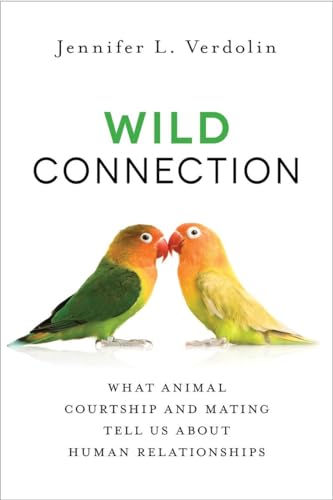
Inhaltsangabe
Wild Kingdom meets Sex and the City in this scientific perspective on dating and relationships.
A specialist in animal behavior compares the courtship rituals and mating behaviors of animals to their human equivalents, revealing the many and often surprising ways we are both similar to and different from other species.
What makes an individual attractive to the opposite sex? Does size matter? Why do we tend to "keep score" in our relationships? From perfume and cosmetics to online dating and therapy, our ultimate goal is to successfully connect with someone. So why is romance such an effort for humans, while animals have little trouble getting it right?
Wild Connection is full of fascinating and suggestive observations about animal behavior. For example, in most species smell is an important component of determining compatibility. So are we humans doing the right thing by masking our natural scents with soaps and colognes? Royal albatrosses have a lengthy courtship period lasting several years. These birds instinctively know that casual hook-ups are not the way to find a reliable mate. And older female chimpanzees often mate with younger males. Is this the evolutionary basis of the human "cougar" phenomenon?
Fun to read as well as educational, this unique take on the perennial human quest to find the ideal mate shows that we have much to learn from our cousins in the wild.
Die Inhaltsangabe kann sich auf eine andere Ausgabe dieses Titels beziehen.
Über die Autorin bzw. den Autor
Dr. Jennifer L. Verdolin, an expert in animal behavior, is currently a research scientist affiliated with the National Evolutionary Synthesis Center (Duke University) in Durham, NC, where she studies lemur personality and social behavior. In addition to publishing in peer-reviewed journals, she has written for Scientific American, has her own Psychology Today blog called Wild Connections, and has a weekly segment on the DL Hughley Show called “Think Like a Human, Act Like an Animal.” Visit her online at www.jenniferverdolin.com and on Twitter @JVerdolin.
Auszug. © Genehmigter Nachdruck. Alle Rechte vorbehalten.
WILD CONNECTION
WHAT ANIMAL COURTSHIP AND MATING TELL US ABOUT HUMAN RELATIONSHIPS
By Jennifer L. VerdolinPrometheus Books
Copyright © 2014 Jennifer L. Verdolin
All rights reserved.
ISBN: 978-1-61614-946-8All rights reserved.
Contents
Author's Note, 11,
CHAPTER 1. THE BIRDS AND THE BEES, 13,
CHAPTER 2. FIRST IMPRESSIONS, 25,
CHAPTER 3. FALSE ADVERTISING, 51,
CHAPTER 4. SORRY GUYS—SIZE MATTERS, 83,
CHAPTER 5. ON BEING A CHOOSY FEMALE, 111,
CHAPTER 6. PEACOCKS, LIONS, AND MEN, 143,
CHAPTER 7. ARE WE MATING OR DATING?, 173,
CHAPTER 8. THE THREE Cs: COMMUNICATION, COOPERATION AND COMPROMISE, 203,
CHAPTER 9. GETTING CUCKOLDED, 227,
CHAPTER 10. IN A NUTSHELL, 245,
Acknowledgments, 255,
Notes, 259,
References, 273,
Index, 299,
CHAPTER 1
THE BIRDS AND THE BEES
It wasn't until I was about eleven years old that I became acutely aware that there was a difference between boys and girls. Mind you, this was not a difference that I perceived, but rather, one that I was told existed. It all happened when I wanted to play little-league football. For as long as I could remember—which when you are eleven seems like an eternity—I had played neighborhood tag football. You know, the kind where you draw the plays in the sand on the edge of the road, on the grass, or even on the back of your teammate's T-shirt.
Anyway, I was told, unequivocally and without exception, that because I was a girl I was not permitted to play official little-league football. Only boys could play. This didn't make sense to me, especially since I had spent at least two years honing my football skills in the street.
I think the boys in the neighborhood got the same message, because suddenly they didn't want me to play with them anymore. The older I got, the more I noticed this pattern, and I remained perplexed. While all my girlfriends had visions of princes and castles, I had dreams of being a wide receiver in the NFL, despite the rules that clearly prevented me from participating.
The divergence didn't stop with sports. Soon after, I received a Barbie house for Christmas while my brother received the coveted erector set. Oh, how I was jealous of his erector set! Then, as I got older, the girls around me began thinking about what clothes to wear, which bag went with which outfit, and how to get the attention of that cute boy while I was trying to figure out how to climb that tree in the backyard, which mouse to play with, and how on earth I went from having two guinea pigs to six.
Into my twenties, the opposite sex remained a puzzle that I couldn't quite figure out. I knew I was attracted to men but, for the most part, I felt like (and wanted to be treated like) I was just one of the guys. As time went on, I became quite curious about this "other" sex, and I began to wonder if males were really so different from females. If they were, how did those differences influence how we interacted with each other? And why did it all seem so difficult?
Given my early adoration for and fascination with animals, my challenges in the dating world, and my questioning nature, it was only a matter of time before I found myself studying animal behavior and mating systems.
I will never forget the day in graduate school, while coteaching an undergraduate biology class, when we showed a movie to the students detailing why sex exists. I must confess that I had never pondered this particular question. I simply took for granted that we are a sexually reproducing species, and never gave it another thought.
Much to my surprise, I discovered that the evolution of sex is mysterious and the subject of much discussion among scientists. Whoa! Why hadn't this been part of my sex-education class? Like many of you, my sex-education class had diagrams of the human reproductive tract and details on why not to have sex. Who can forget those pictures? But why do we have sex? After all, not every organism reproduces sexually.
The asexual approach seems to be working well for the whiptail lizards. As many as fifty species of whiptail lizards reproduce without having sex. The appropriately named New Mexican whiptail is the official state reptile of New Mexico. I wonder if officials in New Mexico knew that the lizards never have sex before they adopted the species to represent their state.
Anyway, these little lizards can make their homes in dry riverbeds or vacant lots, eating everything from crickets to scorpions. When you reproduce by making clones of yourself, males are not required, so naturally all adult New Mexican whiptails are female. The strange part is that sometimes females do engage in "fake" sex. I know, you probably thought the strange part was that females could produce baby lizards without a male. Maybe it's just me, but I happen to think simulated sex between asexually reproducing female lizards is a tad weirder.
This fake sex pretty much follows the rules of regular lizard sex, which makes it all the more interesting. I mean, how do these females know what to do? It usually begins with one female chasing another female around, nipping at her heels. Then the female being chased assumes the donut position common to mating lizards, where curled up like a donut, she signals that she is ready. With one female pinned down by another, the one on top uses her tail to "have sex" with the other one. They reportedly thrash about, eyes closed and panting. Until now, I did not know that lizards panted. Why do some females do this? Apparently, the ones that engage in simulated copulation are stimulated into laying more eggs.
Insects and other lizards, some snakes, and even a fish, the Amazon Molly, join whiptails in the pursuit of a sexless life. Okay, maybe whiptails are sexing it up just a little bit. Nevertheless, given that at least some species do not ever sexually reproduce, there must be some evolutionary advantages to not dealing with the whole boy-meets-girl thing.
One major benefit is that you don't have to share your genetic contribution with anyone else. The genes that are passed on to the next generation are, most of the time, faithful copies of the original. A second advantage is that one can skip all the wining and dining that goes into finding, attracting, and keeping a mate. All of this activity takes time, energy, and effort. Depending on the species, it can take precious minutes away from a very short life or years away from a relatively long one. A third plus is that one avoids all the fighting and competing over mates that is so common in the animals, including humans, that sexually reproduce.
Given what can be gained by not having sex, it starts to make sense that scientists have spent quite a bit of time trying to figure out why organisms would trade it all in. For sex to come about and then stick around, the pros have to outweigh the cons. We'll look quite a bit at the balance between costs and benefits throughout the book, since they are really what drive the development and persistence of many things, especially behavior. Clearly, since the majority of species do sexually reproduce, there are enough pros—other than the fact that it feels good—to overcome all of the real or potential costs of having sex.
How can we go about figuring out what these pros are? One clue can be found in those species that flip-flop between cloning themselves and having sex. One con is that an individual that exclusively clones itself has an Achilles' heel. It may be perfectly suited to current conditions, but...
„Über diesen Titel“ kann sich auf eine andere Ausgabe dieses Titels beziehen.
Suchergebnisse für Wild Connection: What Animal Courtship and Mating Tell...

Beispielbild für diese ISBN
Wild Connection
Verlag:
G38-Prometheus (edition Illustrated), 2014
ISBN 10: 1616149469
ISBN 13: 9781616149468
Gebraucht
Paperback
Anbieter: BooksRun, Philadelphia, PA, USA
Verkäuferbewertung 5 von 5 Sternen

Paperback. Zustand: Fair. Illustrated. The item might be beaten up but readable. May contain markings or highlighting, as well as stains, bent corners, or any other major defect, but the text is not obscured in any way. Artikel-Nr. 1616149469-7-1
Gebraucht kaufen
EUR 5,30
Versand gratis
Versand innerhalb von USA
Versand innerhalb von USA
Anzahl: 1 verfügbar
Beispielbild für diese ISBN
Wild Connection
Anbieter: World of Books (was SecondSale), Montgomery, IL, USA
Verkäuferbewertung 5 von 5 Sternen
Zustand: Good. Item in good condition. Textbooks may not include supplemental items i.e. CDs, access codes etc. Artikel-Nr. 00102644985
Gebraucht kaufen
EUR 5,30
Versand gratis
Versand innerhalb von USA
Versand innerhalb von USA
Anzahl: 3 verfügbar
Beispielbild für diese ISBN
Wild Connection : What Animal Courtship and Mating Tell Us about Human Relationships
Verlag:
Prometheus Books, Publishers, 2014
ISBN 10: 1616149469
ISBN 13: 9781616149468
Gebraucht
Softcover
Anbieter: Better World Books, Mishawaka, IN, USA
Verkäuferbewertung 5 von 5 Sternen
Zustand: Good. Pages intact with minimal writing/highlighting. The binding may be loose and creased. Dust jackets/supplements are not included. Stock photo provided. Product includes identifying sticker. Better World Books: Buy Books. Do Good. Artikel-Nr. 8785697-6
Gebraucht kaufen
EUR 8,35
Versand gratis
Versand innerhalb von USA
Versand innerhalb von USA
Anzahl: 1 verfügbar
Beispielbild für diese ISBN
Wild Connection: What Animal Courtship and Mating Tell Us about Human Relationships
Anbieter: WorldofBooks, Goring-By-Sea, WS, Vereinigtes Königreich
Verkäuferbewertung 5 von 5 Sternen
Paperback. Zustand: Fair. A readable copy of the book which may include some defects such as highlighting and notes. Cover and pages may be creased and show discolouration. Artikel-Nr. GOR014722779
Gebraucht kaufen
EUR 4,94
EUR 6,62 Versand
Versand von Vereinigtes Königreich nach USA
Versand von Vereinigtes Königreich nach USA
Anzahl: 1 verfügbar
Beispielbild für diese ISBN
Wild Connection: What Animal Courtship and Mating Tell Us about Human Relationships
Anbieter: AwesomeBooks, Wallingford, Vereinigtes Königreich
Verkäuferbewertung 5 von 5 Sternen
Paperback. Zustand: Very Good. Wild Connection: What Animal Courtship and Mating Tell Us about Human Relationships This book is in very good condition and will be shipped within 24 hours of ordering. The cover may have some limited signs of wear but the pages are clean, intact and the spine remains undamaged. This book has clearly been well maintained and looked after thus far. Money back guarantee if you are not satisfied. See all our books here, order more than 1 book and get discounted shipping. Artikel-Nr. 7719-9781616149468
Gebraucht kaufen
EUR 6,89
EUR 4,87 Versand
Versand von Vereinigtes Königreich nach USA
Versand von Vereinigtes Königreich nach USA
Anzahl: 2 verfügbar
Beispielbild für diese ISBN
Wild Connection: What Animal Courtship and Mating Tell Us about Human Relationships
Verlag:
Random House International 01/l /06 J, 2014
ISBN 10: 1616149469
ISBN 13: 9781616149468
Gebraucht
Paperback
Anbieter: Bahamut Media, Reading, Vereinigtes Königreich
Verkäuferbewertung 4 von 5 Sternen

Paperback. Zustand: Very Good. Shipped within 24 hours from our UK warehouse. Clean, undamaged book with no damage to pages and minimal wear to the cover. Spine still tight, in very good condition. Remember if you are not happy, you are covered by our 100% money back guarantee. Artikel-Nr. 6545-9781616149468
Gebraucht kaufen
EUR 7,75
EUR 8,25 Versand
Versand von Vereinigtes Königreich nach USA
Versand von Vereinigtes Königreich nach USA
Anzahl: 1 verfügbar
Beispielbild für diese ISBN
Wild Connection
Anbieter: PBShop.store US, Wood Dale, IL, USA
Verkäuferbewertung 5 von 5 Sternen
PAP. Zustand: New. New Book. Shipped from UK. Established seller since 2000. Artikel-Nr. CX-9781616149468
Beispielbild für diese ISBN
Wild Connection
Anbieter: PBShop.store UK, Fairford, GLOS, Vereinigtes Königreich
Verkäuferbewertung 5 von 5 Sternen
PAP. Zustand: New. New Book. Shipped from UK. Established seller since 2000. Artikel-Nr. CX-9781616149468
Neu kaufen
EUR 20,28
EUR 4,92 Versand
Versand von Vereinigtes Königreich nach USA
Versand von Vereinigtes Königreich nach USA
Anzahl: 15 verfügbar
Beispielbild für diese ISBN
Wild Connection: What Animal Courtship and Mating Tell Us About Human Relationships
Anbieter: Revaluation Books, Exeter, Vereinigtes Königreich
Verkäuferbewertung 5 von 5 Sternen
Paperback. Zustand: Brand New. 302 pages. 9.00x6.00x1.00 inches. In Stock. Artikel-Nr. x-1616149469
Neu kaufen
EUR 23,03
EUR 11,82 Versand
Versand von Vereinigtes Königreich nach USA
Versand von Vereinigtes Königreich nach USA
Anzahl: 2 verfügbar
Beispielbild für diese ISBN
Wild Connection
Anbieter: Ria Christie Collections, Uxbridge, Vereinigtes Königreich
Verkäuferbewertung 5 von 5 Sternen
Zustand: New. In English. Artikel-Nr. ria9781616149468_new
Neu kaufen
EUR 26,90
EUR 13,34 Versand
Versand von Vereinigtes Königreich nach USA
Versand von Vereinigtes Königreich nach USA
Anzahl: Mehr als 20 verfügbar