
Verwandte Artikel zu 1 & 2 Chronicles (LifeChange)
Inhaltsangabe
Remember God’s Faithfulness
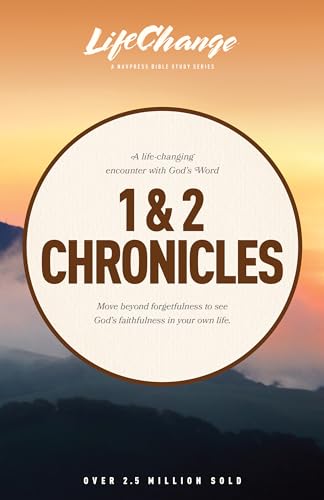
“Does God even care about us?” After being driven out of their homeland, the Israelites weren’t sure anymore. Amid their doubts, the stories of 1 and 2 Chronicles reminded them of God’s faithfulness. Remembering God’s work in the past would help renew their faith for the present. As you study 1 and 2 Chronicles, the stories will also help you move beyond forgetfulness to see God’s faithfulness in your own life.
LifeChange
LifeChange Bible studies will help you grow in Christlikeness through a life-changing encounter with God’s Word. Filled with a wealth of ideas for going deeper so you can return to this study again and again.
Features
- Cover the books of 1 & 2 Chronicles in 12 lessons
- Equip yourself to lead a Bible study
- Imagine the Bible’s historical world
- Study word origins and definitions
- Explore thoughtful questions on key themes
- Go deeper with optional projects
- Add your notes with extra space and wide margins
- Find the flexibility to fit the time you have
Die Inhaltsangabe kann sich auf eine andere Ausgabe dieses Titels beziehen.
Von der hinteren Coverseite
“Does God even care about us?” After being driven out of their homeland, the Israelites weren’t sure. The stories of 1 and 2 Chronicles reminded Israel of God’s faithfulness. These historical books reminded them of God’s work in the past and helped renew their faith for the present. As you study Israel’s history in 1 & 2 Chronicles, you’ll discover how it can renew your own faith for today.
LifeChange Series:
Christians have a lifelong goal: to become like Christ. This involves change, and change isn’t always easy. But the more you know of God’s purposes for you, the more you can experience His joy and participate in His plan.
The LifeChange series of Bible studies on books of the Bible can help you grow in Christlikeness through a life-changing encounter with God’s Word. You’ll benefit in these important ways:
- You’ll gain a firm understanding of the book—its historical context, purpose, structure, and meaning.
- You’ll apply its powerful, relevant wisdom to needs and issues you are currently working through.
- You’ll acquire personal study skills and a thirst to return to the book on your own so you can keep going deeper into its life-transforming truths.
Auszug. © Genehmigter Nachdruck. Alle Rechte vorbehalten.
A Life-Changing Encounter with God's Word from the Book of 1 & 2 Chronicles
By The NavigatorsTyndale House Publishers, Inc.
Copyright © 2014 The Navigators
All rights reserved.
ISBN: 978-1-61521-766-3All rights reserved.
Contents
How to Use This Guide, 5,
Introduction—The Books of 1 and 2 Chronicles: A Chosen Nation, a Privileged Mission, 11,
One—The Heritage of God's People (1 Chronicles 1–7), 15,
Two—The Rise of David (1 Chronicles 8–12), 25,
Three—The Reign of David (1 Chronicles 13–20), 33,
Four—David's Later Days (1 Chronicles 21–27), 43,
Five—The Rise of Solomon (1 Chronicles 28-29 and 2 Chronicles 1–5), 53,
Six—The Reign of Solomon (2 Chronicles 6–9), 63,
Seven—The Kingdom Divided (2 Chronicles 10–16), 71,
Eight—The Reign of Jehoshaphat (2 Chronicles 17–20), 83,
Nine—Further Crises (2 Chronicles 21–24), 91,
Ten—Further Decline (2 Chronicles 25–28), 99,
Eleven—The Reign of Hezekiah (2 Chronicles 29–32), 107,
Twelve—The Kingdom's Fall (2 Chronicles 33–36), 117,
Study Aids, 129,
CHAPTER 1
1 CHRONICLES 1–7
The Heritage of God's People
1. For getting the most from 1 and 2 Chronicles, one of the best guidelines is found in 2 Timothy 3:16-17, words Paul wrote with the Old Testament first in view. He said that all Scripture is of great benefit to (a) teach us, (b) rebuke us, (c) correct us, and (d) train us in righteousness. Paul added that these Scriptures completely equip the person of God "for every good work." As you think seriously about those guidelines, in which of these areas do you especially want to experience the usefulness of 1 and 2 Chronicles? Express your desire in a written prayer to God.
____________________________________________
____________________________________________
____________________________________________
2. In Jeremiah 23:29, God says that His Word is "like fire" and "like a hammer." He can use the Scriptures to burn away unclean thoughts and desires in our hearts. He can also use Scripture, with hammer-like hardness, to crush and crumble our spiritual hardness. From your study of 1 and 2 Chronicles, how do you most want to see the fire-and-hammer power of God's Word at work in your own life? Again, express this longing in a written prayer to God.
____________________________________________
____________________________________________
____________________________________________
3. Think about these words of Paul to his younger helper Timothy: "Do your best to present yourself to God as one approved, a worker who does not need to be ashamed and who correctly handles the word of truth" (2 Timothy 2:15). God calls you to be a "worker" as you study God's word of truth in 1 and 2 Chronicles. It takes work — concentration and perseverance — to fully appropriate God's blessings for us in these books. Express here your commitment before God to work diligently in this study of Chronicles.
____________________________________________
____________________________________________
____________________________________________
4. In one sitting if possible, read attentively all of 1 Chronicles 1–7, taking notes and underlining or highlighting as you go. What impresses you overall as the key features and themes of this part of the book?
____________________________________________
____________________________________________
____________________________________________
The point of the genealogies in chapters 1–9 is to show that the Jews living in the Chronicler's generation are the legitimate heirs of the promise that can be traced from Adam, to Abraham, to Judah and the other patriarchs, to King David. The genealogies sometimes skip generations, sometimes deal with several family lines at once (see 6:1-3), sometimes drop in a story about some event (see 4:9-10; 5:18-22). They deal with all twelve tribes of Israel, but the focus is on the royal family of David and the priestly tribe of Levi. Those two families lead in the secular and the sacred realms.
Genealogies may bore us, but they show how deeply the Jews valued family and how important family was at a time when God's promises passed through bloodlines. Each individual, even if he is only a name on a page to us, is a whole valued piece of the story to God. History, too, matters to God. Our faith is not merely a list of doctrinal propositions. It is rooted in events that happened in particular times and places to particular people.
5. "The opening chapter, drawn almost wholly from Genesis, traces the descent of Israel (Jacob) from Adam and depicts the place of his descendants among the nations." In this first chapter of 1 Chronicles, which of the persons listed are familiar to you from other parts of Scripture?
____________________________________________
____________________________________________
____________________________________________
Adam (1:1). The story of God's covenant of promise begins where human history begins.
Abraham (1:28). Abraham is the center point between Adam (see 1:1) and Jacob/Israel (see 2:1). All of Abraham's descendants are named to show that God kept His promise to make Abraham the father of many nations (see Genesis 17:3-6).
6. In chapters 2–4, the genealogies focus on the tribe of Judah, with special emphasis on the family of David (in chapters 3 and 4). In addition to David, which of the persons listed in chapters 2–4 are familiar to you from other parts of Scripture?
____________________________________________
____________________________________________
____________________________________________
The sons of Israel (2:1). All twelve tribes are listed in 2:1-2. For the Chronicler, the restoration of Israel will be complete only when all twelve tribes are restored to the land. It's not enough to restore Judah.
The sons of Judah (2:3). Faithful leadership was supposed to come through the tribe of Judah. Her failure to provide that leadership led to the exile, but God isn't finished with Judah. She still has a central role in God's plan.
These were the sons of David (3:1). God promised that the family of David would be the royal line of His people forever (see 1 Chronicles 14:2; 2 Chronicles 2:11). This family is key to God's plan.
In chapter 3, the Chronicler lists the kings from David's line and then the descendants of David who survived the exile. The promised royal line will have to pass through one of those descendants. Ultimately, the Messiah will descend from one of these, so these are important names. They include the two men who led the first and second waves of exiles back to the Promised Land.
7. What theological significance and spiritual instruction do you see in the brief story of Jabez in 4:9-10?
____________________________________________
____________________________________________
____________________________________________
Jabez cried out to the God of Israel ... and God granted his request (4:10). The Chronicler often notes that prayer to the God of Israel is answered (see 1 Chronicles 5:20-22; 2 Chronicles 20:6-12). He wants his readers to pray.
8. In focusing on the genealogy of Israel's Transjordan tribes, chapter...
„Über diesen Titel“ kann sich auf eine andere Ausgabe dieses Titels beziehen.
Suchergebnisse für 1 & 2 Chronicles (LifeChange)

Beispielbild für diese ISBN
LifeChange
Verlag:
NavPress Publishing Group, 2015
ISBN 10: 1615217665
ISBN 13: 9781615217663
Gebraucht
Paperback
Anbieter: World of Books (was SecondSale), Montgomery, IL, USA
Verkäuferbewertung 5 von 5 Sternen

Paperback. Zustand: Good. Over 3 million LifeChange studies sold Remember God's Faithfulness"Does God even care about us?" After being driven out of their homeland, the Israelites weren't sure anymore. Amid their doubts, the stories of 1 and 2 Chronicles reminded them of God's faithfulness. Remembering God's work in the past would help renew their faith for the present. As you study 1 and 2 Chronicles, the stories will also help you move beyond forgetfulness to see God's faithfulness in your own life. LifeChangeLifeChange Bible studies will help you grow in Christlikeness through a life-changing encounter with God's Word. Filled with a wealth of ideas for going deeper so you can return to this study again and again. Features Cover the books of 1 & 2 Chronicles in 12 lessons Equip yourself to lead a Bible study Imagine the Bible's historical world Study word origins and definitions Explore thoughtful questions on key themes Go deeper with optional projects Add your notes with extra space and wide margins Find the flexibility to fit the time you have. Artikel-Nr. 00106101408
Gebraucht kaufen
EUR 3,46
Versand gratis
Versand innerhalb von USA
Versand innerhalb von USA
Anzahl: 2 verfügbar
Beispielbild für diese ISBN
1 & 2 Chronicles (LifeChange)
Anbieter: BooksRun, Philadelphia, PA, USA
Verkäuferbewertung 5 von 5 Sternen
Paperback. Zustand: Very Good. It's a well-cared-for item that has seen limited use. The item may show minor signs of wear. All the text is legible, with all pages included. It may have slight markings and/or highlighting. Artikel-Nr. 1615217665-11-1
Gebraucht kaufen
EUR 5,32
Versand gratis
Versand innerhalb von USA
Versand innerhalb von USA
Anzahl: 1 verfügbar
Beispielbild für diese ISBN
1 & 2 Chronicles
Verlag:
NavPress Publishing Group, 2015
ISBN 10: 1615217665
ISBN 13: 9781615217663
Gebraucht
Paperback
Anbieter: ThriftBooks-Dallas, Dallas, TX, USA
Verkäuferbewertung 5 von 5 Sternen
Paperback. Zustand: Very Good. No Jacket. May have limited writing in cover pages. Pages are unmarked. ~ ThriftBooks: Read More, Spend Less. Artikel-Nr. G1615217665I4N00
Gebraucht kaufen
EUR 5,95
Versand gratis
Versand innerhalb von USA
Versand innerhalb von USA
Anzahl: 1 verfügbar
Beispielbild für diese ISBN
1 & 2 Chronicles
Verlag:
NavPress Publishing Group, 2015
ISBN 10: 1615217665
ISBN 13: 9781615217663
Gebraucht
Paperback
Anbieter: ThriftBooks-Atlanta, AUSTELL, GA, USA
Verkäuferbewertung 5 von 5 Sternen
Paperback. Zustand: As New. No Jacket. Pages are clean and are not marred by notes or folds of any kind. ~ ThriftBooks: Read More, Spend Less. Artikel-Nr. G1615217665I2N00
Gebraucht kaufen
EUR 5,95
Versand gratis
Versand innerhalb von USA
Versand innerhalb von USA
Anzahl: 1 verfügbar
Beispielbild für diese ISBN
1 & 2 Chronicles
Verlag:
NavPress Publishing Group, 2015
ISBN 10: 1615217665
ISBN 13: 9781615217663
Gebraucht
Paperback
Anbieter: ThriftBooks-Atlanta, AUSTELL, GA, USA
Verkäuferbewertung 5 von 5 Sternen
Paperback. Zustand: Good. No Jacket. Pages can have notes/highlighting. Spine may show signs of wear. ~ ThriftBooks: Read More, Spend Less. Artikel-Nr. G1615217665I3N00
Gebraucht kaufen
EUR 5,95
Versand gratis
Versand innerhalb von USA
Versand innerhalb von USA
Anzahl: 1 verfügbar
Foto des Verkäufers
1 & 2 Chronicles (LifeChange)
Anbieter: Dream Books Co., Denver, CO, USA
Verkäuferbewertung 5 von 5 Sternen
Zustand: acceptable. This copy has clearly been enjoyedâ"expect noticeable shelf wear and some minor creases to the cover. Binding is strong, and all pages are legible. May contain previous library markings or stamps. Artikel-Nr. DBV.1615217665.A
Gebraucht kaufen
EUR 6,15
Versand gratis
Versand innerhalb von USA
Versand innerhalb von USA
Anzahl: 1 verfügbar
Beispielbild für diese ISBN
1 and 2 Chronicles (LifeChange)
Anbieter: Majestic Books, Hounslow, Vereinigtes Königreich
Verkäuferbewertung 4 von 5 Sternen

Zustand: New. pp. 132. Artikel-Nr. 353827998
Neu kaufen
EUR 14,46
EUR 7,75 Versand
Versand von Vereinigtes Königreich nach USA
Versand von Vereinigtes Königreich nach USA
Anzahl: 1 verfügbar
Beispielbild für diese ISBN
1 and 2 Chronicles
Anbieter: Revaluation Books, Exeter, Vereinigtes Königreich
Verkäuferbewertung 5 von 5 Sternen
Paperback. Zustand: Brand New. 132 pages. 8.25x5.25x0.50 inches. In Stock. Artikel-Nr. x-1615217665
Neu kaufen
EUR 13,81
EUR 11,92 Versand
Versand von Vereinigtes Königreich nach USA
Versand von Vereinigtes Königreich nach USA
Anzahl: 2 verfügbar
Beispielbild für diese ISBN
1 & 2 Chronicles (LifeChange)
Anbieter: Kennys Bookstore, Olney, MD, USA
Verkäuferbewertung 5 von 5 Sternen
Zustand: New. 2015. First Edition. paperback. . . . . . Books ship from the US and Ireland. Artikel-Nr. V9781615217663
Neu kaufen
EUR 19,49
EUR 9,35 Versand
Versand innerhalb von USA
Versand innerhalb von USA
Anzahl: Mehr als 20 verfügbar
Foto des Verkäufers
1 & 2 Chronicles
Anbieter: AHA-BUCH GmbH, Einbeck, Deutschland
Verkäuferbewertung 5 von 5 Sternen
Taschenbuch. Zustand: Neu. Neuware - Over 3 million LifeChange studies soldRemember God's Faithfulness'Does God even care about us ' After being driven out of their homeland, the Israelites weren't sure anymore. Amid their doubts, the stories of 1 and 2 Chronicles reminded them of God's faithfulness. Remembering God's work in the past would help renew their faith for the present. As you study 1 and 2 Chronicles, the stories will also help you move beyond forgetfulness to see God's faithfulness in your own life.LifeChangeLifeChange Bible studies will help you grow in Christlikeness through a life-changing encounter with God's Word. Filled with a wealth of ideas for going deeper so you can return to this study again and again.Features- Cover the books of 1 & 2 Chronicles in 12 lessons- Equip yourself to lead a Bible study- Imagine the Bible's historical world- Study word origins and definitions- Explore thoughtful questions on key themes- Go deeper with optional projects- Add your notes with extra space and wide margins- Find the flexibility to fit the time you have. Artikel-Nr. 9781615217663
Neu kaufen
EUR 26,37
EUR 35,00 Versand
Versand von Deutschland nach USA
Versand von Deutschland nach USA
Anzahl: 2 verfügbar