
Verwandte Artikel zu Building Atlanta: How I Broke Through Segregation to...
Inhaltsangabe
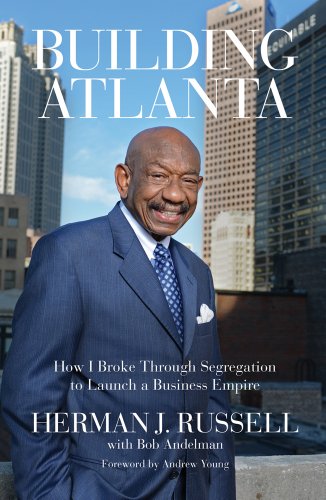
Born into a blue-collar family in the Jim Crow South, Herman J. Russell built a shoeshine business when he was twelve years old—and used the profits to buy a vacant lot where he built a duplex while he was still a teen. Over the next fifty years, he continued to build businesses, amassing one of the nation’s most profitable minority-owned conglomerates.
In Building Atlanta, Russell shares his inspiring life story and reveals how he overcame racism, poverty, and a debilitating speech impediment to become one of the most successful African American entrepreneurs, Atlanta civic leaders, and unsung heroes of the civil rights movement. Not just a typical rags-to-riches story, Russell achieved his success through focus, planning, and humility, and he shares his winning advice throughout. As a millionaire builder before the civil rights movement took hold and a friend of Dr. King, Ralph Abernathy, and Andrew Young, he quietly helped finance the civil rights crusade, putting up bond for protestors and providing the funds that kept King’s dream alive. He provides a wonderful behind-the-scenes look at the role the business community, both black and white working together, played in Atlanta’s peaceful progression from the capital of the racially divided Old South to the financial center of the New South.
Die Inhaltsangabe kann sich auf eine andere Ausgabe dieses Titels beziehen.
Über die Autorinnen und Autoren
Herman J. Russell was the founder, CEO, and chairman of the board of H. J. Russell and Company and Concessions International, as well as a nationally recognized entrepreneur, philanthropist, and Atlanta civic leader. Over the course of the last five decades he built one of the nation’s most profitable minority-owned business empires, transforming his father’s one-man plastering company into a construction and real estate conglomerate. Bob Andelman is the author or coauthor of 16 biographical, business, management, self-help, and sports books, including Built from Scratch with Bernie Marcus and Arthur Blank, the founders of Home Depot; Fans Not Customers with Vernon W. Hill, founder of Commerce Bank and Metro Bank UK; and Mind over Business with Ken Baum. He has written for BusinessWeek, Newsweek, and the St. Petersburg Times. He lives in St. Petersburg, Florida. Andrew Young is an activist and pastor, and a former politician and diplomat. He has served as the mayor of Atlanta, a congressman from Georgia’s fifth congressional district, and U.S. ambassador to the United Nations. A member of the Southern Christian Leadership Conference during the 1960s civil rights movement, he was a supporter and friend of Martin Luther King Jr. He lives in Atlanta, Georgia.
Herman J. Russell was the founder, CEO, and chairman of the board of H. J. Russell and Company and Concessions International, as well as a nationally recognized entrepreneur, philanthropist, and Atlanta civic leader. Over the course of the last five decades he built one of the nation's most profitable minority-owned business empires, transforming his father's one-man plastering company into a construction and real estate conglomerate. Bob Andelman is the author or coauthor of 16 biographical, business, management, self-help, and sports books, including Built from Scratch with Bernie Marcus and Arthur Blank, the founders of Home Depot; Fans Not Customers with Vernon W. Hill, founder of Commerce Bank and Metro Bank UK; and Mind over Business with Ken Baum. He has written for BusinessWeek, Newsweek, and the St. Petersburg Times. He lives in St. Petersburg, Florida. Andrew Young is an activist and pastor, and a former politician and diplomat. He has served as the mayor of Atlanta, a congressman from Georgia's fifth congressional district, and U.S. ambassador to the United Nations. A member of the Southern Christian Leadership Conference during the 1960s civil rights movement, he was a supporter and friend of Martin Luther King Jr. He lives in Atlanta, Georgia.
Auszug. © Genehmigter Nachdruck. Alle Rechte vorbehalten.
Building Atlanta
How I Broke Through Segregation to Launch a Business Empire
By Herman J. Russell, Bob AndelmanChicago Review Press Incorporated
Copyright © 2014 H. J. Russell
All rights reserved.
ISBN: 978-1-61374-694-3All rights reserved.
Contents
Foreword by Andrew Young,
Prologue,
PART I Growing, Working, and Learning,
1 Life, One Word at a Time,
2 High School Hero,
3 Tuskegee Institute: An Educated Class,
PART II H.J. Russell & Company: Atlanta's Do-It-All Contractor,
4 Black Entrepreneurship Takes Hold, Part 1,
5 Otelia Hackney: A Black Woman Emerges,
PART III Dr. King and the Civil Rights Movement,
6 Swimming at the Deep End of Social Change,
7 Black Entrepreneurship Takes Hold, Part 2,
8 My Big Greek Brother (From Another Mother),
9 Desegregating the Good Ol' Boys,
10 A Leg Up and Over: Joint Ventures,
PART IV It's a Living,
11 Before Takeoff and After Landing, Visit Us at Concessions International,
12 The Beer Years,
13 The H.J. Russell Institute of Good Common Sense,
14 Mixing Business and Politics,
PART V Family First,
15 The Wonders of Otelia,
16 Born Leaders,
17 ... And Hello to Sylvia,
PART VI Sixty Years Later,
18 All the Rest of My Days,
Acknowledgments,
Index,
CHAPTER 1
Life, One Word at a Time
Mrs. Johnson was teaching my fourth-grade class the multiplication tables. I had worked hard at memorizing the times tables, as we called them, so when it was my turn to recite, I went all the way to ten without a mistake. As usual, my classmates snickered when I spoke, but Mrs. Johnson, a plump young woman with a nice smile and an agreeable manner, was all smiles, which made me proud.
The rest of the morning went on as usual. After lunch Mrs. Johnson asked me to step into the hallway. That seemed strange to me; she'd never called me out before. She assured me that nothing was wrong, so I didn't worry about it.
As I was closing the classroom door behind me, I noticed two other teachers standing with Mrs. Johnson. They were smiling. Still, something felt strange.
"Herman," Mrs. Johnson said, "please recite your multiplication tables."
I relaxed. Mrs. Johnson wanted to show off my math skills! I was thrilled, because I wasn't used to being praised at school for anything.
"Go on, Herman," she said. "You can do it."
I took a deep breath.
"One times one equals one," I said softly, then paused. The teachers seemed to have no trouble understanding me, so I continued.
"Two times two equals four ..."
The teachers were quiet and attentive. Their anticipation seemed to grow by the passing moment. By the time I got to five times five they were really excited.
I paused, savoring a rare success.
"Go on," Mrs. Johnson said with a big grin. "Say six times six."
I heard her whisper to one of the other teachers, "Here it comes."
They both giggled.
Six was a word I had real trouble pronouncing. But I trusted Mrs. Johnson, so I did as I was told.
For a moment there was silence. I waited for the affirmation I was sure was coming. Suddenly the teachers burst into laughter. I don't mean they giggled. They laughed out loud without any restraint.
I couldn't believe my ears. I felt sick; my heart sank. I looked from face to face, but each was the same: they were laughing at me. All of them. Doubled over and breathless with laughter.
"Mrs. Johnson," guffawed one of the teachers, "how do you keep a straight face in class? Tell him to say it again!"
"Go on, Herman," said Mrs. Johnson. She was laughing so hard she could hardly talk. "Say it again."
I tried with all my might to enunciate, to pronounce the words correctly, but they came out the same way:
"S-s-shit times s-s-shit equals ..."
The teachers howled even louder than before.
I hung my head, crushed. These grown-ups whom I had trusted were laughing at me just like my nine-year-old classmates did. Even now it is hard to put words to the pain and betrayal I felt.
That experience could have broken me or made me bitter, but it did neither. Instead, it made me more self-reliant. That is what I learned that day. No matter how hard they tried, my parents couldn't always be there to protect me. When all was said and done, I had to look out for myself.
It was the first of many painful experiences in my life that left marks that will never go away. I can't say that I would choose it again if I had the choice, but I can say that out of that mess I gained something that has played a crucial role in my success: I learned to define myself. I refused to let the teasing and embarrassment make me bow my head. I kept on keeping on.
No one would ever again define me but me.
* * *
I was born in Atlanta on December 23, 1930.
At that time, the city was deeply segregated and the nation was wallowing in the Great Depression. The most popular song that year was "Brother, Can You Spare a Dime?" Its title was in the mouths of folks all over the country from coast to coast.
Herbert Hoover was our president then. As the result of Hoover's shortsighted policies, the national economy had crashed. Banks failed and even the most menial jobs became scarce. Camps of desperately poor people sprang up on roadsides and under bridges all over America. Folks showed how much they blamed Hoover for the mess the economy was in by calling the camps Hoovervilles.
The average income that year was $1,650, but my parents' combined income came nowhere near that. Even though a gallon of gasoline only cost ten cents and a loaf of bread seven cents, times were still hard for my family.
The average new home then cost $6,500 — but not in my neighborhood. Everyone where we lived was poor and lived in shotgun shacks — so called because they were narrowly built, with one room opening into the next in a way that a shot fired from a gun could go cleanly through the houses from front to back if all doors were left open. No one had front yards, just patches of dirt or gravel. My family's home was a shotgun shack and it certainly wasn't worth anywhere near $6,500, maybe because its thin walls let in as much cold winter air as they kept out. Or because it lacked hot water. Oh, and one other thing holding down its resale value: it was in a poor black neighborhood.
My earliest memory is of standing in front of a black, coal-burning stove. It was a strange feeling. The stove was hot, so it warmed my front. But the rest of the house was so cold that my back froze. I didn't know whether to sweat or shiver; I probably did both.
It sounds strange now, but although we lived in the city, we were so poor that not only did we not have hot water, we didn't have electricity, either. We read by candles and kerosene lamps and bathed in a big galvanized tin tub filled with water that we heated on our wood-burning stove. (Toilets were located on the back porch or in the backyard.) My mama washed our clothes in a black kettle in the yard, stirring it with a big wooden ladle until the water boiled, then rubbing her hands raw on the hard ridges of her washboard. She never experienced cooking on a gas range or washing clothes in a washing machine until she was a senior citizen, when I was grown and able to buy appliances for her.
My parents worked hard to provide for their eight children, but I can still remember having to put pasteboard in the bottom of my shoes when the leather wore out...
„Über diesen Titel“ kann sich auf eine andere Ausgabe dieses Titels beziehen.
Suchergebnisse für Building Atlanta: How I Broke Through Segregation to...

Beispielbild für diese ISBN
Building Atlanta: How I Broke Through Segregation to Launch a Business Empire
Anbieter: World of Books (was SecondSale), Montgomery, IL, USA
Verkäuferbewertung 5 von 5 Sternen

Zustand: Acceptable. Item in acceptable condition! Textbooks may not include supplemental items i.e. CDs, access codes etc. Artikel-Nr. 00106507846
Gebraucht kaufen
EUR 8,83
Versand gratis
Versand innerhalb von USA
Versand innerhalb von USA
Anzahl: 1 verfügbar
Beispielbild für diese ISBN
Building Atlanta : How I Broke Through Segregation to Launch a Business Empire
Verlag:
Chicago Review Press, Incorporated, 2014
ISBN 10: 1613746946
ISBN 13: 9781613746943
Gebraucht
Hardcover
Anbieter: Better World Books, Mishawaka, IN, USA
Verkäuferbewertung 5 von 5 Sternen
Zustand: Very Good. Former library copy. Pages intact with possible writing/highlighting. Binding strong with minor wear. Dust jackets/supplements may not be included. Includes library markings. Stock photo provided. Product includes identifying sticker. Better World Books: Buy Books. Do Good. Artikel-Nr. 5160383-6
Gebraucht kaufen
EUR 9,12
Versand gratis
Versand innerhalb von USA
Versand innerhalb von USA
Anzahl: 1 verfügbar
Beispielbild für diese ISBN
Building Atlanta : How I Broke Through Segregation to Launch a Business Empire
Verlag:
Chicago Review Press, Incorporated, 2014
ISBN 10: 1613746946
ISBN 13: 9781613746943
Gebraucht
Hardcover
Anbieter: Better World Books, Mishawaka, IN, USA
Verkäuferbewertung 5 von 5 Sternen
Zustand: Good. Former library copy. Pages intact with minimal writing/highlighting. The binding may be loose and creased. Dust jackets/supplements are not included. Includes library markings. Stock photo provided. Product includes identifying sticker. Better World Books: Buy Books. Do Good. Artikel-Nr. 9603450-6
Gebraucht kaufen
EUR 9,12
Versand gratis
Versand innerhalb von USA
Versand innerhalb von USA
Anzahl: 3 verfügbar
Beispielbild für diese ISBN
Building Atlanta: How I Broke Through Segregation to Launch a Business Empire
Anbieter: World of Books (was SecondSale), Montgomery, IL, USA
Verkäuferbewertung 5 von 5 Sternen
Zustand: Good. Item in good condition. Textbooks may not include supplemental items i.e. CDs, access codes etc. Artikel-Nr. 00109642081
Gebraucht kaufen
EUR 11,31
Versand gratis
Versand innerhalb von USA
Versand innerhalb von USA
Anzahl: 1 verfügbar
Beispielbild für diese ISBN
Building Atlanta: How I Broke Through Segregation to Launch a Business Empire
Verlag:
Chicago Review Press April 2014, 2014
ISBN 10: 1613746946
ISBN 13: 9781613746943
Gebraucht
Hardcover
Anbieter: Eagle Eye Books, Decatur, GA, USA
Verkäuferbewertung 4 von 5 Sternen

Hardcover. Zustand: Used. Artikel-Nr. 897962
Gebraucht kaufen
EUR 10,62
EUR 3,43 Versand
Versand innerhalb von USA
Versand innerhalb von USA
Anzahl: 1 verfügbar