
Verwandte Artikel zu The Senate Intelligence Committee Report on Torture...
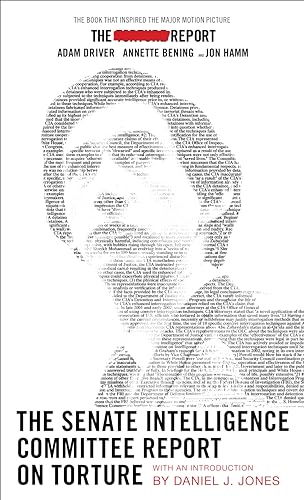
The Senate Intelligence Committee Report on Torture (Movie Tie-In Edition): Executive Summary of the Committee Study of the Central Intelligence Agency's Detention and Interrogation Program - Softcover
Inhaltsangabe
“The most extensive review of U.S. intelligence-gathering tactics in generations.” —Los Angeles Times
This is the Executive Summary of the “Committee Study of the Central Intelligence Agency’s Detention and Interrogation Program,” a U.S. Senate investigation -- a.k.a., The Torture Report.
Based on more than six million pages of classified CIA documents, this report details the establishment of a covert CIA program to secretly detain and interrogate suspected terrorists. Among other matters, the report describes the evolution of the CIA program, the use of the CIA’s so-called “enhanced interrogation techniques," and how the CIA misrepresented the program to the White House, the Department of Justice, Congress, and the American people.
Over five years in the making, it is presented here exactly as redacted and released by the United States government on December 9, 2014, with an introduction by Daniel J. Jones, who led the Senate investigation.
---
NOW A MAJOR MOTION PICTURE
The Report is a riveting thriller based on actual events. Idealistic staffer Daniel J. Jones (Adam Driver) is tasked by his boss Senator Dianne Feinstein (Annette Bening) to lead an investigation of the CIA’s Detention and Interrogation Program, which was created in the aftermath of 9/11. Jones’ relentless pursuit of the truth leads to explosive findings that uncover the lengths to which the nation’s top intelligence agency went to destroy evidence, subvert the law, and hide a brutal secret from the American public.
The Report is written and directed by Scott Z. Burns and features outstanding performances by a powerful cast led by Adam Driver, Annette Bening, and Jon Hamm.
Sarah Goldberg, Michael C. Hall, Douglas Hodge, Fajer Kaisi, Ted Levine, Jennifer Morrison, Tim Blake Nelson, Linda Powell, Matthew Rhys, T. Ryder Smith, Corey Stoll, and Maura Tierney complete the powerful ensemble that brings this essential story to life.
THIS EDITION OF THE SENATE INTELLIGENCE COMMITTEE REPORT ON TORTURE IS THE OFFICIAL TIE-IN TO THE MOTION PICTURE
Die Inhaltsangabe kann sich auf eine andere Ausgabe dieses Titels beziehen.
Über die Autorin bzw. den Autor
Daniel J. Jones, a former FBI analyst, was Chief Investigator for the U.S Senate Select Committee on Intelligence, leading the investigation of the CIA's Detention and Interrogation Program.
The United States Senate Select Committee on Intelligence was created by the U.S. Senate in 1976 as a bipartisan committee responsible for overseeing federal intelligence activities.
It is the committee's responsibility to “oversee and make continuing studies of the intelligence activities and programs of the United States Government,” to “submit to the Senate appropriate proposals for legislation and report to the Senate concerning such intelligence activities and programs,” and to “provide vigilant legislative oversight over the intelligence activities of the United States to assure that such activities are in conformity with the Constitution and laws of the United States.”
Auszug. © Genehmigter Nachdruck. Alle Rechte vorbehalten.
FOREWORD
On April 3, 2014, the Senate Select Committee on Intelligence voted
to send the Findings and Conclusions and the Executive Summary
of its final Study on the CIA’s Detention and Interrogation Program
to the President for declassification and subsequent public
release.
This action marked the culmination of a monumental effort
that officially began with the Committee’s decision to initiate the
Study in March 2009, but which had its roots in an investigation into
the CIA’s destruction of videotapes of CIA detainee interrogations
that began in December 2007.
The full Committee Study, which totals more than 6,700 pages,
remains classified but is now an official Senate report. The full report
has been provided to the White House, the CIA, the Department of
Justice, the Department of Defense, the Department of State, and
the Office of the Director of National Intelligence in the hopes that
it will prevent future coercive interrogation practices and inform the
management of other covert action programs.
As the Chairman of the Committee since 2009, I write to offer
some additional views, context, and history.
I began my service on the Senate Intelligence Committee in
January 2001. I remember testimony that summer from George Tenet,
the Director of Central Intelligence, that warned of a possible
major terrorist event against the United States, but without specifics
on the time, location, or method of attack. On September 11, 2001, the
world learned the answers to those questions that had consumed the
CIA and other parts of the U.S. Intelligence Community.*
* For information on the events at the CIA prior to September 11, 2001, see the Final
Report of the National Commission on Terrorist Attacks upon the United States (9/11
Commission) and Office of the Inspector General Report on Accountability With Respect
to the 9/11 Attacks.
I recall vividly watching the horror of that day, to include the
television footage of innocent men and women jumping out of the
World Trade Center towers to escape the fire. The images, and
the sounds as their bodies hit the pavement far below, will remain
with me for the rest of my life.
It is against that backdrop—the largest attack against the
American homeland in our history—that the events described in this
report were undertaken.
Nearly thirteen years later, the Executive Summary and Findings
and Conclusions of this report are being released. They are highly
critical of the CIA’s actions, and rightfully so. Reading them, it is easy
to forget the context in which the program began—not that the context
should serve as an excuse, but rather as a warning for the future.
It is worth remembering the pervasive fear in late 2001 and how
immediate the threat felt. Just a week after the September 11 attacks,
powdered anthrax was sent to various news organizations and to two
U.S. Senators. The American public was shocked by news of new
terrorist plots and elevations of the color-coded threat level of the
Homeland Security Advisory System. We expected further attacks
against the nation.
I have attempted throughout to remember the impact on the
nation and to the CIA workforce from the attacks of September 11,
2001. I can understand the CIA’s impulse to consider the use of every
possible tool to gather intelligence and remove terrorists from the
battlefield,* and CIA was encouraged by political leaders and the public
to do whatever it could to prevent another attack.
The Intelligence Committee as well often pushes intelligence
agencies to act quickly in response to threats and world events.
Nevertheless, such pressure, fear, and expectation of further terrorist
plots do not justify, temper, or excuse improper actions taken
by individuals or organizations in the name of national security. The
major lesson of this report is that regardless of the pressures and the
need to act, the Intelligence Community’s actions must always reflect
who we are as a nation, and adhere to our laws and standards. It is
precisely at these times of national crisis that our government must be
guided by the lessons of our history and subject decisions to internal
and external review.
Instead, CIA personnel, aided by two outside contractors, decided
to initiate a program of indefinite secret detention and the use
* It is worth repeating that covert action authorities approved by the President in September 2001 did not provide any authorization or contemplate coercive interrogations.
This Committee Study documents the abuses and countless
mistakes made between late 2001 and early 2009. The Executive
Summary of the Study provides a significant amount of new information,
based on CIA and other documents, to what has already
been made public by the Bush and Obama Administrations, as well
as non-governmental organizations and the press.
The Committee’s full Study is more than ten times the length
of the Executive Summary and includes comprehensive and excruciating
detail. The Study describes the history of the CIA’s Detention
and Interrogation Program from its inception to its termination, including
a review of each of the 119 known individuals who were held
in CIA custody.
The full Committee Study also provides substantially more detail
than what is included in the Executive Summary on the CIA’s
justification and defense of its interrogation program on the basis
that it was necessary and critical to the disruption of specific terrorist
plots and the capture of specific terrorists. While the Executive
Summary provides sufficient detail to demonstrate the inaccuracies
of each of these claims, the information in the full Committee Study
is far more extensive.
I chose not to seek declassification of the full Committee Study
at this time. I believe that the Executive Summary includes enough
information to adequately describe the CIA’s Detention and Interrogation
Program, and the Committee’s Findings and Conclusions
cover the entirety of the program. Seeking declassification of
the more than six thousand page report would have significantly
delayed the release of the Executive Summary. Decisions will be
made later on the declassification and release of the full 6,700-page
Study.
In 2009, when this effort began, I stated (in a press release coauthored
with the Vice Chairman of the Committee, Senator Kit
Bond) that “the purpose is to review the program and to shape detention
and interrogation policies in the future.” The review is now
done. It is my sincere and deep hope that through the release of these
Findings and Conclusions and Executive Summary that U.S. policy
will never again allow for secret indefinite detention and the use of
coercive interrogations. As the Study describes, prior to the attacks of
September 2001, the CIA itself determined from its own experience
with coercive interrogations, that such techniques “do not produce
x intelligence,” “will probably result in false answers,” and had historically
proven to be ineffective. Yet these conclusions were ignored. We
cannot again allow history to be forgotten and grievous past mistakes
to be repeated.
President Obama signed Executive Order 13491 in January 2009
to prohibit the CIA from holding detainees other than on a “shortterm,
transitory basis” and to limit interrogation techniques to those
included in the Army Field Manual. However, these limitations are
not part of U.S. law and could be overturned by a future president
with the stroke of a pen. They...
„Über diesen Titel“ kann sich auf eine andere Ausgabe dieses Titels beziehen.
Suchergebnisse für The Senate Intelligence Committee Report on Torture...

Beispielbild für diese ISBN
The Senate Intelligence Committee Report on Torture (Movie Tie-In Edition): Executive Summary of the Committee Study of the Central Intelligence Agency's Detention and Interrogation Program
Verlag:
Melville House (edition Media tie-in), 2019
ISBN 10: 1612198449
ISBN 13: 9781612198446
Gebraucht
Paperback
Anbieter: BooksRun, Philadelphia, PA, USA
Verkäuferbewertung 5 von 5 Sternen

Paperback. Zustand: Very Good. Media tie-in. It's a well-cared-for item that has seen limited use. The item may show minor signs of wear. All the text is legible, with all pages included. It may have slight markings and/or highlighting. Artikel-Nr. 1612198449-11-1
Gebraucht kaufen
EUR 6,54
Versand gratis
Versand innerhalb von USA
Versand innerhalb von USA
Anzahl: 1 verfügbar
Beispielbild für diese ISBN
The Senate Intelligence Committee Report on Torture (Movie Tie-In Edition) : Executive Summary of the Committee Study of the Central Intelligence Agency's Detention and Interrogation Program
Verlag:
Melville House Publishing, 2019
ISBN 10: 1612198449
ISBN 13: 9781612198446
Gebraucht
Softcover
Anbieter: Better World Books, Mishawaka, IN, USA
Verkäuferbewertung 5 von 5 Sternen
Zustand: Good. Media Tie In. Former library copy. Pages intact with minimal writing/highlighting. The binding may be loose and creased. Dust jackets/supplements are not included. Includes library markings. Stock photo provided. Product includes identifying sticker. Better World Books: Buy Books. Do Good. Artikel-Nr. 45805899-6
Gebraucht kaufen
EUR 6,77
Versand gratis
Versand innerhalb von USA
Versand innerhalb von USA
Anzahl: 1 verfügbar
Beispielbild für diese ISBN
The Senate Intelligence Committee Report on Torture (Movie Tie-In Edition) : Executive Summary of the Committee Study of the Central Intelligence Agency's Detention and Interrogation Program
Verlag:
Melville House Publishing, 2019
ISBN 10: 1612198449
ISBN 13: 9781612198446
Gebraucht
Softcover
Anbieter: Better World Books, Mishawaka, IN, USA
Verkäuferbewertung 5 von 5 Sternen
Zustand: Good. Media Tie In. Pages intact with minimal writing/highlighting. The binding may be loose and creased. Dust jackets/supplements are not included. Stock photo provided. Product includes identifying sticker. Better World Books: Buy Books. Do Good. Artikel-Nr. 18445626-6
Gebraucht kaufen
EUR 6,77
Versand gratis
Versand innerhalb von USA
Versand innerhalb von USA
Anzahl: 1 verfügbar
Beispielbild für diese ISBN
The Senate Intelligence Committee Report on Torture (Movie Tie-In Edition): Executive Summary of the Committee Study of the Central Intelligence Agency's Detention and Interrogation Program
Anbieter: Wonder Book, Frederick, MD, USA
Verkäuferbewertung 5 von 5 Sternen
Zustand: Good. Good condition. A copy that has been read but remains intact. May contain markings such as bookplates, stamps, limited notes and highlighting, or a few light stains. Artikel-Nr. N03Q-00322
Gebraucht kaufen
EUR 8,48
Versand gratis
Versand innerhalb von USA
Versand innerhalb von USA
Anzahl: 1 verfügbar
Beispielbild für diese ISBN
The Senate Intelligence Committee Report on Torture (Movie Tie-In Edition): Executive Summary of the Committee Study of the Central Intelligence Agenc
Verlag:
Melville House Publishing, 2019
ISBN 10: 1612198449
ISBN 13: 9781612198446
Gebraucht
Paperback
Anbieter: ThriftBooks-Dallas, Dallas, TX, USA
Verkäuferbewertung 5 von 5 Sternen
Paperback. Zustand: Fair. No Jacket. Readable copy. Pages may have considerable notes/highlighting. ~ ThriftBooks: Read More, Spend Less. Artikel-Nr. G1612198449I5N00
Gebraucht kaufen
EUR 8,57
Versand gratis
Versand innerhalb von USA
Versand innerhalb von USA
Anzahl: 1 verfügbar
Beispielbild für diese ISBN
The Senate Intelligence Committee Report on Torture (Movie Tie-In Edition): Executive Summary of the Committee Study of the Central Intelligence Agenc
Verlag:
Melville House Publishing, 2019
ISBN 10: 1612198449
ISBN 13: 9781612198446
Gebraucht
Paperback
Anbieter: ThriftBooks-Dallas, Dallas, TX, USA
Verkäuferbewertung 5 von 5 Sternen
Paperback. Zustand: Good. No Jacket. Pages can have notes/highlighting. Spine may show signs of wear. ~ ThriftBooks: Read More, Spend Less. Artikel-Nr. G1612198449I3N00
Gebraucht kaufen
EUR 8,57
Versand gratis
Versand innerhalb von USA
Versand innerhalb von USA
Anzahl: 1 verfügbar
Beispielbild für diese ISBN
The Senate Intelligence Committee Report on Torture: (Movie Tie-in Edition)
Anbieter: WorldofBooks, Goring-By-Sea, WS, Vereinigtes Königreich
Verkäuferbewertung 5 von 5 Sternen
Paperback. Zustand: Fair. A readable copy of the book which may include some defects such as highlighting and notes. Cover and pages may be creased and show discolouration. Artikel-Nr. GOR015046330
Gebraucht kaufen
EUR 10,95
EUR 6,69 Versand
Versand von Vereinigtes Königreich nach USA
Versand von Vereinigtes Königreich nach USA
Anzahl: 2 verfügbar
Beispielbild für diese ISBN
The Senate Intelligence Committee Report on Torture
Anbieter: PBShop.store US, Wood Dale, IL, USA
Verkäuferbewertung 5 von 5 Sternen
PAP. Zustand: New. New Book. Shipped from UK. Established seller since 2000. Artikel-Nr. GB-9781612198446
Beispielbild für diese ISBN
The Senate Intelligence Committee Report on Torture: (Movie Tie-in Edition)
Verlag:
Melville House Publishing, 2019
ISBN 10: 1612198449
ISBN 13: 9781612198446
Gebraucht
Paperback
Anbieter: Orbiting Books, Hereford, Vereinigtes Königreich
Verkäuferbewertung 5 von 5 Sternen
Paperback. Zustand: Good. Bumped edges. Slight scratches to cover. Next day dispatch from the UK (Mon-Fri). Please contact us with any queries. Artikel-Nr. mon0000715213
Gebraucht kaufen
EUR 10,82
EUR 14,33 Versand
Versand von Vereinigtes Königreich nach USA
Versand von Vereinigtes Königreich nach USA
Anzahl: 1 verfügbar
Beispielbild für diese ISBN
The Senate Intelligence Committee Report on Torture
Anbieter: PBShop.store UK, Fairford, GLOS, Vereinigtes Königreich
Verkäuferbewertung 5 von 5 Sternen
PAP. Zustand: New. New Book. Shipped from UK. Established seller since 2000. Artikel-Nr. GB-9781612198446
Neu kaufen
EUR 19,56
EUR 6,00 Versand
Versand von Vereinigtes Königreich nach USA
Versand von Vereinigtes Königreich nach USA
Anzahl: 7 verfügbar