
Verwandte Artikel zu Exodus
Inhaltsangabe
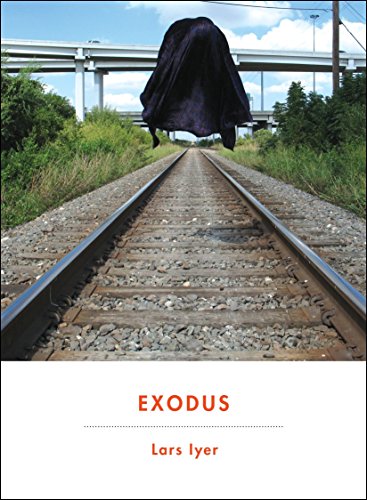
A wickedly funny and satisfyingly highbrow black comedy about the collapse of Western academic institutions under the weight of neoliberal economics and crushing, widespread idiocy.
Lars and W., the two preposterous philosophical anti-heroes of Spurious and Dogma—called “Uproarious” by the New York Times Book Review—return and face a political, intellectual, and economic landscape in a state of total ruination.
With philosophy professors being moved to badminton departments and gin in short supply—although not short enough—the two hapless intellectuals embark on a relentless mission. Well, several relentless missions. For one, they must help gear a guerilla philosophy movement—conducted outside the academy, perhaps under bridges—that will save the study of philosophy after the long, miserable decades of intellectual desert known as the early 21st-century.
For another, they must save themselves, perhaps by learning to play badminton after all. Gin isn’t free, you know.
Die Inhaltsangabe kann sich auf eine andere Ausgabe dieses Titels beziehen.
Über die Autorin bzw. den Autor
LARS IYER is a lecturer in philosophy at the University of Newcastle upon Tyne. He is the author of two books on Blanchot (Blanchot’s Communism: Art, Philosophy, Politics and Blanchot’s Vigilance: Phenomenology, Literature, Ethics) and his blog Spurious. He is also a contributor to Britain’s leading literary blog, Ready, Steady, Book.
Auszug. © Genehmigter Nachdruck. Alle Rechte vorbehalten.
He has things to tell me, W. says when I meet him at Newcastle airport in the morning. Great things! But first he needs a pint. He needs to regroup.
W.’s plane was full of obese children, he says. — ‘When did everyone get so fat?’ They ran up and down the aisle, unhindered by their girth. But W. got down to some reading despite their bellowing. He underlined passages and wrote in his notebook.
And what was I reading, as I waited for him? When I tell him, he nods and murmurs. — ‘Mazzarri, oh I see. Flusser, ah that’s far too complex for Lars. . .’
I’ll have to pay for the beer, W. says in The Trent. He no longer carries money, he says. He’s like the Queen.
W. wonders why I always make my lips — my great fat lips — into a funnel as I lift my drink. No doubt it’s all the better to pour it down, pint after pint: a funnel for the two pints I always neck at the bar before I sit down, and for the dregs of pints that other people leave behind. . .
A legal technicality, W. says over his second pint. Sacked by his university when they closed down the humanities, and what saved him? A legal technicality.
It’s not as if he hadn’t tried to defend himself, W. says. On the contrary, he’d mounted a heroic defence! At his termination hearing he performed a great oration, his version of Socrates’s apology to the jurists of Athens. How he spoke!, W. says. Hours and hours without cease! The committee groaned, they slept. They tried to interrupt, begged to adjourn, but each time W. simply held up his hand. He wasn’t done.
He showed charts and circulated handouts, W. says. He pushed his Summa Idiotica across the table: four hundred pages to make the case against his dismissal. Chapters! An index! A table of contents! Twenty-four appendices! It will stand as his finest work, W. says. But it was all for nothing.
A legal technicality, W. says. That’s what saved him. Which is ironic, because it was through a legal technicality that they tried to get rid of him.
His Union uncovered it. Something about the way the college management had had him marched off campus, when they suspected him of sedition. . . Something about interfering with his freedom of movement, with his freedom of speech. . .W. had a case for legal action against the College, his Union said. He could create bad PR for the College. Bad press! . . . At a stroke, W. was unsackable.
A legal technicality. It’s the contingency of his salvation that bothers him, W. says. He was saved, but he might not have been. And if he was saved, it wasn’t because of anything he’d done. It wasn’t because of fate, or grace. It wasn’t because of his apology. It wasn’t because he’d been chosen in some way. . .
But he’s going to act as though he was chosen, W. says. As though he was saved by grace. As though a divine mission has been allotted to him.
That’s what our lecture tour is to be about, W.’s decided. Our great lecture tour of Great Britain, our last look at the ruins of the humanities. We are to investigate the conditions of his sacking!, W. says. The conditions of the destruction of philosophy at his university — of the destruction of philosophy in Britain — of the destruction of philosophy in the whole world! The end days are upon us, and we must witness them at first hand, W. says. The Pharoah is drowning the children of philosophy. — ‘Drink up, fat boy!, there’s not much time’.
* * *
Newcastle. My office. The collected works of Kierkegaard, spanning the windowsill. W.’s always admired them — their sober spines, the different colours against which their titles appear, varying from volume to volume (Point of View in charcoal, The Book on Adler in bronze, Fear and Trembling in a handsome burgundy). And then there’s the sheer bulk of them, with my improvised bookmarks sticking out at random.— ‘You mean you’ve actually read something!’ W says.
And I have read them. The books look worn, tired. — ‘Is that blood?’, W. wonders, of the blotches in the margins of Practice in Christianity. ‘Are those tears?’ There are even annotations, W. notices. ‘What did you write?’, W. asks, turning the book sideways. He can hardly make out a line. Iration — what does that mean? Livity — what is that?
Why is it that Kierkegaard attracts lunatics?, W. says. He’s seen it before, with some of his more desperate students. The half-wild ones, who’ve come off the streets after years of destitution. The half-mad ones, who want only to lose themselves in some great task of scholarship, but who are made for anything but a great task of scholarship. . .
In truth, I know more about Kierkegaard than he does, W. admits. It’s my Danish connection. Of course, I’m only half Danish, W. says. Half Danish and half Indian, a peculiar combination, he says. He, of course, is Irish on one side of his family and from Jewish stock — Ostjude stock — on the other. The wrong background for Kierkegaard, W. says.
But he wants to understand Kierkegaard, W. says. Kierkegaard’s become fateful to him. Kierkegaard is the philosopher of despair, W. says, and it’s despair we’ll have to think, if we’re to confront the closure of philosophy departments in Britain. It’s the philosopher of despair we’ll have to read, if we’re to grasp the conditions of that closure, which is to say, capitalism itself.
I’m to be his guide in the mountains of Kierkegaard, W. says. His sherpa. I’m to carry his things. What should he bring? His learning, W. says. His years of study in the philosophy of religion. He’ll instruct me as we climb, W. says. He’ll point things out, and when he gets tired, I can give him a piggy-back.
‘God, what a racket! How do you do any work?’, W. says.
The sound of drilling, high pitched, then lower pitched as they cut through something. The fizz of a lorry’s brakes. The clattering of metal poles being thrown onto metal poles. A heavy chugging in the distance. The faraway throbbing of engines. . .
They’re rebuilding the campus, I tell W. They’re putting up new office blocks for the private partners of the university.
He requires silence when he works, W. says. Silence and calm, in his study in the pre-dawn morning, just the pigeons flapping their wings and cooing to annoy him, and Sal asleep in the other room.
Stand well clear, vehicle reversing: a warning from a tannoyed male voice. And now warnings overlapping with warnings, as many vehicles reverse: Stand well clear. . . Stand well clear. . . Stand well clear. . . And now a high pitched throb, very loud, like a helicopter landing. — ‘Surely a helicopter isn’t landing?’, W. says. ‘A helicopter couldn’t be landing. . .’
We walk out through the campus, through the narrow pedestrian routes left to us alongside the building works. W. feels so channelled, he says. We’re being route-marched, he says, staff and student alike, heads down and in lockstep. — ‘Where are they leading us?’, he says. ‘Where are we going?’
A thick smell — is it tar? They must be pouring tar. They must be making some kind of route for the lorries. A hiss, as of gas escaping. The high beeping of a reversing vehicle. — ‘They’re going to crush us!’, W....
„Über diesen Titel“ kann sich auf eine andere Ausgabe dieses Titels beziehen.
Suchergebnisse für Exodus

Beispielbild für diese ISBN
Exodus
Verlag:
Melville House (edition ), 2013
ISBN 10: 1612191827
ISBN 13: 9781612191829
Gebraucht
Paperback
Anbieter: BooksRun, Philadelphia, PA, USA
Verkäuferbewertung 5 von 5 Sternen

Paperback. Zustand: Fair. The item might be beaten up but readable. May contain markings or highlighting, as well as stains, bent corners, or any other major defect, but the text is not obscured in any way. Artikel-Nr. 1612191827-7-1-13
Gebraucht kaufen
EUR 4,28
Versand gratis
Versand innerhalb von USA
Versand innerhalb von USA
Anzahl: 1 verfügbar
Beispielbild für diese ISBN
Exodus
Anbieter: World of Books (was SecondSale), Montgomery, IL, USA
Verkäuferbewertung 5 von 5 Sternen
Zustand: Good. Item in good condition. Textbooks may not include supplemental items i.e. CDs, access codes etc. Artikel-Nr. 00105924649
Gebraucht kaufen
EUR 5,39
Versand gratis
Versand innerhalb von USA
Versand innerhalb von USA
Anzahl: 1 verfügbar
Beispielbild für diese ISBN
Exodus
Verlag:
Melville House Publishing, 2013
ISBN 10: 1612191827
ISBN 13: 9781612191829
Gebraucht
Paperback
Anbieter: ThriftBooks-Dallas, Dallas, TX, USA
Verkäuferbewertung 5 von 5 Sternen
Paperback. Zustand: Fair. No Jacket. Readable copy. Pages may have considerable notes/highlighting. ~ ThriftBooks: Read More, Spend Less. Artikel-Nr. G1612191827I5N00
Gebraucht kaufen
EUR 6,00
Versand gratis
Versand innerhalb von USA
Versand innerhalb von USA
Anzahl: 1 verfügbar
Beispielbild für diese ISBN
Exodus
Verlag:
Melville House Publishing, 2013
ISBN 10: 1612191827
ISBN 13: 9781612191829
Gebraucht
Paperback
Anbieter: ThriftBooks-Atlanta, AUSTELL, GA, USA
Verkäuferbewertung 5 von 5 Sternen
Paperback. Zustand: Fair. No Jacket. Former library book; Readable copy. Pages may have considerable notes/highlighting. ~ ThriftBooks: Read More, Spend Less. Artikel-Nr. G1612191827I5N10
Gebraucht kaufen
EUR 6,00
Versand gratis
Versand innerhalb von USA
Versand innerhalb von USA
Anzahl: 1 verfügbar
Beispielbild für diese ISBN
Exodus
Verlag:
Melville House Publishing, 2013
ISBN 10: 1612191827
ISBN 13: 9781612191829
Gebraucht
Paperback
Anbieter: ThriftBooks-Dallas, Dallas, TX, USA
Verkäuferbewertung 5 von 5 Sternen
Paperback. Zustand: Good. No Jacket. Pages can have notes/highlighting. Spine may show signs of wear. ~ ThriftBooks: Read More, Spend Less. Artikel-Nr. G1612191827I3N00
Gebraucht kaufen
EUR 6,00
Versand gratis
Versand innerhalb von USA
Versand innerhalb von USA
Anzahl: 1 verfügbar
Beispielbild für diese ISBN
Exodus
Verlag:
Melville House Publishing, 2013
ISBN 10: 1612191827
ISBN 13: 9781612191829
Gebraucht
Paperback
Anbieter: ThriftBooks-Dallas, Dallas, TX, USA
Verkäuferbewertung 5 von 5 Sternen
Paperback. Zustand: Very Good. No Jacket. Former library book; May have limited writing in cover pages. Pages are unmarked. ~ ThriftBooks: Read More, Spend Less. Artikel-Nr. G1612191827I4N10
Gebraucht kaufen
EUR 6,00
Versand gratis
Versand innerhalb von USA
Versand innerhalb von USA
Anzahl: 1 verfügbar
Beispielbild für diese ISBN
Exodus
Verlag:
Melville House Publishing, 2013
ISBN 10: 1612191827
ISBN 13: 9781612191829
Gebraucht
Softcover
Anbieter: Better World Books: West, Reno, NV, USA
Verkäuferbewertung 5 von 5 Sternen
Zustand: Fine. Used book that is in almost brand-new condition. May contain a remainder mark. Better World Books: Buy Books. Do Good. Artikel-Nr. 58075714-75
Gebraucht kaufen
EUR 8,17
Versand gratis
Versand innerhalb von USA
Versand innerhalb von USA
Anzahl: 1 verfügbar
Beispielbild für diese ISBN
Exodus
Verlag:
Melville House Publishing, 2013
ISBN 10: 1612191827
ISBN 13: 9781612191829
Gebraucht
Softcover
Anbieter: Better World Books, Mishawaka, IN, USA
Verkäuferbewertung 5 von 5 Sternen
Zustand: Very Good. Former library copy. Pages intact with possible writing/highlighting. Binding strong with minor wear. Dust jackets/supplements may not be included. Includes library markings. Stock photo provided. Product includes identifying sticker. Better World Books: Buy Books. Do Good. Artikel-Nr. GRP85651377
Gebraucht kaufen
EUR 8,17
Versand gratis
Versand innerhalb von USA
Versand innerhalb von USA
Anzahl: 1 verfügbar
Beispielbild für diese ISBN
Exodus
Verlag:
Melville House Publishing, 2013
ISBN 10: 1612191827
ISBN 13: 9781612191829
Gebraucht
Softcover
Anbieter: Better World Books: West, Reno, NV, USA
Verkäuferbewertung 5 von 5 Sternen
Zustand: Good. Former library copy. Pages intact with minimal writing/highlighting. The binding may be loose and creased. Dust jackets/supplements are not included. Includes library markings. Stock photo provided. Product includes identifying sticker. Better World Books: Buy Books. Do Good. Artikel-Nr. GRP80362572
Gebraucht kaufen
EUR 8,17
Versand gratis
Versand innerhalb von USA
Versand innerhalb von USA
Anzahl: 1 verfügbar
Beispielbild für diese ISBN
Exodus
Verlag:
Melville House Publishing, 2013
ISBN 10: 1612191827
ISBN 13: 9781612191829
Gebraucht
Softcover
Anbieter: Better World Books Ltd, Dunfermline, Vereinigtes Königreich
Verkäuferbewertung 5 von 5 Sternen
Zustand: Good. Former library copy. Pages intact with minimal writing/highlighting. The binding may be loose and creased. Dust jackets/supplements are not included. Includes library markings. Stock photo provided. Product includes identifying sticker. Better World Books: Buy Books. Do Good. Artikel-Nr. GRP80362572
Gebraucht kaufen
EUR 6,60
EUR 5,83 Versand
Versand von Vereinigtes Königreich nach USA
Versand von Vereinigtes Königreich nach USA
Anzahl: 1 verfügbar