
Verwandte Artikel zu Samurai Wisdom Stories: Tales from the Golden Age of...
Inhaltsangabe
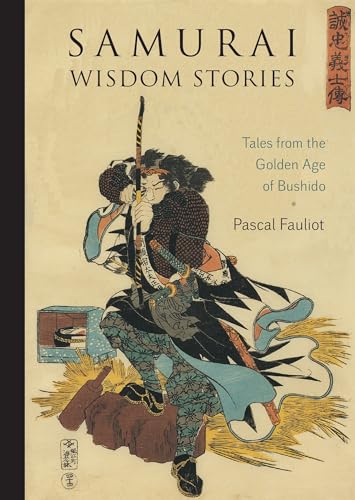
A collection of samurai stories of battles, strategy, conflict, and intrigue—featuring some of the greatest warriors and military leaders of the samurai era
Martial artist and samurai scholar Pascal Fauliot has collected and retold twenty-eight wisdom tales of the samurai era. The tales are set in the golden age of bushido and represent the pinnacle of traditional Japanese culture in which aristocratic tastes, feudal virtues, and martial skills come together with the implacable insights of Zen. Some of the stories—like “The Samurai and the Zen Cat”—are iconic; others are obscure. They feature notable figures from samurai history and legend: military leaders and strategists such as Oda Nobunaga, Toyotomi Hideyoshi, and Tokugawa Ieyasu; sword masters; ronin; the warrior monk Benkei, and the ninja-samurai Kakei Juzo, among many others.
These samurai stories are pithy and engaging, and include tales of battle, strategy, loyalty conflicts, court intrigues, breakthroughs in a warrior’s development, and vengeance achieved or foregone. Each tale reveals a gesture or an outcome that represents greater insight or higher virtue.
Die Inhaltsangabe kann sich auf eine andere Ausgabe dieses Titels beziehen.
Über die Autorin bzw. den Autor
PASCAL FAULIOT is a martial arts teacher and storyteller who specializes in retelling traditional Japanese martial arts and Zen wisdom tales and legends. He has written eighteen books, published by Albin Michel and Seuil in France.
Auszug. © Genehmigter Nachdruck. Alle Rechte vorbehalten.
Samurai Wisdom Stories
Tales from the Golden Age of Bushido
By Pascal Fauliot, Sherab Chödzin KohnShambhala Publications, Inc.
Copyright © 2011 Éditions du Seuil
All rights reserved.
ISBN: 978-1-61180-413-3All rights reserved.
Contents
Introduction, ix,
Making the Cuckoo Sing, 1,
The Duel on the Gojo Bridge, 3,
The Samurai and the Zen Cat, 9,
The Three Bonsai, 13,
The Courtesan and the Torturer, 19,
The Arrows of the Mori, 23,
The Art of Winning without a Fight, 25,
The Tiger of Kai and the Dragon of Echigo, 29,
The Cherry-Tree Branch, 39,
In the School of the Gentleman Bandit, 43,
The Second Arrow, 51,
The Strategy of the Gods, 55,
The Daimyo and His Bodyguard, 61,
The Revenge of the Samurai Wife, 65,
The Invisible Target, 73,
Hideyoshi's Eighth Thought,
Trial by Horse,
The Challenge of Flowers for Tea,
The Apparition of the Buddha,
The Return of the Ronin,
The Shogun and the Ninja,
The Archery Contest,
The Shogun and the Assassin,
The Song of the Nightingale,
Master Banzo's Bamboo Stick,
Judge Ooka and the Statue ofJizo,
Asari's Shadow,
The Samurai and the Young Emperor,
Glossary,
Acknowledgments,
Sources and Credits,
CHAPTER 1
Making the Cuckoo Sing
One day the three great men who had reunified Japan at the end of the sixteenth century were sitting in a garden. They were Oda Nobunaga, the lord of the province of Owari; Toyotomi Hideyoshi, one of his generals; and Tokugawa Ieyasu, his powerful ally. A hototogisu, a bird of the cuckoo family, landed on the branch of a cherry tree. Someone proposed to the three great strategist that they engage in a poetry contest on the theme of "how to make a bird sing" Each of them replied with a haiku that revealed his true nature and presaged the future.
Nobunaga came out with his verse first:
Hototogisu
If you won't sing
I will wring your neck!
The daimyo of Owari was known for his hot-headed temperament. He was called the Demon King. A tactician who slaughtered his enemies mercilessly, he had succeeded in conquering several provinces. He was betrayed by one of his vassals and had to commit hara-kiri before he was able to finish reunifying Japan.
Then Hideyoshi, with a malicious smile, recited the following:
Hototogisu,
I will find a way
To make you sing!
Hideyoshi had the nickname saru, the monkey, and he was as sly and ugly as a macaque. Despite being the son of a poor farmer, he rose to an exceptional position in a Japan that was entirely based on class hierarchy. He was cunning and intrepid, a gifted speaker, and a politician of subtlety. It was he who finished reuniting Japan and obtained the supreme power for himself.
Finally, Ieyasu recited his poem:
Hototogisu
I will wait
Until you feel like singing.
And in fact this young lord of high lineage proved very capable of waiting for his moment to arrive. He was a man of patience, shrewdness, and caution. His nickname was furu tanuki, the Japanese equivalent of "old fox." In the end, he took power from Hideyoshi's son and completed the pacification of Japan. He founded the dynasty of the Tokugawa shoguns, which ruled the country for more than two centuries.
CHAPTER 2The Duel on the Gojo Bridge
In Kyoto, on the Gojo Bridge, the formidable monk-warrior Benkei stood waiting. He was a formidable figure, as big and broad as a sumo wrestler. Each night, brandishing his battle pike, his naginata, he barred the way over the wooden span to any samurai who might be bold enough to try to cross it. His custom was to provoke the samurai he met on the bridge into duels, and when he defeated them he confiscated their swords, or katanas — for Benkei had sworn an oath to take one thousand katanas from warriors of the Heike clan, a clan that had seized political power and was making abusive use of it. Benkei planned to sell the swords to pay for the reconstruction of a certain temple. Being a past master of the martial arts, possessed of colossal strength and amazing speed, he had already disarmed nine hundred and ninety-nine samurai. He only had to confiscate one more sword to fulfill his oath.
That night, at the hour of the cow, a tuneful sound was heard from the far side of the bridge. Amid the curling wisps of mist rising from the river, Benkei saw a slender figure approaching, playing a flute. The flute player was wrapped in folds of richly decorated silken kimonos, and the face was hidden beneath the veils of a wide-brimmed hat. The monk-warrior stood aside to permit the passage of this personage, whom he took to be a woman. But when out of politeness he discreetly lowered his gaze, he saw, protruding from the passing figure's obi, the handle of a sword of very great value.
"Who are you?" Benkei called out in a gruff voice.
The figure continued its graceful progress across the bridge without answering and without ceasing to bring forth melodious music from the bamboo flute. With mind-boggling dexterity, using the butt end of his naginata, the fearsome monk lifted the veils of the wide-brimmed hat. The mysterious person whirled about and regarded him with fury in his eyes.
"What insolence, boor! What manners are these for dealing with a gentleman!? Beg forgiveness at once!"
Benkei saw that, despite its feminine air, the figure standing before him was a young man.
"I asked you a question," Benkei said, "but you did not show me the courtesy of a reply. I can see clearly enough now that you are one of those pretentious pages who serves at the Heike court!"
"Really now, arrogant monk, you are becoming more offensive by the second. It seems I might have to teach you a lesson!
"Goodness me, imagine that! The little lion cub bares its claws. It considers itself the equal of the warrior called the Demon of Mount Hiei. But I won't trouble myself with squashing a mere gnat. Come then, give me your sword and I'll let you pass."
With humor in his eye and mockery in his smile, the young man issued a challenge: "Take it yourself, if you can!"
The burly monk struck out at the offender with lightning speed, only to find his arm flailing in the void. The youth had sidestepped with the agility of a cat. With his next attack, Benkei was able to grab the flute, which he angrily threw down onto the bridge. With a dry rattling sound, it rolled along the planks. The youth set his hand on the hilt of his sword and said, "I don't know what is keeping me from ending your life! That flute was the only keepsake I had left from my mother."
Taking his battle pike in both hands, the monk took the en garde position and roared, "All right, that's it! Draw your sword and let's get it over with! Since you want to play the samurai, I'll give you a taste of my naginata!"
The youth let go of the handle of his sword and drew his fan from his belt.
"This little accessory will do the job," he replied.
Insulted to the core, fearsome Benkei decided to give the brat a spanking with the flat of his blade. The young page dodged the blade of the pike, leapt over its shaft, and struck the giant on the forehead with his fan. Furious, the mountain of muscle began twirling his weapon in such a way that cut followed thrust with the speed of the paddles of a mill wheel in a rapid current.
Like a graceful butterfly on wings of silk, the page fluttered and swirled, as...
„Über diesen Titel“ kann sich auf eine andere Ausgabe dieses Titels beziehen.
Suchergebnisse für Samurai Wisdom Stories: Tales from the Golden Age of...

Beispielbild für diese ISBN
Samurai Wisdom Stories: Tales from the Golden Age of Bushido
Anbieter: World of Books (was SecondSale), Montgomery, IL, USA
Verkäuferbewertung 5 von 5 Sternen

Zustand: Good. Item in good condition. Textbooks may not include supplemental items i.e. CDs, access codes etc. Artikel-Nr. 00106741084
Gebraucht kaufen
EUR 5,50
Versand gratis
Versand innerhalb von USA
Versand innerhalb von USA
Anzahl: 1 verfügbar
Beispielbild für diese ISBN
Samurai Wisdom Stories: Tales from the Golden Age of Bushido
Anbieter: ThriftBooks-Dallas, Dallas, TX, USA
Verkäuferbewertung 5 von 5 Sternen
Paperback. Zustand: Very Good. No Jacket. May have limited writing in cover pages. Pages are unmarked. ~ ThriftBooks: Read More, Spend Less. Artikel-Nr. G1611804132I4N00
Gebraucht kaufen
EUR 6,29
Versand gratis
Versand innerhalb von USA
Versand innerhalb von USA
Anzahl: 1 verfügbar
Foto des Verkäufers
Samurai Wisdom Stories: Tales from the Golden Age of Bushido
Verlag:
Shambhala Publications Inc, 2017
ISBN 10: 1611804132
ISBN 13: 9781611804133
Gebraucht
paperback
Anbieter: WeBuyBooks, Rossendale, LANCS, Vereinigtes Königreich
Verkäuferbewertung 5 von 5 Sternen
paperback. Zustand: Good. Most items will be dispatched the same or the next working day. A copy that has been read but remains in clean condition. All of the pages are intact and the cover is intact and the spine may show signs of wear. The book may have minor markings which are not specifically mentioned. Artikel-Nr. rev6704549469
Gebraucht kaufen
EUR 9,41
EUR 5,84 Versand
Versand von Vereinigtes Königreich nach USA
Versand von Vereinigtes Königreich nach USA
Anzahl: 1 verfügbar
Beispielbild für diese ISBN
Samurai Wisdom Stories: Tales from the Golden Age of Bushido
Anbieter: medimops, Berlin, Deutschland
Verkäuferbewertung 5 von 5 Sternen
Zustand: very good. Gut/Very good: Buch bzw. Schutzumschlag mit wenigen Gebrauchsspuren an Einband, Schutzumschlag oder Seiten. / Describes a book or dust jacket that does show some signs of wear on either the binding, dust jacket or pages. Artikel-Nr. M01611804132-V
Gebraucht kaufen
EUR 12,93
EUR 10,00 Versand
Versand von Deutschland nach USA
Versand von Deutschland nach USA
Anzahl: 1 verfügbar
Beispielbild für diese ISBN
Samurai Wisdom Stories
Anbieter: PBShop.store US, Wood Dale, IL, USA
Verkäuferbewertung 5 von 5 Sternen
PAP. Zustand: New. New Book. Shipped from UK. Established seller since 2000. Artikel-Nr. DB-9781611804133
Beispielbild für diese ISBN
Samurai Wisdom Stories
Anbieter: PBShop.store UK, Fairford, GLOS, Vereinigtes Königreich
Verkäuferbewertung 5 von 5 Sternen
PAP. Zustand: New. New Book. Shipped from UK. Established seller since 2000. Artikel-Nr. DB-9781611804133
Neu kaufen
EUR 21,79
EUR 3,92 Versand
Versand von Vereinigtes Königreich nach USA
Versand von Vereinigtes Königreich nach USA
Anzahl: 1 verfügbar
Beispielbild für diese ISBN
Samurai Wisdom Stories
Verlag:
Shambhala Publications, Incorporated, 2017
ISBN 10: 1611804132
ISBN 13: 9781611804133
Neu
Softcover
Anbieter: Majestic Books, Hounslow, Vereinigtes Königreich
Verkäuferbewertung 4 von 5 Sternen

Zustand: New. pp. 160. Artikel-Nr. 372152063
Neu kaufen
EUR 19,28
EUR 7,75 Versand
Versand von Vereinigtes Königreich nach USA
Versand von Vereinigtes Königreich nach USA
Anzahl: 1 verfügbar
Beispielbild für diese ISBN
Samurai Wisdom Stories
Anbieter: Kennys Bookstore, Olney, MD, USA
Verkäuferbewertung 5 von 5 Sternen
Zustand: New. Num Pages: 160 pages. BIC Classification: WSTM. Category: (G) General (US: Trade). Dimension: 197 x 140. Weight in Grams: 367. . 2017. Paperback. . . . . Books ship from the US and Ireland. Artikel-Nr. V9781611804133
Neu kaufen
EUR 24,67
EUR 9,36 Versand
Versand innerhalb von USA
Versand innerhalb von USA
Anzahl: 15 verfügbar
Beispielbild für diese ISBN
Samurai Wisdom Stories: Tales from the Golden Age of Bushido
Anbieter: Revaluation Books, Exeter, Vereinigtes Königreich
Verkäuferbewertung 5 von 5 Sternen
Paperback. Zustand: Brand New. 160 pages. 8.25x5.75x0.50 inches. In Stock. Artikel-Nr. zk1611804132
Neu kaufen
EUR 26,77
EUR 11,93 Versand
Versand von Vereinigtes Königreich nach USA
Versand von Vereinigtes Königreich nach USA
Anzahl: 1 verfügbar
Foto des Verkäufers
Samurai Wisdom Stories : Tales from the Golden Age of Bushido
Anbieter: AHA-BUCH GmbH, Einbeck, Deutschland
Verkäuferbewertung 5 von 5 Sternen
Taschenbuch. Zustand: Neu. Neuware - A collection of samurai stories of battles, strategy, conflict, and intriguefeaturing some of the greatest warriors and military leaders of the samurai era Martial artist and samurai scholar Pascal Fauliot has collected and retold twenty-eight wisdom tales of the samurai era. The tales are set in the golden age of bushido and represent the pinnacle of traditional Japanese culture in which aristocratic tastes, feudal virtues, and martial skills come together with the implacable insights of Zen. Some of the storieslike "The Samurai and the Zen Cat"are iconic; others are obscure. They feature notable figures from samurai history and legend: military leaders and strategists such as Oda Nobunaga, Toyotomi Hideyoshi, and Tokugawa Ieyasu; sword masters; ronin; the warrior monk Benkei, and the ninja-samurai Kakei Juzo, among many others. These samurai stories are pithy and engaging, and include tales of battle, strategy, loyalty conflicts, court intrigues, breakthroughs in a warrior's development, and vengeance achieved or foregone. Each tale reveals a gesture or an outcome that represents greater insight or higher virtue. Artikel-Nr. 9781611804133
Neu kaufen
EUR 25,84
EUR 35,00 Versand
Versand von Deutschland nach USA
Versand von Deutschland nach USA
Anzahl: 1 verfügbar