
Inhaltsangabe
The sustainability challenges of yesterday have become today’s resilience crises. National and global efforts have failed to stop climate change, transition from fossil fuels, and reduce inequality. We must now confront these and other increasingly complex problems by building resilience at the community level. But what does that mean in practice, and how can it be done in a way that’s effective and equitable?
The Community Resilience Reader offers a new vision for creating resilience, through essays by leaders in such varied fields as science, policy, community building, and urban design. The Community Resilience Reader combines a fresh look at the challenges humanity faces in the 21st century, the essential tools of resilience science, and the wisdom of activists, scholars, and analysts working with community issues on the ground. It shows that resilience is a process, not a goal; how resilience requires learning to adapt but also preparing to transform; and that resilience starts and ends with the people living in a community. Despite the formidable challenges we face, The Community Resilience Reader shows that building strength and resilience at the community level is not only crucial, but possible.
From Post Carbon Institute, the producers of the award-winning The Post Carbon Reader, The Community Resilience Reader is a valuable resource for students, community leaders, and concerned citizens.
The Community Resilience Reader offers a new vision for creating resilience, through essays by leaders in such varied fields as science, policy, community building, and urban design. The Community Resilience Reader combines a fresh look at the challenges humanity faces in the 21st century, the essential tools of resilience science, and the wisdom of activists, scholars, and analysts working with community issues on the ground. It shows that resilience is a process, not a goal; how resilience requires learning to adapt but also preparing to transform; and that resilience starts and ends with the people living in a community. Despite the formidable challenges we face, The Community Resilience Reader shows that building strength and resilience at the community level is not only crucial, but possible.
From Post Carbon Institute, the producers of the award-winning The Post Carbon Reader, The Community Resilience Reader is a valuable resource for students, community leaders, and concerned citizens.
Die Inhaltsangabe kann sich auf eine andere Ausgabe dieses Titels beziehen.
Über die Autorin bzw. den Autor
Daniel Lerch is Publications Director of Post Carbon Institute, serving as lead editor and manager of the Institute’s books and reports. He is the author of Post Carbon Cities: Planning for Energy and Climate Uncertainty (2007)—the first major local government guidebook on the end of cheap oil—and was the founding chair of the Sustainable Communities Division of the American Planning Association and a founding co-director of The City Repair Project. Lerch has delivered over 100 presentations to audiences across the United States and abroad, and has been interviewed for numerous media outlets. He has worked with urban sustainability issues for over twenty years in the public, private, and non-profit sectors.
Auszug. © Genehmigter Nachdruck. Alle Rechte vorbehalten.
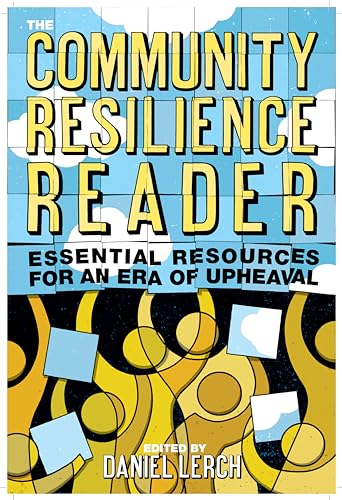
The Community Resilience Reader
Essential Resources for an Era of Upheaval
By Daniel LerchISLAND PRESS
Copyright © 2017 Post Carbon Institute
All rights reserved.
ISBN: 978-1-61091-860-2All rights reserved.
Contents
Acknowledgments,
Introduction Daniel Lerch,
Chapter 1 Six Foundations for Building Community Resilience Daniel Lerch,
PART I Understanding Our Predicament,
Chapter 2 The Environmental Crisis: The Needs of Humanity versus the Limits of the Planet Leena Iyengar,
Chapter 3 The Energy Crisis: From Fossil Fuel Abundance to Renewable Energy Constraints Richard Heinberg,
Chapter 4 The Economic Crisis: The Limits of Twentieth-Century Economics and Growth Joshua Farley,
Chapter 5 The Equity Crisis: The True Costs of Extractive Capitalism Sarah Byrnes and Chuck Collins,
Chapter 6 The Roots of Our Crises: Does Human Nature Drive Us toward Collapse? William Rees,
PART II Gathering the Needed Tools,
Chapter 7 Systems Literacy: A Toolkit for Purposeful Change Howard Silverman,
Chapter 8 A Crash Course in the Science of Sustainability Margaret Robertson,
Chapter 9 A Crash Course in the Science of Resilience Brian Walker and David Salt,
Chapter 10 Pulling It All Together: Resilience, Wisdom, and Beloved Community Stephanie Mills,
PART III Community Resilience in Action,
Chapter 11 Energy Democracy Denise Fairchild and Al Weinrub,
Chapter 12 Building Community Resilience at the Water's Edge Rebecca Wodder,
Chapter 13 Food System Lessons from Vermont Scott Sawyer,
Chapter 14 Learning Our Way toward Resilience William Throop,
Chapter 15 Beyond Waste: Sustainable Consumption for Community Resilience Rosemary Cooper,
Chapter 16 Resilient Streets, Resilient Cities Mike Lydon,
Chapter 17 Community Resilience and the Built Environment Daniel Lerch,
Chapter 18 Conclusion: Where to Start Asher Miller,
Contributors,
About Post Carbon Institute,
Index,
CHAPTER 1
Six Foundations for Building Community Resilience
Daniel Lerch
How do you know community resilience when you see it? I think you look for the capacity for people to not have to go through extremes ... being knowledgeable and having capacity to do something, to change your circumstances.
— Doria Robinson, Urban Tilth
We all need a sense of community. And we all need to believe that we have agency — a sense that we can make choices that will affect our lives.
— Stuart Comstock-Gay, Vermont Community Foundation
Efforts to build community resilience often focus on growing the capacity to "bounce back" from disruptions, like those caused by climate change. But climate change is not the only crisis we face, nor is preparing for disruption the only way to build resilience. Truly robust community resilience should do more. It should engage and benefit all community members, and it should consider all the challenges the community faces, from rising sea levels to a lack of living wage jobs. In addition, it should be grounded in resilience science, which tells us how complex systems — like human communities — can adapt and persist through changing circumstances.
What Problem Are We Trying to Solve?
Virtually every American community is part of — and dependent on — a deeply interconnected and highly complex global civilization of nearly two hundred countries, tens of thousands of cities, and more than seven billion people. The prices we pay at the grocery store and the gas station, the investments our businesses make, the regulations our governments set, and even the weather we experience every day are potentially influenced by countless events and decisions made around the world, all to a degree that was barely conceivable just half a century ago.
Although many of the challenges our communities face would exist regardless, this global interconnection is the dominant factor of our modern world and brings us rewards and risks (neither of which are distributed equally) that we cannot ignore. If the aim of community resilience — at minimum — is to safeguard the health and well-being of people in the face of the twenty-first century's many complex challenges, those challenges need to be understood in a global context.
At Post Carbon Institute, we organize those challenges as a set of four distinct but intertwined crises called the "E" crises. They influence and multiply one another, and they manifest in myriad ways from the most local to the most global of scales. They are characterized as crises because they are pushing us toward decisive changes — tipping points that we may choose to fight, ignore, or take advantage of. The E crises do not encompass all the challenges facing humanity today, but they frame and highlight those that we feel most immediately threaten modern civilization.
1. The ecological crisis. Everything we need to survive — to have life, a society, an economy — ultimately depends on the natural world, but every ecosystem has two important limiting factors: its rate of replenishment and its capacity to deal with wastes and stress. The last two hundred years of exponential economic growth and population growth have pushed ecosystems around the world near or past these limits, with results like severe topsoil loss, freshwater depletion, biodiversity loss, and climate change. Humanity's "ecological footprint" is now larger than what the planet can sustainably handle, and we are crossing key boundaries beyond which human civilization literally may not be able to continue.
2. The energy crisis. The era of easy fossil fuels is over, leading the energy industry to resort to extreme measures like tar sands mining, mountain- top removal coal mining, hydrofracturing ("fracking") for shale gas and tight oil, and deepwater drilling. These practices come with significant costs and risks, however, and in most instances, they provide far less net energy than the conventional oil, coal, and natural gas that fueled the twentieth century. Renewable energy is a real but imperfect alternative, as it would take decades and many trillions of dollars to scale up deployment to all sectors of the economy and retrofit transportation and industrial infrastructure accordingly. Declines in the amount of affordable energy available to society threaten to create major environmental, economic, and social impacts as the twenty-first century progresses.
3. The economic crisis. Our local, national, and global economies are currently structured to require constant growth, yet with the onset of the Great Recession in 2008, we reached the end of economic growth as we have known it. Despite unprecedented interventions on the part of central banks and governments, economic recovery in the United States and Europe has failed to benefit the majority of citizens. The end of the age of cheap and easy energy, the vast mountains of both private and public debt that we have incurred, and the snowballing costs of climate change impacts are all forcing us into an as- yet-undefined post growth economic system, whether we are ready for it or not.
3. The equity crisis. Inequity has been a problem throughout recorded human history, and not least in the United States, despite its professed values of liberty and justice for all. Although social progress since the Civil War has in theory brought political enfranchisement and legal protections to almost everyone, in practice the failure to...
„Über diesen Titel“ kann sich auf eine andere Ausgabe dieses Titels beziehen.
Suchergebnisse für The Community Resilience Reader: Essential Resources...

Beispielbild für diese ISBN
The Community Resilience Reader: Essential Resources for an Era of Upheaval
Verlag:
Island Press (edition 2nd ed.), 2017
ISBN 10: 1610918606
ISBN 13: 9781610918602
Gebraucht
Paperback
Anbieter: BooksRun, Philadelphia, PA, USA
Verkäuferbewertung 5 von 5 Sternen

Paperback. Zustand: Very Good. 2nd ed. It's a well-cared-for item that has seen limited use. The item may show minor signs of wear. All the text is legible, with all pages included. It may have slight markings and/or highlighting. Artikel-Nr. 1610918606-11-1
Gebraucht kaufen
EUR 9,40
Versand gratis
Versand innerhalb von USA
Versand innerhalb von USA
Anzahl: 1 verfügbar
Beispielbild für diese ISBN
The Community Resilience Reader: Essential Resources for an Era of Upheaval
Anbieter: ThriftBooks-Atlanta, AUSTELL, GA, USA
Verkäuferbewertung 5 von 5 Sternen
Paperback. Zustand: Very Good. No Jacket. May have limited writing in cover pages. Pages are unmarked. ~ ThriftBooks: Read More, Spend Less. Artikel-Nr. G1610918606I4N00
Gebraucht kaufen
EUR 10,75
Versand gratis
Versand innerhalb von USA
Versand innerhalb von USA
Anzahl: 1 verfügbar
Beispielbild für diese ISBN
The Community Resilience Reader: Essential Resources for an Era of Upheaval
Anbieter: ThriftBooks-Dallas, Dallas, TX, USA
Verkäuferbewertung 5 von 5 Sternen
Paperback. Zustand: As New. No Jacket. Pages are clean and are not marred by notes or folds of any kind. ~ ThriftBooks: Read More, Spend Less. Artikel-Nr. G1610918606I2N00
Gebraucht kaufen
EUR 10,75
Versand gratis
Versand innerhalb von USA
Versand innerhalb von USA
Anzahl: 1 verfügbar
Foto des Verkäufers
The Community Resilience Reader: Essential Resources for an Era of Upheaval
Anbieter: WeBuyBooks, Rossendale, LANCS, Vereinigtes Königreich
Verkäuferbewertung 5 von 5 Sternen
Zustand: Like New. Most items will be dispatched the same or the next working day. An apparently unread copy in perfect condition. Dust cover is intact with no nicks or tears. Spine has no signs of creasing. Pages are clean and not marred by notes or folds of any kind. Artikel-Nr. wbs4072107277
Gebraucht kaufen
EUR 10,52
EUR 8,69 Versand
Versand von Vereinigtes Königreich nach USA
Versand von Vereinigtes Königreich nach USA
Anzahl: 1 verfügbar
Beispielbild für diese ISBN
The Community Resilience Reader
Anbieter: PBShop.store US, Wood Dale, IL, USA
Verkäuferbewertung 5 von 5 Sternen
PAP. Zustand: New. New Book. Shipped from UK. Established seller since 2000. Artikel-Nr. GB-9781610918602
Beispielbild für diese ISBN
The Community Resilience Reader
Anbieter: PBShop.store UK, Fairford, GLOS, Vereinigtes Königreich
Verkäuferbewertung 5 von 5 Sternen
PAP. Zustand: New. New Book. Shipped from UK. Established seller since 2000. Artikel-Nr. GB-9781610918602
Neu kaufen
EUR 35,12
EUR 4,80 Versand
Versand von Vereinigtes Königreich nach USA
Versand von Vereinigtes Königreich nach USA
Anzahl: 2 verfügbar
Beispielbild für diese ISBN
The Community Resilience Reader: Essential Resources for an Era of Upheaval
Anbieter: Ria Christie Collections, Uxbridge, Vereinigtes Königreich
Verkäuferbewertung 5 von 5 Sternen
Zustand: New. In. Artikel-Nr. ria9781610918602_new
Neu kaufen
EUR 38,46
EUR 13,83 Versand
Versand von Vereinigtes Königreich nach USA
Versand von Vereinigtes Königreich nach USA
Anzahl: 2 verfügbar
Beispielbild für diese ISBN
The Community Resilience Reader: Essential Resources for an Era of Upheaval
Anbieter: Kennys Bookstore, Olney, MD, USA
Verkäuferbewertung 5 von 5 Sternen
Zustand: New. 2017. 2nd ed. Paperback. . . . . . Books ship from the US and Ireland. Artikel-Nr. V9781610918602
Neu kaufen
EUR 51,21
EUR 8,96 Versand
Versand innerhalb von USA
Versand innerhalb von USA
Anzahl: 2 verfügbar
Beispielbild für diese ISBN
COMMUNITY RESILIENCE READER
Anbieter: Speedyhen, Hertfordshire, Vereinigtes Königreich
Verkäuferbewertung 5 von 5 Sternen
Zustand: NEW. Artikel-Nr. NW9781610918602
Neu kaufen
EUR 31,52
EUR 47,34 Versand
Versand von Vereinigtes Königreich nach USA
Versand von Vereinigtes Königreich nach USA
Anzahl: 2 verfügbar
Beispielbild für diese ISBN
The Community Resilience Reader Essential Resources for an Era of Upheaval
Anbieter: Revaluation Books, Exeter, Vereinigtes Königreich
Verkäuferbewertung 5 von 5 Sternen
Paperback. Zustand: Brand New. 340 pages. 9.50x6.50x0.50 inches. In Stock. Artikel-Nr. zk1610918606
Neu kaufen
EUR 42,46
EUR 40,41 Versand
Versand von Vereinigtes Königreich nach USA
Versand von Vereinigtes Königreich nach USA
Anzahl: 1 verfügbar