
Verwandte Artikel zu The Power of Latino Leadership: Culture, Inclusion,...
Inhaltsangabe
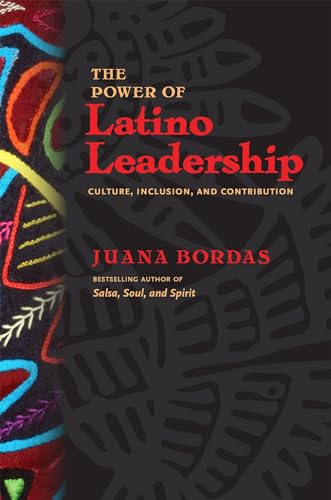
Over 50 million Latinos live in the United States, and it’s estimated that by 2050 one in three of the US population will be Hispanic. What does it take to lead such a varied and vibrant people who hail from twenty-two different countries and are a blend of different races? And what can leaders of all cultures and ethnicities learn from how Latinos lead?
Juana Bordas takes us on a journey to the very heart and soul of Latino leadership. She offers ten principles that richly illustrate the inclusive, people-oriented, socially responsible, and life-affirming way Latinos have led their communities. Bordas includes the voices and experiences of other distinguished Latino leaders and vivid dichos (traditional sayings) that illustrate positive aspects of the Latino culture. This unprecedented book illustrates powerful and distinctive lessons that will inform leaders of every background.
Die Inhaltsangabe kann sich auf eine andere Ausgabe dieses Titels beziehen.
Über die Autorin bzw. den Autor
Juana Bordas is president of Mestiza Leadership International. She served as vice president of the Greenleaf Center for Servant Leadership’s board and as a trustee of the International Leadership Association.
Auszug. © Genehmigter Nachdruck. Alle Rechte vorbehalten.
INTRODUCTION
Leading Latino Style
BEYOND ITS CULTURAL INFLUENCE, Latino power will drive the American economic engine in this century. In 2017, Latinos will be the majority of the people entering the US workforce.1 They are the fast-growing small-business sector. US Latino spending power represents a trillion-dollar market and the eighth-largest gross national product in the world.2
On a more practical level, by the middle of this century, when Latinos become the dominant workforce, organizations will need to cultivate Latino talent and benefit from their dynamic work ethic. Companies who are part of the bilingual market economy will grow and prosper. The future success of organizations and businesses, then, is closely linked to the growing Latino population and market. The Power of Latino Leadership offers an exciting, hands-on, and test-driven way to connect with and leverage Latino assets, energy, and values. It puts forth ten culturally specific leadership principles rooted in Latino history and tradition.
What is important to note is that, just as women left their imprint on the twentieth century and changed every institution in their wake, so too will Latinos be the dominant force in these times. Women started the last century as 18 percent of the workforce. Today, they are a majority of workers and make up over a quarter of managers. They are the majority of students in colleges and universities, including law and medical schools. Women have made leadership more collaborative and relationship oriented.3
The Power of Latino Leadership describes how Latinos will have a similar transformative effect in this century. The book validates the leadership practices that have held Latinos together through the tribulations of being conquered, colonized, and deemed a minority. Their resiliency, contributions, and cultural vibrancy are a testament to the wisdom and perseverance of their leaders.
During the twenty-first century the Eurocentric influence of the past five hundred years will be transformed into a diverse multicultural form. Jorge Ramos, an award-winning Univision news anchor, notes that the Latinization of America is the fundamental influence that will change the monocultural nature of our society and replace ethnocentric tendencies with a multiethnic, multiracial, and multicultural nation.4 Ramos is observing that the melting pot is being converted into a delicious paella and that Latinos are a vital ingredient adding color and flavor to our emerging rainbow nation.
Hispanic and Latino
Almost four decades have passed since the US government mandated the use of the term Hispanic. Latino was not added as a choice until the 2000 census.5 Hispanic and Latino are used interchangeably in this book. A 2012 study by the Pew Hispanic Center, When Labels Don’t Fit: Hispanics and Their View of Identity, noted that 51 percent of Latinos have no preference between Hispanic and Latino. Thirty-three percent still prefer Hispanic, which is more traditional. (Most Hispanic organizations formed decades ago use this designation.) Fourteen percent now prefer Latino.6 We will learn more about the multifaceted Latino identity as we explore this dynamic culture and its distinctive leadership forms. It is important to note that Hispanics may be of any race.
Part I: La Historia: Latino Fusion and Hybrid Vigor
THE POWER OF LATINO leadership begins with the complex history that birthed the Latino phenomenon. Be prepared for an exciting roller coaster ride that starts in ancient Rome, traverses the conquest of the Americas, and continues to Manifest Destiny in the nineteenth century. Why, you might ask, do we have to unearth these historical skeletons? How will this shed light on the dynamic leadership that sustained and advanced Latinos?
Well, consider that the word Latino comes from its connection to Latin America, which has its antecedent in the Roman conquest of Spain in 200 BC. Part I, “La Historia: Latino Fusion and Hybrid Vigor,” starts with the footprints of the Spanish conquistadores—one of the precursors of today’s Latinos. To understand how far we’ve come and the powerful legacy of our leaders, young Latinos must know their history. Non-Latinos will learn about the long-standing presence and contributions of Latinos in this hemisphere.
Chapter 1, “Ancient Roots and Mestizo Ancestry,” considers the racial and cultural blending in Spain that was transported to the “new world.” These antecedents resulted in a type of encounter very different from that which occurred in North America. Mestizos—the mixed-blood offspring of the Spanish and the indigenous people of this hemisphere—became the dominant population and are the ancestors of today’s Latinos. We will explore a “creation” story of the Mestizo birth almost five centuries ago that prophesied the cultural fusion that would occur and gave hope for the future.
Chapter 2, “The US Latino Legacy,” describes the annexation of the US Southwest from México and the designation of Latinos as minorities. This was abetted by Manifest Destiny in the nineteenth century, proclaiming that Indians, Blacks, and the ancestors of today’s Latinos needed to learn the ways of White civilization. Manifest Destiny swept in a belief in cultural superiority and laid the groundwork for the segregated society that continued until the civil rights movement of the 1960s.
Part II: Preparing to Lead: A Latino Perspective
BECOMING A LEADER IN the Latino community requires pondering questions such as: Why do I desire to lead? What will be my unique contribution? How will I stay on the path I have chosen? Part II offers three culturally based principles that prepare a person to become a leader and to tap into his personal power.
Chapter 3, “Personalismo: The Character of the Leader,” explores the belief that every person has inherent value and must be treated with respect. While many cultures espouse this, it is an actual expectation of Latinos, not just a cultural nicety. Personalismo prescribes that leaders establish personal, genuine, and caring relationships.
Second, the leader must become the type of person other people will follow. The essence of personalismo is the leader’s character—her persona. The leader embodies traits that earn respect and trust.
To become this type of person requires a deep connection with the leader’s inner self—the rock on which character formation rests. This implies understanding one’s roots and family heritage, staying culturally connected, and understanding history. This is discussed in chapter 4, “Conciencia: Knowing Oneself and Cultivating Personal Awareness.” A leader must also deal with the aftermath of exclusion and discrimination, both on him personally and on Latinos as a whole.
The belief that every person has a distinct life path and purpose is explored in chapter 5, “Destino: Personal and Collective Purpose.” Knowing one’s destino requires the insight of conciencia. Individualistic cultures believe a person is in charge of and determines his own future. Many Latinos believe it is impossible to control chance, fate, or unplanned events. (Having to deal with discrimination is a case in point.) Life presents certain opportunities, experiences, and challenges. Destino is a dance with the currents of life.
Part III: The Cultural Foundations of Leadership
LATINO LEADERSHIP FLOWS FROM the cultural spring. Part III considers the values that unify Latinos and their emerging collective identity.
Chapter 6, “La Cultura: Culturally Based Leadership,” looks at how the Latino culture is bound together by a common history, heritage, spiritual...
„Über diesen Titel“ kann sich auf eine andere Ausgabe dieses Titels beziehen.
Suchergebnisse für The Power of Latino Leadership: Culture, Inclusion,...

Beispielbild für diese ISBN
The Power of Latino Leadership; 10 Principles of Inclusion, Community, and Contribution
Anbieter: World of Books (was SecondSale), Montgomery, IL, USA
Verkäuferbewertung 5 von 5 Sternen

Paperback. Zustand: Good. Over 50 million Latinos live in the United States, and it's estimated that by 2050 one in three of the US population will be Hispanic. What does it take to lead such a varied and vibrant people who hail from twenty-two different countries and are a blend of different races? And what can leaders of all cultures and ethnicities learn from how Latinos lead? Juana Bordas takes us on a journey to the very heart and soul of Latino leadership. She offers ten principles that richly illustrate the inclusive, people-oriented, socially responsible, and life-affirming way Latinos have led their communities. Bordas includes the voices and experiences of other distinguished Latino leaders and vivid dichos (traditional sayings) that illustrate positive aspects of the Latino culture. This unprecedented book illustrates powerful and distinctive lessons that will inform leaders of every background. Artikel-Nr. 00097567987
Gebraucht kaufen
EUR 5,05
Versand gratis
Versand innerhalb von USA
Versand innerhalb von USA
Anzahl: 4 verfügbar
Beispielbild für diese ISBN
The Power of Latino Leadership : Culture, Inclusion, and Contribution
Verlag:
Berrett-Koehler Publishers, Incorporated, 2013
ISBN 10: 1609948874
ISBN 13: 9781609948870
Gebraucht
Softcover
Anbieter: Better World Books, Mishawaka, IN, USA
Verkäuferbewertung 5 von 5 Sternen
Zustand: Good. Former library copy. Pages intact with minimal writing/highlighting. The binding may be loose and creased. Dust jackets/supplements are not included. Includes library markings. Stock photo provided. Product includes identifying sticker. Better World Books: Buy Books. Do Good. Artikel-Nr. 8214305-6
Gebraucht kaufen
EUR 6,21
Versand gratis
Versand innerhalb von USA
Versand innerhalb von USA
Anzahl: 1 verfügbar
Beispielbild für diese ISBN
The Power of Latino Leadership : Culture, Inclusion, and Contribution
Verlag:
Berrett-Koehler Publishers, Incorporated, 2013
ISBN 10: 1609948874
ISBN 13: 9781609948870
Gebraucht
Softcover
Anbieter: Better World Books: West, Reno, NV, USA
Verkäuferbewertung 5 von 5 Sternen
Zustand: Good. Former library copy. Pages intact with minimal writing/highlighting. The binding may be loose and creased. Dust jackets/supplements are not included. Includes library markings. Stock photo provided. Product includes identifying sticker. Better World Books: Buy Books. Do Good. Artikel-Nr. 8214305-6
Gebraucht kaufen
EUR 6,21
Versand gratis
Versand innerhalb von USA
Versand innerhalb von USA
Anzahl: 1 verfügbar
Beispielbild für diese ISBN
The Power of Latino Leadership : Culture, Inclusion, and Contribution
Verlag:
Berrett-Koehler Publishers, Incorporated, 2013
ISBN 10: 1609948874
ISBN 13: 9781609948870
Gebraucht
Softcover
Anbieter: Better World Books: West, Reno, NV, USA
Verkäuferbewertung 5 von 5 Sternen
Zustand: Very Good. Former library copy. Pages intact with possible writing/highlighting. Binding strong with minor wear. Dust jackets/supplements may not be included. Includes library markings. Stock photo provided. Product includes identifying sticker. Better World Books: Buy Books. Do Good. Artikel-Nr. 9484756-75
Gebraucht kaufen
EUR 6,21
Versand gratis
Versand innerhalb von USA
Versand innerhalb von USA
Anzahl: 2 verfügbar
Beispielbild für diese ISBN
The Power of Latino Leadership : Culture, Inclusion, and Contribution
Verlag:
Berrett-Koehler Publishers, Incorporated, 2013
ISBN 10: 1609948874
ISBN 13: 9781609948870
Gebraucht
Softcover
Anbieter: Better World Books: West, Reno, NV, USA
Verkäuferbewertung 5 von 5 Sternen
Zustand: Very Good. Pages intact with possible writing/highlighting. Binding strong with minor wear. Dust jackets/supplements may not be included. Stock photo provided. Product includes identifying sticker. Better World Books: Buy Books. Do Good. Artikel-Nr. 14974050-6
Gebraucht kaufen
EUR 6,21
Versand gratis
Versand innerhalb von USA
Versand innerhalb von USA
Anzahl: 1 verfügbar
Beispielbild für diese ISBN
The Power of Latino Leadership: Culture, Inclusion, and Contribution
Verlag:
Berrett-Koehler Publishers, 2013
ISBN 10: 1609948874
ISBN 13: 9781609948870
Gebraucht
Softcover
Anbieter: Wonder Book, Frederick, MD, USA
Verkäuferbewertung 5 von 5 Sternen
Zustand: Very Good. Very Good condition. A copy that may have a few cosmetic defects. May also contain light spine creasing or a few markings such as an owner's name, short gifter's inscription or light stamp. Artikel-Nr. V02A-04723
Gebraucht kaufen
EUR 6,45
Versand gratis
Versand innerhalb von USA
Versand innerhalb von USA
Anzahl: 1 verfügbar
Beispielbild für diese ISBN
The Power of Latino Leadership: Culture, Inclusion, and Contribution
Verlag:
Berrett-Koehler Publishers, 2013
ISBN 10: 1609948874
ISBN 13: 9781609948870
Gebraucht
Softcover
Anbieter: Wonder Book, Frederick, MD, USA
Verkäuferbewertung 5 von 5 Sternen
Zustand: Good. Good condition. A copy that has been read but remains intact. May contain markings such as bookplates, stamps, limited notes and highlighting, or a few light stains. Artikel-Nr. P10B-02503
Gebraucht kaufen
EUR 6,45
Versand gratis
Versand innerhalb von USA
Versand innerhalb von USA
Anzahl: 1 verfügbar
Beispielbild für diese ISBN
The Power of Latino Leadership: Culture, Inclusion, and Contribution
Verlag:
Berrett-Koehler Publishers, 2013
ISBN 10: 1609948874
ISBN 13: 9781609948870
Gebraucht
Paperback
Anbieter: ThriftBooks-Atlanta, AUSTELL, GA, USA
Verkäuferbewertung 5 von 5 Sternen
Paperback. Zustand: As New. No Jacket. Pages are clean and are not marred by notes or folds of any kind. ~ ThriftBooks: Read More, Spend Less. Artikel-Nr. G1609948874I2N00
Gebraucht kaufen
EUR 6,68
Versand gratis
Versand innerhalb von USA
Versand innerhalb von USA
Anzahl: 1 verfügbar
Beispielbild für diese ISBN
The Power of Latino Leadership: Culture, Inclusion, and Contribution
Verlag:
Berrett-Koehler Publishers, 2013
ISBN 10: 1609948874
ISBN 13: 9781609948870
Gebraucht
Paperback
Anbieter: ThriftBooks-Dallas, Dallas, TX, USA
Verkäuferbewertung 5 von 5 Sternen
Paperback. Zustand: Very Good. No Jacket. May have limited writing in cover pages. Pages are unmarked. ~ ThriftBooks: Read More, Spend Less. Artikel-Nr. G1609948874I4N00
Gebraucht kaufen
EUR 6,68
Versand gratis
Versand innerhalb von USA
Versand innerhalb von USA
Anzahl: 1 verfügbar
Beispielbild für diese ISBN
The Power of Latino Leadership: Culture, Inclusion, and Contribution
Verlag:
Berrett-Koehler Publishers, 2013
ISBN 10: 1609948874
ISBN 13: 9781609948870
Gebraucht
Paperback
Anbieter: ThriftBooks-Atlanta, AUSTELL, GA, USA
Verkäuferbewertung 5 von 5 Sternen
Paperback. Zustand: Very Good. No Jacket. May have limited writing in cover pages. Pages are unmarked. ~ ThriftBooks: Read More, Spend Less. Artikel-Nr. G1609948874I4N00
Gebraucht kaufen
EUR 6,68
Versand gratis
Versand innerhalb von USA
Versand innerhalb von USA
Anzahl: 1 verfügbar