
Verwandte Artikel zu Last Friends (Old Filth Trilogy, 3, Band 3)
Inhaltsangabe
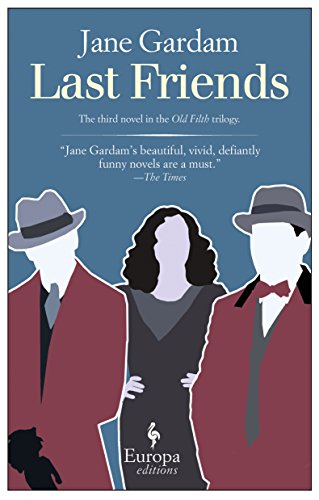
“The satisfying conclusion to Gardam’s Old Filth trilogy offers exquisite prose, wry humor, and keen insights into aging and death” (The New Yorker).
While Old Filth introduced readers to Sir Edward Feathers, his dreadful childhood, and his decades-long marriage, The Man in the Wooden Hat was his wife Betty’s story. Last Friends is Terence Veneering’s turn. His beginnings were not those of the usual establishment grandee. Filth’s hated rival in court and in love is the son of a Russian acrobat marooned in the English midlands and a local girl. He escapes the war and later emerges in the Far East as a man of panache and fame. The Bar treats his success with suspicion: where did this handsome, brilliant Slav come from? This exquisite story of Veneering, Filth, and their circle tells a bittersweet tale of friendship and grace and of the disappointments and consolations of age. They are all, finally, each other’s last friend as this magnificent series ends with the deep and abiding satisfaction that only great literature provides.
“[Gardam’s] prose sparkles with wit, compassion and humor. She keeps us entertained, and she keeps us guessing. Be thankful for her books. Be thankful for this trilogy, which is ultimately an elegy, created with deep affection.”—The Washington Post
“Restores us to an era rich in spectacle and bristling with insinuation and intrigue. Vivid, spacious, superbly witty, and refreshingly brisk . . . the story (and the author) will endure.”—The Boston Globe
“All three Gardam books are beautifully written but it’s a pleasure to note that Last Friends is the most enjoyable, the funniest and the most touching.”—National Post
Die Inhaltsangabe kann sich auf eine andere Ausgabe dieses Titels beziehen.
Über die Autorin bzw. den Autor
Jane Gardam is the only writer to have been twice awarded the Whitbread Prize for Best Novel of the Year. She is winner of the David Higham Prize, the Royal Society for Literature's Winifred Holtby Prize, the Katherine Mansfield Prize, and the Silver Pen Award from PEN. Her novels include: God on the Rocks, shortlisted for the Booker Prize; Old Filth, a finalist for the Orange Prize; The Man in the Wooden Hat, finalist for the Los Angeles Times Book prize, and Last Friends, finalist for the Folio Award. She lives in the south of England, near the sea.
Auszug. © Genehmigter Nachdruck. Alle Rechte vorbehalten.
LAST FRIENDS
By Jane Gardam, $TRADUTTORE$Europa Editions
Copyright ©2013 Jane Gardam
All rights reserved.
ISBN: 978-1-60945-093-9All rights reserved.
Excerpt
CHAPTER 1
The Titans were gone. They had clashed their last. Sir Edward Feathers,affectionately known as Old Filth (Failed in London, Try Hong Kong) and SirTerence Veneering, the two greatest exponents of English and International Lawin the engineering and construction industry and the current experts upon theEthics of Pollution, were dead. Their well-worn armour had fallen from them withbarely a clatter and the quiet Dorset village to which they had retired within avery few years of each other (accidentally, for they had hated each other forover fifty years) mourned their passing and wondered who would be distinguishedenough to buy their houses.
How they had hated! For over half a century they had been fetching up allover the world eye-ball to eye-ball, Hector and Achilles, usually onbattlefields far from home, championing or rubbishing, depending on the client,great broken bridges, mouldering reservoirs, wild crumbling new roads acrossmountain ranges, sewage-works, wind farms, ocean barrages and the leakingswimming pools of moguls. That they had in old age finished up by buying housesnext door to each other in a village where: there was absolutely nothing to domust have been the result of something the lolling gods had set up one drab dayon Olympus to give the legal world a laugh.
And the laugh had been uneasy because it had been said foryears—well, everyone knew—that Edward Feathers' dead wife, Betty,had been the lover of Sir Terry. Or maybe not exactly the lover. But something.There had been something between them. Well, there had been love.
Elizabeth—Betty—Feathers had died some years before the arrival ofSir Terry next-door.
Her husband, Old Filth, Sir Edward, the great crag of a man seated above heron the patio pretending to shoot rooks with his walking-stick, a gin and tonicat his elbow, had, quite simply, broken his heart.
Birds and beasts were important to Old Filth. Donkeys' years ago his prep-schoolheadmaster had taught him about birds. It was birds and the language ofthe natural world and the headmaster whose name was briefly 'Sir', who had curedhim of his awful child-hood stammer and enabled him to become an advocate.
His house, Dexters, lay in a long narrow dell off the village hill, bird-haunted andsurrounded by trees. Beyond his gate, up the same turn-off and out of sight,Veneering's house stood at the top of the view. His taller, darker trees hungover the lane but the rooks ignored them. 'Rooks,' thought Old Filth, 'choosetheir friends. They will only abandon a friend if they have fore-knowledge ofdisaster.' Each night before sleep and each morning Filth lay in his bedstraight as a sentry, striped Chilprufe pyjamas neatly buttoned, handkerchief inbreast pocket carefully folded, and listened to the vigorous clamour of therooks and was comforted. So long as he could hear their passionate disputationshe would never miss his life at the Commercial Bar.
He did rather wish they had been cleaner birds. Their nests were old andhuge. Ramshackle and filthy. Filth himself was ostentatiously clean. His fingernails and toe nails were pearly (chiropodist to the house every sixth week:twenty-five pounds a time) his hair still not grey but curly, autumnal bronze.His complexion shone and was scarcely lined. He smelled of Wrights coal-tarsoap—rather excitingly—a commodity beginning to be rare in manyparts of the country. 'He must have had something to hide,' said youngbarristers. 'Something nasty in his wood-shed.' 'What, Old Filth!' theycried, 'Impossible!' They were of course wrong. Eddie Feathers Q.C. had asmuch to hide as everybody else.
But whatever it was it would have nothing to do with money. He nevermentioned the stuff. He was a gentleman to the end. There must have been bucketsof it somewhere. Bucket upon bucket upon bucket, thanks to the long, longinternational practice. And he spent nothing, or nothing much. Maybe a bit morethan the mysterious Veneering next door. He was not a vain man. He strode aboutthe lanes in expensive tweeds, but they were very old. Not much fun, but neverpompous. If he ever brooded upon his well-organised millions, managed byimpeccable brokers, he didn't think about them much. He joked about themoccasionally. 'Oh yes, I have "held the gorgeous East in fee,'" he would say,'Ha-ha,' and quoting Sir, his headmaster. He himself never went to the theatre orread poetry, for he wept too easily.
After a time a lethargy had fallen upon Feathers. He lost the energy evento think about moving house. And maybe the old enemy up the slope had begun tofeel the same. They never met. If occasionally they found themselves passing oneanother at a distance during an afternoon walk in the lanes, each looked away.
Then, after a year or so, something must have happened. It was neverdiscussed even in the village shop but there were some astonishing sightings,sounds of old-English accents, staccato in the bluebell woods. It happened overa snow-bound Christmas. Before long it was reported that the two old bufferswere playing chess together on Thursdays. And when Terry Veneering died during aridiculous jaunt—foot in a hole on a cliff-top on the island of Malta andthen thrombosis—Edward Feathers said, 'Silly old fool. Far too old forthat sort of thing. I told him so,' but was surprised how much he missed him.
Yet he refused to attend Veneering's memorial service at Temple Church inLondon. There would have been comment and Betty's name bandied about. For allhis Olympian manner Old Filth was not histrionic. Never. He stayed alone at homethat day making notes on the new edition of Hudson on Building Contracts that hehad been (flatteringly considering his age) asked to re-edit some years before.He had a whisky and a slice of ham for his supper and listened to the News. Whenhe heard the returning cars of the village mourners passing the end of his lanefrom Tisbury station he sensed disapproval at his absence like a wet clothacross his face; and turned a page.
Nobody came to see him that evening, not even sexy old Chloe who was neveroff his doorstep with shepherd's pies: not his gardener or his cleaning lady whohad travelled to the memorial service to London and back together in thegardener's pick-up. Not Dulcie who lived nearby on Privilege Hill and was justabout his oldest friend, the widow of an endearing old Hong Kong judge deadyears ago and much lamented. Dulcie was a tiny, rather stupid woman, and grandedame of the village. 'Let them think what they like,' said Old Filth into hisdouble malt. 'I am past all these frivolities.'
But the next frivolity was to be his own, for the following Christmas hetook himself off alone to the place of his birth, which he still called TheMalay States, and died as he stepped off the plane.
(Continues...)
Excerpted from LAST FRIENDS by Jane Gardam. Copyright © 2013 by Jane Gardam. Excerpted by permission of Europa Editions.
All rights reserved. No part of this excerpt may be reproduced or reprinted without permission in writing from the publisher.
Excerpts are provided by Dial-A-Book Inc. solely for the personal use of visitors to this web site.
„Über diesen Titel“ kann sich auf eine andere Ausgabe dieses Titels beziehen.
Suchergebnisse für Last Friends (Old Filth Trilogy, 3, Band 3)

Foto des Verkäufers
Last Friends (The Old Filth Trilogy, 3)
Anbieter: Dream Books Co., Denver, CO, USA
Verkäuferbewertung 5 von 5 Sternen

Zustand: acceptable. This copy has clearly been enjoyedâ"expect noticeable shelf wear and some minor creases to the cover. Binding is strong, and all pages are legible. May contain previous library markings or stamps. Artikel-Nr. DBV.1609450930.A
Gebraucht kaufen
EUR 3,82
Versand gratis
Versand innerhalb von USA
Versand innerhalb von USA
Anzahl: 1 verfügbar
Beispielbild für diese ISBN
Last Friends
Anbieter: ThriftBooks-Atlanta, AUSTELL, GA, USA
Verkäuferbewertung 5 von 5 Sternen
Paperback. Zustand: Good. No Jacket. Former library book; Pages can have notes/highlighting. Spine may show signs of wear. ~ ThriftBooks: Read More, Spend Less. Artikel-Nr. G1609450930I3N10
Gebraucht kaufen
EUR 5,82
Versand gratis
Versand innerhalb von USA
Versand innerhalb von USA
Anzahl: 1 verfügbar
Beispielbild für diese ISBN
Last Friends
Anbieter: ThriftBooks-Atlanta, AUSTELL, GA, USA
Verkäuferbewertung 5 von 5 Sternen
Paperback. Zustand: As New. No Jacket. Pages are clean and are not marred by notes or folds of any kind. ~ ThriftBooks: Read More, Spend Less. Artikel-Nr. G1609450930I2N00
Gebraucht kaufen
EUR 5,82
Versand gratis
Versand innerhalb von USA
Versand innerhalb von USA
Anzahl: 1 verfügbar
Beispielbild für diese ISBN
Last Friends
Anbieter: ThriftBooks-Phoenix, Phoenix, AZ, USA
Verkäuferbewertung 5 von 5 Sternen
Paperback. Zustand: Good. No Jacket. Former library book; Pages can have notes/highlighting. Spine may show signs of wear. ~ ThriftBooks: Read More, Spend Less. Artikel-Nr. G1609450930I3N10
Gebraucht kaufen
EUR 5,82
Versand gratis
Versand innerhalb von USA
Versand innerhalb von USA
Anzahl: 1 verfügbar
Beispielbild für diese ISBN
Last Friends
Anbieter: ThriftBooks-Phoenix, Phoenix, AZ, USA
Verkäuferbewertung 5 von 5 Sternen
Paperback. Zustand: Very Good. No Jacket. Former library book; May have limited writing in cover pages. Pages are unmarked. ~ ThriftBooks: Read More, Spend Less. Artikel-Nr. G1609450930I4N10
Gebraucht kaufen
EUR 5,82
Versand gratis
Versand innerhalb von USA
Versand innerhalb von USA
Anzahl: 1 verfügbar
Beispielbild für diese ISBN
Last Friends
Anbieter: ThriftBooks-Reno, Reno, NV, USA
Verkäuferbewertung 5 von 5 Sternen
Paperback. Zustand: Very Good. No Jacket. Former library book; May have limited writing in cover pages. Pages are unmarked. ~ ThriftBooks: Read More, Spend Less. Artikel-Nr. G1609450930I4N10
Gebraucht kaufen
EUR 5,82
Versand gratis
Versand innerhalb von USA
Versand innerhalb von USA
Anzahl: 1 verfügbar
Beispielbild für diese ISBN
Last Friends
Anbieter: ThriftBooks-Phoenix, Phoenix, AZ, USA
Verkäuferbewertung 5 von 5 Sternen
Paperback. Zustand: Very Good. No Jacket. May have limited writing in cover pages. Pages are unmarked. ~ ThriftBooks: Read More, Spend Less. Artikel-Nr. G1609450930I4N00
Gebraucht kaufen
EUR 5,82
Versand gratis
Versand innerhalb von USA
Versand innerhalb von USA
Anzahl: 6 verfügbar
Beispielbild für diese ISBN
Last Friends
Anbieter: ThriftBooks-Dallas, Dallas, TX, USA
Verkäuferbewertung 5 von 5 Sternen
Paperback. Zustand: Very Good. No Jacket. May have limited writing in cover pages. Pages are unmarked. ~ ThriftBooks: Read More, Spend Less. Artikel-Nr. G1609450930I4N00
Gebraucht kaufen
EUR 5,82
Versand gratis
Versand innerhalb von USA
Versand innerhalb von USA
Anzahl: 6 verfügbar
Beispielbild für diese ISBN
Last Friends
Anbieter: ThriftBooks-Dallas, Dallas, TX, USA
Verkäuferbewertung 5 von 5 Sternen
Paperback. Zustand: Very Good. No Jacket. Former library book; May have limited writing in cover pages. Pages are unmarked. ~ ThriftBooks: Read More, Spend Less. Artikel-Nr. G1609450930I4N10
Gebraucht kaufen
EUR 5,82
Versand gratis
Versand innerhalb von USA
Versand innerhalb von USA
Anzahl: 2 verfügbar
Beispielbild für diese ISBN
Last Friends
Anbieter: ThriftBooks-Reno, Reno, NV, USA
Verkäuferbewertung 5 von 5 Sternen
Paperback. Zustand: Good. No Jacket. Former library book; Pages can have notes/highlighting. Spine may show signs of wear. ~ ThriftBooks: Read More, Spend Less. Artikel-Nr. G1609450930I3N10
Gebraucht kaufen
EUR 5,82
Versand gratis
Versand innerhalb von USA
Versand innerhalb von USA
Anzahl: 1 verfügbar