
Verwandte Artikel zu Making It: Radical Home Ec for a Post-Consumer World
Inhaltsangabe
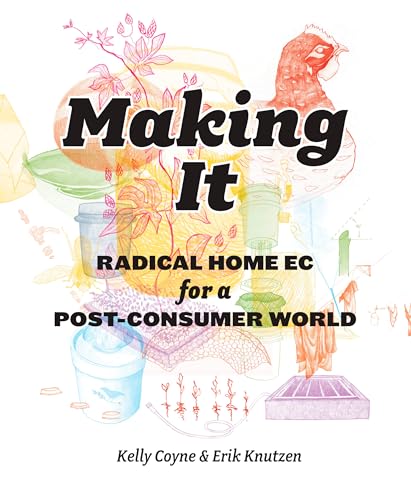
Spending money is the last thing anyone wants to do right now. We are in the midst of a massive cultural shift away from consumerism and toward a vibrant and very active countermovement that has been thriving on the outskirts for quite some time—do-it-yourselfers who make frugal, homemade living hip are challenging the notion that true wealth has anything to do with money. In Making It, Coyne and Knutzen, who are at the forefront of this movement, provide readers with all the tools they need for this radical shift in home economics.
The projects range from simple to ambitious and include activities done in the home, in the garden, and out in the streets. With step-by-step instructions for a wide range of projects—from growing food in an apartment and building a ninety-nine-cent solar oven to creating safe, effective laundry soap for pennies a gallon and fishing in urban waterways—Making It will be the go-to source for post-consumer living activities that are fun, inexpensive, and eminently doable. Within hours of buying this book, readers will be able to start transitioning into a creative, sustainable mode of living that is not just a temporary fad but a cultural revolution.
Die Inhaltsangabe kann sich auf eine andere Ausgabe dieses Titels beziehen.
Über die Autorin bzw. den Autor
KELLY COYNE and ERIK KNUTZEN grow food, keep chickens, brew, bike, bake, and plot revolution from their 1/12-acre farm in the heart of Los Angeles. They are the keepers of the popular DIY blog, Homegrown Evolution, and the authors of The Urban Homestead, which the New York Times describes as "home economics as our greatgrandparents knew it...the contemporary bible on the subject."
Auszug. © Genehmigter Nachdruck. Alle Rechte vorbehalten.
Section One
Day to Day
In this section we focus on the daily needs, like tooth brushing and face washing, and also little emergencies that might pop up at any time, like a scraped knee or sore throat. Unlike the big projects that come along later in this book, these projects are perishables and consumables, things you whip up as you need them, using ingredients found in your pantry or backyard. Warning: These are gateway projects that may addict you to a more homegrown lifestyle.
01>
Olive Oil Lamps
PREPARATION: 5 min
Since this book is all about rethinking your relationship to the common products and systems in your home, we thought it would be appropriate to start off with a project that brings new light to the household.
Oil lamps are one of the most elemental forms of lighting. The Romans used clay lamps filled with olive oil. The Inuit used soapstone dishes of seal oil. Scottish fishermen used little tin lamps filled with fish oil. Lamps fueled with ghee are still used to light temples in India. Oil lamps are inexpensive, nontoxic alternatives to paraffin candles and petroleum-fueled lamps. But the true beauty of these lamps is their flexibility and simplicity. They can be improvised in a few seconds with items found around the house (which is handy in a power outage) but can also be made into beautiful objects to grace your dinner table.
Oil lamps work best when the wick is submerged in oil, there's lots of airflow, and--this is most important--the flame sits just above the oil pool. If the flame is too far away from the fuel, it won't burn long. If you look at ancient lamps in museums, you'll see that they share a common design that facilitates these principles. They are usually palm size and always shallow. In most, the flame is not placed centrally but instead burns at the rim of the container, where the wick rests on an sloped edge, against a lip, or in a spout of some sort.
YOU'LL NEED
A SHALLOW VESSEL. The first lamps were probably made of large scallop, clam, or oyster shells, and these still make pretty lamps. A little china saucer works well. So does a jar lid, but you'll want to pull out a little V-shape lip in the edge of the lid with pliers so the wick has a place to rest. We'll also show you a lidded variation made out of a round mint tin that burns from the center. It works because it has big holes punched in the lid for airflow.
A WICK. This can be made of a bit of kitchen twine, a shoelace, a string tie from an old blouse, or a thin strip of T-shirt. Just make sure it's 100 percent natural fiber. In olden times, they used the piths of reeds or twisted moss. The broader the wick, the bigger and brighter the flame. The wick doesn't have to be long because it doesn't burn down much.
THE FUEL. We recommend olive oil, though you're welcome to experiment with other fats. Olive oil of any grade burns slowly, without smoke or odor. If you have a bottle of olive oil that has gone rancid, this is a great use for it.
PUTTING IT TOGETHER
A LAMP MADE OF A DISH OR A SHELL
Fill your shell or dish with oil and lay the wick across the bottom, arranging the end of the wick so it pokes off the side about 1/2 inch out of the oil. For more light, use two wicks. Give the oil a couple of minutes to fully saturate the wick, then light the lamp. Tilt the vessel, if necessary, to make sure the oil is pooling at the base of the flame. Nesting one saucer or shell inside another facilitates this sort of tilting and can help to stabilize a tippy shell. Refill whenever you notice the distance growing between the oil and the flame. Time between refills varies by shell depth and whether you have multiple wicks, but a teaspoon of oil burns for about an hour. A good-size shell should see you through a dinner party.
SAFETY
Of course you'd never leave a flame unattended, but what if your lamp gets knocked over? Olive oil is not very volatile, so the spilled oil will not ignite into a blazing inferno. However, the wick may continue to burn if it isn't doused in the accident.
A LAMP MADE OUT OF A CANDY TIN
The shallow shape of a candy or mint tin is ideal for making an oil lamp. The lid is a nice addition, because it makes spills less likely. Punch a hole in the center of the tin's lid for the wick. Make the first puncture with the tip of a knife blade, then widen the hole using a screwdriver. Work from the top of the lid so that the ragged edge is hidden. The hole should be broad enough that the wick is not pinched or constricted. To allow sufficient oxygen flow, you will need to punch a second, smaller hole off to one side to help draw air. Use a broad, stiff wick for this sort of lamp. A shoelace or string tie would be ideal. Poke one end through the central hole and coil the rest in the bottom of the tin. Fill the tin with oil and allow the wick to saturate a few minutes before lighting.
02>
Thinking around the Toothbrush
PREPARATION: 5 min
A plastic brush with nylon bristles is considered an indispensable part of dental hygiene, but what did people use before its invention? What is used today in parts of the world where the toothbrush hasn't been adopted?
Modern toothbrushes date their popularity to 1938, when quick-drying nylon bristles were invented. Prior to that, brushes were made with animal bristles, which tended to shed and mold, and which probably didn't taste great, either. The combination of nylon bristles and plastic handles made for a hygienic, practical brush--but at a cost. Those brushes have immortal life spans in landfills, and while eco-friendly recycled handles and replaceable heads are available, they don't challenge the dominant paradigm that the toothbrush is a plastic, disposable item.
Alternatives exist. You might adopt them because you're trying to reduce the plastic waste in your household, or you might just keep them in mind in case a zombie apocalypse cuts you off from your usual toothbrush supply. If nothing else, they're convenient for camping trips. Try one or two of these techniques in conjunction with ordinary brushing. Your brushes will last longer, and over time you might find you don't miss your brush.
TOOTH CLOTHS
A tooth cloth cleans the teeth, and your finger massages the gums nicely along the way, which is something dentists are always trying to get us to do better.
Take a 5-inch square of slightly textured fabric, like linen or oxford cloth. (You can make a mountain of these squares with a yard of inexpensive fabric or old, clean shirts. Use pinking shears to cut them out and you can get away with not hemming them.)
Wrap a square around your forefinger and use it to rub your teeth clean. You can use a dentifrice, if you wish, by dampening the cloth first and then adding toothpaste or tooth powder. The cloth doesn't clean between the teeth, true; but that's why we floss. Wash and reuse the cloths.
SAGE
This strongly aromatic and antiseptic herb will leave your mouth fresh, and the texture of the leaves cleans teeth well. If you grow sage, it's worth keeping a few fresh sprigs in a vase in the bathroom. When it's time to brush, just rub a leaf over your teeth and gums, using as many leaves as it takes--two to four in most cases.
How to Choose a Twig
How do you find a good chew-stick tree in your neighborhood or yard? In every region, certain trees have been identified through traditional use as being valuable for this purpose. These trees will contain antibacterial or otherwise mouth-friendly agents, making them ideal for dental use. Question local wild food experts and search history texts for leads on interesting plants in your area. Don't use just any twig. The majority of them will be inert--meaning not particularly useful-while other trees are poisonous, such as oleander, yew,...
„Über diesen Titel“ kann sich auf eine andere Ausgabe dieses Titels beziehen.
Suchergebnisse für Making It: Radical Home Ec for a Post-Consumer World

Beispielbild für diese ISBN
Making It: Radical Home Ec for a Post-Consumer World
Anbieter: World of Books (was SecondSale), Montgomery, IL, USA
Verkäuferbewertung 5 von 5 Sternen

Paperback. Zustand: Fair. Spending money is the last thing anyone wants to do right now. We are in the midst of a massive cultural shift away from consumerism and toward a vibrant and very active countermovement that has been thriving on the outskirts for quite some time--do-it-yourselfers who make frugal, homemade living hip are challenging the notion that true wealth has anything to do with money. In Making It, Coyne and Knutzen, who are at the forefront of this movement, provide readers with all the tools they need for this radical shift in home economics. The projects range from simple to ambitious and include activities done in the home, in the garden, and out in the streets. With step-by-step instructions for a wide range of projects--from growing food in an apartment and building a ninety-nine-cent solar oven to creating safe, effective laundry soap for pennies a gallon and fishing in urban waterways--Making It will be the go-to source for post-consumer living activities that are fun, inexpensive, and eminently doable. Within hours of buying this book, readers will be able to start transitioning into a creative, sustainable mode of living that is not just a temporary fad but a cultural revolution. Artikel-Nr. 00104493179
Gebraucht kaufen
EUR 5,82
Versand gratis
Versand innerhalb von USA
Versand innerhalb von USA
Anzahl: 1 verfügbar
Beispielbild für diese ISBN
Making It: Radical Home Ec for a Post-Consumer World
Anbieter: World of Books (was SecondSale), Montgomery, IL, USA
Verkäuferbewertung 5 von 5 Sternen
Paperback. Zustand: Good. Spending money is the last thing anyone wants to do right now. We are in the midst of a massive cultural shift away from consumerism and toward a vibrant and very active countermovement that has been thriving on the outskirts for quite some time--do-it-yourselfers who make frugal, homemade living hip are challenging the notion that true wealth has anything to do with money. In Making It, Coyne and Knutzen, who are at the forefront of this movement, provide readers with all the tools they need for this radical shift in home economics. The projects range from simple to ambitious and include activities done in the home, in the garden, and out in the streets. With step-by-step instructions for a wide range of projects--from growing food in an apartment and building a ninety-nine-cent solar oven to creating safe, effective laundry soap for pennies a gallon and fishing in urban waterways--Making It will be the go-to source for post-consumer living activities that are fun, inexpensive, and eminently doable. Within hours of buying this book, readers will be able to start transitioning into a creative, sustainable mode of living that is not just a temporary fad but a cultural revolution. Artikel-Nr. 00106807544
Gebraucht kaufen
EUR 5,82
Versand gratis
Versand innerhalb von USA
Versand innerhalb von USA
Anzahl: 2 verfügbar
Foto des Verkäufers
Making It: Radical Home Ec for a Post-Consumer World
Anbieter: Dream Books Co., Denver, CO, USA
Verkäuferbewertung 5 von 5 Sternen
Zustand: good. Gently used with minimal wear on the corners and cover. A few pages may contain light highlighting or writing, but the text remains fully legible. Dust jacket may be missing, and supplemental materials like CDs or codes may not be included. May be ex-library with library markings. Ships promptly! Artikel-Nr. DBV.1605294624.G
Gebraucht kaufen
EUR 5,83
Versand gratis
Versand innerhalb von USA
Versand innerhalb von USA
Anzahl: 1 verfügbar
Beispielbild für diese ISBN
Making It: Radical Home Ec for a Post-Consumer World
Anbieter: Infinity Books Japan, Tokyo, TKY, Japan
Verkäuferbewertung 2 von 5 Sternen

Zustand: Very Good. Artikel-Nr. RWARE0000030129
Gebraucht kaufen
EUR 14,63
EUR 46,20 Versand
Versand von Japan nach USA
Versand von Japan nach USA
Anzahl: 1 verfügbar
Beispielbild für diese ISBN
Making It: Radical Home-Ec for a Post-consumer World
Anbieter: Revaluation Books, Exeter, Vereinigtes Königreich
Verkäuferbewertung 5 von 5 Sternen
Paperback. Zustand: Brand New. 256 pages. 9.50x9.00x0.75 inches. In Stock. Artikel-Nr. 1605294624
Neu kaufen
EUR 48,14
EUR 14,71 Versand
Versand von Vereinigtes Königreich nach USA
Versand von Vereinigtes Königreich nach USA
Anzahl: 1 verfügbar
Beispielbild für diese ISBN
Making It: Radical Home Ec for a Post-Consumer World
Anbieter: Studibuch, Stuttgart, Deutschland
Verkäuferbewertung 5 von 5 Sternen
paperback. Zustand: Gut. 320 Seiten; 9781605294629.3 Gewicht in Gramm: 1. Artikel-Nr. 1060557
Gebraucht kaufen
EUR 10,35
EUR 62,30 Versand
Versand von Deutschland nach USA
Versand von Deutschland nach USA
Anzahl: 1 verfügbar