
Verwandte Artikel zu Collaborative Intelligence: Using Teams to Solve Hard...
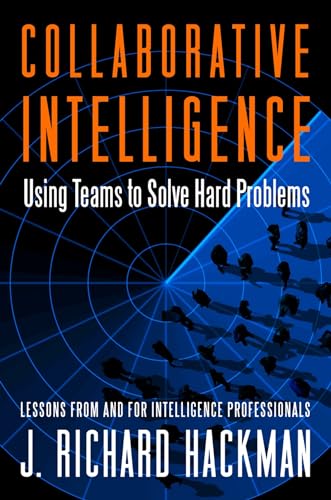
Inhaltsangabe
This practical guide draws on cognitive science and work with Fortune 500 companies to help readers develop essential collaborative skills.
Collaborative intelligence is a measure of our ability to think with others on behalf of what matters to us all. It is emerging as a new professional currency at a time when influence is more important than power, and success relies on the ability to inspire.
Through a series of practices and strategies, this book helps us develop our own collaborative intelligence. The authors teach us how to value intellectual diversity and recognize our own mind patterns. By mapping the talents of our teams, we’re able to embark together on an aligned course of action and influence.
Collaborative Intelligence is the culmination of more than fifty years of original research that draws on Dawna Markova’s background in cognitive neuroscience and her most recent work, with Angie McArthur, as a “Professional Thinking Partner” to some of the world’s top CEOs and creative professionals. In their experience, managers who appreciate intellectual diversity will lead their teams to innovation; employees who understand it will thrive because they are in touch with their strengths; and an entire team who understands it will come together to do their best work in a symphony of collaboration.
Die Inhaltsangabe kann sich auf eine andere Ausgabe dieses Titels beziehen.
Über die Autorin bzw. den Autor
J. Richard Hackman is the Edgar Pierce Professor of Social and Organizational Psychology at Harvard University. He is the author of the award-winning Leading Teams and coauthor of Groups That Work and Senior Leadership Teams. He is the recipient of the Distinguished Scientific Contribution Award of the American Psychological Association’s division on industrial and organizational psychology, both the Distinguished Educator Award and the Distinguished Scholar Award of the Academy of Management, and the Joseph E. McGrath Award for Lifetime Achievement in the Study of Groups.
Auszug. © Genehmigter Nachdruck. Alle Rechte vorbehalten.
INTRODUCTION
The Challenge and Potential of Teams
Intelligence professionals commonly are viewed as solo operators. Here is an analyst, alone in a cubicle at Langley, calling up images and reports on a secure computer, consulting historical materials on the cubicle shelf, thinking deeply about the implications of ambiguous but worrisome recent developments. There is an undercover officer making seemingly casual social contacts overseas to identify locals who might have access to useful information—and then inducing the most promising of them to share what they know or can find out. And down there is a clandestine service trainee, straining to acquire the knowledge and skills of the trade, worried about washing out, unsure about having what it takes for a successful career in intelligence.
Engaging images such as these are the stuff of spy novels and movies. They sometimes even are accurate. But that’s not how it generally happens. Although there are indeed many heroic individuals in the intelligence community, most intelligence work actually involves extensive and intensive collaboration with others—with colleagues in the intelligence community to be sure, but also with outsiders such as people from other government agencies, academic researchers, and employees of private-sector organizations.
The analyst activates a network of contacts both inside and outside government for ideas about what those worrisome developments might portend. The clandestine officer works with a team to cultivate and exploit sources of information. Even in training—which is still more individually focused than real intelligence work—instructors are discovering the pedagogical power of team exercises in which trainees may learn as much from teammates as from their teachers. So we have across the intelligence community fusion teams, training teams, special activities teams, networked collaborations, management teams, scientific teams, and more. Moreover, as electronic technologies for communication and coordination become more powerful and pervasive, teamwork-at-a-distance is becoming more the rule than the exception. Teams are everywhere in the community, and they make a difference.
Teams have great potential for solving hard problems in challenging contexts. They obviously bring more knowledge, skill, and experience to the work than any single individual could. They provide flexibility in how members are deployed. They offer members nonstop opportunities for real-time learning. And they have at least the potential of integrating members’ diverse contributions into a creative product that is just what is needed. Yet, as an extensive body of research has documented, teams also can go badly wrong, spinning their wheels and not even finishing their work or, perhaps, falling into a syndrome known as “groupthink,” which results in a true fiasco. A team is akin to an audio amplifier: whatever comes in, be it Mozart or ear-grating static, comes out louder.1
What Helps and What Gets in the Way
The intelligence community has more than its share of unique features, some of which facilitate collaboration and teamwork, and others that get in the way. For starters, the people who work in U.S. intelligence organizations are, as a group, extraordinarily talented. In 2008, for example, the CIA received over 120,000 online job applications, and offered positions to only the very best candidates.2 But it’s not just the raw talent of intelligence analysts, operations officers, and technologists that is impressive, it is also their deep personal commitment to public service. I’ve been involved with the community for over a decade now, both as a researcher and in an advisory capacity, and it is not an exaggeration to say that I am in awe of the dedication of most of the intelligence professionals I have encountered. Again and again I have spoken with people who could make much more money and have much more time for personal pursuits in the private sector—but who stay where they are because of their commitment to what they are doing. They know that their work contributes directly to the security of the nation and to the well-being of their fellow citizens. Indeed, a community-wide employee climate survey published in 2007 showed that almost 90 percent of the respondents affirm the importance of their work and, moreover, their satisfaction with their coworkers.3
Intelligence community leaders do not have much reason to worry, therefore, about the dedication or smarts of the people who do intelligence work. Arranging things so the work can be accomplished efficiently and well, however, is another story. Virtually all organizations in the intelligence community are large bureaucracies, and one does not need a doctorate in sociology to know that bureaucratic policies and practices sometimes frustrate even the most capable and best-intentioned employees. Worse, the intelligence community is not just a large bureaucracy, it is a whole set of them, linked together in sometimes-hard-to-fathom ways. When you have an intelligence budget that exceeds $80 billion, more than 850,000 professionals holding top secret clearances, and a workforce that is distributed across nearly 50 government organizations and 2,000 private companies, management is, to say the least, a significant challenge.4 So it is perhaps not surprising that only about 40 percent of the respondents to the climate survey reported that their leaders engender motivation and commitment in the workplace, or that good work is recognized and reinforced. Even fewer respondents felt that appropriate steps are taken to deal with poor performers.
Secrecy also poses significant problems in getting intelligence work done. Although absolutely essential for some intelligence activities, the need for secrecy has spawned a labyrinth of compartments and such a pervasive disposition to classify materials that it sometimes can be nearly impossible for intelligence professionals to obtain the information they need for their work. And there is the difficulty of navigating between being too responsive to what policymakers want to hear (and thereby becoming politicized) and being insufficiently responsive to their needs (and thereby becoming irrelevant).5
And then there is the external context of intelligence work. On one side are our adversaries, including non-state entities whose technological and scientific sophistication presents analytic and operational challenges beyond anything that the community has had to deal with before. On the other side, our side, is the U.S. political establishment, some members of which seem always to have their “intelligence failure” rubber stamp at the ready.
Perhaps most worrisome of all is the sheer volume of the work to be done. The number of potential adversaries has proliferated (one analyst told me how much he missed the “good old days” when one could focus mainly on the Soviet Union). Simultaneously, new collection technologies and methods, along with the flood of open source information now available, have increased by orders of magnitude the amount of data flowing into community organizations. Trying to keep track of it all can be overwhelming.
Searching for Solutions
There is no obviously best way to structure and manage intelligence work. The people are great and the work is important, to be sure, but the frustrations in getting the work done correctly and on time are escalating. In the years since 9/11, many commentators have had their say about how to “fix” intelligence, and every new revelation of some slip-up or oversight generates more diagnoses of what went wrong and what it would take to keep it from happening again. The prescriptions are a varied lot: Change the culture of the intelligence community. Simplify...
„Über diesen Titel“ kann sich auf eine andere Ausgabe dieses Titels beziehen.
Suchergebnisse für Collaborative Intelligence: Using Teams to Solve Hard...

Beispielbild für diese ISBN
Collaborative Intelligence: Using Teams to Solve Hard Problems
Verlag:
Berrett-Koehler Publishers, 2011
ISBN 10: 1605099902
ISBN 13: 9781605099903
Gebraucht
Hardcover
Anbieter: ThriftBooks-Dallas, Dallas, TX, USA
Verkäuferbewertung 5 von 5 Sternen

Hardcover. Zustand: As New. No Jacket. Pages are clean and are not marred by notes or folds of any kind. ~ ThriftBooks: Read More, Spend Less. Artikel-Nr. G1605099902I2N00
Gebraucht kaufen
EUR 12,83
Versand gratis
Versand innerhalb von USA
Versand innerhalb von USA
Anzahl: 1 verfügbar
Beispielbild für diese ISBN
Collaborative Intelligence: Using Teams to Solve Hard Problems
Verlag:
Berrett-Koehler Publishers, 2011
ISBN 10: 1605099902
ISBN 13: 9781605099903
Gebraucht
Hardcover
Anbieter: Lady BookHouse, Belmont, MA, USA
Verkäuferbewertung 5 von 5 Sternen
hardcover. Zustand: As New. This book is in near-perfect condition, showing minimal signs of use. It has clean, crisp pages with no markings or highlighting, and the spine and cover are intact without any creases or wear. This book appears as if it has been barely touched and is virtually indistinguishable from a brand new book. Textbooks may not include supplemental items i.e. CDs, access codes etc. Artikel-Nr. B03669
Gebraucht kaufen
EUR 16,07
EUR 3,95 Versand
Versand innerhalb von USA
Versand innerhalb von USA
Anzahl: 1 verfügbar