
Verwandte Artikel zu Sex, Race, and Class―The Perspective of Winning:...
Sex, Race, and Class―The Perspective of Winning: A Selection of Writings, 1952–2011 (Common Notions) - Softcover
Buch 1 von 4: Common Notions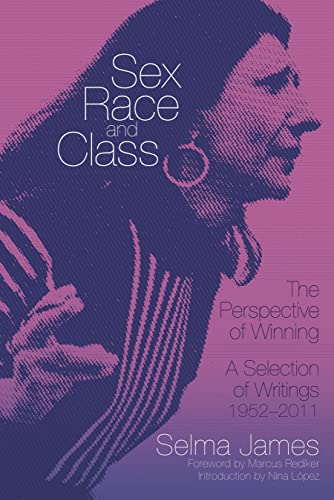
Inhaltsangabe
In 1972 Selma James set out a new political perspective. Her starting point was the millions of unwaged women who, working in the home and on the land, were not seen as “workers” and their struggles viewed as outside of the class struggle. Based on her political training in the Johnson-Forest Tendency, founded by her late husband C.L.R. James, on movement experience South and North, and on a respectful study of Marx, she redefined the working class to include sectors previously dismissed as “marginal.”
For James, the class struggle presents itself as the conflict between the reproduction and survival of the human race, and the domination of the market with its exploitation, wars, and ecological devastation. She sums up her strategy for change as “Invest in Caring not Killing.”
This selection, spanning six decades, traces the development of this perspective in the course of building an international campaigning network. It includes excerpts from the classic The Power of Women and the Subversion of the Community which launched the “domestic labor debate,” the exciting “Hookers in the House of the Lord” which describes a church occupation by sex workers, an incisive review of the C.L.R. James masterpiece The Black Jacobins, a reappraisal of the novels of Jean Rhys and of the leadership of Julius Nyerere, the groundbreaking “Marx and Feminism,” and more.
The writing is lucid and without jargon. The ideas, never abstract, spring from the experience of organising, from trying to make sense of the successes and the setbacks, and from the need to find a way forward.
Die Inhaltsangabe kann sich auf eine andere Ausgabe dieses Titels beziehen.
Über die Autorinnen und Autoren
Selma James is a women’s rights and anti-racist campaigner and author. From 1958 to 1962 she worked with C.L.R. James in the movement for West Indian federation and independence. In 1972 she founded the International Wages for Housework Campaign, and in 2000 helped launch the Global Women’s Strike whose strategy for change is “Invest in Caring not Killing”. She coined the word “unwaged” which has since entered the English language. In the 1970s she was the first spokeswoman of the English Collective of Prostitutes. She is a founding member of the International Jewish Anti-Zionist Network. She co-authored the classic The Power of Women and the Subversion of the Community which launched the “domestic labour debate.” Other publications include A Woman’s Place (1952), Women, the Unions and Work, or what is not to be done (1972), Sex, Race and Class (1974), Wageless of the World (1974), The Rapist Who Pays the Rent (1982), The Ladies and the Mammies—Jane Austen and Jean Rhys (1983), Marx and Feminism (1983), Hookers in the House of the Lord (1983), Strangers & Sisters: Women, Race and Immigration (1985), The Global Kitchen—the Case for Counting Unwaged Work (1985 and 1995), and The Milk of Human Kindness—Defending Breastfeeding from the AIDS Industry and the Global Market (2005).
Marcus Rediker is a an activist and Distinguished Professor of Atlantic History at the University of Pittsburgh. His books include: Between the Devil and the Deep Blue Sea (1987), The Many-Headed Hydra (2000), Villains of All Nations (2004), The Slave Ship: A Human History (2007), and many more.
Nina López is the joint co-ordinator of the Global Women’s Strike. Her writings and edited volumes include: Prostitute Women and AIDS—Resisting the Virus of Repression (1988), Some Mother’s Daughter: The Hidden Movement of Prostitute Women Against Violence (1998), The Milk of Human Kindness (2002), and Creating a Caring Economy: Nora Castañeda and the Women’s Development Bank of Venezuela (2006).
Auszug. © Genehmigter Nachdruck. Alle Rechte vorbehalten.
Sex, Race and Class
The Perspective of Winning A Selection of Writings, 1952–2011
By Selma JamesPM Press
Copyright © 2012 PM Press
All rights reserved.
ISBN: 978-1-60486-454-0All rights reserved.
Contents
A Grateful Preface Marcus Rediker,
A Winning Perspective Nina López,
A Woman's Place (1952),
Columns from the newspaper Correspondence (1954),
Aubrey Williams and Wilson Harris (1966),
Women Against the Industrial Relations Act (1971),
The Power of Women and the Subversion of the Community (1972) (Excerpts),
Women, the Unions, and Work, or What Is Not to Be Done (1972),
The Perspective of Winning (1973),
The Family Allowance Campaign: Tactics and Strategy (1973),
Sex, Race, and Class (1974),
Wageless of the World (1975),
Hookers in the House of the Lord (1983),
Jean Rhys (1983) (Excerpts),
Marx and Feminism (1983),
The Global Kitchen (1985) (Excerpts),
Strangers and Sisters: Women, Race, and Immigration (1985) (Excerpts),
The UN Decade for Women: An Offer We Couldn't Refuse (1986),
The Challenge of Diversity: Reflections on a Conference (1990),
Women's Unwaged Work: The Heart of the Informal Sector (1991),
The Milk of Human Kindness (2002) [Excerpt],
Venezuela [2004-2005],
Sixth Global Women's Strike Call [2005],
Rediscovering Nyerere's Tanzania [2007-2009],
Interview Excerpts [2009],
Speaking at the U.S. Assembly of Jews Confronting Racism and Israeli Apartheid [2010],
Haiti [2010-2011],
Guardian Articles [2010-2011],
Mumia Abu-Jamal, Jailhouse Lawyer [2011] [Excerpts],
Striving for Clarity and Influence: the Political Legacy of CLR James [2001-2012],
CHAPTER 1
A GRATEFUL PREFACE
MARCUS REDIKER
Selma James is a treasure, as this volume of riches makes clear. For more than half a century she has played a significant role in a wide variety of radical organizations and movements, many of which are not nearly well enough known. From the Johnson-Forest Tendency and the Facing Reality group of the 1950s, to the Race Today Collective in Brixton, to Global Women's Strike, James has animated and embodied a kind of radicalism that is increasingly relevant in today's world.
Her close association with the great Trinidadian scholar-activist CLR James provides a key to her political approach. One of the main ideas embodied in James's writings is what the late George Rawick, another close comrade of CLR James, called "working-class self-activity": those many and various and often invisible things the working class, broadly defined, does for itself in the quest for emancipation. The emphasis is on action, agency, new meanings and possibilities generated, often unpredictably, from social movement and conflict on the ground. CLR James always emphasized the importance of new forms of struggle that bubble up constantly from below, often alongside and sometimes against established left-wing institutions such as unions and political parties.
If the promise of Tom Paine's The Rights of Man (1791) was expanded by Mary Wollstonecraft's A Vindication of the Rights of Women (1792) and by the lesser-known but hugely important work of Thomas Spence, The Rights of Infants (1796), James has continued in this direction, asking how it came to be that "Women do two-thirds of the world's work, receive 5 percent of world income, and own less than 1 percent of world assets" — and asking, impatiently, how can this sordid reality be changed. She was doing pioneering theoretical and historical analysis of "race-class-gender," with an emphasis on how each constitutes the other, long before this became a popular analytical approach during the 1980s.
James's political theory and her organizing strategies thus come "from below" — that is to say, not from intellectuals or party functionaries who tell working people what they should be doing, but rather from factory workers, housewives, prostitutes, and migrants, as the following pages will show. And those people come not only from London and New York but from places that range from Mexico and Venezuela and Haiti to Kenya and Tanzania. James insists not only on deriving her ideas from interaction with working people of all kinds and all nations, she consistently tests and refines them in the same constituency. From her very first pamphlet, which she discussed with her fellow workers and neighbors, she has always trusted not only the decency of common people, but their ability to think and act. "Every cook can govern," wrote CLR James in 1956. James carried that optimistic message into the woman's world of work, the kitchen, and in so doing deepened and expanded its meaning.
The pamphlet James cowrote with Mariarosa Dalla Costa, The Power of Women and the Subversion of the Community, which is excerpted here, is, in my view, a classic of radical literature and one of the most important political documents of the 1970s, contributing as it did to both the working-class movement and the women's movement — indeed, showing activists in both that they shared a common struggle! The "Wages for Housework" campaign carried the message around the world. In this respect as in so many others, James's work has consistently expanded our idea of what the proletariat is, moving beyond the factory gate to the household, the streets, and the prison.
A case in point is her recent work with prisoner Mumia Abu-Jamal, a former Black Panther and one of the world's most eminent political prisoners. When James visited him at the SCI-Greene Supermax Prison in Waynesburg, Pennsylvania, their wide-ranging political discussion turned to what prisoners do for themselves in their struggles against the law. The result was Jailhouse Lawyers, a fascinating study of working-class self-activity — how the prison functions as a kind of school and how prisoners educate themselves in order to help each other in their cases. James saw that vital, creative political work was being done in the belly of the beast, and she wanted everyone to know about it. She encouraged Mumia to write the book, which he did. When you read it, you will have a better understanding of race and class in America, and how a previously little-known movement from below is challenging the powers that be. You will also have a better understanding of what kind of political thinker James is.
Another thing I like about this collection of essays is their practicality: they show not only thought in relation to action, they convey a vivid sense of how a talented organizer actually works. In our rush to glorify theory, we too often forget the craft of practice, the democratic art of working with people amid all the contradictions of their lives. That is something James knows and does extremely well. These essays distill the precious wisdom of the organizer, much of it gained at the Crossroads Women's Centre in London.
In the end, I am delighted that PM Press has published this volume, because it will help James to become better known and to enable her to take her rightful place as one of the key political thinkers and activists of our times. She is, and has long been, a critical contributor to our knowledge commons, where a better future must lie. Indeed, she has been building it for almost six decades, as readers may now happily see for themselves.
CHAPTER 2A WINNING PERSPECTIVE
NINA LÓPEZ
Selma James has made and continues to make a critical contribution to the movement for social justice,...
„Über diesen Titel“ kann sich auf eine andere Ausgabe dieses Titels beziehen.
Suchergebnisse für Sex, Race, and Class―The Perspective of Winning:...

Beispielbild für diese ISBN
Sex, Race and Class - The Perspective of Winning: A Selection of Writings 1952-2011
Anbieter: World of Books (was SecondSale), Montgomery, IL, USA
Verkäuferbewertung 5 von 5 Sternen

Paperback. Zustand: Good. This selection, spanning six decades, traces the development of a new political perspective that would set out to redefine traditional views of the class struggle. James' starting point was the millions of unwaged women who, despite working at home and on land, were not seen as 'workers'. For her, the class struggle is the the conflict between the reproduction of the human race and the domination of a exploitative, detructive and war driven market. This lucid and jargon free read springs from the author's urgent need to find a better way forward. Artikel-Nr. 00106313509
Gebraucht kaufen
EUR 4,55
Versand gratis
Versand innerhalb von USA
Versand innerhalb von USA
Anzahl: 1 verfügbar
Beispielbild für diese ISBN
Sex, Race, and Class - the Perspective of Winning : A Selection of Writings, 1952?2011
Anbieter: Better World Books, Mishawaka, IN, USA
Verkäuferbewertung 5 von 5 Sternen
Zustand: Good. Pages intact with minimal writing/highlighting. The binding may be loose and creased. Dust jackets/supplements are not included. Stock photo provided. Product includes identifying sticker. Better World Books: Buy Books. Do Good. Artikel-Nr. 8234008-6
Gebraucht kaufen
EUR 8,35
Versand gratis
Versand innerhalb von USA
Versand innerhalb von USA
Anzahl: 1 verfügbar
Beispielbild für diese ISBN
Sex, Race and Class - The Perspective of Winning: A Selection of Writings 1952-2011 (Common Notions)
Anbieter: Sell Books, Elland, YORKS, Vereinigtes Königreich
Verkäuferbewertung 5 von 5 Sternen
paperback. Zustand: Very Good. Most of our very good books have only minor imperfections such as shelf wear consistent with a new book that's sat on a bookshop shelf for a year or two. Occasionally we may miss other minor imperfections as we have to grade books at speed. Our books are dispatched from a Yorkshire former cotton mill. We list via barcode/ISBN so please note that the images are stock images and may not be the exact copy you receive, furthermore the details about edition and year might not be accurate as many publishers reuse the same ISBN for multiple editions and as we simply scan a barcode or enter an ISBN we do not check the validity of the edition data when listing. If you're looking for an exact edition please don't order (at least not without checking with us first, although we don't always have time to check). We aim to dispatch prompty, the service used will depend on order value and book size. We can ship to most countries, see our shipping policies. Payment is via Abe only. Artikel-Nr. SBAB-mon0000006688
Gebraucht kaufen
EUR 8,18
EUR 9,17 Versand
Versand von Vereinigtes Königreich nach USA
Versand von Vereinigtes Königreich nach USA
Anzahl: 1 verfügbar
Beispielbild für diese ISBN
Sex, Race and Class - The Perspective of Winning: A Selection of Writings 1952-2011 (Common Notions)
Anbieter: WorldofBooks, Goring-By-Sea, WS, Vereinigtes Königreich
Verkäuferbewertung 5 von 5 Sternen
Paperback. Zustand: Very Good. The book has been read, but is in excellent condition. Pages are intact and not marred by notes or highlighting. The spine remains undamaged. Artikel-Nr. GOR008853605
Gebraucht kaufen
EUR 13,66
EUR 6,62 Versand
Versand von Vereinigtes Königreich nach USA
Versand von Vereinigtes Königreich nach USA
Anzahl: 1 verfügbar
Beispielbild für diese ISBN
Sex, Race and Class - The Perspective of Winning
Anbieter: PBShop.store US, Wood Dale, IL, USA
Verkäuferbewertung 5 von 5 Sternen
PAP. Zustand: New. New Book. Shipped from UK. Established seller since 2000. Artikel-Nr. EB-9781604864540
Beispielbild für diese ISBN
Sex, Race and Class - The Perspective of Winning
Anbieter: PBShop.store UK, Fairford, GLOS, Vereinigtes Königreich
Verkäuferbewertung 5 von 5 Sternen
PAP. Zustand: New. New Book. Shipped from UK. Established seller since 2000. Artikel-Nr. EB-9781604864540
Neu kaufen
EUR 19,90
EUR 4,92 Versand
Versand von Vereinigtes Königreich nach USA
Versand von Vereinigtes Königreich nach USA
Anzahl: 3 verfügbar
Beispielbild für diese ISBN
Sex, Race and Class the Perspective of Winning: A Selection of Writings, 1952-2011
Anbieter: Revaluation Books, Exeter, Vereinigtes Königreich
Verkäuferbewertung 5 von 5 Sternen
Paperback. Zustand: Brand New. 296 pages. 9.00x6.00x0.75 inches. In Stock. Artikel-Nr. __1604864540
Neu kaufen
EUR 16,16
EUR 11,82 Versand
Versand von Vereinigtes Königreich nach USA
Versand von Vereinigtes Königreich nach USA
Anzahl: 2 verfügbar
Beispielbild für diese ISBN
Sex, Race and Class-The Perspective of Winning
Anbieter: Majestic Books, Hounslow, Vereinigtes Königreich
Verkäuferbewertung 4 von 5 Sternen

Zustand: New. pp. 320. Artikel-Nr. 4269490
Neu kaufen
EUR 23,57
EUR 7,68 Versand
Versand von Vereinigtes Königreich nach USA
Versand von Vereinigtes Königreich nach USA
Anzahl: 3 verfügbar
Beispielbild für diese ISBN
Sex, Race And Class - The Perspective Of Winning: A Selection of Writings 1952-2011
Anbieter: Kennys Bookstore, Olney, MD, USA
Verkäuferbewertung 5 von 5 Sternen
Zustand: New. 2012. Paperback. Num Pages: 306 pages, illustrations. BIC Classification: JFFK; JFSC; JFSJ1; JFSL. Category: (G) General (US: Trade). Dimension: 229 x 152 x 23. Weight in Grams: 449. . . . . . Books ship from the US and Ireland. Artikel-Nr. V9781604864540
Neu kaufen
EUR 26,44
EUR 9,38 Versand
Versand innerhalb von USA
Versand innerhalb von USA
Anzahl: 8 verfügbar
Beispielbild für diese ISBN
Sex, Race, and Class?The Perspective of Winning: A Selection of Writings, 1952-2011 (Common Notions)
Anbieter: Ria Christie Collections, Uxbridge, Vereinigtes Königreich
Verkäuferbewertung 5 von 5 Sternen
Zustand: New. In English. Artikel-Nr. ria9781604864540_new
Neu kaufen
EUR 24,19
EUR 13,34 Versand
Versand von Vereinigtes Königreich nach USA
Versand von Vereinigtes Königreich nach USA
Anzahl: 2 verfügbar