
Verwandte Artikel zu 100 Things Duke Fans Should Know & Do Before They...
Inhaltsangabe
Perfect for Duke fans who think they already know everything 
 
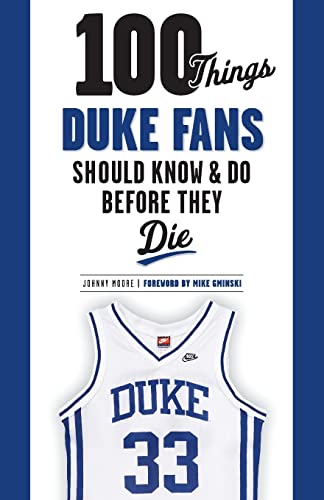
100 Things Duke Fans Should Know & Do Before They Die is the ultimate resource guide for true fans of the Blue Devils. Whether you're a die-hard booster from the days of Mike Gminski or a new supporter of Jahlil Okafor, these are the 100 things all fans need to know and do in their lifetime. It lists figures from the Vic Bubas era to the current Coach K era&;with stories on each of his four national championships and the players involved. The book also features the places all Duke fans needs to visit, such as the Angus Barn, and provides background on the university, including how it was founded and what makes the famed chapel such a special structure. Every essential piece of Blue Devils knowledge and trivia is here, as well as must-do activities, all ranked from 1 to 100, providing an entertaining and easy-to-follow checklist as you progress on your way to fan superstardom. 
Die Inhaltsangabe kann sich auf eine andere Ausgabe dieses Titels beziehen.
Über die Autorin bzw. den Autor
Johnny Moore is a producer for the radio and television networks at Duke University, has been involved with Duke athletics for nearly 40 years, and is the coauthor of The Blue Divide. He lives in Durham, North Carolina. Mike Gminski was a first-team All-American and ACC Player of the Year at Duke before becoming a nationally known broadcaster. He resides in Charlotte, NC.
Auszug. © Genehmigter Nachdruck. Alle Rechte vorbehalten.
100 Things Duke Fans Should Know & Do Before They Die
By Johnny MooreTriumph Books
Copyright © 2015 Johnny Moore
All rights reserved.
ISBN: 978-1-60078-980-9All rights reserved.
Contents
Foreword by Mike Gminski,
Introduction,
1. Cameron Indoor Stadium,
2. Coach K,
3. The Shot,
4. Upsetting UNLV and K's First Title,
5. Johnny Dawkins,
6. 1992 National Championship,
7. Cameron Crazies,
8. 2015 National Championship,
9. Christian Laettner,
10. 2001 National Championship,
11. Bobby Hurley,
12. Danny Ferry,
13. 2010 National Championship,
14. Shane Battier,
15. Grant Hill,
16. Jason Williams,
17. J.J. Redick,
18. Art Heyman,
19. Go Camping at Krzyzewskiville,
20. Jeff Mullins,
21. Bill Foster,
22. Duke Chapel,
23. How the Blue Devils Got Their Name,
24. Eddie Cameron,
25. Smell the Flowers at the Sarah P. Duke Gardens,
26. Dick Groat,
27. Dukies on TV,
28. The Legend of Fred Lind,
29. The Dominating 1999 Team,
30. Coach K and USA Basketball,
31. Gman,
32. The Fight,
33. The War of 1989,
34. Dennard and Banks — So Long and Thanks,
35. Wojo's Senior Day,
36. Washington Duke,
37. The Duke Brothers,
38. Dedication Day,
39. The 7–0 Game,
40. Duke vs. Shaq's LSU Tigers,
41. Black Sunday,
42. Siler City — The Beginning of the Carolina Hatred,
43. Dine at Angus Barn,
44. The Missoula Mountain,
45. Bill Werber, the First All-American,
46. Capel's Shot,
47. Austin Rivers' Game-Winner and the One-and-Dones,
48. Cap Card,
49. The Architects of Cameron,
50. C.B. Claiborne,
51. Ferry Scores 58,
52. Miracle Minute,
53. Red Auerbach,
54. Duke-Carolina Pranks,
55. Renovations to Cameron,
56. Gerry Gerard,
57. Harold Bradley,
58. Visit the Nasher Art Museum,
59. Visit East Campus,
60. Stay at Washington Duke Inn & Golf Club,
61. Jay Bilas,
62. Read "The Chronicle",
63. Madison Square Garden and the Meadowlands,
64. Early All-Americans,
65. Visit the Duke Basketball Museum,
66. Attend Countdown to Craziness,
67. Johnny Dawkins' Epic Weekend,
68. Boozer's Injury,
69. K's First Win Over No. 1,
70. Wallace Wade,
71. Bucky Waters,
72. Coach K and the Legacy Fund,
73. Wojo,
74. Jon Scheyer,
75. Nate James,
76. Jeff Capel,
77. Chris Collins,
78. Tom Butters, the Man Who Hired Coach K,
79. Make a Fist,
80. Billy King,
81. Snow Day,
82. Jim Spanarkel,
83. Tinkerbell,
84. The Alaskan Assassin,
85. Bob Verga,
86. Jack Marin,
87. Just Say No to L.A.,
88. Randy Denton,
89. Elton Brand,
90. The Landlord,
91. Carlos Boozer,
92. Mark Alarie,
93. Kyle Singler,
94. The Lost Season of 1994–95,
95. Tate Armstrong,
96. Chris Duhon,
97. Steve Vacendak,
98. Tommy Amaker,
99. Mike Dunleavy,
100. Chris Carrawell,
Acknowledgments,
Sources,
CHAPTER 1
Cameron Indoor Stadium
A classic venue and the crown jewel of college basketball, Cameron Indoor Stadium originally opened in 1940 as Duke Indoor Stadium. Heading into the 2015–16 season, it has been the site of 832 men's basketball victories. More than a few of those victories have been influenced by the electric atmosphere within its Gothic halls.
Well before $2 million renovations in the 1980s, legend has it that it all began with a book of matches. For a town and a school founded on local tobacco fortunes, that seems a fitting way to start. On the cover of a matchbook, Eddie Cameron and Wallace Wade first sketched out the plan for Duke Indoor Stadium in 1935. The story may be a myth (the matchbook has never been found), but then the Indoor Stadium that emerged from those first scribblings lends itself to the propagation of myths.
For seven decades, spectators, players, and coaches have understood the unique magic of the Indoor Stadium. The building was dedicated to longtime Duke athletic director and basketball coach Eddie Cameron, a legend in his own right, on January 22, 1972. Then an unranked Duke team upset third-ranked North Carolina 76–74 after Robby West drove the length of the court to hit a pull-up jumper to win the game.
It's the intimacy of the arena, the unique seating arrangement that puts the wildest fans right down on the floor with the players. It's the legends that were made there, the feeling of history being made with every game. And it's something indescribable that comes from the building itself. No one who has experienced it will ever forget it.
Whether or not the matchbook story is true, it is a fact that the official architectural plans for the stadium were drawn up by the Philadelphia firm of Horace Trumbauer, a self-made man, a poor boy who left school at 16 to apprentice himself as a draftsman to a local architect. In 1890, at the age of 21, he opened his own office and quickly rose to prominence in the Northeast. His designs for the mansions and estates of wealthy northeastern magnates brought him to the attention of James Buchanan Duke, the North Carolina tobacco baron. Duke commissioned the architect to design his New York town home during the early part of the century. In 1924 when Duke created the $40 million Duke Endowment that turned Trinity College into Duke University, he called on Trumbauer to design the new university campus. In recent years it has come to light that the plans for the campus, as well as designs for later buildings, including the stadium, were drawn up not by Trumbauer himself (although his name appeared on all the blueprints) but by his chief designer, Julian Abele, one of the nation's first African American architects.
The original design for the Indoor Stadium was significantly less grand than the one from which the building was actually constructed. That first plan called for 5,000 basketball "sittings," and even that number was considered extravagant, at least by Trumbauer, who originally had proposed 4,000 seats. In a letter to Duke president Dr. William P. Few, Trumbauer said: "For your information Yale has in its new gymnasium a basket ball [sic] court with settings for 1,600 ... I think the settings for 8,000 people is rather liberal ... the Palestra at the University of Pennsylvania seats 9,000." The original building was a domed structure with 16-feet steel ceiling spans and a 90-foot by 45-foot playing court.
As important as the size of the stadium was its external appearance. It was vital that the building be aesthetically integrated with the original West Campus buildings. For this reason stone was taken from the Duke quarry in nearby Hillsborough, where all the stone for the original campus had been found. The stone had to be laid in temperate weather. (In extremely cold temperatures, the mortar would freeze.)
Building on the stadium proceeded quickly and finished in nine months before it was officially opened on January 6, 1940. The final cost was $400,000, which Duke finished paying after the football team won the Sugar Bowl in 1945. Touring the building before the evening ceremony and subsequent game, local city officials were "speechless." Said Chamber of Commerce president Col. Marion B. Fowler, "It is so colossal and so wonderful ... This building will not only be an asset to the university but to the entire...
„Über diesen Titel“ kann sich auf eine andere Ausgabe dieses Titels beziehen.
Suchergebnisse für 100 Things Duke Fans Should Know & Do Before They...

Beispielbild für diese ISBN
100 Things Duke Fans Should Know and Do Before They Die
Anbieter: World of Books (was SecondSale), Montgomery, IL, USA
Verkäuferbewertung 5 von 5 Sternen

Paperback. Zustand: Good. Perfect for Duke fans who think they already know everything 100 Things Duke Fans Should Know & Do Before They Die is the ultimate resource guide for true fans of the Blue Devils. Whether you're a die-hard booster from the days of Mike Gminski or a new supporter of Jahlil Okafor, these are the 100 things all fans need to know and do in their lifetime. It lists figures from the Vic Bubas era to the current Coach K era--with stories on each of his four national championships and the players involved. The book also features the places all Duke fans needs to visit, such as the Angus Barn, and provides background on the university, including how it was founded and what makes the famed chapel such a special structure. Every essential piece of Blue Devils knowledge and trivia is here, as well as must-do activities, all ranked from 1 to 100, providing an entertaining and easy-to-follow checklist as you progress on your way to fan superstardom. Artikel-Nr. 00109800800
Gebraucht kaufen
EUR 5,93
Versand gratis
Versand innerhalb von USA
Versand innerhalb von USA
Anzahl: 3 verfügbar
Beispielbild für diese ISBN
100 Things Duke Fans Should Know & Do Before They Die
Anbieter: ThriftBooks-Dallas, Dallas, TX, USA
Verkäuferbewertung 5 von 5 Sternen
Paperback. Zustand: Good. No Jacket. Pages can have notes/highlighting. Spine may show signs of wear. ~ ThriftBooks: Read More, Spend Less. Artikel-Nr. G1600789803I3N00
Gebraucht kaufen
EUR 6,13
Versand gratis
Versand innerhalb von USA
Versand innerhalb von USA
Anzahl: 1 verfügbar
Beispielbild für diese ISBN
100 Things Duke Fans Should Know & Do Before They Die
Anbieter: ThriftBooks-Atlanta, AUSTELL, GA, USA
Verkäuferbewertung 5 von 5 Sternen
Paperback. Zustand: Good. No Jacket. Pages can have notes/highlighting. Spine may show signs of wear. ~ ThriftBooks: Read More, Spend Less. Artikel-Nr. G1600789803I3N00
Gebraucht kaufen
EUR 6,13
Versand gratis
Versand innerhalb von USA
Versand innerhalb von USA
Anzahl: 1 verfügbar
Beispielbild für diese ISBN
100 Things Duke Fans Should Know and Do Before They Die
Anbieter: Better World Books, Mishawaka, IN, USA
Verkäuferbewertung 5 von 5 Sternen
Zustand: Good. Pages intact with minimal writing/highlighting. The binding may be loose and creased. Dust jackets/supplements are not included. Stock photo provided. Product includes identifying sticker. Better World Books: Buy Books. Do Good. Artikel-Nr. 14920872-6
Gebraucht kaufen
EUR 7,02
Versand gratis
Versand innerhalb von USA
Versand innerhalb von USA
Anzahl: 2 verfügbar
Beispielbild für diese ISBN
100 Things Duke Fans Should Know & Do Before They Die
Anbieter: Kennys Bookstore, Olney, MD, USA
Verkäuferbewertung 5 von 5 Sternen
Zustand: New. Num Pages: 288 pages. BIC Classification: 1KBBFN; WSJM. Category: (G) General (US: Trade). Dimension: 215 x 139 x 20. Weight in Grams: 431. . 2015. Paperback. . . . . Books ship from the US and Ireland. Artikel-Nr. V9781600789809
Neu kaufen
EUR 25,38
EUR 9,37 Versand
Versand innerhalb von USA
Versand innerhalb von USA
Anzahl: Mehr als 20 verfügbar
Beispielbild für diese ISBN
100 Things Duke Fans Should Know & Do Before They Die
Anbieter: Revaluation Books, Exeter, Vereinigtes Königreich
Verkäuferbewertung 5 von 5 Sternen
Paperback. Zustand: Brand New. 273 pages. 8.25x5.50x0.75 inches. In Stock. Artikel-Nr. zk1600789803
Neu kaufen
EUR 27,43
EUR 14,93 Versand
Versand von Vereinigtes Königreich nach USA
Versand von Vereinigtes Königreich nach USA
Anzahl: 1 verfügbar