
Verwandte Artikel zu False Black Power? (New Threats to Freedom)
Inhaltsangabe
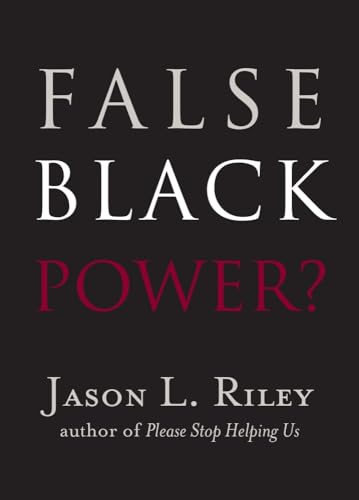
Black civil rights leaders have long supported ethnic identity politics and prioritized the integration of political institutions, and seldom has that strategy been questioned. In False Black Power?, Jason L. Riley takes an honest, factual look at why increased black political power has not paid off in the ways that civil rights leadership has promised.
Recent decades have witnessed a proliferation of black elected officials, culminating in the historic presidency of Barack Obama. However, racial gaps in employment, income, homeownership, academic achievement, and other measures not only continue but in some cases have even widened. While other racial and ethnic groups in America have made economic advancement a priority, the focus on political capital for blacks has been a disadvantage, blocking them from the fiscal capital that helped power upward mobility among other groups.
Riley explains why the political strategy of civil rights leaders has left so many blacks behind. The key to black economic advancement today is overcoming cultural handicaps, not attaining more political power. The book closes with thoughtful responses from key thought leaders Glenn Loury and John McWhorter.
Die Inhaltsangabe kann sich auf eine andere Ausgabe dieses Titels beziehen.
Über die Autorin bzw. den Autor
Jason L. Riley is a senior fellow at the Manhattan Institute, a columnist for the Wall Street Journal, and a commentator for Fox News. He lives in suburban New York City with his wife and three children.
Glenn C. Louryis the Merton P. Stoltz Professor of the Social Sciences and professor of economics at Brown University. His books include One by One from the Inside Out: Essays and Reviews on Race and Responsibility in America; The Anatomy of Racial Inequality; and Race, Incarceration, and American Values. Among other honors, he has been elected a distinguished fellow of the American Economic Association, a fellow of the Econometric Society, a member of the American Philosophical Society, and a member of the U.S. Council on Foreign Relations.
John McWhorter is an associate professor of English and Comparative Literature at Columbia University. He is the author of The Power of Babel, Doing Our Own Thing, Our Magnificent Bastard Tongue, The Language Hoax, Words on the Move, and, most recently, Talking Back, Talking Black. He is a regular columnist on language matters and race issues for Time and CNN and writes for the Wall Street Journal Taste page. McWhorter also writes a regular column on language for the Atlantic and hosts the Lexicon Valley podcast at Slate.
Auszug. © Genehmigter Nachdruck. Alle Rechte vorbehalten.
False Black Power?
By Jason L. RildeyTempleton Press
Copyright © 2017 Jason L. Riley
All rights reserved.
ISBN: 978-1-59947-518-9All rights reserved.
Contents
Introduction,
Part 1: False Black Power,
1: The Civil Rights Distraction,
2: The Limits of Politics,
3: False Black Power,
Part 2: Dissenting Points of View,
4: Keeping Up With the Leftists New Observations for Variations on the Theme by John McWhorter,
5: Black America Changing Rhetoric into Remedies by Glenn C. Loury,
6: A Response to McWhorter and Loury,
Notes,
About the Contributors,
CHAPTER 1
The Civil Rights Distraction
* * *
ONE DAY IN FALL 2002, I opened my newspaper to read that the Reverends Jesse Jackson and Al Sharpton were upset over some dialogue in the new hit movie Barbershop. The nation's most prominent civil rights activists had threatened to call for a boycott of the ensemble comedy unless the filmmakers agreed to issue a public apology and delete the offending material from future DVD versions. I looked up from the paper and chuckled to myself. Perhaps there was something that could better recommend a film to me than Jackson and Sharpton not wanting me to see it, but nothing came to mind immediately. Not then and not now. I grabbed a jacket, headed to the theater, and caught the next showing. I laughed from beginning to end and left the multiplex with a renewed appreciation of the diminishing relevance of a civil rights old guard personified by the likes of Jackson and Sharpton.
The controversy turned out to be excellent publicity for a relatively low-budget film aimed primarily at black audiences. Barbershop was the top money-maker at the box office the weekend it was released. Written, produced, and directed by blacks, it's set on Chicago's crime-ridden South Side and features a nearly all-black cast. The story centers around Calvin, an exasperated young husband whose wife is expecting their first child and who dreams of opening his own music studio but is stuck running a barbershop he inherited from his father. The plot is predictable for the most part — Calvin, who's played by rapper-turned-actor Ice Cube, eventually comes to appreciate his inheritance — but nobody hails Barbershop because of the storyline. Rather, the film's main appeal is the dialogue: free-wheeling verbal exchanges that Calvin's esoteric crew of barbers — including old-timer Eddie and ex-con Ricky — have with one another and their customers. Topics cover not only sports and music and women, which you'd expect, but also topics like race relations and dating and urban crime. The sharp, edgy comedic riffs are often insightful and sometimes shock you with their bluntness.
The movie isn't overtly political but its social conservatism is unmistakable. Characters celebrate self-help and personal responsibility while refusing to be condescended to or pitied. The overriding ethos is that blacks can and should be advancing by dint of hard work, not white guilt, and it's largely their own fault if they aren't. "Black people in this country are some of the richest negroes on the planet," says Ricky to a young black man who blames his inability to find a job on racism. "Everywhere you look, there's opportunity." After one customer, a dim-witted small-time crook, announces that ancestral slavery has "ruined my whole life," and another suggests that blacks demand reparations from the government to improve their lot, Eddie interjects that blacks already receive government compensation for slavery in the form of welfare payments and affirmative action. Ricky takes the antireparations argument even further and insists that today's black ghetto culture is the more significant impediment to group success. "We don't need reparations. We need restraint," he explains. "Don't go out and buy a Range Rover when you livin' with your momma. And pay your momma some rent." Ricky isn't finished. "Can we please, please try to teach our kids something other than [rap music] ... and please, black people, be on time for something other than free [admission] before 11 at the club."
In the film, Ricky's listeners nod in approval and applaud. So too, I noticed, did several other black people sitting nearby in my Brooklyn theater. I was stunned by the exchange. It wasn't the sentiments expressed — those are commonplace among everyday blacks, if not among their self-appointed spokespeople. The surprise was to hear them being voiced by black protagonists in a mainstream Hollywood film, which was much less common. Here was a work of fiction that required no suspension of my disbelief. I readily recognized this place. My father took me to this barbershop on Buffalo's struggling east side as a boy. It's the clip shop I frequented — when I still had hair — on Flatbush Avenue in Brooklyn after moving to New York City in my twenties. It's where black people from all backgrounds — the college grad and the high-school dropout, the businessman and the bus driver — gather and make observations that are as raw and heartfelt as they are politically incorrect. Two minutes of film dialogue had produced a more honest conversation about race than ten-thousand-word magazine essays by Ta-Nehisi Coates and Michael Eric Dyson or a dozen panel discussions on CNN, where talking heads dance around uncomfortable truths, and expressing Ricky and Eddie's views about the black underclass might get you escorted from the premises by building security. In this sense, the entire movie's message is an affront to black leaders like Al Sharpton and Jesse Jackson as well as the liberal intellectuals who trade on the notion that black America is all but helpless in the face of an oppressive white society. The can-do attitudes on display undermine the agenda of a black political elite that benefits from portraying underprivileged minorities as perpetual victims in need of more government remedies.
The scenes that set off the reverends — and which, thankfully, remained in the DVD version — are surprisingly innocuous given all the fuss they generated. The cantankerous Eddie, who's played by comedian Cedric the Entertainer, pokes fun at Martin Luther King Jr.'s philandering and downplays Rosa Parks's famous act of disobedience in Montgomery, Alabama, in 1955 by pointing out that she was far from the first black person to refuse to give up a seat on the bus. In the same scene, Eddie also insists that O. J. Simpson "did it" and that black motorist Rodney King had it coming for resisting arrest. When an appalled customer warns Eddie that Jesse Jackson better not hear him talking like that, Eddie responds, "Fuck Jesse Jackson!" Eddie's irreverence produces some of the movie's biggest laughs.
The veracity of Eddie's remarks isn't really the issue. There's not much doubt that King strayed, according to his contemporaries and biographers. And what really distinguished Parks, as Eddie explains, were her ties to the National Association for the Advancement of Colored People (NAACP), not her willingness to ignore a racist law. At least three other blacks in Montgomery alone had been arrested earlier in 1955 for defiant behavior similar to Parks's. It's also worth noting that in neither scene do Eddie's rants go over well with onlookers, who either challenge him or howl in disapproval of his outlandishly disrespectful tone. Nevertheless, Sharpton compared the film to the FBI's efforts to discredit Dr. King in the 1960s and even took offense at the Rodney King crack. Jackson insisted that he was unbothered by the attacks on himself and was...
„Über diesen Titel“ kann sich auf eine andere Ausgabe dieses Titels beziehen.
Suchergebnisse für False Black Power? (New Threats to Freedom)

Beispielbild für diese ISBN
False Black Power?
Verlag:
Templeton Foundation Press,U.S., 2017
ISBN 10: 1599475189
ISBN 13: 9781599475189
Gebraucht
Paperback
Anbieter: World of Books (was SecondSale), Montgomery, IL, USA
Verkäuferbewertung 5 von 5 Sternen

Paperback. Zustand: Good. Black civil rights leaders have long supported ethnic identity politics and prioritized the integration of political institutions, and seldom has that strategy been questioned. In False Black Power?, Jason L. Riley takes an honest, factual look at why increased black political power has not paid off in the ways that civil rights leadership has promised.Recent decades have witnessed a proliferation of black elected officials, culminating in the historic presidency of Barack Obama. However, racial gaps in employment, income, homeownership, academic achievement, and other measures not only continue but in some cases have even widened. While other racial and ethnic groups in America have made economic advancement a priority, the focus on political capital for blacks has been a disadvantage, blocking them from the fiscal capital that helped power upward mobility among other groups.Riley explains why the political strategy of civil rights leaders has left so many blacks behind. The key to black economic advancement today is overcoming cultural handicaps, not attaining more political power. The book closes with thoughtful responses from key thought leaders Glenn Loury and John McWhorter. . Artikel-Nr. 00107531574
Gebraucht kaufen
EUR 5,61
Versand gratis
Versand innerhalb von USA
Versand innerhalb von USA
Anzahl: 3 verfügbar
Beispielbild für diese ISBN
False Black Power?
Verlag:
Templeton Foundation Press,U.S., 2017
ISBN 10: 1599475189
ISBN 13: 9781599475189
Gebraucht
Paperback
Anbieter: World of Books (was SecondSale), Montgomery, IL, USA
Verkäuferbewertung 5 von 5 Sternen
Paperback. Zustand: Very Good. Black civil rights leaders have long supported ethnic identity politics and prioritized the integration of political institutions, and seldom has that strategy been questioned. In False Black Power?, Jason L. Riley takes an honest, factual look at why increased black political power has not paid off in the ways that civil rights leadership has promised.Recent decades have witnessed a proliferation of black elected officials, culminating in the historic presidency of Barack Obama. However, racial gaps in employment, income, homeownership, academic achievement, and other measures not only continue but in some cases have even widened. While other racial and ethnic groups in America have made economic advancement a priority, the focus on political capital for blacks has been a disadvantage, blocking them from the fiscal capital that helped power upward mobility among other groups.Riley explains why the political strategy of civil rights leaders has left so many blacks behind. The key to black economic advancement today is overcoming cultural handicaps, not attaining more political power. The book closes with thoughtful responses from key thought leaders Glenn Loury and John McWhorter. . Artikel-Nr. 00100863707
Gebraucht kaufen
EUR 5,61
Versand gratis
Versand innerhalb von USA
Versand innerhalb von USA
Anzahl: 3 verfügbar
Beispielbild für diese ISBN
False Black Power?
Anbieter: ThriftBooks-Dallas, Dallas, TX, USA
Verkäuferbewertung 5 von 5 Sternen
Paperback. Zustand: Very Good. No Jacket. Former library book; May have limited writing in cover pages. Pages are unmarked. ~ ThriftBooks: Read More, Spend Less. Artikel-Nr. G1599475189I4N10
Gebraucht kaufen
EUR 6,01
Versand gratis
Versand innerhalb von USA
Versand innerhalb von USA
Anzahl: 1 verfügbar
Beispielbild für diese ISBN
False Black Power?
Anbieter: ThriftBooks-Atlanta, AUSTELL, GA, USA
Verkäuferbewertung 5 von 5 Sternen
Paperback. Zustand: As New. No Jacket. Pages are clean and are not marred by notes or folds of any kind. ~ ThriftBooks: Read More, Spend Less. Artikel-Nr. G1599475189I2N00
Gebraucht kaufen
EUR 6,01
Versand gratis
Versand innerhalb von USA
Versand innerhalb von USA
Anzahl: 1 verfügbar
Beispielbild für diese ISBN
False Black Power?
Anbieter: ThriftBooks-Atlanta, AUSTELL, GA, USA
Verkäuferbewertung 5 von 5 Sternen
Paperback. Zustand: Good. No Jacket. Former library book; Pages can have notes/highlighting. Spine may show signs of wear. ~ ThriftBooks: Read More, Spend Less. Artikel-Nr. G1599475189I3N10
Gebraucht kaufen
EUR 6,01
Versand gratis
Versand innerhalb von USA
Versand innerhalb von USA
Anzahl: 1 verfügbar
Beispielbild für diese ISBN
False Black Power?
Anbieter: Better World Books, Mishawaka, IN, USA
Verkäuferbewertung 5 von 5 Sternen
Zustand: Good. Pages intact with minimal writing/highlighting. The binding may be loose and creased. Dust jackets/supplements are not included. Stock photo provided. Product includes identifying sticker. Better World Books: Buy Books. Do Good. Artikel-Nr. 14452603-6
Gebraucht kaufen
EUR 6,18
Versand gratis
Versand innerhalb von USA
Versand innerhalb von USA
Anzahl: 2 verfügbar
Beispielbild für diese ISBN
False Black Power?
Anbieter: Better World Books, Mishawaka, IN, USA
Verkäuferbewertung 5 von 5 Sternen
Zustand: Good. Former library copy. Pages intact with minimal writing/highlighting. The binding may be loose and creased. Dust jackets/supplements are not included. Includes library markings. Stock photo provided. Product includes identifying sticker. Better World Books: Buy Books. Do Good. Artikel-Nr. 14606394-75
Gebraucht kaufen
EUR 6,18
Versand gratis
Versand innerhalb von USA
Versand innerhalb von USA
Anzahl: 2 verfügbar
Beispielbild für diese ISBN
False Black Power?
Anbieter: Better World Books: West, Reno, NV, USA
Verkäuferbewertung 5 von 5 Sternen
Zustand: Good. Pages intact with minimal writing/highlighting. The binding may be loose and creased. Dust jackets/supplements are not included. Stock photo provided. Product includes identifying sticker. Better World Books: Buy Books. Do Good. Artikel-Nr. 14452603-6
Gebraucht kaufen
EUR 6,18
Versand gratis
Versand innerhalb von USA
Versand innerhalb von USA
Anzahl: 1 verfügbar
Beispielbild für diese ISBN
False Black Power? (New Threats to Freedom Series)
Anbieter: Wonder Book, Frederick, MD, USA
Verkäuferbewertung 5 von 5 Sternen
Zustand: As New. Like New condition. A near perfect copy that may have very minor cosmetic defects. Artikel-Nr. E02O-00274
Gebraucht kaufen
EUR 6,42
Versand gratis
Versand innerhalb von USA
Versand innerhalb von USA
Anzahl: 1 verfügbar
Beispielbild für diese ISBN
False Black Power?
Anbieter: Revaluation Books, Exeter, Vereinigtes Königreich
Verkäuferbewertung 5 von 5 Sternen
Paperback. Zustand: Brand New. 160 pages. 7.00x5.00x0.25 inches. In Stock. Artikel-Nr. __1599475189
Neu kaufen
EUR 14,95
EUR 11,94 Versand
Versand von Vereinigtes Königreich nach USA
Versand von Vereinigtes Königreich nach USA
Anzahl: 1 verfügbar