
Verwandte Artikel zu Making Grateful Kids: The Science of Building Character
Inhaltsangabe
If there was a new wonder drug on the market that got kids to behave better, improve their grades, feel happier, and avoid risky behaviors, many parents around the world would be willing to empty their bank accounts to acquire it. Amazingly, such a product actually does exist. It’s not regulated by the FDA, it has no ill side-effects, and it’s absolutely free and available to anyone at any time. This miracle cure is gratitude.
Over the past decade, science has shown that gratitude is one of the most valuable and important emotions we possess, and it is a virtue that anyone can cultivate. In fact, researchers have developed many different methods people can use to foster an attitude of gratitude, and the science shows that many of them really work.
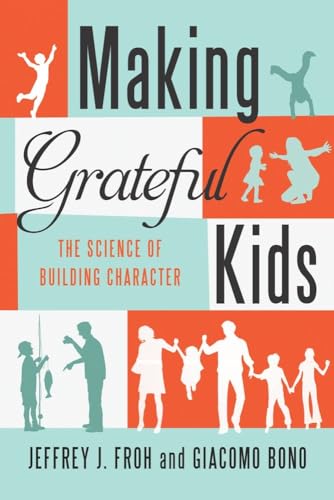
In Making Grateful Kids, two of the leading authorities on gratitude among young people, Jeffrey J. Froh and Giacomo Bono, introduce their latest and most compelling research, announce groundbreaking findings, and share real-life stories from adults and youth to show parents, teachers, mentors, and kids themselves how to achieve greater life satisfaction through gratitude. Most importantly perhaps, they expand on this groundbreaking research to offer practical and effective common-sense plans that can be used in day-to-day interactions between kids and adults to enhance success and wellbeing.
Their unique, scientifically-based approach for producing grateful youth works whether these kids are very young elementary school students or troubled teenagers. Not only does the purposeful practice of gratitude increase their happiness, but the research indicates that grateful kids also report more self-discipline, fulfilling relationships, and engagement with their schools and communities when compared to their less grateful counterparts. After reading Making Grateful Kids, parents, teachers, and anyone who works with youth will be able to connect more meaningfully with kids so that all parties can focus on the things that matter most and, in turn, create a more cooperative and thriving society.
Die Inhaltsangabe kann sich auf eine andere Ausgabe dieses Titels beziehen.
Über die Autorin bzw. den Autor
Jeffrey J. Froh, PsyD, is a school psychologist, associate professor of psychology at Hofstra University, and the recipient of a multiyear grant from The John Templeton Foundation to study gratitude in children and adolescents. He is past associate editor for The Journal of Positive Psychology and co-editor of Activities for Teaching Positive Psychology: A Guide for Instructors. He has authored over thirty scientific articles and book chapters on gratitude, strengths, and well-being, among other topics. His research has appeared in mainstream media such as the Wall Street Journal, the Los Angeles Times, the Washington Post, Woman’s Day, Family Circle, and Better Homes and Gardens. He lives with his wife, Cara, and two children, James and Julianne, in Greenlawn, New York.
Giacomo Bono, PhD, is a professor at California State University, Dominguez Hills and, along with Froh, the recipient of a multiyear grant from The John Templeton Foundation to study gratitude in children and adolescents. He has a PhD in Social Psychology from Claremont Graduate University and has extensive training and work experience involving research in health, positive psychology, youth development, and school and community programs for youth and families. With approximately twenty articles and chapters published, his research has appeared in U.S. News and World Report, the Huffington Post, Health Magazine, and Youth Radio. He lives with his wife, Kate, and two children, Dario and Alex, in La Mirada, California.
Giacomo Bono, PhD, is a professor at California State University, Dominguez Hills and, along with Froh, the recipient of a multiyear grant from The John Templeton Foundation to study gratitude in children and adolescents. He has a PhD in Social Psychology from Claremont Graduate University and has extensive training and work experience involving research in health, positive psychology, youth development, and school and community programs for youth and families. With approximately twenty articles and chapters published, his research has appeared in U.S. News and World Report, the Huffington Post, Health Magazine, and Youth Radio. He lives with his wife, Kate, and two children, Dario and Alex, in La Mirada, California.
Auszug. © Genehmigter Nachdruck. Alle Rechte vorbehalten.
Making Grateful Kids
The Science of Building Character
By Jeffrey J. Froh, Giacomo BonoTempleton Press
Copyright © 2014 Jeffrey J. Froh and Giacomo Bono
All rights reserved.
ISBN: 978-1-59947-480-9All rights reserved.
Contents
Introduction: What Drives a Child Who Thrives?,
Chapter 1: Orienting Your Family toward Gratitude,
Chapter 2: Raising Grateful Children from the Beginning,
Chapter 3: Growing Gratitude One Goal at a Time,
Chapter 4: Building Strengths and Resilience by Staying Positive and Learning to Cope,
Chapter 5: Valuing Others Develops Character and Gratitude,
Chapter 6: Dealing with Consumerism, Media, and Materialism,
Chapter 7: Nurturing Relationships,
Chapter 8: Developing Community, Connection, and a Sense of Purpose,
Chapter 9: How the World Could Be with Generation G,
Acknowledgments,
Appendix: Measuring Gratitude,
Notes,
Index,
CHAPTER 1
Orienting Your Family toward Gratitude
GRATITUDE should spring from the first supportive relationships in a child's life, such as with parents and caregivers and, eventually, from other close relationships. Indeed, our research shows that youth with supportive and satisfying family and peer relationships are more grateful. Yet even in homes that actively encourage gratitude, a young person's ability to reason and accept challenging situations varies with maturity. One day, Giacomo's seven-year-old son Dario noticed his little brother Alex had been given a new toy. It quickly dawned on Dario that he didn't have the same good fortune, and he swiftly made his displeasure known to his mother. He then cried, but not without saying that it just wasn't fair—a sentiment he repeated many times. Many of you may chuckle at this scenario because you've experienced it with your kids. And there's good reason. Children argue about who has more, or better, toys. But why? Why is it so easy for kids—and adults—to focus on things to complain about?
Encourage Your Kids to Tune into Positive Emotions
Emotions give us important information about our environment. If we feel anxious, it may be because we sense a looming threat. If we feel angry, it may be because someone frustrated us or hurt us. But when we're happy, we don't always think about why. When it comes to positive emotions, we usually just enjoy the feeling because positive emotions signal to us that the current circumstances are going well, so we should just continue doing what we're doing to reap more of the same. As a result, we automatically tend to be less analytical during positive states and fail to focus on the reasons why they came to happen. During negative events, on the other hand, we tend to analyze things more. Our nature compels us to figure out why negative events transpire so that we might, in the future, avoid or prevent them entirely. While this state of affairs generally helps us survive, it doesn't necessarily help us thrive. So let's revisit Dario and Alex with this in mind.
Let's say Dario came home to discover new toys for both he and his brother. It would be easy to imagine him ripping open his gift in record time then delving eagerly into playing with it without considering why he even got the toy. This natural tendency becomes especially ingrained in adults. Like Dario, we tend to not think about why good things come our way. But if his mom first asked Dario to explain why Alex and he received toys that day, he would likely make the connection between the reward—the toys—and the boys' good behavior—cleaning up after playtime all week.
The more we understand why positive events happen for us, the easier it is to tune into possible sources of gratitude (at least when people are responsible for those events). In this example, mom helps her kids feel good for being responsible, they appreciate getting toys from her, and everybody is content with this good state of affairs. This leads us to the first strategy: capitalize on positive emotions. It can be useful with kids as young as three years old.
Strategy 1: Focus children on why good things happen to them and on the people responsible for making the good things happen.
This basic strategy helps initiate discussions with children that can help them notice and understand how others were purposefully involved in helping them. To employ this strategy, an adult and child should talk about the good things that happened during the day (or a week) and, why, in the child's opinion, those good things happened. This guides the child to notice a friend or teacher for his kindness. For example, a child might say that she learned a fun new game in school from a friend who showed her how to play. The parent can take this opportunity to suggest the child appreciate her friend for including her in the fun.
Gratitude aids humans' survival because it helps people identify the relationships that are personally more important to them than others. This strategy is useful in many settings. For instance, being thankful and appreciative of people who have been helpful and kind can easily be encouraged in school. This practice could also complement other exercises to help stoke a more cooperative classroom environment.
At home, children could think about the blessings of the day or week to come up with more thoughtful prayers. This could be done at mealtime, and our longitudinal data show that children who say grace during meals have also developed more gratitude than their peers. You could encourage children to give thanks to all the people responsible for the food on the table, which could include farmers, fishermen, truck drivers, supermarket employees, and God. You could also encourage your children during prayer at bedtime to be thankful for the people who have recently helped them or been good to them and to thank God for having such special people in their lives.
To test this strategy, Jeff and his colleagues Robert Emmons and William Sefick asked sixth and seventh graders to keep a daily journal for two weeks. The students were divided into three groups. The first group was instructed to write about five things they were grateful for; the second group was asked to focus on hassles. The third group functioned as a control, and the students in it simply completed the questionnaire administered to all three groups.
Students writing in gratitude journals made entries such as:
* "My coach helped me out at baseball practice."
* "My grandma is in good health, my family is still together, my family still loves each other, my brothers are healthy, and we have fun every day."
* "I am grateful that my mom didn't go crazy when I accidentally broke a patio table."
Students writing about hassles made entries such as:
* "I hate when people act like idiots and make fun of others."
* "I had to get up early for soccer, and we lost the game because I missed a penalty shot."
* "I feel like I'm trying so hard in school to do well but it's not enough."
Our research found that students who counted their blessings became more grateful, optimistic, satisfied with their lives and experienced fewer negative emotions. Three weeks after keeping their gratitude journals, students who counted blessings said that they were grateful for school and their education and reported feelings of greater satisfaction with their school. They also reported they were learning more and were eager to go to school.
The benefits of this change in perspective are very real. Students who are...
„Über diesen Titel“ kann sich auf eine andere Ausgabe dieses Titels beziehen.
Suchergebnisse für Making Grateful Kids: The Science of Building Character

Beispielbild für diese ISBN
Making Grateful Kids: The Science of Building Character
Anbieter: World of Books (was SecondSale), Montgomery, IL, USA
Verkäuferbewertung 5 von 5 Sternen

Zustand: Good. Item in good condition. Textbooks may not include supplemental items i.e. CDs, access codes etc. Artikel-Nr. 00095729064
Gebraucht kaufen
EUR 3,86
Versand gratis
Versand innerhalb von USA
Versand innerhalb von USA
Anzahl: 2 verfügbar
Beispielbild für diese ISBN
Making Grateful Kids: The Science of Building Character
Anbieter: World of Books (was SecondSale), Montgomery, IL, USA
Verkäuferbewertung 5 von 5 Sternen
Zustand: Very Good. Item in very good condition! Textbooks may not include supplemental items i.e. CDs, access codes etc. Artikel-Nr. 00099663277
Gebraucht kaufen
EUR 3,86
Versand gratis
Versand innerhalb von USA
Versand innerhalb von USA
Anzahl: 2 verfügbar
Beispielbild für diese ISBN
Making Grateful Kids: The Science of Building Character
Verlag:
Templeton Press (edition 1), 2015
ISBN 10: 1599474808
ISBN 13: 9781599474809
Gebraucht
Paperback
Anbieter: BooksRun, Philadelphia, PA, USA
Verkäuferbewertung 5 von 5 Sternen
Paperback. Zustand: Very Good. 1. It's a well-cared-for item that has seen limited use. The item may show minor signs of wear. All the text is legible, with all pages included. It may have slight markings and/or highlighting. Artikel-Nr. 1599474808-11-1
Gebraucht kaufen
EUR 5,22
Versand gratis
Versand innerhalb von USA
Versand innerhalb von USA
Anzahl: 1 verfügbar
Beispielbild für diese ISBN
Making Grateful Kids: The Science of Building Character
Verlag:
Templeton Press (edition 1), 2015
ISBN 10: 1599474808
ISBN 13: 9781599474809
Gebraucht
Paperback
Anbieter: BooksRun, Philadelphia, PA, USA
Verkäuferbewertung 5 von 5 Sternen
Paperback. Zustand: Very Good. 1. It's a well-cared-for item that has seen limited use. The item may show minor signs of wear. All the text is legible, with all pages included. It may have slight markings and/or highlighting. Artikel-Nr. 1599474808-8-1
Gebraucht kaufen
EUR 5,40
Versand gratis
Versand innerhalb von USA
Versand innerhalb von USA
Anzahl: 1 verfügbar
Beispielbild für diese ISBN
Making Grateful Kids: The Science of Building Character
Anbieter: ThriftBooks-Atlanta, AUSTELL, GA, USA
Verkäuferbewertung 5 von 5 Sternen
Paperback. Zustand: Very Good. No Jacket. May have limited writing in cover pages. Pages are unmarked. ~ ThriftBooks: Read More, Spend Less. Artikel-Nr. G1599474808I4N00
Gebraucht kaufen
EUR 6,02
Versand gratis
Versand innerhalb von USA
Versand innerhalb von USA
Anzahl: 1 verfügbar
Beispielbild für diese ISBN
Making Grateful Kids: The Science of Building Character
Anbieter: ThriftBooks-Dallas, Dallas, TX, USA
Verkäuferbewertung 5 von 5 Sternen
Paperback. Zustand: Very Good. No Jacket. May have limited writing in cover pages. Pages are unmarked. ~ ThriftBooks: Read More, Spend Less. Artikel-Nr. G1599474808I4N00
Gebraucht kaufen
EUR 6,02
Versand gratis
Versand innerhalb von USA
Versand innerhalb von USA
Anzahl: 1 verfügbar
Beispielbild für diese ISBN
Making Grateful Kids : The Science of Building Character
Anbieter: Better World Books: West, Reno, NV, USA
Verkäuferbewertung 5 von 5 Sternen
Zustand: Fine. Used book that is in almost brand-new condition. May contain a remainder mark. Better World Books: Buy Books. Do Good. Artikel-Nr. 53467758-75
Gebraucht kaufen
EUR 6,54
Versand gratis
Versand innerhalb von USA
Versand innerhalb von USA
Anzahl: 1 verfügbar
Beispielbild für diese ISBN
Making Grateful Kids : The Science of Building Character
Anbieter: Better World Books: West, Reno, NV, USA
Verkäuferbewertung 5 von 5 Sternen
Zustand: Good. Pages intact with minimal writing/highlighting. The binding may be loose and creased. Dust jackets/supplements are not included. Stock photo provided. Product includes identifying sticker. Better World Books: Buy Books. Do Good. Artikel-Nr. 15749533-6
Gebraucht kaufen
EUR 6,54
Versand gratis
Versand innerhalb von USA
Versand innerhalb von USA
Anzahl: 1 verfügbar
Beispielbild für diese ISBN
Making Grateful Kids : The Science of Building Character
Anbieter: Better World Books, Mishawaka, IN, USA
Verkäuferbewertung 5 von 5 Sternen
Zustand: Very Good. Former library copy. Pages intact with possible writing/highlighting. Binding strong with minor wear. Dust jackets/supplements may not be included. Includes library markings. Stock photo provided. Product includes identifying sticker. Better World Books: Buy Books. Do Good. Artikel-Nr. 19179150-6
Gebraucht kaufen
EUR 6,54
Versand gratis
Versand innerhalb von USA
Versand innerhalb von USA
Anzahl: 1 verfügbar
Beispielbild für diese ISBN
Making Grateful Kids: The Science of Building Character
Anbieter: WorldofBooks, Goring-By-Sea, WS, Vereinigtes Königreich
Verkäuferbewertung 5 von 5 Sternen
Paperback. Zustand: Good. The book has been read but remains in clean condition. All pages are intact and the cover is intact. Some minor wear to the spine. Artikel-Nr. GOR014679666
Gebraucht kaufen
EUR 15,03
EUR 6,59 Versand
Versand von Vereinigtes Königreich nach USA
Versand von Vereinigtes Königreich nach USA
Anzahl: 1 verfügbar