
Verwandte Artikel zu Science and Creation: The Search for Understanding
Inhaltsangabe
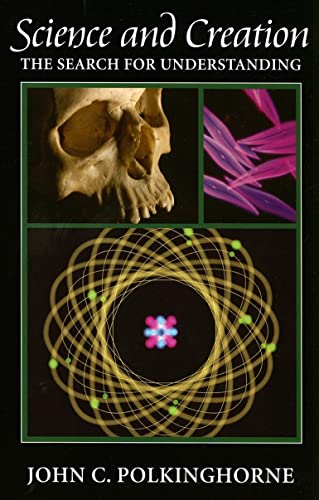
John C. Polkinghorne, internationally renowned priest-scientist, addresses fundamental questions about how scientific and theological worldviews relate to each other in this, the second volume (originally published in 1988) of his trilogy, which also included Science and Providence and One World.
Dr. Polkinghorne illustrates how a scientifically minded person approaches the task of theological inquiry, postulating that there exists a close analogy between theory and experiment in science and belief and understanding in theology. He offers a fresh perspective on such questions as: Are we witnessing today a revival a natural theology—the search for God through the exercise of reason and the study of nature? How do the insights of modern physics into the interlacing of order and disorder relate to the Christian doctrine of Creation? What is the relationship between mind and matter?
Polkinghorne states that the "remarkable insights that science affords us into the intelligible workings of the world cry out for an explanation more profound than that which it itself can provide. Religion, if it is to take seriously its claim that the world is the creation of God, must be humble enough to learn from science what that world is actually like.The dialogue between them can only be mutually enriching."
Die Inhaltsangabe kann sich auf eine andere Ausgabe dieses Titels beziehen.
Über die Autorin bzw. den Autor
John C. Polkinghorne is an Anglican priest, a fellow of the Royal Academy past president of Queens’ College, Cambridge University, and former professor of mathematical physics at Cambridge. Polkinghorne resigned his chair in physics to study for the Anglican priesthood. After completing his theological studies and serving at parishes, he returned to Cambridge. In 1997, Dr. Polkinghorne was knighted by Queen Elizabeth II for distinguished service to science, religion, learning, and medical ethics. He was the recipient of the 2002 Templeton Prize. He lives in Cambridge, United Kingdom.
Auszug. © Genehmigter Nachdruck. Alle Rechte vorbehalten.
Science and Creation
THE SEARCH FOR UNDERSTANDING
By JOHN C. POLKINGHORNETEMPLETON PRESS
Copyright © 1988 John Polkinghorne
All rights reserved.
ISBN: 978-1-59947-100-6All rights reserved.
Contents
| Preface to the 2006 Edition................................................ | ix |
| Acknowledgments............................................................ | xv |
| Introduction............................................................... | 3 |
| 1. Natural Theology........................................................ | 7 |
| 2. Insightful Inquiry...................................................... | 25 |
| 3. Order and Disorder...................................................... | 44 |
| 4. Creation and Creator.................................................... | 63 |
| 5. The Nature of Reality................................................... | 83 |
| 6. Theological Science..................................................... | 101 |
| Notes...................................................................... | 119 |
| Bibliography............................................................... | 129 |
| Index...................................................................... | 133 |
CHAPTER 1
Natural Theology
A scientist of even quite modest attainments will find, from time totime, that he receives unsolicited contributions from the general publicproposing solutions to the riddle of the physical universe. His correspondentsmay need a little help with the mathematics or a testimonialto facilitate the publication of their ideas, but they are confidentthat they have made an important advance. I am sorry to have to saythat such items of this character that have come my way have, withoutexception, proved valueless. Many have not been sufficiently articulateeven to attain the status of being wrong. Nor does some kinship withscience prove any help in the matter; some of my most persistent andwrong-headed correspondents have been electrical engineers.
This thought crosses my mind as I, a theoretical physicist by profession,take up my pen to write on matters theological. To be sure, Ireceived some grounding in theology during my preparation for ordination,and the subject remains among the principal interests whichdirect my reading; but it is also true that electrical engineers are taughta bit of physics, and no doubt they read more about it after graduation.So how can I have the temerity to attempt the present task? I certainlycannot pretend to write as a professional theologian, but only as a scientistdeeply interested in the understanding of religion.
I believe that the justification for the enterprise lies in the natureof theology. If it is to lay claim again to its medieval title of the Queenof the Sciences, that will not be because it is in a position to prescribethe answers to the questions discussed by other disciplines. Rather, itwill be because it must avail itself of their answers in the conduct ofits own inquiry, thereby setting them within the most profound contextavailable. Theology's regal status lies in its commitment to seek thedeepest possible level of understanding. In the course of that endeavor,it needs to take into account all other forms of knowledge, while inno way attempting to assert hegemony over them. A theological viewof the world is a total view of the world. Every form of human understandingmust make its contribution to it. The offering of the physicalsciences to that end must be made, at least partly, by those whowork in them. Theology cannot just be left to the theologians, as ismade clear by the recent spectacle of a distinguished theologian writingmore than 300 pages on God in creation with only an occasionaland cursory reference to scientific insight. It is as idle to supposethat one can satisfactorily speak about the doctrine of creation withouttaking into account the actual nature of the world, as it would beto think that the significance of the world could be exhaustively conveyedin the scientific description of its physical processes. There mustbe a degree of consonance between the assertions of science and theologyif the latter are to make sense. Hence there is an urgent need fordialogue between the two disciplines. The arena for their interaction isnatural theology.
Natural theology may be defined as the search for the knowledgeof God by the exercise of reason and the inspection of the world. Thereare, of course, those who would deny the possibility of such knowledge.They are by no means all of an atheist or agnostic persuasion. Peopleof religious belief have sometimes been so impressed by the transcendentotherness of God that they have asserted that He is only to be encounteredin His gracious and specific acts of self-disclosure. He cancondescend to us, but we are powerless to reach out to Him. The leadingproponent of this point of view in our century has been Karl Barth,who wrote of the God of whom the Christian creeds speak:
He cannot be known by the powers of human knowledge, but is apprehensibleand apprehended solely because of His own freedom, decision and action.What man can know by his own power according to the measure ofhis natural powers, his understanding, his feeling, will be at most somethinglike a supreme being, an absolute nature, the idea of an utterly free power,of a being towering over everything. This absolute and supreme being, theultimate and most profound, this "thing in itself," has nothing to do withGod.
That "nothing" seems like something of an overstatement. We canacknowledge that natural theology, whose source of insight is bydefinition limited to the generalities of experience, will not tell usall about God that is humanly accessible. The individual encounterwith Him, both our own and that of the spiritual masters preservedin the tradition, will surely be of the highest importance.Yet the world is not just a neutral theater in which these individualrevelatory acts take place. Rather, it is itself, if theism is true,the creation of God and so potentially a vehicle also for His self-disclosure.God is to be found in the general as well as in the particular.Natural theology may only be able to help us to discern "somethinglike a supreme being, an absolute nature," and it is certainly powerlessby itself to bring us to know the God and Father of our Lord JesusChrist, but its insights are not for that reason to be despised. There isa great deal more to the structure of matter than chemistry can tell us,with its talk of 92 elements, but it would be foolish to refuse its assistancein an inquiry into what the physical world is made of. Similarly,natural theology can provide valuable help in an inquiry about whetherthe process of the world is the carrier of significance and the expressionof purpose. This role is of special relevance today when so manypeople find it difficult to see theism as a credible and coherent possibility.Natural theology may be for them a necessary starting point. Iagree with Hugh Montefiore when he writes about the relationship ofthe intellectual quest for God through natural theology to the personalcommitment of faith, thatwhile it is true that cold intellectual thinking can never bring anyone intoa warm personal relationship with God, it is also true that, while a subjectivecommitment to God may be satisfying to the self, it lacks credibility toothers unless it can be shown that...
„Über diesen Titel“ kann sich auf eine andere Ausgabe dieses Titels beziehen.
Suchergebnisse für Science and Creation: The Search for Understanding

Beispielbild für diese ISBN
Science and Creation: The Search for Understanding
Anbieter: ThriftBooks-Dallas, Dallas, TX, USA
Verkäuferbewertung 5 von 5 Sternen

Paperback. Zustand: Good. No Jacket. Pages can have notes/highlighting. Spine may show signs of wear. ~ ThriftBooks: Read More, Spend Less. Artikel-Nr. G1599471000I3N00
Gebraucht kaufen
EUR 6,26
Versand gratis
Versand innerhalb von USA
Versand innerhalb von USA
Anzahl: 1 verfügbar
Foto des Verkäufers
Science and Creation: The Search for Understanding
Verlag:
Templeton Foundation Press,U.S., 2006
ISBN 10: 1599471000
ISBN 13: 9781599471006
Gebraucht
paperback
Anbieter: WeBuyBooks, Rossendale, LANCS, Vereinigtes Königreich
Verkäuferbewertung 5 von 5 Sternen
paperback. Zustand: Very Good. Most items will be dispatched the same or the next working day. A copy that has been read, but is in excellent condition. Pages are intact and not marred by notes or highlighting. The spine remains undamaged. Artikel-Nr. rev2011320471
Gebraucht kaufen
EUR 1,46
EUR 5,88 Versand
Versand von Vereinigtes Königreich nach USA
Versand von Vereinigtes Königreich nach USA
Anzahl: 1 verfügbar
Foto des Verkäufers
Science and Creation: The Search for Understanding
Verlag:
Templeton Foundation Press,U.S., 2006
ISBN 10: 1599471000
ISBN 13: 9781599471006
Gebraucht
paperback
Anbieter: WeBuyBooks, Rossendale, LANCS, Vereinigtes Königreich
Verkäuferbewertung 5 von 5 Sternen
paperback. Zustand: Good. Most items will be dispatched the same or the next working day. A copy that has been read but remains in clean condition. All of the pages are intact and the cover is intact and the spine may show signs of wear. The book may have minor markings which are not specifically mentioned. Artikel-Nr. rev8989255104
Gebraucht kaufen
EUR 1,46
EUR 5,88 Versand
Versand von Vereinigtes Königreich nach USA
Versand von Vereinigtes Königreich nach USA
Anzahl: 2 verfügbar
Beispielbild für diese ISBN
Science and Creation: The Search for Understanding
Anbieter: WorldofBooks, Goring-By-Sea, WS, Vereinigtes Königreich
Verkäuferbewertung 5 von 5 Sternen
Paperback. Zustand: Very Good. The book has been read, but is in excellent condition. Pages are intact and not marred by notes or highlighting. The spine remains undamaged. Artikel-Nr. GOR002697096
Gebraucht kaufen
EUR 2,93
EUR 6,65 Versand
Versand von Vereinigtes Königreich nach USA
Versand von Vereinigtes Königreich nach USA
Anzahl: 1 verfügbar
Beispielbild für diese ISBN
Science and Creation: The Search for Understanding
Anbieter: WorldofBooks, Goring-By-Sea, WS, Vereinigtes Königreich
Verkäuferbewertung 5 von 5 Sternen
Paperback. Zustand: Fine. Artikel-Nr. GOR010553931
Gebraucht kaufen
EUR 2,93
EUR 6,65 Versand
Versand von Vereinigtes Königreich nach USA
Versand von Vereinigtes Königreich nach USA
Anzahl: 1 verfügbar
Beispielbild für diese ISBN
Science and Creation : The Search for Understanding
Anbieter: Better World Books, Mishawaka, IN, USA
Verkäuferbewertung 5 von 5 Sternen
Zustand: Good. Former library copy. Pages intact with minimal writing/highlighting. The binding may be loose and creased. Dust jackets/supplements are not included. Includes library markings. Stock photo provided. Product includes identifying sticker. Better World Books: Buy Books. Do Good. Artikel-Nr. 11656449-20
Gebraucht kaufen
EUR 10,10
Versand gratis
Versand innerhalb von USA
Versand innerhalb von USA
Anzahl: 1 verfügbar
Beispielbild für diese ISBN
Science and Creation: The Search for Understanding
Anbieter: AwesomeBooks, Wallingford, Vereinigtes Königreich
Verkäuferbewertung 5 von 5 Sternen
Paperback. Zustand: Very Good. Science and Creation: The Search for Understanding This book is in very good condition and will be shipped within 24 hours of ordering. The cover may have some limited signs of wear but the pages are clean, intact and the spine remains undamaged. This book has clearly been well maintained and looked after thus far. Money back guarantee if you are not satisfied. See all our books here, order more than 1 book and get discounted shipping. Artikel-Nr. 7719-9781599471006
Gebraucht kaufen
EUR 5,29
EUR 4,89 Versand
Versand von Vereinigtes Königreich nach USA
Versand von Vereinigtes Königreich nach USA
Anzahl: 2 verfügbar
Beispielbild für diese ISBN
Science and Creation: The Search for Understanding
Anbieter: Bahamut Media, Reading, Vereinigtes Königreich
Verkäuferbewertung 4 von 5 Sternen

Paperback. Zustand: Very Good. This book is in very good condition and will be shipped within 24 hours of ordering. The cover may have some limited signs of wear but the pages are clean, intact and the spine remains undamaged. This book has clearly been well maintained and looked after thus far. Money back guarantee if you are not satisfied. See all our books here, order more than 1 book and get discounted shipping. Artikel-Nr. 6545-9781599471006
Gebraucht kaufen
EUR 4,00
EUR 8,28 Versand
Versand von Vereinigtes Königreich nach USA
Versand von Vereinigtes Königreich nach USA
Anzahl: 2 verfügbar
Beispielbild für diese ISBN
Science and Creation: The Search for Understanding
Anbieter: medimops, Berlin, Deutschland
Verkäuferbewertung 5 von 5 Sternen
Zustand: good. Befriedigend/Good: Durchschnittlich erhaltenes Buch bzw. Schutzumschlag mit Gebrauchsspuren, aber vollständigen Seiten. / Describes the average WORN book or dust jacket that has all the pages present. Artikel-Nr. M01599471000-G
Gebraucht kaufen
EUR 4,37
EUR 10,00 Versand
Versand von Deutschland nach USA
Versand von Deutschland nach USA
Anzahl: 1 verfügbar
Beispielbild für diese ISBN
Science and Creation The Search for Understanding
Anbieter: Revaluation Books, Exeter, Vereinigtes Königreich
Verkäuferbewertung 5 von 5 Sternen
Paperback. Zustand: Brand New. 1st edition. 135 pages. 8.25x5.50x0.50 inches. In Stock. Artikel-Nr. __1599471000
Neu kaufen
EUR 22,98
EUR 14,84 Versand
Versand von Vereinigtes Königreich nach USA
Versand von Vereinigtes Königreich nach USA
Anzahl: 1 verfügbar