
Inhaltsangabe
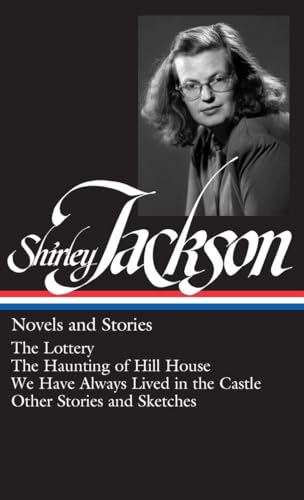
"The world of Shirley Jackson is eerie and unforgettable," writes A. M. Homes. "It is a place where things are not what they seem; even on a morning that is sunny and clear there is always the threat of darkness looming, of things taking a turn for the worse." Jackson's characters-mostly unloved daughters in search of a home, a career, a family of their own-chase what appears to be a harmless dream until, without warning, it turns on its heel to seize them by the throat. We are moved by these characters' dreams, for they are the dreams of love and acceptance shared by us all. We are shocked when their dreams become nightmares, and terrified by Jackson's suggestion that there are unseen powers-"demons" both subconscious and supernatural-malevolently conspiring against human happiness.
In this volume Joyce Carol Oates, our leading practitioner of the contemporary Gothic, presents the essential works of Shirley Jackson, the novels and stories that, from the early 1940s through the mid-1960s, wittily remade the genre of psychological horror for an alienated, postwar America. She opens with The Lottery (1949), Jackson's only collection of short fiction, whose disquieting title story-one of the most widely anthologized tales of the 20th century-has entered American folklore. Also among these early works are "The Daemon Lover," a story Oates praises as "deeper, more mysterious, and more disturbing than 'The Lottery,' " and "Charles," the hilarious sketch that launched Jackson's secondary career as a domestic humorist. Here too are Jackson's masterly short novels: The Haunting of Hill House (1959), the tale of an achingly empathetic young woman chosen by a haunted house to be its new tenant, and We Have Always Lived in the Castle (1962), the unrepentant confessions of Miss Merricat Blackwood, a cunning adolescent who has gone to quite unusual lengths to preserve her ideal of family happiness. Rounding out the volume are 21 other stories and sketches that showcase Jackson in all her many modes, and the essay "Biography of a Story," Jackson's acidly funny account of the public reception of "The Lottery," which provoked more mail from readers of The New Yorker than any contribution before or since.
Die Inhaltsangabe kann sich auf eine andere Ausgabe dieses Titels beziehen.
Über die Autorinnen und Autoren
Shirley Jackson (1919–1965), a master of modern horror and psychological suspense, was the acclaimed author of six novels, scores of stories, and two works of nonfiction.
Joyce Carol Oates is the author of a number of works of gothic fiction including Haunted: Tales of the Grotesque, a 1995 World Fantasy Award nominee; and Zombie, winner of the 1996 Bram Stoker Award for Best Horror Novel, awarded by the Horror Writers' Association. In 1994, Oates received the Bram Stoker Lifetime Achievement Award in Horror Fiction. She lives in Princeton, New Jersey.
Shirley Jackson (1919–1965), a celebrated writer of horror, wrote many stories as well as six novels and two works of nonfiction.
In addition to many prize-winning and bestselling novels, including We Were the Mulvaneys, Black Water, and Because It Is Bitter and Because It Is My Heart (available in Plume editions), Joyce Carol Oates is the author of a number of works of gothic fiction including Haunted: Tales of the Grotesque (Plume), a 1995 World Fantasy Award nominee; and Zombie (Plume), winner of the 1996 Bram Stoker Award for Best Horror Novel, awarded by the Horror Writers' Association. In 1994, Oates received the Bram Stoker Lifetime Achievement Award in Horror Fiction. She is the editor of American Gothic Tales and her latest novel is Broke Heart Blues (Dutton). She lives in Princeton, New Jersey.
Auszug. © Genehmigter Nachdruck. Alle Rechte vorbehalten.
WE HAVE ALWAYS LIVED IN THE CASTLE
By Shirley JacksonLibrary of America
Copyright © 2010 Literary Classics of the United States, Inc.All right reserved.
ISBN: 978-1-59853-072-8
Chapter One
My name is Mary Katherine Blackwood. I am eighteen years old, and I live with my sister Constance. I have often thought that with any luck at all I could have been born a werewolf, because the two middle fingers on both my hands are the same length, but I have had to be content with what I had. I dislike washing myself, and dogs, and noise. I like my sister Constance, and Richard Plantagenet, and Amanita phalloides, the death-cup mushroom. Everyone else in my family is dead.The last time I glanced at the library books on the kitchen shelf they were more than five months overdue, and I wondered whether I would have chosen differently if I had known that these were the last books, the ones which would stand forever on our kitchen shelf. We rarely moved things; the Blackwoods were never much of a family for restlessness and stirring. We dealt with the small surface transient objects, the books and the flowers and the spoons, but underneath we had always a solid foundation of stable possessions. We always put things back where they belonged. We dusted and swept under tables and chairs and beds and pictures and rugs and lamps, but we left them where they were; the tortoiseshell toilet set on our mother's dressing table was never off place by so much as a fraction of an inch. Blackwoods had always lived in our house, and kept their things in order; as soon as a new Blackwood wife moved in, a place was found for her belongings, and so our house was built up with layers of Blackwood property weighting it, and keeping it steady against the world.
It was on a Friday in late April that I brought the library books into our house. Fridays and Tuesdays were terrible days, because I had to go into the village. Someone had to go to the library, and the grocery; Constance never went past her own garden, and Uncle Julian could not. Therefore it was not pride that took me into the village twice a week, or even stubbornness, but only the simple need for books and food. It may have been pride that brought me into Stella's for a cup of coffee before I started home; I told myself it was pride and would not avoid going into Stella's no matter how much I wanted to be at home, but I knew, too, that Stella would see me pass if I did not go in, and perhaps think I was afraid, and that thought I could not endure.
"Good morning, Mary Katherine," Stella always said, reaching over to wipe the counter with a damp rag, "how are you today?"
"Very well, thank you."
"And Constance Blackwood, is she well?"
"Very well, thank you."
"And how is he?"
"As well as can be expected. Black coffee, please."
If anyone else came in and sat down at the counter I would leave my coffee without seeming hurried, and leave, nodding goodbye to Stella. "Keep well," she always said automatically as I went out.
I chose the library books with care. There were books in our house, of course; our father's study had books covering two walls, but I liked fairy tales and books of history, and Constance liked books about food. Although Uncle Julian never took up a book, he liked to see Constance reading in the evenings while he worked at his papers, and sometimes he turned his head to look at her and nod.
"What are you reading, my dear? A pretty sight, a lady with a book."
"I'm reading something called The Art of Cooking, Uncle Julian."
"Admirable."
We never sat quietly for long, of course, with Uncle Julian in the room, but I do not recall that Constance and I have ever opened the library books which are still on our kitchen shelf. It was a fine April morning when I came out of the library; the sun was shining and the false glorious promises of spring were everywhere, showing oddly through the village grime. I remember that I stood on the library steps holding my books and looking for a minute at the soft hinted green in the branches against the sky and wishing, as I always did, that I could walk home across the sky instead of through the village. From the library steps I could cross the street directly and walk on the other side along to the grocery, but that meant that I must pass the general store and the men sitting in front. In this village the men stayed young and did the gossiping and the women aged with grey evil weariness and stood silently waiting for the men to get up and come home. I could leave the library and walk up the street on this side until I was opposite the grocery and then cross; that was preferable, although it took me past the post office and the Rochester house with the piles of rusted tin and the broken automobiles and the empty gas tins and the old mattresses and plumbing fixtures and wash tubs that the Harler family brought home and-I genuinely believe-loved.
The Rochester house was the loveliest in town and had once had a walnut-panelled library and a second-floor ballroom and a profusion of roses along the veranda; our mother had been born there and by rights it should have belonged to Constance. I decided as I always did that it would be safer to go past the post office and the Rochester house, although I disliked seeing the house where our mother was born. This side of the street was generally deserted in the morning, since it was shady, and after I went into the grocery I would in any case have to pass the general store to get home, and passing it going and coming was more than I could bear.
Outside the village, on Hill Road and River Road and Old Mountain, people like the Clarkes and the Carringtons had built new lovely homes. They had to come through the village to get to Hill Road and River Road because the main street of the village was also the main highway across the state, but the Clarke children and the Carrington boys went to private schools and the food in the Hill Road kitchens came from the towns and the city; mail was taken from the village post office by car along along the River Road and up to Old Mountain, but the Mountain people mailed their letters in the towns and the River Road people had their hair cut in the city.
I was always puzzled that the people of the village, living in their dirty little houses on the main highway or out on Creek Road, smiled and nodded and waved when the Clarkes and the Carringtons drove by; if Helen Clarke came into Elbert's Grocery to pick up a can of tomato sauce or a pound of coffee her cook had forgotten everyone told her "Good morning," and said the weather was better today. The Clarke's house is newer but no finer than the Blackwood house. Our father brought home the first piano ever seen in the village. The Carringtons own the paper mill but the Blackwoods own all the land between the highway and the river. The Shepherds of Old Mountain gave the village its town hall, which is white and peaked and set in a green lawn with a cannon in front. There was some talk once of putting in zoning laws in the village and tearing down the shacks on Creek Road and building up the whole village to match the town hall, but no one ever lifted a finger; maybe they thought the Blackwoods might take to attending town meetings if they did. The villagers get their hunting and fishing licenses in the town hall, and once a year the Clarkes and the Carringtons and the Shepherds attend town meeting and solemnly vote to get the Harler junk yard off Main Street and take away the benches in front of the general store, and each year the villagers gleefully outvote...
„Über diesen Titel“ kann sich auf eine andere Ausgabe dieses Titels beziehen.
Suchergebnisse für Shirley Jackson: Novels and Stories (Library of America,...

Beispielbild für diese ISBN
Shirley Jackson Novels and Sto
Anbieter: World of Books (was SecondSale), Montgomery, IL, USA
Verkäuferbewertung 5 von 5 Sternen

Zustand: Good. Item in good condition. Textbooks may not include supplemental items i.e. CDs, access codes etc. Artikel-Nr. 00103363231
Gebraucht kaufen
EUR 19,04
Versand gratis
Versand innerhalb von USA
Versand innerhalb von USA
Anzahl: 2 verfügbar
Beispielbild für diese ISBN
Shirley Jackson: Novels and Stories
Anbieter: Revaluation Books, Exeter, Vereinigtes Königreich
Verkäuferbewertung 5 von 5 Sternen
Hardcover. Zustand: Brand New. 832 pages. 8.00x5.25x1.25 inches. In Stock. Artikel-Nr. __1598530720
Neu kaufen
EUR 32,91
EUR 14,49 Versand
Versand von Vereinigtes Königreich nach USA
Versand von Vereinigtes Königreich nach USA
Anzahl: 5 verfügbar
Beispielbild für diese ISBN
Shirley Jackson: Novels and Stories (Loa #204): The Lottery / The Haunting of Hill House / We Have Always Lived in the Castle / Other Stories and Sketches (Library of America)
Anbieter: Kennys Bookstore, Olney, MD, USA
Verkäuferbewertung 5 von 5 Sternen
Zustand: New. 2010. hardcover. . . . . . Books ship from the US and Ireland. Artikel-Nr. V9781598530728
Neu kaufen
EUR 42,75
EUR 9,19 Versand
Versand innerhalb von USA
Versand innerhalb von USA
Anzahl: 5 verfügbar
Beispielbild für diese ISBN
Shirley Jackson: Novels and Stories
Anbieter: Revaluation Books, Exeter, Vereinigtes Königreich
Verkäuferbewertung 5 von 5 Sternen
Hardcover. Zustand: Brand New. 832 pages. 8.00x5.25x1.25 inches. In Stock. Artikel-Nr. xr1598530720
Neu kaufen
EUR 38,50
EUR 14,49 Versand
Versand von Vereinigtes Königreich nach USA
Versand von Vereinigtes Königreich nach USA
Anzahl: 2 verfügbar
Beispielbild für diese ISBN
Shirley Jackson: Novels and Stories
Anbieter: Revaluation Books, Exeter, Vereinigtes Königreich
Verkäuferbewertung 5 von 5 Sternen
Hardcover. Zustand: Brand New. 832 pages. 8.00x5.25x1.25 inches. In Stock. Artikel-Nr. xi1598530720
Neu kaufen
EUR 38,50
EUR 14,49 Versand
Versand von Vereinigtes Königreich nach USA
Versand von Vereinigtes Königreich nach USA
Anzahl: 2 verfügbar
Foto des Verkäufers
Shirley Jackson
Anbieter: p015, Rotterdam, Niederlande
Verkäuferbewertung 5 von 5 Sternen
Hardcover met stofomslag. Zustand: As new. Condition: Als nieuw. Binding: Hardcover met stofomslag. Year: 2010. Language: Engels. Description: Lichte sporen omslag verder als nieuw. Artikel-Nr. 178777
Gebraucht kaufen
EUR 31,99
EUR 38,00 Versand
Versand von Niederlande nach USA
Versand von Niederlande nach USA
Anzahl: 1 verfügbar
Foto des Verkäufers
Shirley Jackson: Novels and Stories (Loa #204): The Lottery / The Haunting of Hill House / We Have Always Lived in the Castle / Other Stories and Sket
Anbieter: moluna, Greven, Deutschland
Verkäuferbewertung 5 von 5 Sternen
Zustand: New. Über den AutorrnrnShirley Jackson (1919-1965), a master of modern horror and psychological suspense, was the acclaimed author of six novels, scores of stories, and two works of nonfiction.Joyce Carol Oates is the author of a number . Artikel-Nr. 904434405
Neu kaufen
EUR 31,94
EUR 48,99 Versand
Versand von Deutschland nach USA
Versand von Deutschland nach USA
Anzahl: 5 verfügbar
Foto des Verkäufers
Shirley Jackson: Novels and Stories (Loa #204) : The Lottery / The Haunting of Hill House / We Have Always Lived in the Castle / Other Stories and Sketches
Anbieter: AHA-BUCH GmbH, Einbeck, Deutschland
Verkäuferbewertung 5 von 5 Sternen
Buch. Zustand: Neu. Neuware - In one volume: The Haunting of Hill House, The Lottery, We Have Always Lived in the Castle, and much more 'The world of Shirley Jackson is eerie and unforgettable,' writes A. M. Homes. 'It is a place where things are not what they seem; even on a morning that is sunny and clear there is always the threat of darkness looming, of things taking a turn for the worse.' In this Library of America volume Joyce Carol Oates, our leading practitioner of the contemporary Gothic, presents the essential works of Shirley Jackson, the novels and stories that, from the early 1940s through the mid-1960s, wittily remade the genre of psychological horror for an alienated, postwar America. She opens with The Lottery (1949), Jackson's only collection of short fiction, whose disquieting title story-one of the most widely anthologized tales of the 20th century-has entered American folklore. Also among these early works are 'The Daemon Lover,' a story Oates praises as 'deeper, more mysterious, and more disturbing than 'The Lottery, ' ' and 'Charles,' the hilarious sketch that launched Jackson's secondary career as a domestic humorist. Here too are Jackson's masterly short novels: The Haunting of Hill House (1959), the tale of an achingly empathetic young woman chosen by a haunted house to be its new tenant, and We Have Always Lived in the Castle (1962), the unrepentant confessions of Miss Merricat Blackwood, a cunning adolescent who has gone to quite unusual lengths to preserve her ideal of family happiness. Rounding out the volume are 21 other stories and sketches that showcase Jackson in all her many modes, and the essay 'Biography of a Story,' Jackson's acidly funny account of the public reception of 'The Lottery,' which provoked more mail from readers of The New Yorker than any contribution before or since. LIBRARY OF AMERICA is an independent nonprofit cultural organization founded in 1979 to preserve our nation's literary heritage by publishing, and keeping permanently in print, America's best and most significant writing. The Library of America series includes more than 300 volumes to date, authoritative editions that average 1,000 pages in length, feature cloth covers, sewn bindings, and ribbon markers, and are printed on premium acid-free paper that will last for centuries. Artikel-Nr. 9781598530728
Neu kaufen
EUR 39,73
EUR 62,79 Versand
Versand von Deutschland nach USA
Versand von Deutschland nach USA
Anzahl: 1 verfügbar