
Verwandte Artikel zu Safe Passages: Highways, Wildlife, and Habitat Connectivity
Inhaltsangabe
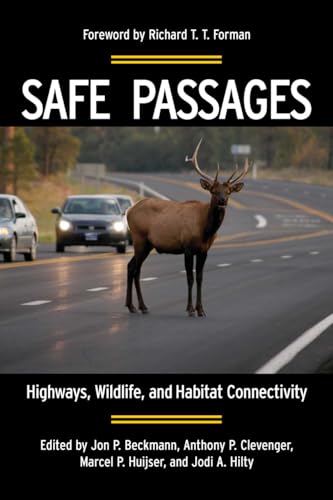
Safe Passages brings together in a single volume the latest information on the emerging science of road ecology as it relates to mitigating interactions between roads and wildlife. This practical handbook of tools and examples is designed to assist individuals and organizations thinking about or working toward reducing road-wildlife impacts. The book provides:
Safe Passages is an important new resource for local-, state-, and national-level managers and policymakers working on road-wildlife issues, and will appeal to a broad audience including scientists, agency personnel, planners, land managers, transportation consultants, students, conservation organizations, policymakers, and citizens engaged in road-wildlife mitigation projects.
- an overview of the importance of habitat connectivity with regard to roads
- current planning approaches and technologies for mitigating the impacts of highways on both terrestrial and aquatic species
- different facets of public participation in highway-wildlife connectivity mitigation projects
- case studies from partnerships across North America that highlight successful on-the-ground implementation of ecological and engineering solutions
- recent innovative highway-wildlife mitigation developments
Safe Passages is an important new resource for local-, state-, and national-level managers and policymakers working on road-wildlife issues, and will appeal to a broad audience including scientists, agency personnel, planners, land managers, transportation consultants, students, conservation organizations, policymakers, and citizens engaged in road-wildlife mitigation projects.
Die Inhaltsangabe kann sich auf eine andere Ausgabe dieses Titels beziehen.
Über die Autorin bzw. den Autor
Jon P. Beckmann is an associate conservation scientist for the Wildlife Conservation Society and an affiliated professor at Idaho State University.
Anthony P. Clevenger is a senior wildlife research scientist at the Western Transportation Institute at Montana State University.
Marcel P. Huijser is a research road ecologist at the Western Transportation Institute at Montana State University.
Jodi A. Hilty is Director of the Wildlife Conservation Society’s North America Program.
Auszug. © Genehmigter Nachdruck. Alle Rechte vorbehalten.
Safe Passages
Highways, Wildlife, and Habitat Connectivity
By Jon P. Beckmann, Anthony P. Clevenger, Marcel P. Huijser, Jodi A. HiltyISLAND PRESS
Copyright © 2010 Island Press
All rights reserved.
ISBN: 978-1-59726-654-3All rights reserved.
Contents
Foreword,
Preface,
PART I CURRENT PRACTICES,
Chapter 1 Connecting Wildlife Populations in Fractured Landscapes JON P. BECKMANNAND JODI A. HILTY,
Chapter 2 Wildlife Crossing Structures, Fencing, and Other Highway Design Considerations ANTHONY P. CLEVENGER AND ADAM T. FORD,
Chapter 3 Reducing Wildlife-Vehicle Collisions MARCEL P. HUIJSER AND PAT T. MCGOWEN,
Chapter 4 Safe Passages for Fish and Other Aquatic Species MATTHEW D. BLANK,
PART II ECOLOGICALLY EFFECTIVE TRANSPORTATION PLANS AND PROJECTS,
Chapter 5 An Eco-Logical Approach to Transportation Project Delivery in Montana AMANDA HARDY AND DEB WAMBACH,
Chapter 6 Improving Conservationists' Participation PATRICIA A. WHITE,
PART III EFFECTIVE PARTNERSHIPS,
Chapter 7 The Banff Wildlife Crossings Project: An International Public-Private Partnership ADAM T. FORD, ANTHONY P. CLEVENGER, AND KATHY RETTIE,
Chapter 8 Reconstruction of U.S. Highway 93: Collaboration between Three Governments DALE M. BECKER AND PATRICK B. BASTING,
Chapter 9 Citizens, the Conservation Community, and Key Agency Personnel: Prerequisites for Success MARK L. WATSON AND KURT A. MENKE,
Chapter 10 The I-75 Project: Lessons from the Florida Panther DEBORAH JANSEN, KRISTA SHERWOOD, AND ELIZABETH FLEMING,
Chapter 11 Wildlife Underpasses on U.S. 64 in North Carolina: Integrating Manaagement and Science Objective MARK D. JONES, FRANK T. VAN MANEN, TRAVIS W. WILSON, AND DAVID R.COX,
Chapter 12 Strategic Wildlife Conservation and Transportation Planning: The Vermont Experience JOHN M. AUSTIN, CHRIS SLESAR, AND FORREST M. HAMMOND,
Chapter 13 Arizona State Route 260: Promoting Wildlife Permeability, Highway Safety, and Agency Cultural Change NORRIS L. DODD AND JEFFREY W. GAGNON,
PART IV EFFECTIVE INNOVATIONS,
Chapter 14 A Local Community Monitors Wildlife along a Major Transportation Corridor TRACY LEE, MICHAEL QUINN, AND DANAH DUKE,
Chapter 15 The Sonoran Desert Conservation Plan and Regional Transportation Authority: Citizen Support for Habitat Connectivity and Highway Mitigation CAROLYN CAMPBELL AND KATHLEEN KENNEDY,
Chapter 16 Current and Developing Technologies in Highway-Wildlife Mitigation MARCEL P. HUIJSER, DOUG E. GALARUS, AND ANGELA V. KOCIOLEK,
Chapter 17 The Way Forward: Twenty-first Century Roads and Wildlife Connectivity JODI A. HILTY, JON P. BECKMANN, ANTHONY P. CLEVENGER, AND MARCEL P. HUIJSER,
Contributors,
Literature Cited,
Index,
CHAPTER 1
Connecting Wildlife Populations in Fractured Landscapes
Jon P. Beckmann and Jodi A. Hilty
I see ... an America where a mighty network of highways spreads across our country.
Dwight D. Eisenhower (www.fhwa.dot.gov)
President Eisenhower is credited with leading the creation of the national system of interstate highways across the United States in the 1950s, the primary basis of today's commerce and travel. The system was originally conceived by Eisenhower as a necessary part of defending the country and was called the national highway defense system. He simultaneously touted the importance of the interstate system for communication and the transport of goods. Since its inception, this highway system has continued to grow, with states adding to the network as well as broadening already existing roadways. As of 2008, there were more than 74,000 kilometers (46,000 miles) of roads in the interstate highway network, making it both the largest highway system in the world and the largest public works project in history (U.S. Department of Transportation 2008). During most of the twentieth century, road construction focused on the ease of terrain, soil, and other location considerations along with logistics and cost. It was not until late in the twentieth century that projects started to consider the needs of wildlife in relation to road construction and maintenance (e.g., Forman et al. 2003). As a result, many roadways pass through what were once the best habitats for numerous species, such as in valley bottoms and along streams or rivers.
Today, there are more vehicles on the roads than in the 1950s, and both the technology of roads and automobile design enable vehicles to move faster than in the past. At the same time, many species of wildlife have rebounded in number, such as elk, deer, and other ungulates. Increasing cars and car speeds and increasing numbers of ungulates—the group of animals most commonly reported in accidents—have resulted in more animal-vehicle collisions. These wildlife-vehicle collisions are probably the main reason that society has been increasingly interested in the need to address wildlife-vehicle collisions and the adverse effects roads have on wildlife populations (Trombulak and Frissell 2000, Forman et al. 2003). In 2007,1 to 2 million traffic accidents involving large mammals in the United States caused an estimated US$8.3 billion in vehicle damage (Huijser et al. 2007). In some U.S. states, six to eight cents of every insurance dollar goes toward paying for wildlife-related claims (Lowy 2001). Beyond vehicular damage, an astounding 26,000 people are injured or killed in the United States each year due to vehicle collisions with wildlife (Huijser et al. 2007). According to the Insurance Corporation of British Columbia, the cost to society of a human fatality is C$4.17 million, while an injury costs approximately US$97,000 (Sielecki 2000).
Europeans were first to recognize and start resolving the problem of wildlife-vehicle collisions by commissioning studies of the problem, building wildlife crossings, and reducing traffic speeds to reduce vehicle collisions. In the 1980s, North America saw an increase in interest in studies and construction of wildlife crossings such as those in Florida that are discussed in chapter 10 (Forman et al. 2003). In 2003 the seminal book Road Ecology: Science and Solutions (Forman et al. 2003) formalized this new subdiscipline of ecology. Today, increasing research, general media, and visible projects continue to move the nascent field of road ecology forward. This means that now is the time to bring emerging science, policy, and innovation into standard transportation planning, design, and construction.
Creating projects to minimize or reverse the negative impacts of roads on wildlife, however, is challenging. Given funding constraints and design limitations, it is unlikely that a project will benefit all possible species; therefore, species must be prioritized. Where new roads are being constructed, there are increasing opportunities to consider wildlife early and throughout the decision-making process. Unfortunately, given that many of the mitigation projects for wildlife are for existing roads, most efforts require the daunting task of redesigning roadways to restore connectivity.
This chapter offers a brief review of why roads can be a challenge for wildlife in general; how roads impair connectivity for wildlife populations, including the broader toll of roads on wildlife; and the importance of connectivity. For those interested, many of these concepts are covered in depth elsewhere (e.g., Forman et al. 2003, Hilty et al. 2006), but an overview of these challenges is important in framing the case studies and opportunities presented throughout...
„Über diesen Titel“ kann sich auf eine andere Ausgabe dieses Titels beziehen.
Suchergebnisse für Safe Passages: Highways, Wildlife, and Habitat Connectivity

Beispielbild für diese ISBN
Safe Passages: Highways, Wildlife, and Habitat Connectivity
Anbieter: ThriftBooks-Atlanta, AUSTELL, GA, USA
Verkäuferbewertung 5 von 5 Sternen

Paperback. Zustand: Very Good. No Jacket. May have limited writing in cover pages. Pages are unmarked. ~ ThriftBooks: Read More, Spend Less. Artikel-Nr. G159726654XI4N00
Gebraucht kaufen
EUR 7,00
Versand gratis
Versand innerhalb von USA
Versand innerhalb von USA
Anzahl: 1 verfügbar
Beispielbild für diese ISBN
Safe Passages: Highways, Wildlife, and Habitat Connectivity
Anbieter: ThriftBooks-Dallas, Dallas, TX, USA
Verkäuferbewertung 5 von 5 Sternen
Paperback. Zustand: Very Good. No Jacket. May have limited writing in cover pages. Pages are unmarked. ~ ThriftBooks: Read More, Spend Less. Artikel-Nr. G159726654XI4N00
Gebraucht kaufen
EUR 7,00
Versand gratis
Versand innerhalb von USA
Versand innerhalb von USA
Anzahl: 1 verfügbar
Beispielbild für diese ISBN
Safe Passages : Highways, Wildlife, and Habitat Connectivity
Anbieter: Better World Books, Mishawaka, IN, USA
Verkäuferbewertung 5 von 5 Sternen
Zustand: Very Good. Former library copy. Pages intact with possible writing/highlighting. Binding strong with minor wear. Dust jackets/supplements may not be included. Includes library markings. Stock photo provided. Product includes identifying sticker. Better World Books: Buy Books. Do Good. Artikel-Nr. 1516663-75
Gebraucht kaufen
EUR 10,03
Versand gratis
Versand innerhalb von USA
Versand innerhalb von USA
Anzahl: 1 verfügbar
Beispielbild für diese ISBN
Safe Passages: Highways, Wildlife, and Habitat Connectivity
Anbieter: Romtrade Corp., STERLING HEIGHTS, MI, USA
Verkäuferbewertung 5 von 5 Sternen
Zustand: New. This is a Brand-new US Edition. This Item may be shipped from US or any other country as we have multiple locations worldwide. Artikel-Nr. ABBB-202598
Beispielbild für diese ISBN
Safe Passages
Anbieter: Majestic Books, Hounslow, Vereinigtes Königreich
Verkäuferbewertung 4 von 5 Sternen

Zustand: New. pp. 424. Artikel-Nr. 6586500
Neu kaufen
EUR 36,93
EUR 7,58 Versand
Versand von Vereinigtes Königreich nach USA
Versand von Vereinigtes Königreich nach USA
Anzahl: 1 verfügbar
Foto des Verkäufers
Safe Passages: highways, wildlife and habitat connectivity
Verlag:
Island Press, Washington, Covelo, London, 2010
ISBN 10: 159726654X
ISBN 13: 9781597266543
Gebraucht
Soft cover
Erstausgabe
Anbieter: Calluna Books, Morpeth, Vereinigtes Königreich
Verkäuferbewertung 5 von 5 Sternen
Soft cover. Zustand: Very Good. 1st Edition. Book - very good but bump to bottom of spine. Paperback. Artikel-Nr. 000404
Gebraucht kaufen
EUR 18,02
EUR 26,76 Versand
Versand von Vereinigtes Königreich nach USA
Versand von Vereinigtes Königreich nach USA
Anzahl: 1 verfügbar