
Inhaltsangabe
New York Times Bestseller
The good, the bad, and the ugly, served up Bourdain-style.
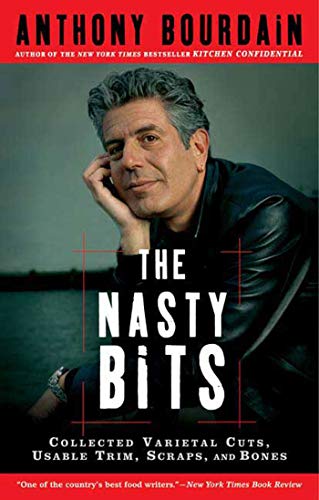
Bestselling chef and Parts Unknown host Anthony Bourdain has never been one to pull punches. In The Nasty Bits, he serves up a well-seasoned hellbroth of candid, often outrageous stories from his worldwide misadventures. Whether scrounging for eel in the backstreets of Hanoi, revealing what you didn't want to know about the more unglamorous aspects of making television, calling for the head of raw food activist Woody Harrelson, or confessing to lobster-killing guilt, Bourdain is as entertaining as ever.
Bringing together the best of his previously uncollected nonfiction--and including new, never-before-published material--The Nasty Bits is a rude, funny, brutal and passionate stew for fans and the uninitiated alike.
Die Inhaltsangabe kann sich auf eine andere Ausgabe dieses Titels beziehen.
Über die Autorinnen und Autoren
Chef and author Anthony Bourdain wrote the New York Times bestselling memoirs Kitchen Confidential, Medium Raw, and A Cook's Tour; the collection The Nasty Bits; the novels Bone in the Throat, The Bobby Gold Stories, and Gone Bamboo; the biography Typhoid Mary; and the cookbooks Appetites and Les Halles Cookbook.
Bourdain was the host of the Emmy and Peabody Award–winning docuseries Anthony Bourdain: Parts Unknown on CNN, and prior to that hosted the Emmy Award–winning No Reservations and The Layover on the Travel Channel and The Taste on ABC.
Chef and author Anthony Bourdain wrote the New York Times bestselling memoirs Kitchen Confidential, Medium Raw, and A Cook's Tour; the collection The Nasty Bits; the novels Bone in the Throat, The Bobby Gold Stories, and Gone Bamboo; the biography Typhoid Mary; and the cookbooks Appetites and Les Halles Cookbook.
Bourdain was the host of the Emmy and Peabody Award–winning docuseries Anthony Bourdain: Parts Unknown on CNN, and prior to that hosted the Emmy Award–winning No Reservations and The Layover on the Travel Channel and The Taste on ABC.
Auszug. © Genehmigter Nachdruck. Alle Rechte vorbehalten.
The Nasty Bits
Collected Varietal Cuts, Usable Trim, Scraps, and BonesBy Anthony BourdainBloomsbury Publishing PLC
Copyright © 2007 Anthony BourdainAll right reserved.
ISBN: 9781596913608
Chapter One
SYSTEM D
Debrouillard is what every plongeur wants to be called. A debrouillard is a man who, even when he is told to do the impossible, will se debrouiller-get it done somehow. -George Orwell, Down and Out in Paris and London
He was a master of the short cut, the easy way out, the System D. D. stands for de as in debrouiller or demerder-to extricate ... and to a hair (he) knew how to stay out of trouble. He was a very skillful cook, and a very bad one. -Nicolas Freeling, The Kitchen
I STUMBLED ACROSS MY first reference to the mysterious and sinister-sounding System D in Nicolas Freeling's wonderful memoir of his years as a Grand Hotel cook in France. I knew the word debrouillard already, having enjoyed reading about the concept of se debrouiller or se demerder in Orwell's earlier account of his dishwashing/prep-cooking at the pseudonymous Hotel "X" in Paris. But what sent chills down my spine and sent me racing back to my weathered copies of both books was a casual remark by my French sous-chef as he watched a busboy repairing a piece of kitchen equipment with a teaspoon.
"Ahh ... Le System D!" he said with a smirk, and a warm expression of recognition. For a moment, I thought I'd stumbled across a secret society-a coven of warlocks, a subculture within our subculture of chefs and cooks and restaurant lifers. I was annoyed that what I had thought to be an ancient term from kitchens past, a little bit of culinary arcanum, was in fact still in use, and I felt suddenly threatened-as if my kitchen, my crew, my team of talented throat slitters, fire starters, mercenaries, and hooligans was secretly a hotbed of Trilateralists, Illuminati, Snake Handlers, or Satan Worshippers. I felt left out. I asked, "Did you say `System D'? What is `System D'?"
"Tu connais ... you know MacGyver?" replied my sous-chef thoughtfully.
I nodded, flashing onto the idiotic detective series of years back where the hero would regularly bust out of maximum-security prisons and perform emergency neurosurgery using nothing more than a paper clip and a gum wrapper.
"MacGyver!" pronounced my sous-chef, "CA ... ca c'est System D."
Whether familiar with the term or not, I have always assigned great value to debrouillards, and at various times in my career, particularly when I was a line cook, I have taken great pride in being one. The ability to think fast, to adapt, to improvise when in danger of falling "in the weeds" or dans la merde, even if a little corner-cutting is required, has been a point of pride with me for years. My previous sous-chef, Steven, a very talented cook with a criminal mind, was a Grandmaster Debrouillard, a Sergeant Bilko-like character who, in addition to being a superb saucier, was fully versed in the manly arts of scrounging, refrigeration repair, surreptitious entry, intelligence collection, subornation, and the effortless acquisition of objects which did not rightly belong to him. He was a very useful person to have around. If I ran out of calves' liver or shell steaks in the middle of a busy Saturday night, Steven could be counted on to slip out the kitchen door and return a few moments later with whatever I needed. Where he got the stuff I never knew. I only knew not to ask. System D, to work right, requires a certain level of plausible deniability.
I am always pleased to find historical precedent for my darker urges. And in the restaurant business, where one's moods tend to swing from near euphoria to crushing misery and back again at least ten times a night, it's always useful to remember that my crew and I are part of a vast and well-documented continuum going back centuries. Why did this particular reference hold such magic for me, though? I had to think about that. Why this perverse pride in finding that my lowest, sleaziest moments of mid-rush hackwork were firmly rooted in tradition, going back to the French masters?
It all comes down to the old dichotomy, the razor's edge of volume versus quality. God knows, all chefs want to make perfect food. We'd like to make sixty-five to seventy-five absolutely flawless meals per night, every plate a reflection of our best efforts, all our training and experience, only the finest, most expensive, most seasonal ingredients available-and we'd like to make a lot of money for our masters while we do it. But this is the real world. Most restaurants can't charge a hundred fifty bucks a customer for food alone. Sixty-five meals a night (at least in my place) means we'll all be out of work-and fast. Two hundred fifty to three hundred meals a night is more like it when you're talking about a successful New York City restaurant and job security for your posse of well-paid culinarians in the same breath. When I was the executive chef, a few years ago, of a stadium-size nightclub/supper club near Times Square, it often meant six and seven hundred meals a night-a logistical challenge that called for skills closer to those of an air-traffic controller or a military ordnance officer than to those of a classically trained chef. When you're cranking out that kind of volume, especially during the pretheater rush, when everybody in the room expects to wolf down three courses and dessert and still be out the door in time to make curtain for Cats, you'd better be fast. They want that food. They want it hot, cooked the way they asked, and they want it soon. It may feel wonderfully fulfilling, putting one's best foot forward, sweating and fiddling and wiping and sculpting impeccable little spires of a-la-minute food for an adoring dining public, but there is another kind of satisfaction: the grim pride of the journeyman professional, the cook who's got moves, who can kick ass on the line, who can do serious numbers, and "get through." "How many'd we do?" is the question frequently asked at the end of the shift, when the cooks collapse onto flour sacks and milk crates and piles of dirty linen, smoking their cigarettes, drinking their shift cocktails, and contemplating what kind of felonious activity they will soon take part in during their afterwork leisure hours. If the number is high (say three hundred fifty dinners), and there have been few returns or customer complaints, if only happy diners waddled satiated out the crowded doorway to the restaurant, squeezing painfully past the incoming mob-well, that's a statistic we can all appreciate and understand. Drinks and congratulations are in order. We made it through! We didn't fall into the weeds! We ran out of nothing! What could be better? We not only served a monstrous number of meals without a glitch, but we served them on time and in good order. We avoided disaster. We brought honor and riches to our clan.
And if it was a particularly brutal night, if the specter of meltdown loomed near, if we just narrowly avoided the kind of horror that occurs when the kitchen "loses it," if we managed to just squeak through without taking major casualties-then all the better. Picture the worst-case scenario: The saucier is getting hit all night long. Everything ordered is coming off his station...
„Über diesen Titel“ kann sich auf eine andere Ausgabe dieses Titels beziehen.
Weitere beliebte Ausgaben desselben Titels

Suchergebnisse für The Nasty Bits: Collected Varietal Cuts, Usable Trim,...

Beispielbild für diese ISBN
The Nasty Bits: Collected Vari
Anbieter: World of Books (was SecondSale), Montgomery, IL, USA
Verkäuferbewertung 5 von 5 Sternen

Zustand: Acceptable. Item in acceptable condition! Textbooks may not include supplemental items i.e. CDs, access codes etc. Artikel-Nr. 00102268830
Gebraucht kaufen
EUR 3,70
Versand gratis
Versand innerhalb von USA
Versand innerhalb von USA
Anzahl: 3 verfügbar
Beispielbild für diese ISBN
The Nasty Bits: Collected Vari
Anbieter: World of Books (was SecondSale), Montgomery, IL, USA
Verkäuferbewertung 5 von 5 Sternen
Zustand: Good. Item in good condition. Textbooks may not include supplemental items i.e. CDs, access codes etc. Artikel-Nr. 00101588189
Gebraucht kaufen
EUR 3,70
Versand gratis
Versand innerhalb von USA
Versand innerhalb von USA
Anzahl: 12 verfügbar
Foto des Verkäufers
Nasty Bits
Anbieter: Dream Books Co., Denver, CO, USA
Verkäuferbewertung 5 von 5 Sternen
Zustand: good. Gently used with minimal wear on the corners and cover. A few pages may contain light highlighting or writing, but the text remains fully legible. Dust jacket may be missing, and supplemental materials like CDs or codes may not be included. May be ex-library with library markings. Ships promptly! Artikel-Nr. DBV.1596913606.G
Gebraucht kaufen
EUR 3,74
Versand gratis
Versand innerhalb von USA
Versand innerhalb von USA
Anzahl: 1 verfügbar
Foto des Verkäufers
The Nasty Bits: Collected Varietal Cuts, Usable Trim, Scraps, and Bones
Anbieter: Dream Books Co., Denver, CO, USA
Verkäuferbewertung 5 von 5 Sternen
Zustand: acceptable. This copy has clearly been enjoyedâ"expect noticeable shelf wear and some minor creases to the cover. Binding is strong, and all pages are legible. May contain previous library markings or stamps. Artikel-Nr. DBV.1596913606.A
Gebraucht kaufen
EUR 4,84
Versand gratis
Versand innerhalb von USA
Versand innerhalb von USA
Anzahl: 3 verfügbar
Beispielbild für diese ISBN
The Nasty Bits: Collected Varietal Cuts, Usable Trim, Scraps, and Bones
Anbieter: ThriftBooks-Reno, Reno, NV, USA
Verkäuferbewertung 5 von 5 Sternen
Paperback. Zustand: Good. No Jacket. Pages can have notes/highlighting. Spine may show signs of wear. ~ ThriftBooks: Read More, Spend Less. Artikel-Nr. G1596913606I3N00
Gebraucht kaufen
EUR 5,80
Versand gratis
Versand innerhalb von USA
Versand innerhalb von USA
Anzahl: 1 verfügbar
Beispielbild für diese ISBN
The Nasty Bits: Collected Varietal Cuts, Usable Trim, Scraps, and Bones
Anbieter: ThriftBooks-Reno, Reno, NV, USA
Verkäuferbewertung 5 von 5 Sternen
Paperback. Zustand: Fair. No Jacket. Readable copy. Pages may have considerable notes/highlighting. ~ ThriftBooks: Read More, Spend Less. Artikel-Nr. G1596913606I5N00
Gebraucht kaufen
EUR 5,80
Versand gratis
Versand innerhalb von USA
Versand innerhalb von USA
Anzahl: 3 verfügbar
Beispielbild für diese ISBN
The Nasty Bits: Collected Varietal Cuts, Usable Trim, Scraps, and Bones
Anbieter: ThriftBooks-Phoenix, Phoenix, AZ, USA
Verkäuferbewertung 5 von 5 Sternen
Paperback. Zustand: Fair. No Jacket. Readable copy. Pages may have considerable notes/highlighting. ~ ThriftBooks: Read More, Spend Less. Artikel-Nr. G1596913606I5N00
Gebraucht kaufen
EUR 5,80
Versand gratis
Versand innerhalb von USA
Versand innerhalb von USA
Anzahl: 3 verfügbar
Beispielbild für diese ISBN
The Nasty Bits: Collected Varietal Cuts, Usable Trim, Scraps, and Bones
Anbieter: ThriftBooks-Phoenix, Phoenix, AZ, USA
Verkäuferbewertung 5 von 5 Sternen
Paperback. Zustand: Good. No Jacket. Pages can have notes/highlighting. Spine may show signs of wear. ~ ThriftBooks: Read More, Spend Less. Artikel-Nr. G1596913606I3N00
Gebraucht kaufen
EUR 5,80
Versand gratis
Versand innerhalb von USA
Versand innerhalb von USA
Anzahl: 1 verfügbar
Beispielbild für diese ISBN
The Nasty Bits: Collected Varietal Cuts, Usable Trim, Scraps, and Bones
Anbieter: ThriftBooks-Atlanta, AUSTELL, GA, USA
Verkäuferbewertung 5 von 5 Sternen
Paperback. Zustand: Fair. No Jacket. Readable copy. Pages may have considerable notes/highlighting. ~ ThriftBooks: Read More, Spend Less. Artikel-Nr. G1596913606I5N00
Gebraucht kaufen
EUR 5,80
Versand gratis
Versand innerhalb von USA
Versand innerhalb von USA
Anzahl: 4 verfügbar
Beispielbild für diese ISBN
The Nasty Bits: Collected Varietal Cuts, Usable Trim, Scraps, and Bones
Anbieter: ThriftBooks-Dallas, Dallas, TX, USA
Verkäuferbewertung 5 von 5 Sternen
Paperback. Zustand: Good. No Jacket. Pages can have notes/highlighting. Spine may show signs of wear. ~ ThriftBooks: Read More, Spend Less. Artikel-Nr. G1596913606I3N00
Gebraucht kaufen
EUR 5,80
Versand gratis
Versand innerhalb von USA
Versand innerhalb von USA
Anzahl: 2 verfügbar