
Verwandte Artikel zu Our Choice: A Plan to Solve the Climate Crisis
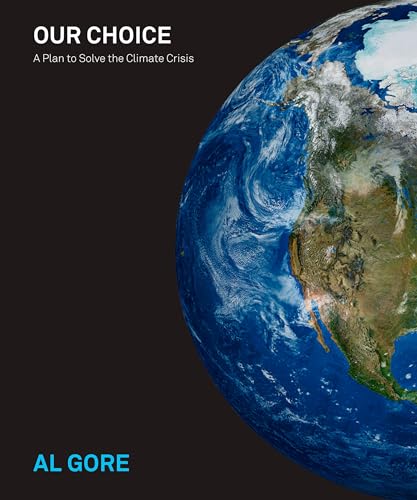
Inhaltsangabe
It is now abundantly clear that we have at our fingertips all of the tools we need to solve the climate crisis. The only missing ingredient is collective will.
Properly understood, the climate crisis is an unparalleled opportunity to finally and effectively address many persistent causes of suffering and misery that have long been neglected, and to transform the prospects of future generations, giving them a chance to live healthier, more prosperous lives as they continue their pursuit of happiness.
Our Choice gathers in one place all of the most effective solutions that are available now and that, together, will solve this crisis. It is meant to depoliticize the issue as much as possible and inspire readers to take action—not only on an individual basis but as participants in the political processes by which every country, and the world as a whole, makes the choice that now confronts us.
There is an old African proverb that says, "If you want to go quickly, go alone; if you want to go far, go together."
We have to go far, quickly.
We can solve the climate crisis. It will be hard, to be sure, but if we can make the choice to solve it, I have no doubt whatsoever that we can and will succeed.
—AL GORE, from the introduction
Die Inhaltsangabe kann sich auf eine andere Ausgabe dieses Titels beziehen.
Über die Autorin bzw. den Autor
Al Gore is the cofounder and chairman of Current TV, an Emmy Award-winning, independently owned cable and satellite television news and information network for young people based on viewer-created content, citizen journalism, and investigative reporting. He is also cofounder and chairman of Generation Investment Management, a firm focused on a new approach to sustainable investing. Gore is a partner with the venture capial firm Kleiner Perkins Caufield & Byers, a member of the Board of Directors of Apple, and a senior advisor to Google. He is a visiting professor at Middle Tennessee State University in Murfreesboro, Tennessee, and chairs a nonprofit organization designed to help solve the climate crisis-the Alliance for Climate Protection-to which he is donating 100 percent of his earnings from this book.
Gore was first elected to the U.S. House of Representatives in 1976 and then to the U.S. Senate in 1984 and 1990. He was inaugurated as the 45th vice president of the United States on January 20, 1993, and served for eight years. He is the author of the bestsellers Earth in the Balance: Ecology and the Human Spirit, An Inconvenient Truth, and The Assault on Reason and was featured in an Academy Award-winning documentary. He was a corecipient of the Nobel Peace Prize in 2007.
Al Gore lives in Nashville, Tennessee. He and his wife, Tipper, have four children and three grandchildren.
Auszug. © Genehmigter Nachdruck. Alle Rechte vorbehalten.
CHAPTER ONE
WHAT GOES UP MUST COME DOWN
Human civilization and the earth's ecological system are colliding, and the climate crisis is the most prominent, destructive, and threatening manifestation of this collision. It is often lumped together with other ecological crises, such as the destruction of ocean fisheries and coral reefs; the growing shortages of freshwater; the depletion of topsoil in many prime agricultural areas; the cutting and burning of ancient forests, including tropical and subtropical rain forests rich in species diversity; the extinction crisis; the introduction of long-lived toxic pollutants into the biosphere and the accumulation of toxic waste from chemical processing, mining, and other industrial activities; air pollution; and water pollution.
These manifestations of the violent impact human civilization has on the earth's ecosystem add up to a worldwide ecological crisis that affects and threatens the habitability of the earth. But the deterioration of our atmosphere is by far the most serious manifestation of this crisis. It is inherently global and affects every part of the earth; it is a contributing and causative factor in most of the other crises; and if it is not quickly addressed, it has the potential to end human civilization as we know it.
For all its complexity, however, its causes are breathtakingly simple and easy to understand.
All around the world, we humans are putting into the atmosphere extraordinary amounts of six different kinds of air pollution that trap heat and raise the temperature of the air, the oceans, and the surface of the earth.
These six pollutants, once emitted, travel up into the sky quickly. But all six of them eventually come back down to earth, some quickly, others very slowly. And as a result, the oft-cited aphorism "What goes up must come down" will work in our favor when we finally decide to solve the climate crisis.
Indeed, the simplicity of global warming causation points toward a solution that is equally simple, even if difficult to execute: we must sharply reduce what goes up and sharply increase what comes down. That's what this book is about.
The biggest global warming cause by far--carbon dioxide--comes primarily from the burning of coal for heat and electricity, from the burning of oil- based products (gasoline, diesel, and jet fuel) in transportation, and from the burning of coal, oil, and natural gas in industrial activity. Carbon dioxide produced in the burning of these fossil fuels accounts for the single largest amount of the air pollution responsible for the climate crisis. That is why most discussions of how to solve the climate crisis tend to focus on producing energy in ways that do not at the same time produce dangerous emissions of CO2.
At this point, however, the burning of coal, oil, and natural gas is not only the largest source of CO2 but also far and away the most rapidly increasing source of global warming pollution.
After fossil fuels, the next largest source of human-caused CO2 pollution-- almost a quarter of the total--comes from land use changes--predominantly deforestation, the burning of trees and vegetation. Since the majority of forest burning is in relatively poorer developing countries and the majority of industrial activity is in relatively wealthier developed countries, the negotiators of proposed global agreements to solve the climate crisis generally try to strike a balance between measures that sharply reduce the burning of fossil fuels on the one hand and sharply reduce deforestation on the other.
excess natural gas is flared off at a gas platform off the coast of thailand. flaring produces co2, but minimizes the release of methane, an even more potent greenhouse gas. it is wasteful not to capture the methane.
WHAT GOES UP: GREENHOUSE GASES
The pollutants that produce global warming come from many different activities, especially electricity generation, industry, agriculture, deforestation, and transportation. Carbon dioxide, the most prevalent greenhouse gas, enters the atmosphere from the processing and burning of coal (and other fossil fuels) for electricity and heat; burning forests and agricultural waste; land, air, and sea transportation; and frozen carbon just beginning to be released from the thawing of permafrost, to name just a few sources. The best scientists say we must reduce CO2 to 350 parts per million in the atmosphere. Methane, which is less abundant but has a much stronger greenhouse effect, comes from sources such as livestock, rice cultivation, decaying waste in landfills, and "fugitive emissions" from coal, oil, and gas processing. Black-carbon pollution, now believed to be an extremely important contributor to global warming, is produced by burning forests and grasslands, cooking fires, and other man-made sources. Some industries and businesses emit very powerful greenhouse gases known as halocarbons, some of which are thousands of times more powerful molecule per molecule than CO2. Industrial agriculture is also the largest source of nitrous oxide, carbon monoxide, and volatile organic com£ds (VOCs).
There's good news and bad news about CO2. Here is the good news: if we stopped producing excess CO2 tomorrow, about half of the man-made CO2 would fall out of the atmosphere (to be absorbed by the ocean and by plants and trees) within 30 years.
Here is the bad news: the remainder would fall out much more slowly, and as much as 20 percent of what we put into the atmosphere this year will remain there 1,000 years from now. And we're putting 90 million tons of CO2 into the atmosphere every single day!
The good news should encourage us to take action now, so that our children and grandchildren will have reason to thank us. Although some harmful consequences of the climate crisis are already under way, the most horrific consequences can still be avoided. The bad news should embolden us to a sense of urgency, because--to paraphrase the old Chinese proverb--a journey of a thousand years begins with a single step.
The second most powerful cause of the climate crisis is methane. Even though the volume of methane released is much smaller than the volume of CO2, over a century-long period, methane is more than 20 times as potent as CO2 in its ability to trap heat in the atmosphere--and over a 20-year period, it is about 75 times as potent.
Methane is different from CO2 in one other key respect: it is chemically active in the atmosphere. CO2, for the most part, does not interact with other molecules in the atmosphere, but methane does--and it plays a big role in its interactions with ozone, particulates, and other components of the atmosphere. Methane interacts with other chemicals in the atmosphere that break it down over a 10-to 12-year period into CO2 and water vapor, both of which trap heat, though less powerfully molecule for molecule than methane before it is broken into its component parts. The global warming effect of methane is also magnified by these interactions in ways that make it a somewhat larger cause of the problem than scientists used to believe. Overall, it is now considered to have contributed about two thirds as much to global warming as CO2.
syncrude tar sands processing plant, alberta, canada. over its life cycle, fuel made from tar sands emits much more co2 than either coal or oil. a toyota prius running on gasoline made from tar sands has the carbon footprint of a hummer.
feedlot near bakersfield, california. about half of our diet-related greenhouse gas emissions come from the production of meat.
More than half of human-caused methane releases occur in agriculture. Most of the methane from agricultural operations comes from livestock, livestock waste, and rice cultivation. And most of the remaining methane emissions come from oil and gas production,...
„Über diesen Titel“ kann sich auf eine andere Ausgabe dieses Titels beziehen.
Suchergebnisse für Our Choice: A Plan to Solve the Climate Crisis

Beispielbild für diese ISBN
Our Choice
Anbieter: World of Books (was SecondSale), Montgomery, IL, USA
Verkäuferbewertung 5 von 5 Sternen

Zustand: Good. Item in good condition. Textbooks may not include supplemental items i.e. CDs, access codes etc. Artikel-Nr. 00091350112
Gebraucht kaufen
EUR 4,29
Versand gratis
Versand innerhalb von USA
Versand innerhalb von USA
Anzahl: 16 verfügbar
Beispielbild für diese ISBN
Our Choice
Anbieter: World of Books (was SecondSale), Montgomery, IL, USA
Verkäuferbewertung 5 von 5 Sternen
Zustand: Very Good. Item in very good condition! Textbooks may not include supplemental items i.e. CDs, access codes etc. Artikel-Nr. 00093288795
Gebraucht kaufen
EUR 4,29
Versand gratis
Versand innerhalb von USA
Versand innerhalb von USA
Anzahl: 6 verfügbar
Beispielbild für diese ISBN
Our Choice
Anbieter: ThriftBooks-Dallas, Dallas, TX, USA
Verkäuferbewertung 5 von 5 Sternen
Paperback. Zustand: As New. No Jacket. Pages are clean and are not marred by notes or folds of any kind. ~ ThriftBooks: Read More, Spend Less. Artikel-Nr. G1594867348I2N00
Gebraucht kaufen
EUR 5,96
Versand gratis
Versand innerhalb von USA
Versand innerhalb von USA
Anzahl: 1 verfügbar
Beispielbild für diese ISBN
Our Choice: A Plan to Solve the Climate Crisis
Anbieter: Wonder Book, Frederick, MD, USA
Verkäuferbewertung 5 von 5 Sternen
Zustand: As New. Like New condition. A near perfect copy that may have very minor cosmetic defects. Artikel-Nr. R02Q-00416
Gebraucht kaufen
EUR 6,45
Versand gratis
Versand innerhalb von USA
Versand innerhalb von USA
Anzahl: 4 verfügbar
Beispielbild für diese ISBN
Our Choice: A Plan to Solve the Climate Crisis
Anbieter: Wonder Book, Frederick, MD, USA
Verkäuferbewertung 5 von 5 Sternen
Zustand: Very Good. Very Good condition. A copy that may have a few cosmetic defects. May also contain light spine creasing or a few markings such as an owner's name, short gifter's inscription or light stamp. Artikel-Nr. P09B-03592
Gebraucht kaufen
EUR 6,45
Versand gratis
Versand innerhalb von USA
Versand innerhalb von USA
Anzahl: 4 verfügbar
Beispielbild für diese ISBN
Our Choice : A Plan to Solve the Climate Crisis
Verlag:
Potter/Ten Speed/Harmony/Rodale, 2009
ISBN 10: 1594867348
ISBN 13: 9781594867347
Gebraucht
Softcover
Anbieter: Better World Books: West, Reno, NV, USA
Verkäuferbewertung 5 von 5 Sternen
Zustand: Good. Pages intact with minimal writing/highlighting. The binding may be loose and creased. Dust jackets/supplements are not included. Stock photo provided. Product includes identifying sticker. Better World Books: Buy Books. Do Good. Artikel-Nr. 2721776-6
Gebraucht kaufen
EUR 6,69
Versand gratis
Versand innerhalb von USA
Versand innerhalb von USA
Anzahl: 1 verfügbar
Beispielbild für diese ISBN
Our Choice : A Plan to Solve the Climate Crisis
Verlag:
Potter/Ten Speed/Harmony/Rodale, 2009
ISBN 10: 1594867348
ISBN 13: 9781594867347
Gebraucht
Softcover
Anbieter: Better World Books, Mishawaka, IN, USA
Verkäuferbewertung 5 von 5 Sternen
Zustand: Very Good. Former library copy. Pages intact with possible writing/highlighting. Binding strong with minor wear. Dust jackets/supplements may not be included. Includes library markings. Stock photo provided. Product includes identifying sticker. Better World Books: Buy Books. Do Good. Artikel-Nr. 2721779-6
Gebraucht kaufen
EUR 6,69
Versand gratis
Versand innerhalb von USA
Versand innerhalb von USA
Anzahl: 1 verfügbar
Beispielbild für diese ISBN
Our Choice : A Plan to Solve the Climate Crisis
Verlag:
Potter/Ten Speed/Harmony/Rodale, 2009
ISBN 10: 1594867348
ISBN 13: 9781594867347
Gebraucht
Softcover
Anbieter: Better World Books, Mishawaka, IN, USA
Verkäuferbewertung 5 von 5 Sternen
Zustand: Very Good. Pages intact with possible writing/highlighting. Binding strong with minor wear. Dust jackets/supplements may not be included. Stock photo provided. Product includes identifying sticker. Better World Books: Buy Books. Do Good. Artikel-Nr. GRP98717104
Gebraucht kaufen
EUR 6,69
Versand gratis
Versand innerhalb von USA
Versand innerhalb von USA
Anzahl: 1 verfügbar
Beispielbild für diese ISBN
Our Choice: A Plan to Solve the Climate Crisis
Verlag:
Rodale Books (edition Original), 2009
ISBN 10: 1594867348
ISBN 13: 9781594867347
Gebraucht
Paperback
Anbieter: BooksRun, Philadelphia, PA, USA
Verkäuferbewertung 5 von 5 Sternen
Paperback. Zustand: Very Good. Original. It's a well-cared-for item that has seen limited use. The item may show minor signs of wear. All the text is legible, with all pages included. It may have slight markings and/or highlighting. Artikel-Nr. 1594867348-11-6
Gebraucht kaufen
EUR 8,48
Versand gratis
Versand innerhalb von USA
Versand innerhalb von USA
Anzahl: 1 verfügbar
Beispielbild für diese ISBN
Our Choice: A Plan to Solve the Climate Crisis
Anbieter: My Dead Aunt's Books, Hyattsville, MD, USA
Verkäuferbewertung 5 von 5 Sternen
Paperback. Zustand: Good. Zustand des Schutzumschlags: None. Clean, unmarked, tight flat pages. Shiny cover surfaces are scuffed. Small creases at lower spine and minor shelfwear. Artikel-Nr. 19612C
Gebraucht kaufen
EUR 5,10
EUR 4,91 Versand
Versand innerhalb von USA
Versand innerhalb von USA
Anzahl: 1 verfügbar