
Verwandte Artikel zu The South Beach Heart Program: The 4-Step Plan that...
The South Beach Heart Program: The 4-Step Plan that Can Save Your Life (The South Beach Diet) - Hardcover
Buch 7 von 10: The South Beach Diet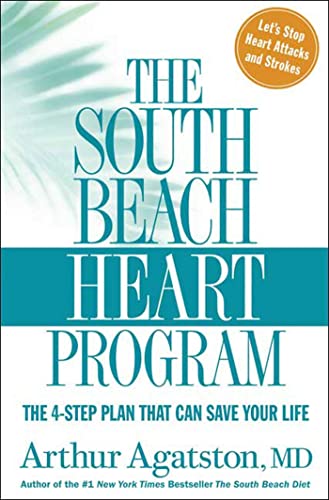
Inhaltsangabe
A pioneering cardiologist and the author of the international bestseller The South Beach Diet presents the truth about cardiac care in this country and offers his proven program for preventing heart attacks and strokes.
This year alone more than 1 million men and women in this country will suffer a heart attack or stroke. The shocking fact is that the majority of heart attacks and strokes can be prevented with the medical knowledge we already possess. Yet this isn't happening. Why? Because doctors and hospitals are paid more to treat disease with invasive techniques like angioplasty and bypass surgery than to prevent it. In his most personal and passionate work yet, Dr. Arthur Agatston champions a revolution in heart disease prevention that will enable people to stay out of the hospital and off the operating table.
In Part 1 of this compelling book, he tells you why seemingly healthy people can suddenly have a heart attack and why people with great cholesterol numbers can be walking time bombs. He explains why belly fat can be an early warning sign of future heart disease and why a noninvasive heart scan can help predict your risk of heart attack. In Part 2, he presents the South Beach Heart Program, his 4-step plan for detecting, preventing, and even reversing heart disease: The 4 steps include: Heart-healthy eating, regular aerobic and core-strengthening exercise, state-of-the art diagnostic testing, and the latest heart-protective medications, as necessary. Thanks to his aggressive prevention approach, Dr. Agatston rarely sees a heart attack or stroke in his practice. Now you can benefit from the prevention strategy he uses to help his patients every day.
Die Inhaltsangabe kann sich auf eine andere Ausgabe dieses Titels beziehen.
Über die Autorin bzw. den Autor
Arthur Agatston, M.D., is a preventive cardiologist and associate professor of medicine at the University of Miami Miller School of Medicine. In 1995, Dr. Agatston developed the South Beach Diet to help his cardiac and diabetes patients improve their blood chemistries and lose weight. Since then, his book The South Beach Diet and its companion titles have sold more than 22 million copies. Dr. Agatston has published more than 100 scientific articles and abstracts in medical journals,including articles on echocardiography, valvular heart disease, and noninvasive imaging of the coronary arteries. He recently received the prestigious Alpha Omega Award from New York University Medical Center for outstanding achievement in the medical profession. He lives in Miami Beach with his wife, Sari.
Auszug. © Genehmigter Nachdruck. Alle Rechte vorbehalten.
1
YOU DON'T HAVE TO HAVE A HEART ATTACK!
Imagine a world in which heart attacks are rare and death from a premature heart attack is virtually unknown--a thing of the past. Imagine a world in which heart disease is detected so early and so accurately--and treated so effectively--that very few people will ever need to be subjected to invasive and expensive procedures such as angioplasty or coronary bypass surgery. Imagine a world in which we can confidently look forward to healthy and productive lives free from the threat of heart attack and stroke.
You may be thinking, "Gee, my kids or grandchildren might be lucky enough to live in such a world, but this isn't going to happen in my lifetime."
If that's what you're thinking, you're wrong.
The exciting news is that we now have the knowledge and ability to prevent the great majority of heart attacks and strokes. We can save hundreds of thousands of lives each year--maybe even yours. I'm not talking about what we will be able to do 10 years from now, or even 5 years from now. I'm talking about what we can do right now. What's even more remarkable is the fact that right now we have noninvasive-- no cutting, no pain, no recovery required--diagnostic techniques that can identify people who are at high risk for developing coronary artery disease (or CAD), so that they can be treated early. We also have highly effective treatments, including medications and lifestyle changes, that can reverse damage to the heart's arteries without requiring patients to go under the knife. These treatments are simple and inexpensive when compared to angioplasty or bypass surgery.
I know this is true because I prescribe them every day in my medical practice. Many of you may know me as the doctor who created the South Beach Diet, but I am an accidental diet doctor. For nearly 30 years, I have been a cardiologist--a specialist in disorders of the heart--and for more than 20 years, I've been an associate professor at the University of Miami Miller School of Medicine at Mount Sinai. Much of my medical career has been devoted to noninvasive cardiac imaging, the technology that allows us to get detailed pictures of the heart and coronary arteries from outside the body. If you have ever had a heart scan--either a computed tomography (CT) scan or an electron beam tomography (EBT) scan--you were probably given a Calcium Score as part of your test results. That measure of coronary calcium is often referred to as the Agatston Score, and the method for calcium screening is called the Agatston Method. Both come from my early work with my colleague Warren Janowitz, MD, developing a method of imaging plaque-clogged arteries that can be employed years before heart attack symptoms occur. In fact, the diagnosis and prevention of heart disease has been my focus and passion throughout my professional life.
A PASSION FOR PREVENTION
Today, an unbelievable 66.5 percent of Americans are either overweight or obese, and 40 percent of those over the age of 40 are prediabetic. Nearly 21 million Americans actually have diabetes, and that number is growing daily. What's more, we are exporting our epidemics of obesity, prediabetes, and diabetes to the rest of the world at an alarming rate. People who have these conditions, which are largely due to poor diet and lifestyle habits, are prime candidates for heart disease.
I developed the South Beach Diet to help my patients lose weight, improve their blood chemistries, and avoid becoming diabetic. It was a piece of the prevention puzzle and it worked. Thanks to the worldwide success of my first book, I have been given the unique and wonderful opportunity to help change the way America eats. And while I am thrilled that millions of people are following the South Beach Diet, I have an even more ambitious agenda.
My goal in writing The South Beach Heart Program is to speed the pace of the cardiac prevention revolution currently taking place in this country.
I believe that one of the great failings in medical practice today is that cardiovascular disease is not diagnosed and treated in its earliest stages. Every time I hear that someone has died of a "sudden heart attack," I can't help but think that it shouldn't have happened. A life could have been saved if the victim had just had the benefit of the latest diagnostic techniques and medical treatments.
The South Beach Heart Program is based on these cutting-edge tools, which are currently being used by prevention-oriented cardiologists and internists around the country. It shows you how to make the most of these advances, while improving your diet and lifestyle as well.
HEART ATTACKS CAN BE PREVENTED
From the moment I graduated from medical school, I had a great interest in preventing heart disease, but I didn't know how. That changed with the development of cholesterol-lowering drugs, new noninvasive coronary screening methods, advanced blood testing, and a much more accurate understanding of how heart attacks happen. Although I had been practicing a form of what I like to call "aggressive prevention" for years, it wasn't until the late 1990s that I was able to take advantage of all these new strategies and implement the heart disease prevention program I use today.
Now, thankfully, I am hard-put to remember the last time I got a late-night call from the emergency room telling me that a patient of mine had suffered a heart attack. I don't have 40-, 50-, or 60-year-olds in my practice suffering heart attacks or strokes. And among people whom I've treated over a period of time, I rarely find it necessary to refer them for invasive procedures such as angioplasty or bypass surgery. I don't pick only heart- healthy patients, either. I treat primarily high-risk men and women with multiple risk factors and often a family history of heart disease. In fact, many of my patients have come to me after already suffering a heart attack at a young age. If they follow my program, they don't go on to have another.
As I've said, this is not just my experience. One of the best-kept secrets in medicine today is that many doctors who practice aggressive prevention have essentially stopped seeing heart attacks and strokes among their patients. When we meet at conferences and compare notes, it's common to hear "I've hardly had a heart attack in my practice this entire year" and "If hospitals had to rely on my referrals for surgery, they'd have very quiet operating rooms." We don't wait until our patients are crippled by chest pain or in the throes of a heart attack to act. At that late stage, an invasive approach is usually essential. Instead, we use the latest technology to identify people who are at high risk for a heart attack years before they experience any symptoms. We educate our patients about the right diet and exercise. And we prescribe cholesterol-lowering drugs and other medications that are proven to help prevent heart attacks and strokes.
We closely monitor our patients and our perseverance pays off. They stay healthy, happy, and nearly always heart attack free. Watching patients who had a parent or sibling die of heart disease before age 50 reach their sixties--and often well beyond--has brought me my greatest satisfaction as a physician. There is usually nothing routine about saving lives. Yet, in cardiology practices using aggressive prevention techniques, saving lives has become routine. My program works because it is a synthesis of what I have learned over the years from so many leaders in cardiology research and practice, and I owe them a great debt of gratitude. In the Foreword to this book, I have named those who have had the greatest influence on me.
MILLIONS ARE MISSING OUT
Despite all the advances and our proven success, I am frustrated that more Americans aren't getting the preventive care enjoyed by my patients and the...
„Über diesen Titel“ kann sich auf eine andere Ausgabe dieses Titels beziehen.
Suchergebnisse für The South Beach Heart Program: The 4-Step Plan that...

Beispielbild für diese ISBN
The South Beach Heart Program: The 4-Step Plan that Can Save Your Life (The South Beach Diet)
Anbieter: World of Books (was SecondSale), Montgomery, IL, USA
Verkäuferbewertung 5 von 5 Sternen

Zustand: Good. Item in good condition. Textbooks may not include supplemental items i.e. CDs, access codes etc. Artikel-Nr. 00058933505
Gebraucht kaufen
EUR 3,82
Versand gratis
Versand innerhalb von USA
Versand innerhalb von USA
Anzahl: Mehr als 20 verfügbar
Beispielbild für diese ISBN
The South Beach Heart Program: The 4-Step Plan that Can Save Your Life (The South Beach Diet)
Anbieter: World of Books (was SecondSale), Montgomery, IL, USA
Verkäuferbewertung 5 von 5 Sternen
Zustand: Very Good. Item in very good condition! Textbooks may not include supplemental items i.e. CDs, access codes etc. Artikel-Nr. 00094879527
Gebraucht kaufen
EUR 3,82
Versand gratis
Versand innerhalb von USA
Versand innerhalb von USA
Anzahl: 6 verfügbar
Beispielbild für diese ISBN
The South Beach Heart Program: The 4-Step Plan that Can Save Your Life (The South Beach Diet)
Verlag:
Rodale Books (edition First Edition), 2006
ISBN 10: 1594864195
ISBN 13: 9781594864193
Gebraucht
Hardcover
Erstausgabe
Anbieter: BooksRun, Philadelphia, PA, USA
Verkäuferbewertung 5 von 5 Sternen
Hardcover. Zustand: Very Good. First Edition. With dust jacket. It's a well-cared-for item that has seen limited use. The item may show minor signs of wear. All the text is legible, with all pages included. It may have slight markings and/or highlighting. Artikel-Nr. 1594864195-11-6-29
Gebraucht kaufen
EUR 5,43
Versand gratis
Versand innerhalb von USA
Versand innerhalb von USA
Anzahl: 1 verfügbar
Beispielbild für diese ISBN
The South Beach Heart Program: The 4-Step Plan that Can Save Your Life (The South Beach Diet)
Anbieter: ThriftBooks-Phoenix, Phoenix, AZ, USA
Verkäuferbewertung 5 von 5 Sternen
Hardcover. Zustand: As New. No Jacket. Pages are clean and are not marred by notes or folds of any kind. ~ ThriftBooks: Read More, Spend Less. Artikel-Nr. G1594864195I2N00
Gebraucht kaufen
EUR 5,94
Versand gratis
Versand innerhalb von USA
Versand innerhalb von USA
Anzahl: 1 verfügbar
Beispielbild für diese ISBN
The South Beach Heart Program: The 4-Step Plan that Can Save Your Life (The South Beach Diet)
Anbieter: ThriftBooks-Atlanta, AUSTELL, GA, USA
Verkäuferbewertung 5 von 5 Sternen
Hardcover. Zustand: As New. No Jacket. Pages are clean and are not marred by notes or folds of any kind. ~ ThriftBooks: Read More, Spend Less. Artikel-Nr. G1594864195I2N00
Gebraucht kaufen
EUR 5,94
Versand gratis
Versand innerhalb von USA
Versand innerhalb von USA
Anzahl: 1 verfügbar
Beispielbild für diese ISBN
The South Beach Heart Program: The 4-Step Plan that Can Save Your Life (The South Beach Diet)
Anbieter: ThriftBooks-Dallas, Dallas, TX, USA
Verkäuferbewertung 5 von 5 Sternen
Hardcover. Zustand: As New. No Jacket. Pages are clean and are not marred by notes or folds of any kind. ~ ThriftBooks: Read More, Spend Less. Artikel-Nr. G1594864195I2N00
Gebraucht kaufen
EUR 5,94
Versand gratis
Versand innerhalb von USA
Versand innerhalb von USA
Anzahl: 1 verfügbar
Beispielbild für diese ISBN
The South Beach Heart Program : The 4-Step Plan That Can Save Your Life
Verlag:
Potter/Ten Speed/Harmony/Rodale, 2006
ISBN 10: 1594864195
ISBN 13: 9781594864193
Gebraucht
Hardcover
Erstausgabe
Anbieter: Better World Books, Mishawaka, IN, USA
Verkäuferbewertung 5 von 5 Sternen
Zustand: Very Good. 1st Edition. Pages intact with possible writing/highlighting. Binding strong with minor wear. Dust jackets/supplements may not be included. Stock photo provided. Product includes identifying sticker. Better World Books: Buy Books. Do Good. Artikel-Nr. 2721013-20
Gebraucht kaufen
EUR 6,33
Versand gratis
Versand innerhalb von USA
Versand innerhalb von USA
Anzahl: 1 verfügbar
Beispielbild für diese ISBN
The South Beach Heart Program : The 4-Step Plan That Can Save Your Life
Verlag:
Potter/Ten Speed/Harmony/Rodale, 2006
ISBN 10: 1594864195
ISBN 13: 9781594864193
Gebraucht
Hardcover
Erstausgabe
Anbieter: Better World Books, Mishawaka, IN, USA
Verkäuferbewertung 5 von 5 Sternen
Zustand: Fine. 1st Edition. Used book that is in almost brand-new condition. May contain a remainder mark. Better World Books: Buy Books. Do Good. Artikel-Nr. 6401904-75
Gebraucht kaufen
EUR 6,33
Versand gratis
Versand innerhalb von USA
Versand innerhalb von USA
Anzahl: 1 verfügbar
Beispielbild für diese ISBN
The South Beach Heart Program: The 4-Step Plan that Can Save Your Life (The South Beach Diet)
Anbieter: Wonder Book, Frederick, MD, USA
Verkäuferbewertung 5 von 5 Sternen
Zustand: Good. Good condition. Good dust jacket. A copy that has been read but remains intact. May contain markings such as bookplates, stamps, limited notes and highlighting, or a few light stains. Artikel-Nr. A12A-06665
Gebraucht kaufen
EUR 6,40
Versand gratis
Versand innerhalb von USA
Versand innerhalb von USA
Anzahl: 1 verfügbar
Beispielbild für diese ISBN
The South Beach Heart Program: The 4-Step Plan that Can Save Your Life (The South Beach Diet)
Anbieter: Wonder Book, Frederick, MD, USA
Verkäuferbewertung 5 von 5 Sternen
Zustand: Very Good. Very Good condition. Very Good dust jacket. A copy that may have a few cosmetic defects. May also contain light spine creasing or a few markings such as an owner's name, short gifter's inscription or light stamp. Artikel-Nr. J07P-00746
Gebraucht kaufen
EUR 6,40
Versand gratis
Versand innerhalb von USA
Versand innerhalb von USA
Anzahl: 4 verfügbar