
Verwandte Artikel zu The South Beach Diet Dining Guide
Inhaltsangabe
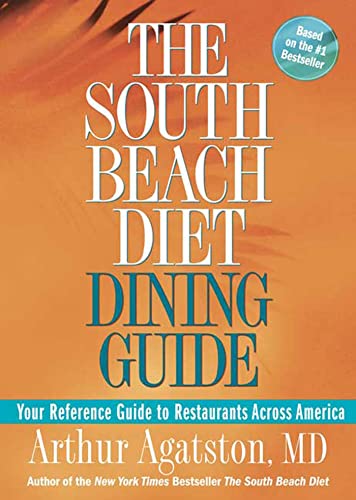
Americans spend $440 billion eating out at restaurants each year, and as the American culture is increasingly on the go, we let diets fall by the wayside as we fuel up on fast food and convenience foods. Now, with The South Beach Diet Dining Guide, Arthur Agatston, M.D. will give dieters a trusted resource to keep them on track wherever they go.
The first part of the book features listings of over 75 of the most popular chain and family restaurants in America, including mall and airport listings. For each entry, the book provides an editorial overview and specific menu recommendations and nutritional information. The South Beach Diet Dining Guide focuses on what you can eat, not what you should avoid! The second part of the book covers suggestions on what to eat from different ethnic food categories, such as French, Italian, Mexican, Spanish, Indian, and Japanese.
A bonus section for the business traveler will include an editorial overview and menu suggestions from South Beach-friendly restaurants in 15 of the most well-traveled cities: New York; Los Angeles; San Francisco; Boston; Chicago; Atlanta; Dallas; Cleveland; New Orleans; Kansas City; Minneapolis; Miami; Washington, DC; St. Louis; and Las Vegas.
Die Inhaltsangabe kann sich auf eine andere Ausgabe dieses Titels beziehen.
Über die Autorin bzw. den Autor
Arthur Agatston, M.D., is a preventive cardiologist and associate professor of medicine at the University of Miami Miller School of Medicine. In 1995, Dr. Agatston developed the South Beach Diet to help his cardiac and diabetes patients improve their blood chemistries and lose weight. Since then, his book The South Beach Diet and its companion titles have sold more than 22 million copies. Dr. Agatston has published more than 100 scientific articles and abstracts in medical journals, and recently he received the prestigious Alpha Omega Award from New York University Medical Center for outstanding achievement in the medical profession. He lives in Miami Beach with his wife, Sari.
Auszug. © Genehmigter Nachdruck. Alle Rechte vorbehalten.
DINING OUT
ON THE SOUTH BEACH DIET
You have a busy life. Chances are that work and family keep you on the go, and preparing home-cooked meals may be difficult because of time constraints. Finding a healthy lunch in the middle of a hectic day is often just as hard, and eating a good breakfast at home may be a rare event. In fact, if you're like most Americans, you purchase at least one meal a day at some sort of restaurant.
And that's just on an ordinary day. What about weekends, holidays, special occasions, travel days, business dinners, and all the other times you're away from your own kitchen? Does this mean putting your South Beach Diet on hold?
Not at all.
One of the best things about the South Beach Diet is that it's easy to dine out--and still eat well--while following the principles of the program. No matter what phase you're on, you can continue to lose weight and improve your health, whether you're grabbing a take-out order or enjoying dinner with family, friends, or business associates at a fine restaurant.
The first, and most important, step in sticking to the South Beach Diet when eating out is to keep the following ground rules in mind:
Choose unprocessed, unrefined carbohydrates, such as whole grains, whole fruits, and fresh vegetables.
Enjoy plenty of lean protein, such as chicken, fish, certain cuts of meat, low-fat dairy, and reduced-fat cheese.
Choose foods that are high in good fats, such as fish, avocados, and nuts, and make sure your foods are prepared with healthy oils such as olive oil or canola.
Avoid foods that are high in saturated fat, such as fatty cuts of beef, bacon, processed meats such as salami, and full-fat cheese.
Eat plenty of fiber--it's found in fruits, vegetables, nuts, beans, seeds, and whole grains.
Avoid refined carbohydrates such as white bread, cake, candy, white rice, and other processed foods that are high in sugar and often high in fat as well.
Avoid added sugar. Choose diet soft drinks, for instance, and watch out for hidden sugars in salad dressings and sauces.
Once you have the ground rules down, you'll also need to master some proven strategies that will help you enjoy your restaurant meals even more.
Key Strategies for Restaurant Dining
Dining out is one of life's pleasures, but it's also a challenge when you're trying to maintain a healthy diet. At home you can control what you put on your plate, but when you eat out, you're bound to come up against some common pitfalls: oversized portions, tempting refined carbs, extra ingredients that add bad fat and bad carbs, and of course menus that don't offer many South Beach Diet--friendly options. The following tips will help you stick to your healthy eating plan.
Have a protein snack before you leave the house.
By eating something with protein--a hard-boiled egg or a piece of reduced- fat cheese, for example--about 15 minutes before you arrive at the restaurant, you'll take the edge off your appetite. If you're not ravenous while you're reading the menu, you'll be able to make better food choices.
Banish the bread basket.
And the tortilla chips basket. And the crispy noodle basket. They're all filled with bad (refined) carbs, such as rolls made from white flour or deep-fried tortilla chips. Eating these carbs will give you a glucose jolt that could raise your blood sugar, and you might end up feeling hungrier. If it's okay with your fellow diners, ask your server to remove the basket before you even have a chance to nibble. If not, wait until everyone has taken some and then ask the server to remove the basket. (If that's not appropriate for the group you're with, at least position the basket as far from yourself as possible.) Once you're on Phase 2 or 3, you can indulge in a slice from the bread basket--as long as it is made from whole grains. To prevent a rapid rise in blood sugar, dip the bread into olive oil or even spread a little butter on it. The added calories are offset by the feeling of fullness that the fat adds.
Order soup.
If possible, order a cup of soup--the dieter's friend--as soon as you're seated. Look for soups that are rich in vegetables and that aren't cream- based, or order clear broth or consomme. The beauty of soup is that it fills you up, so you're not so hungry when it comes time to order from the rest of the menu. It also sends a message to your brain that you're eating and will be full soon. Since it takes about 20 minutes for that message to travel from your stomach to your brain, by the time your main course arrives, you'll already be on the way to feeling satiated.
Ask for extra veggies instead of starches.
Main courses usually come with starchy side dishes, such as white rice or mashed potatoes, which are undesirable foods for South Beach dieters on Phase 1 and 2. Ask instead for extra green vegetables, such as broccoli or string beans, or for a small green salad. Today, this is a routine request in many restaurants--and your server should be happy to help.
Pick healthy cooking methods.
Stay away from anything on the menu that appears to be coated or battered and fried. If the dish comes with a rich butter or cheese sauce, ask for it on the side. Stick to cooking methods--such as roasting, broiling, baking, grilling, steaming, and even sauteing--that don't add bad fats.
Have a (nonalcoholic) drink or two.
When your server asks if you want something from the bar, order a glass of water or diet soda. Sip it instead of a mixed drink or beer, and order another to go with your meal. Beyond Phase 1, have a glass of red or white wine along with your food--this is a form of alcohol that's not only acceptable but good for you.
Enjoy dessert--within reason.
The South Beach Diet is a lifestyle, and life without dessert would be no fun at all! But you have to make the right choices. Skip high-fat, high- sugar desserts. After Phase 1, if the menu offers fresh fruit, like berries or melon, that's your best choice. If you decide to indulge in something more decadent, use common sense. Ask the server to bring extra forks, limit yourself to three bites, and then share the rest with your fellow diners. After you've been on the South Beach Diet for a while, you may well find that your sweet tooth is more than satisfied with a small portion.
Casual Dining
The average American eats in a chain restaurant specializing in fast food at least once a week. What's wrong with the food at these casual quick- serve restaurants? A lot. Let's start with the fact that the emphasis at most chains is on big, sweet, fat, and fast. There's no denying that most fast food is typically high in calories, saturated fats (from the meats and cooking oil), trans fats, and refined carbohydrates (from all those buns, pizza crusts, and french fries) and low in fiber (think pickle slice). That means you're getting a faster rise in blood sugar from the bad carbs--one that's not offset by any fiber. The overall effect of this can leave you feeling unsatisfied by your meal. So, while you're still in the restaurant, you end up ordering more food--usually a dessert high in refined carbs and fat--just to feel full. And even if you do feel full, the sensation probably won't last, and you'll be on the lookout for a snack just an hour or two later.
Estimating Portion Size
Portions in restaurants have ballooned over the past couple of decades. Though on the South Beach Diet you should eat until you feel satiated, eating two or three times a normal serving of food means you could be getting a lot more calories, fat, and carbohydrates from your restaurant meal than you realize--and you may keep eating even after you're full simply because it's there. Use these simple tricks to eyeball your portions and get an idea of how oversized they really...
„Über diesen Titel“ kann sich auf eine andere Ausgabe dieses Titels beziehen.
Suchergebnisse für The South Beach Diet Dining Guide

Beispielbild für diese ISBN
The South Beach Diet Dining Guide: Your Reference Guide to Restaurants Across America
Anbieter: World of Books (was SecondSale), Montgomery, IL, USA
Verkäuferbewertung 5 von 5 Sternen

Paperback. Zustand: Fair. Artikel-Nr. 00107192940
Gebraucht kaufen
EUR 3,85
Versand gratis
Versand innerhalb von USA
Versand innerhalb von USA
Anzahl: 2 verfügbar
Beispielbild für diese ISBN
The South Beach Diet Dining Guide: Your Reference Guide to Restaurants Across America
Anbieter: World of Books (was SecondSale), Montgomery, IL, USA
Verkäuferbewertung 5 von 5 Sternen
Paperback. Zustand: Good. Artikel-Nr. 00083621167
Gebraucht kaufen
EUR 3,85
Versand gratis
Versand innerhalb von USA
Versand innerhalb von USA
Anzahl: 19 verfügbar
Beispielbild für diese ISBN
The South Beach Diet Dining Guide: Your Reference Guide to Restaurants Across America
Anbieter: World of Books (was SecondSale), Montgomery, IL, USA
Verkäuferbewertung 5 von 5 Sternen
Paperback. Zustand: Very Good. Artikel-Nr. 00097403070
Gebraucht kaufen
EUR 3,85
Versand gratis
Versand innerhalb von USA
Versand innerhalb von USA
Anzahl: 11 verfügbar
Beispielbild für diese ISBN
The South Beach Diet Dining Guide: Your Reference Guide to Restaurants Across America
Verlag:
Rodale Books (edition First Edition), 2005
ISBN 10: 1594863601
ISBN 13: 9781594863608
Gebraucht
Paperback
Erstausgabe
Anbieter: BooksRun, Philadelphia, PA, USA
Verkäuferbewertung 5 von 5 Sternen
Paperback. Zustand: Very Good. First Edition. It's a well-cared-for item that has seen limited use. The item may show minor signs of wear. All the text is legible, with all pages included. It may have slight markings and/or highlighting. Artikel-Nr. 1594863601-11-6
Gebraucht kaufen
EUR 4,52
Versand gratis
Versand innerhalb von USA
Versand innerhalb von USA
Anzahl: 1 verfügbar
Beispielbild für diese ISBN
The South Beach Diet Dining Guide: Your Reference Guide to Restaurants Across America
Anbieter: ThriftBooks-Dallas, Dallas, TX, USA
Verkäuferbewertung 5 von 5 Sternen
Paperback. Zustand: As New. No Jacket. Pages are clean and are not marred by notes or folds of any kind. ~ ThriftBooks: Read More, Spend Less. Artikel-Nr. G1594863601I2N00
Gebraucht kaufen
EUR 5,97
Versand gratis
Versand innerhalb von USA
Versand innerhalb von USA
Anzahl: 1 verfügbar
Beispielbild für diese ISBN
The South Beach Diet Dining Guide: Your Reference Guide to Restaurants Across America
Anbieter: ThriftBooks-Phoenix, Phoenix, AZ, USA
Verkäuferbewertung 5 von 5 Sternen
Paperback. Zustand: As New. No Jacket. Pages are clean and are not marred by notes or folds of any kind. ~ ThriftBooks: Read More, Spend Less. Artikel-Nr. G1594863601I2N00
Gebraucht kaufen
EUR 5,97
Versand gratis
Versand innerhalb von USA
Versand innerhalb von USA
Anzahl: 1 verfügbar
Beispielbild für diese ISBN
The South Beach Diet Dining Guide : Your Reference Guide to Restaurants Across America
Verlag:
Potter/Ten Speed/Harmony/Rodale, 2005
ISBN 10: 1594863601
ISBN 13: 9781594863608
Gebraucht
Softcover
Erstausgabe
Anbieter: Better World Books, Mishawaka, IN, USA
Verkäuferbewertung 5 von 5 Sternen
Zustand: Good. 1st Edition. Former library copy. Pages intact with minimal writing/highlighting. The binding may be loose and creased. Dust jackets/supplements are not included. Includes library markings. Stock photo provided. Product includes identifying sticker. Better World Books: Buy Books. Do Good. Artikel-Nr. GRP62111988
Gebraucht kaufen
EUR 6,19
Versand gratis
Versand innerhalb von USA
Versand innerhalb von USA
Anzahl: 1 verfügbar
Beispielbild für diese ISBN
The South Beach Diet Dining Guide : Your Reference Guide to Restaurants Across America
Verlag:
Potter/Ten Speed/Harmony/Rodale, 2005
ISBN 10: 1594863601
ISBN 13: 9781594863608
Gebraucht
Softcover
Erstausgabe
Anbieter: Better World Books: West, Reno, NV, USA
Verkäuferbewertung 5 von 5 Sternen
Zustand: Good. 1st Edition. Pages intact with minimal writing/highlighting. The binding may be loose and creased. Dust jackets/supplements are not included. Stock photo provided. Product includes identifying sticker. Better World Books: Buy Books. Do Good. Artikel-Nr. 2080473-75
Gebraucht kaufen
EUR 6,19
Versand gratis
Versand innerhalb von USA
Versand innerhalb von USA
Anzahl: 1 verfügbar
Beispielbild für diese ISBN
The South Beach Diet Dining Guide: Your Reference Guide to Restaurants Across America
Anbieter: Wonder Book, Frederick, MD, USA
Verkäuferbewertung 5 von 5 Sternen
Zustand: As New. Like New condition. A near perfect copy that may have very minor cosmetic defects. Artikel-Nr. N12O-00002
Gebraucht kaufen
EUR 6,43
Versand gratis
Versand innerhalb von USA
Versand innerhalb von USA
Anzahl: 2 verfügbar
Beispielbild für diese ISBN
The South Beach Diet Dining Guide: Your Reference Guide to Restaurants Across America
Anbieter: Wonder Book, Frederick, MD, USA
Verkäuferbewertung 5 von 5 Sternen
Zustand: Very Good. Very Good condition. A copy that may have a few cosmetic defects. May also contain light spine creasing or a few markings such as an owner's name, short gifter's inscription or light stamp. Artikel-Nr. Q17T-00936
Gebraucht kaufen
EUR 6,43
Versand gratis
Versand innerhalb von USA
Versand innerhalb von USA
Anzahl: 1 verfügbar