
Verwandte Artikel zu The Fair Fight
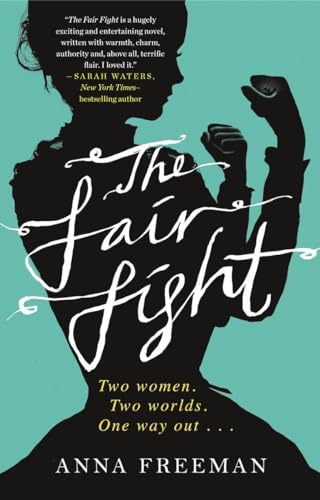
Inhaltsangabe
NAMED A BEST BOOK OF THE YEAR BY BOOKPAGE AND LIBRARY JOURNAL
The Crimson Petal and the White meets Fight Club: A page-turning novel set in the world of female pugilists and their patrons in late eighteenth-century England.
Moving from a filthy brothel to a fine manor house, from the world of street fighters to the world of champions, The Fair Fight is a vivid, propulsive historical novel announcing the arrival of a dynamic new talent.
Born in a brothel, Ruth doesn’t expect much for herself beyond abuse. While her sister’s beauty affords a certain degree of comfort, Ruth’s harsh looks set her on a path of drudgery. That is until she meets pugilist patron George Dryer and discovers her true calling—fighting bare knuckles in the prize rings of Bristol.
Manor-born Charlotte has a different cross to bear. Scarred by smallpox, stifled by her social and romantic options, and trapped in twisted power games with her wastrel brother, she is desperate for an escape.
After a disastrous, life-changing fight sidelines Ruth, the two women meet, and it alters the perspectives of both of them. When Charlotte presents Ruth with an extraordinary proposition, Ruth pushes dainty Charlotte to enter the ring herself and learn the power of her own strength.
A gripping, page-turning story about people struggling to transcend the circumstances into which they were born and fighting for their own places in society, The Fair Fight is a raucous, intoxicating tale of courage, reinvention, and fighting one’s way to the top.
Die Inhaltsangabe kann sich auf eine andere Ausgabe dieses Titels beziehen.
Über die Autorin bzw. den Autor
Anna Freeman supported herself during the writing of this book by bartending at the Hatchet Inn in Bristol, the very pub where this female pugilism took root over two hundred years ago. This is her first novel. She lives in Bristol.
Auszug. © Genehmigter Nachdruck. Alle Rechte vorbehalten.
Some folks call the prize-ring a nursery for vice. Boxing is talked against by all the magistrates and held up as unlawful and wild, even sometimes called unchristian. As I see it, those pious old smatchets are right, but what of it? Prize-fighting is all those things, but more, it’s beautiful. The sight of two people—for it’s not only men, you know, who take the ring—who’ve built their skills and their bodies, struggling together with nothing between them, no ball or stick, but only desperate force and the will to live—why, there’s the root of all mankind, the stuff of our lives played out. Till you’ve seen one pug, bare chest steaming in the frosty air, half blinded by his own blood, drop the other to his knees on the frozen turf and turn to roar to the sky, well, if you ain’t seen it, you can’t know. It brings you to the base of yourself; just the sight brings a bellow to the throat. Prizefighting is named “the noble sport” by the fancy crowding the ringside, and so it seems to me. Nothing much else in my life has been noble.
I’d like to say that my beginnings were humble, but they weren’t beginnings, because I never really left them but for a short while. I was born in a narrow house we called the convent, and I came into the world as fighting and blood-soaked as I mean to leave it, upon a big oaken bed that had carried the weight of a regiment of cullies. Ma used to say I might’ve had twenty daddies. She meant, by the look of me: my jaw too large, my eyes too small, my nose thin and hooked as a gypsy’s. I’d teeth to spare, crowd-ing my chops and hiding one behind the other, too bashful to line up straight. I was a puzzle made of the plainest parts of those twenty daddies, the parts they left behind and went on to give handsome children to their lady wives.
Ma never would answer questions, but she couldn’t stop the misses’ talking. The story went that when she was young, a fine gent bought the house to set her up as his mistress. He grew tired of her, as cullies do, and had given the place over to her as a means of saying sorry. Dora always thought that the cully who flit was our daddy, but as we grew up and grew so different, it was plain that whichever man had a hand in making Dora, he wasn’t likely the same cull who made me. It didn’t much signify in a house like ours. In our house a girl’s worth could be counted out in pounds, shillings, and pence, and that was all the worth that mattered.
A babe, of course, never can be much counted that way, and as infants Dora and I had always to make ourselves useful or else stay out of sight. It’s the same choice children are given the world over: be of service or be gone. We were there to scrub the flags and empty the pots, we were there to fetch the callers to the misses or, if some sailor became more trouble than he’d paid to be, we were there to fetch the bullies to see the cully out. The misses all held the same view of keeping house, however they lived before they came there; they’d do what they must to keep their own fires lit and whatever Ma stirred herself to bid them in the way of housework, and never be fashed to lift a finger more. All the rest fell to Dora and me.
Every so often there’d come a new miss with a desperate look about her, lugging an infant that screamed and spat up into its blanket. Ma was fond of pink-cheeked wretched misses; she’d always take a ruined girl over a hard-faced strumper. Then Dora and I would have a babber to drag about like a doll, or carry up to the garret, if it wouldn’t hush. We never could keep any of those infants long enough to love them—we’d come down one day and it’d be gone and none of us would ask where it’d been whipped off to. Sometimes the miss it’d belonged to took it hard and wept. Ma never minded weeping in the kitchen, but if a molly couldn’t smile for the cullies she’d be turned out quick as blinking. She might sit at breakfast bawling as though she were the infant herself, if she could dry her eyes and flutter them when once she stepped foot outside the kitchen. I remember a miss who never could stop weeping, and was put out upon her arse for it. I recall standing in the hall, my hands twisting in my apron, as she was hustled from the door, the bully’s big hand between her shoulder blades. I was only five or six, I should think. Her thin back was aquiver with tears, in only the same poor dress she’d come in, for of course Ma kept back the silks. A miss could get along all right if she’d silks of her own, so it was spite as well as greed that drove Ma’s hand. I went to the parlour window and watched her struggle down the road with her box, dragging it by one handle and rucking up a wake in the dirt of the street like a skiff at low tide. I pressed my face right up to the glass, to see her as long as I could. I couldn’t say what it was about that particular miss that caught my fancy, but I’d think of her sometimes, after that; I liked to imagine that when she’d turned the corner she’d found her baby waiting there and would be mother to it again. Later, when I grew up a little and had a grasp of the trade, I wondered at Ma keeping Dora and me. She kept us and never did hire us out to the cullies whose tastes ran to kiddies, though she threatened to often enough. I suppose, in a woman like our ma, that passed for love.
The convent was so narrow that it looked to have been built in an alley, crushed up against the houses on either side like a drunken crone held up by two fat fellows. Ours was the oldest house on the lane, the houses that had once stood on either side having been burned down, or torn down to make room for the new ones. Because the house couldn’t spread out, it reached up; there were five floors, if you counted the cellar, and all the rooms were full, though the bodies in them changed about. My whole life, we never had a spare room for more than a day.
In our house we went to bed when the whole world was rising. I’d lie there and listen to the milkmaid shouting in the lane, and the women calling to those below to look out, as they emptied their pots. I’d fall asleep with the sun pinking the dark behind my eyes. I always thought it the best way to live; in daylight the world was merry and safe. At night it was always better to be up and ready. I’d no choice in it, so it was well that I thought it so fine—Ma would never have stomached me creeping about the house in the daylight, while all the house was abed.
Sleeping all day as we did, we took our breakfast when other folks had dinner, at three or four o’clock. The kitchen table had been built just where it was and took up near the whole room; you’d have had to chop it to firewood to get it out of the door. We sat around it, pressed together on the benches, the misses in their silks, all bare arms and bosoms, and Dora and I always pushed to the ends of the bench, with half our arses hanging off. The bullies would put heavy bars across the front door and come to sit with us, though sometimes they stood, the room being so full. There were chairs at the head and the foot, and the bullies never did sit in them, as the men might expect to in any usual house. Ma sat always at the head of the table. The other chair was for whichever girl she saw fit to reward, whether it be a miss who’d taken good earnings the night before or a newcomer who was proving difficult to turn and so needed softening.
When Dora and I weren’t making ourselves useful we’d be huddled in the garret in the bed we shared, or else out upon the street, teasing the pigs; there were...
„Über diesen Titel“ kann sich auf eine andere Ausgabe dieses Titels beziehen.
Suchergebnisse für The Fair Fight

Beispielbild für diese ISBN
The Fair Fight: A Novel
Anbieter: World of Books (was SecondSale), Montgomery, IL, USA
Verkäuferbewertung 5 von 5 Sternen

Paperback. Zustand: Good. NAMED A BEST BOK OF THE YEAR BY BOKPAGE AND LIBRARY JOURNAL The Crimson Petal and the White meets Fight Club A page-turning novel set in the world of female pugilists and their patrons in late eighteenth-century England. Moving from a filthy brothel to a fine manor house, from the world of street fighters to the world of champions, The Fair Fight is a vivid, propulsive historical novel announcing the arrival of a dynamic new talent. Born in a brothel, Ruth doesn't expect much for herself beyond abuse. While her sister's beauty affords a certain degree of comfort, Ruth's harsh looks set her on a path of drudgery. That is until she meets pugilist patron George Dryer and discovers her true calling--fighting bare knuckles in the prize rings of Bristol. Manor-born Charlotte has a different cross to bear. Scarred by smallpox, stifled by her social and romantic options, and trapped in twisted power games with her wastrel brother, she is desperate for an escape. After a disastrous, life-changing fight sidelines Ruth, the two women meet, and it alters the perspectives of both of them. When Charlotte presents Ruth with an extraordinary proposition, Ruth pushes dainty Charlotte to enter the ring herself and learn the power of her own strength. A gripping, page-turning story about people struggling to transcend the circumstances into which they were born and fighting for their own places in society, The Fair Fight is a raucous, intoxicating tale of courage, reinvention, and fighting one's way to the top. From the Hardcover edition. Artikel-Nr. 00059145706
Gebraucht kaufen
EUR 3,86
Versand gratis
Versand innerhalb von USA
Versand innerhalb von USA
Anzahl: 3 verfügbar
Beispielbild für diese ISBN
The Fair Fight
Anbieter: ThriftBooks-Atlanta, AUSTELL, GA, USA
Verkäuferbewertung 5 von 5 Sternen
Paperback. Zustand: Fair. No Jacket. Readable copy. Pages may have considerable notes/highlighting. ~ ThriftBooks: Read More, Spend Less. Artikel-Nr. G1594634084I5N00
Gebraucht kaufen
EUR 6,34
Versand gratis
Versand innerhalb von USA
Versand innerhalb von USA
Anzahl: 1 verfügbar
Beispielbild für diese ISBN
The Fair Fight
Anbieter: BookOutlet, Jefferson City, TN, USA
Verkäuferbewertung 5 von 5 Sternen
Paperback. Zustand: New. Paperback. Publisher overstock, may contain remainder mark on edge. Artikel-Nr. 9781594634086B
Neu kaufen
EUR 5,35
EUR 2,89 Versand
Versand innerhalb von USA
Versand innerhalb von USA
Anzahl: Mehr als 20 verfügbar