
Verwandte Artikel zu In Paradise: A novel
Inhaltsangabe
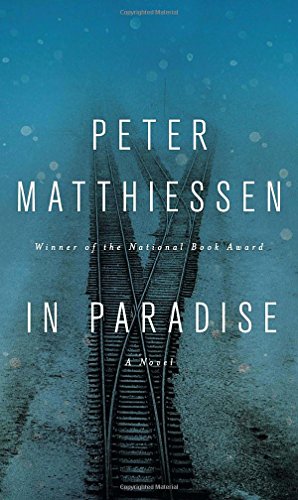
The bestselling final novel by a writer of incomparable range, power, and achievement, a three-time winner of the National Book Award.
Peter Matthiessen was a literary legend, the author of more than thirty acclaimed books. In this, his final novel, he confronts the legacy of evil, and our unquenchable desire to wrest good from it.
One week in late autumn of 1996, a group gathers at the site of a former death camp. They offer prayer at the crematoria and meditate in all weathers on the selection platform. They eat and sleep in the sparse quarters of the Nazi officers who, half a century before, sent more than a million Jews in this camp to their deaths. Clements Olin has joined them, in order to complete his research on the strange suicide of a survivor. As the days pass, tensions both political and personal surface among the participants, stripping away any easy pretense to resolution or healing. Caught in the grip of emotions and impulses of bewildering intensity, Olin is forced to abandon his observer's role and to bear witness, not only to his family's ambiguous history but to his own.
Profoundly thought-provoking, In Paradise is a fitting coda to the luminous career of a writer who was "for all readers. He was for the world" ( National Geographic ).
Die Inhaltsangabe kann sich auf eine andere Ausgabe dieses Titels beziehen.
Über die Autorinnen und Autoren
Peter Matthiessen was a three-time National Book Award winner (twice in two nonfiction categories forThe Snow Leopard, published in 1978, and again in fiction in 2008 for Shadow Country) and the author of more than thirty books, as well as a world renowned naturalist, explorer, and activist. A cofounder of theParis Review, he was a member of the American Academy of Arts and Letters and a recipient of its William Dean Howells Award, a State Author of New York, and a recipient of the Heinz Award in the Arts and Humanities, among many other honors. A longtime student of Zen Buddhism, Matthiessen eventually became a priest of the White Plum Asanga. He lived for more than 60 years on the South Fork of Long Island, where he worked as a commercial fisherman in his twenties and died on April 5, 2014.
Peter Matthiessen was a three-time National Book Award winner (twice in two nonfiction categories forThe Snow Leopard, published in 1978, and again in fiction in 2008 for Shadow Country) and the author of more than thirty books, as well as a world renowned naturalist, explorer, and activist. A cofounder of theParis Review, he was a member of the American Academy of Arts and Letters and a recipient of its William Dean Howells Award, a State Author of New York, and a recipient of the Heinz Award in the Arts and Humanities, among many other honors. A longtime student of Zen Buddhism, Matthiessen eventually became a priest of the White Plum Asanga. He lived for more than 60 years on the South Fork of Long Island, where he worked as a commercial fisherman in his twenties and died on April 5, 2014.
Auszug. © Genehmigter Nachdruck. Alle Rechte vorbehalten.
IN PARADISE
One
He has flown all night over the ocean from the New
World, descending from moon stare and the rigid stars into the murk and tumult of inversion shrouding winter Poland.
From the airport, a cab takes him to the city and sets him down in an empty square where a row of buses, closely parked, stand side by side facing a wall; the cab is gone by the time he discovers they are locked. (The imprisoned air inside, he thinks, must be even colder than this outside weather.) At the corner café he is informed that buses to that destination won't be available before spring, and that he has missed the morning train he would have caught had he been driven to the depot; there will be no other until evening.
At a loss, he drinks black coffee at the counter, scowling at the unshaven traveler reflected in the dirty mirror. His antiquated Polish is eked out by the primitive English of a young couple who have overheard his inquiries about hiring a car and boisterously endorse the waiter's protest that the cost would be far too high. Concerned that a visitor to their fair land has been inconvenienced, they offer to escort him to that small museum he had mentioned: the waiter will keep an eye on his old suitcase. On the way he can ad- mire the Royal Palace and cathedral on Wawel Hill and the St. Mary's Basilica destroyed in the thirteenth century by Asian Tatars and rebuilt in the fourteenth with that strange crowned tower. "Like black icicles!" the girl cries. Thus their guest can at least enjoy the historic center of Poland's oldest city, still so beautiful, they say, because Cracow, like Paris, had been spared bomb and fire in the war. Pardon? Oh no, sir, they giggle, they have never been to Paris!
Exhausted, he trails his merry guides past the medieval Cloth House on the Market Square. Mirek and his love- struck Wanda will not let him visit this city he knows more about than they do without dragging him into a shop to find a souvenir of Poland "for delight your sweetheart in America." Wanda supervises the selection of a silken lozenge of transparent amber. "Beauty gift for Mama!" This golden drop encasing flecks of ancient insects is the very essence of his ancestral earth, yet its acquisition further sinks his spirits. He knows no one who would have much interest in this scrap of fossil tree sap, never mind "delight." He has no sweetheart, only a married lover he does not much miss-in fact, is rather glad to get a rest from-and no surviving family in the New World. Were they still alive, his father and paternal grandparents would have disapproved this trip, having always warned him against returning to this region of southwest Poland just because he happened to be born there. "You have no memory of that place, and our own memories are sad," his father said.
The one thing he will make sure he sees in Cracow is the Leonardo da Vinci portrait of a Renaissance girl holding a white winter weasel in her lap. Long ago, his father had shown him a faded reproduction clipped from an art magazine ("She reminds me so of your dear mother!"). Alas, on this cold Sunday of 1996, Young Woman with Ermine is locked away behind the small museum's obdurate wood door. His guides stare at the notice as if hoping that at any moment it might change its mind. Disappointed for their guest and sensing his annoyance, the poor things are looking a bit desperate.
On the return, in an effort to intrigue them, he relates how over the centuries this portrait of Cecilia Gallerani, Count Ludovico Sforza's adolescent mistress, had wandered in times of war and conquest-sealed up in castle cellars, stolen, sold, and finally recovered, only to be confiscated by Hans Frank (crony and former lawyer of the Leader in Berlin, now Governor General of Occupied Poland) and displayed in his office in the Royal Palace-
"Is up there!" Eager to contribute, the girl is pointing at the fortress castle looming in the mis
„Über diesen Titel“ kann sich auf eine andere Ausgabe dieses Titels beziehen.
Suchergebnisse für In Paradise: A novel

Beispielbild für diese ISBN
In Paradise
Anbieter: World of Books (was SecondSale), Montgomery, IL, USA
Verkäuferbewertung 5 von 5 Sternen

Zustand: Very Good. Item in very good condition! Textbooks may not include supplemental items i.e. CDs, access codes etc. Artikel-Nr. 00104838102
Gebraucht kaufen
EUR 4,33
Versand gratis
Versand innerhalb von USA
Versand innerhalb von USA
Anzahl: 3 verfügbar
Beispielbild für diese ISBN
In Paradise
Anbieter: World of Books (was SecondSale), Montgomery, IL, USA
Verkäuferbewertung 5 von 5 Sternen
Zustand: Acceptable. Item in acceptable condition! Textbooks may not include supplemental items i.e. CDs, access codes etc. Artikel-Nr. 00097590062
Gebraucht kaufen
EUR 4,33
Versand gratis
Versand innerhalb von USA
Versand innerhalb von USA
Anzahl: 1 verfügbar
Beispielbild für diese ISBN
In Paradise
Anbieter: World of Books (was SecondSale), Montgomery, IL, USA
Verkäuferbewertung 5 von 5 Sternen
Zustand: Good. Item in good condition. Textbooks may not include supplemental items i.e. CDs, access codes etc. Artikel-Nr. 00096106150
Gebraucht kaufen
EUR 4,33
Versand gratis
Versand innerhalb von USA
Versand innerhalb von USA
Anzahl: 8 verfügbar
Beispielbild für diese ISBN
In Paradise: A Novel
Verlag:
Riverhead Books (edition First Edition), 2014
ISBN 10: 1594633177
ISBN 13: 9781594633171
Gebraucht
Hardcover
Erstausgabe
Anbieter: BooksRun, Philadelphia, PA, USA
Verkäuferbewertung 5 von 5 Sternen
Hardcover. Zustand: Very Good. First Edition. It's a well-cared-for item that has seen limited use. The item may show minor signs of wear. All the text is legible, with all pages included. It may have slight markings and/or highlighting. Artikel-Nr. 1594633177-8-18
Gebraucht kaufen
EUR 5,96
Versand gratis
Versand innerhalb von USA
Versand innerhalb von USA
Anzahl: 1 verfügbar
Beispielbild für diese ISBN
In Paradise: A Novel
Anbieter: ThriftBooks-Atlanta, AUSTELL, GA, USA
Verkäuferbewertung 5 von 5 Sternen
Hardcover. Zustand: Very Good. No Jacket. May have limited writing in cover pages. Pages are unmarked. ~ ThriftBooks: Read More, Spend Less. Artikel-Nr. G1594633177I4N00
Gebraucht kaufen
EUR 6,14
Versand gratis
Versand innerhalb von USA
Versand innerhalb von USA
Anzahl: 1 verfügbar
Beispielbild für diese ISBN
In Paradise: A Novel
Anbieter: ThriftBooks-Atlanta, AUSTELL, GA, USA
Verkäuferbewertung 5 von 5 Sternen
Hardcover. Zustand: Very Good. No Jacket. Former library book; May have limited writing in cover pages. Pages are unmarked. ~ ThriftBooks: Read More, Spend Less. Artikel-Nr. G1594633177I4N10
Gebraucht kaufen
EUR 6,14
Versand gratis
Versand innerhalb von USA
Versand innerhalb von USA
Anzahl: 1 verfügbar
Beispielbild für diese ISBN
In Paradise
Verlag:
Penguin Publishing Group, 2014
ISBN 10: 1594633177
ISBN 13: 9781594633171
Gebraucht
Hardcover
Erstausgabe
Anbieter: Better World Books, Mishawaka, IN, USA
Verkäuferbewertung 5 von 5 Sternen
Zustand: Good. First Edition. Former library copy. Pages intact with minimal writing/highlighting. The binding may be loose and creased. Dust jackets/supplements are not included. Includes library markings. Stock photo provided. Product includes identifying sticker. Better World Books: Buy Books. Do Good. Artikel-Nr. 1508938-20
Gebraucht kaufen
EUR 6,26
Versand gratis
Versand innerhalb von USA
Versand innerhalb von USA
Anzahl: 2 verfügbar
Beispielbild für diese ISBN
In Paradise
Verlag:
Penguin Publishing Group, 2014
ISBN 10: 1594633177
ISBN 13: 9781594633171
Gebraucht
Hardcover
Erstausgabe
Anbieter: Better World Books, Mishawaka, IN, USA
Verkäuferbewertung 5 von 5 Sternen
Zustand: Very Good. First Edition. Pages intact with possible writing/highlighting. Binding strong with minor wear. Dust jackets/supplements may not be included. Stock photo provided. Product includes identifying sticker. Better World Books: Buy Books. Do Good. Artikel-Nr. 1508939-6
Gebraucht kaufen
EUR 6,26
Versand gratis
Versand innerhalb von USA
Versand innerhalb von USA
Anzahl: 2 verfügbar
Beispielbild für diese ISBN
In Paradise
Anbieter: Wonder Book, Frederick, MD, USA
Verkäuferbewertung 5 von 5 Sternen
Zustand: Good. Good condition. Very Good dust jacket. A copy that has been read but remains intact. May contain markings such as bookplates, stamps, limited notes and highlighting, or a few light stains. Artikel-Nr. M03J-02319
Gebraucht kaufen
EUR 6,33
Versand gratis
Versand innerhalb von USA
Versand innerhalb von USA
Anzahl: 1 verfügbar
Beispielbild für diese ISBN
In Paradise
Anbieter: Wonder Book, Frederick, MD, USA
Verkäuferbewertung 5 von 5 Sternen
Zustand: Very Good. Very Good condition. Good dust jacket. A copy that may have a few cosmetic defects. May also contain light spine creasing or a few markings such as an owner's name, short gifter's inscription or light stamp. Artikel-Nr. A11T-00661
Gebraucht kaufen
EUR 6,33
Versand gratis
Versand innerhalb von USA
Versand innerhalb von USA
Anzahl: 1 verfügbar