
Verwandte Artikel zu I Am Radar: A Novel
Inhaltsangabe
The Washington Post
"[G]randly ambitious... another masterpiece... this genre includes some of the greatest novels of our time, from Pynchon's V. to David Foster Wallace's Infinite Jest . That's the troupe Larsen has decided to join, and I Am Radar is a dazzling performance."
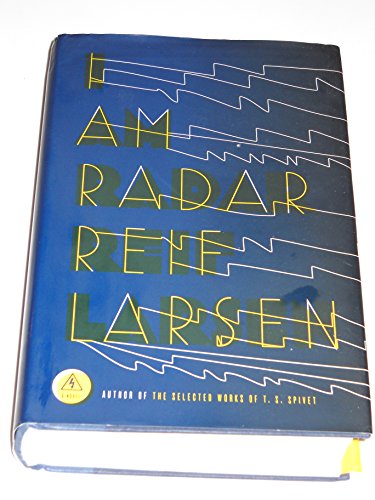
The moment just before Radar Radmanovic is born, all of the hospital's electricity mysteriously fails. The delivery takes place in total darkness. Lights back on, the staff sees a healthy baby boy-with pitch-black skin-born to the stunned white parents. No one understands the uncanny electrical event or the unexpected skin color. "A childbirth is an explosion," the ancient physician says by way of explanation. "Some shrapnel is inevitable, isn't it?"
A kaleidoscopic novel both heartbreaking and dazzling, Reif Larsen's I Am Radar begins with Radar's perplexing birth but rapidly explodes outward, carrying readers across the globe and throughout history, as well as to unknown regions where radio waves and subatomic particles dance to their own design. Spanning this extraordinary range with grace and empathy, humor and courage, I Am Radar is the vessel where a century of conflict and art unite in a mesmerizing narrative whole.
Deep in arctic Norway, a cadre of Norwegian schoolteachers is imprisoned during the Second World War. Founding a radical secret society that will hover on the margins of recorded history for decades to come, these schoolteachers steal radioactive material from a hidden Nazi nuclear reactor and use it to stage a surreal art performance on a frozen coastline. This strange society appears again in the aftermath of Cambodia's murderous Khmer Rouge regime, when another secret performance takes place but goes horrifically wrong. Echoes of this disaster can be heard during the Yugoslavian wars, when an avant-garde puppeteer finds himself trapped inside Belgrade while his brother serves in the genocidal militia that attacks Srebrenica. Decades later, in the war-torn Congo, a disfigured literature professor assembles the largest library in the world even as the country around him collapses. All of these stories are linked by Radar-now a gifted radio operator living in the New Jersey Meadowlands-who struggles with love, a set of hapless parents,and a terrible medical affliction that he has only just begun to comprehend.
As I Am Radar accelerates toward its unforgettable conclusion, these divergent strands slowly begin to converge, revealing that beneath our apparent differences, unseen harmonies secretly unite our lives. Drawing on the furthest reaches of quantum physics, forgotten history, and mind-bending art, Larsen's I Am Radar is a triumph of storytelling at its most primal, elegant, and epic: a breathtaking journey through humanity's darkest hours only to arrive at a place of shocking wonder and redemption.
Cleveland Plain-Dealer
"Larsen's is an extraordinarily lush and verdant imagination, blooming wildly on the borders of the absurd and the riotous, the surreal and the ordinary...Quite unlike any [novel] I've read in a long time. One doesn't consume it; one enters it, as part of a literary enactment... Brilliant...The effort is well-rewarded: It is both maddening and marvelous...I can't wait to see what he pulls off next."
Die Inhaltsangabe kann sich auf eine andere Ausgabe dieses Titels beziehen.
Über die Autorinnen und Autoren
REIF LARSEN’s first novel, The Selected Works of T. S. Spivet, was a New York Times bestseller and is currently translated in twenty-seven languages. The novel was a 2010 Montana Honor book and an IndieBound Award finalist; was shortlisted for theGuardian First Book award and the James Tait Black Memorial Prize; and was adapted into a movie by Jean- Pierre Jeunet (Amelié). Larsen’s writings have appeared inThe New York Times, The Guardian, Tin House, one story, The Millions, Asymptote Journal, andThe Believer. Larsen is currently serving as the writer-in-residence at the University of St Andrews in Scotland.
@ReifLarsen | ReifLarsen.com | iamradar.net
@ReifLarsen | ReifLarsen.com | iamradar.net
Reif Larsen's first novel, The Selected Works of T. S. Spivet, was a New York Times bestseller and has been translated into twenty-seven languages. A Montana Honor book, The Selected Works of T. S. Spivet was a finalist for the IndieBound Award, was short-listed for theGuardian First Book Award and the James Tait Black Memorial Prize, and is currently being released as a film in France and the United States.
Auszug. © Genehmigter Nachdruck. Alle Rechte vorbehalten.
This excerpt is from an advance uncorrected proof
Copyright © 2015 Reif Larsen
Elizabeth, New Jersey
April 17, 1975
It was just after midnight in birthing room 4C and Dr. Sherman, the mustached obstetrician presiding over the delivery, was sweating lightly into his cotton underwear, holding out his hands like a beggar, ready to receive the imminent cranium.
Without warning, the room was plunged into total darkness.
Though he had been delivering babies for more than thirty years now, Dr. Sherman was so taken aback by this complete loss of vision that he briefly considered, and then rejected, the possibility of his own death. Desperate to get his bearings, he wheeled around, trying to locate the sans serif glow of the emergency exit sign across the hall, but this too had gone dark.
"Doctor?" the nurse called next to him.
"The exit!" he hissed into the darkness.
All through the hospital, a wash of panic spread over staff and patients alike as life support machines failed and surgeons were left holding beating hearts in pitch-black operating theaters. None of the backup systems-the two generators in the basement, the giant, deep- cycle batteries outside the ICU, usually so reliable in blackouts such as this one- appeared to be working. It was a catastrophe in the making. Electricity had quite simply vanished.
In birthing room 4C, Dr. Sherman was jolted into action by Charlene, the expectant mother, who gave a single, visceral cry that let everyone know, in no uncertain terms, that the baby was still coming. Maybe the baby had already come, under shroud of darkness. Dr. Sherman instinctively reached down and, sure enough, felt the conical crown of the baby's skull emerging from his mother's vagina. He guided this invisible head with the tips of his ten fingers, pulling, gathering, turning so that the head and neck were once again square with the baby's shoulders, which still lingered in Charlene's birth canal. He did this pulling, gathering, turning without seeing, with only the memory infused in the synapses of his cortex, and his blindness was a fragile kind of sleep.
As he shepherded the child from its wet, coiled womb into a new kind of darkness, Dr. Sherman heard a distinct clicking sound. At first he thought the sound was coming from the birth canal, but then he located the clicking as coming from just behind him, over his right shoulder. Suddenly his vision was bathed in a syrupy yellow light. The father of the newborn, Kermin Radmanovic, who had earlier brought a transceiver radio and a telegraph key into the birthing room in order to announce his child's arrival to the world, was waving a pocket flashlight wrapped in tinfoil at the space between his wife's legs.
"He is okay?" asked Kermin. "He comes now?" His accent was vaguely Slavic, the fins of his words dipping their uvular tips into a smooth lake of water.
Everyone looked to where the beam of light had peeled back the darkness. There glistened the torpedo-like head of the child, covered in a white, waxen substance. The sight encouraged Dr. Sherman back into action. He first slipped his finger beneath the child's chin, but when he felt no sign of the umbilical cord wrapped around the neck, he yelled, "Push!"
Charlene did her best to comply with the order, her toes curling as she attempted to expel the entire contents of her abdomen, and when the breaking point was most certainly reached, surpassed, and then reached again, there was a soft popping sound and the rest of the baby emerged, the starfish body tumbling out into the dim mustard glow of this world.
Kermin leaned in to catch a first glimpse of his new child. Ever since his wife had come hobbling into his tiny electronics closet, staring at her dripping hand as if it were not her own, time had begun to unravel. The labor had come three weeks early. His fingers-so steady as he mended the cathode ruptures and fiz
„Über diesen Titel“ kann sich auf eine andere Ausgabe dieses Titels beziehen.
Suchergebnisse für I Am Radar: A Novel

Beispielbild für diese ISBN
I Am Radar
Anbieter: World of Books (was SecondSale), Montgomery, IL, USA
Verkäuferbewertung 5 von 5 Sternen

Hardback. Zustand: Very Good. Big, beautiful, ambitious . . . It takes narrative magic to pull off such a loopy combination, and luckily, Reif Larsen has it to spare. His prose is addictive and enchanting. --Los Angeles Times The moment just before Radar Radmanovic is born, the hospital's electricity fails. The delivery takes place in total darkness. Lights back on, everyone present sees a healthy baby boy--with jet-black skin--born to the stunned white parents. No one understands the uncanny electrical event or the unexpected skin color. A childbirth is an explosion, an ancient physician explains. Some shrapnel is inevitable, isn't it? A kaleidoscopic novel both heartbreaking and dazzling, Reif Larsen's I Am Radar rapidly explodes outward from Radar's strange birth. In World War I Norway, a cadre of imprisoned schoolteachers founds a radical secret society that will hover on the margins of history for decades to come, performing acts of radical art and experimental science in the midst of conflict zones from embattled Bosnia to Khmer Rouge Cambodia and the contemporary Congo. All of these stories are linked by Radar--now a gifted radio operator living in the New Jersey Meadowlands--who struggles with love, a set of hapless parents, and a terrible medical affliction that he has only just begun to comprehend. Drawing on the furthest reaches of quantum physics, forgotten history, and mind-bending art, Larsen's I Am Radar is a triumph of storytelling at its most primal, elegant, and epic: a breathtaking journey through humanity's darkest hours, yet one that arrives at a place of shocking wonder and redemption. Praise for I Am Radar A deeply patterned narrative that darts easily from small-bore domestic dramas to sweeping historical catastrophes with just the right fillip of silliness and levity to keep the whole text eminently ­approachable. --The New York Times Book Review. Artikel-Nr. 00083629318
Gebraucht kaufen
EUR 5,67
Versand gratis
Versand innerhalb von USA
Versand innerhalb von USA
Anzahl: 1 verfügbar
Beispielbild für diese ISBN
I Am Radar: A Novel
Anbieter: World of Books (was SecondSale), Montgomery, IL, USA
Verkäuferbewertung 5 von 5 Sternen
Zustand: Acceptable. Item in acceptable condition! Textbooks may not include supplemental items i.e. CDs, access codes etc. Artikel-Nr. 00107634179
Gebraucht kaufen
EUR 5,67
Versand gratis
Versand innerhalb von USA
Versand innerhalb von USA
Anzahl: 1 verfügbar
Beispielbild für diese ISBN
I Am Radar: A Novel
Anbieter: World of Books (was SecondSale), Montgomery, IL, USA
Verkäuferbewertung 5 von 5 Sternen
Zustand: Good. Item in good condition. Textbooks may not include supplemental items i.e. CDs, access codes etc. Artikel-Nr. 00109925665
Gebraucht kaufen
EUR 5,67
Versand gratis
Versand innerhalb von USA
Versand innerhalb von USA
Anzahl: 1 verfügbar
Beispielbild für diese ISBN
I Am Radar: A Novel
Anbieter: ThriftBooks-Dallas, Dallas, TX, USA
Verkäuferbewertung 5 von 5 Sternen
Hardcover. Zustand: Very Good. No Jacket. May have limited writing in cover pages. Pages are unmarked. ~ ThriftBooks: Read More, Spend Less. Artikel-Nr. G1594206163I4N00
Gebraucht kaufen
EUR 6,44
Versand gratis
Versand innerhalb von USA
Versand innerhalb von USA
Anzahl: 1 verfügbar
Beispielbild für diese ISBN
I Am Radar: A Novel
Anbieter: ThriftBooks-Atlanta, AUSTELL, GA, USA
Verkäuferbewertung 5 von 5 Sternen
Hardcover. Zustand: Very Good. No Jacket. Former library book; May have limited writing in cover pages. Pages are unmarked. ~ ThriftBooks: Read More, Spend Less. Artikel-Nr. G1594206163I4N10
Gebraucht kaufen
EUR 6,44
Versand gratis
Versand innerhalb von USA
Versand innerhalb von USA
Anzahl: 1 verfügbar
Beispielbild für diese ISBN
I Am Radar: A Novel
Anbieter: ThriftBooks-Dallas, Dallas, TX, USA
Verkäuferbewertung 5 von 5 Sternen
Hardcover. Zustand: Very Good. No Jacket. Former library book; May have limited writing in cover pages. Pages are unmarked. ~ ThriftBooks: Read More, Spend Less. Artikel-Nr. G1594206163I4N10
Gebraucht kaufen
EUR 6,44
Versand gratis
Versand innerhalb von USA
Versand innerhalb von USA
Anzahl: 1 verfügbar
Beispielbild für diese ISBN
I Am Radar: A Novel
Anbieter: ThriftBooks-Atlanta, AUSTELL, GA, USA
Verkäuferbewertung 5 von 5 Sternen
Hardcover. Zustand: Very Good. No Jacket. May have limited writing in cover pages. Pages are unmarked. ~ ThriftBooks: Read More, Spend Less. Artikel-Nr. G1594206163I4N00
Gebraucht kaufen
EUR 6,44
Versand gratis
Versand innerhalb von USA
Versand innerhalb von USA
Anzahl: 1 verfügbar
Beispielbild für diese ISBN
I Am Radar
Verlag:
Penguin Publishing Group, 2015
ISBN 10: 1594206163
ISBN 13: 9781594206160
Gebraucht
Hardcover
Erstausgabe
Anbieter: Better World Books, Mishawaka, IN, USA
Verkäuferbewertung 5 von 5 Sternen
Zustand: Very Good. First Edition. Former library copy. Pages intact with possible writing/highlighting. Binding strong with minor wear. Dust jackets/supplements may not be included. Includes library markings. Stock photo provided. Product includes identifying sticker. Better World Books: Buy Books. Do Good. Artikel-Nr. 5377273-75
Gebraucht kaufen
EUR 6,66
Versand gratis
Versand innerhalb von USA
Versand innerhalb von USA
Anzahl: 1 verfügbar
Beispielbild für diese ISBN
I Am Radar
Verlag:
Penguin Publishing Group, 2015
ISBN 10: 1594206163
ISBN 13: 9781594206160
Gebraucht
Hardcover
Erstausgabe
Anbieter: Better World Books, Mishawaka, IN, USA
Verkäuferbewertung 5 von 5 Sternen
Zustand: Good. First Edition. Former library copy. Pages intact with minimal writing/highlighting. The binding may be loose and creased. Dust jackets/supplements are not included. Includes library markings. Stock photo provided. Product includes identifying sticker. Better World Books: Buy Books. Do Good. Artikel-Nr. 5415092-75
Gebraucht kaufen
EUR 6,66
Versand gratis
Versand innerhalb von USA
Versand innerhalb von USA
Anzahl: 1 verfügbar
Beispielbild für diese ISBN
I Am Radar: A Novel
Verlag:
Penguin Press (edition First Edition), 2015
ISBN 10: 1594206163
ISBN 13: 9781594206160
Gebraucht
Hardcover
Erstausgabe
Anbieter: BooksRun, Philadelphia, PA, USA
Verkäuferbewertung 5 von 5 Sternen
Hardcover. Zustand: Very Good. First Edition. It's a well-cared-for item that has seen limited use. The item may show minor signs of wear. All the text is legible, with all pages included. It may have slight markings and/or highlighting. Artikel-Nr. 1594206163-11-1
Gebraucht kaufen
EUR 8,96
Versand gratis
Versand innerhalb von USA
Versand innerhalb von USA
Anzahl: 1 verfügbar