
Verwandte Artikel zu Ten Things I've Learnt about Love
Inhaltsangabe
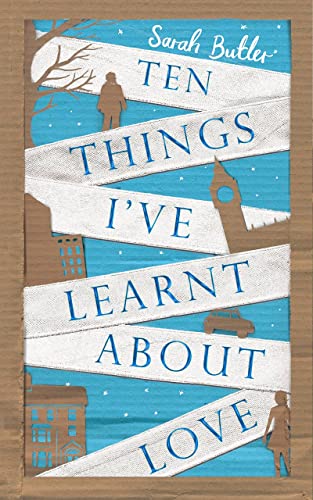
About to turn thirty, Alice is the youngest of three daughters, and the black sheep of her family. Drawn to traveling in far-flung and often dangerous countries, she has never enjoyed the closeness with her father that her two older sisters have and has eschewed their more conventional career paths. She has left behind a failed relationship in London with the man she thought she might marry and is late to hear the news that her father is dying. She returns to the family home only just in time to say good-bye.
Daniel is called many things—"tramp", "bum", "lost." He hasn't had a roof over his head for almost thirty years, but he once had a steady job and a passionate love affair with a woman he’s never forgotten. To him, the city of London has come to be like home in a way that no bricks and mortar dwelling ever was. He makes sculptures out of the objects he finds on his walks throughout the city—bits of string and scraps of paper, a child’s hair tie, and a lost earring—and experiences synesthesia, a neurological condition which causes him to see words and individual letters of the alphabet as colors. But as he approaches his sixties his health is faltering, and he is kept alive by the knowledge of one thing—that he has a daughter somewhere in the world whom he has never been able to find.
A searching and inventive debut, Ten Things I’ve Learnt About Love is a story about finding love in unexpected places, about rootlessness and homecoming, and the power of the ties that bind. It announces Sarah Butler as a major new talent for telling stories that are heart-wrenching, page-turning, and unforgettable.
Daniel is called many things—"tramp", "bum", "lost." He hasn't had a roof over his head for almost thirty years, but he once had a steady job and a passionate love affair with a woman he’s never forgotten. To him, the city of London has come to be like home in a way that no bricks and mortar dwelling ever was. He makes sculptures out of the objects he finds on his walks throughout the city—bits of string and scraps of paper, a child’s hair tie, and a lost earring—and experiences synesthesia, a neurological condition which causes him to see words and individual letters of the alphabet as colors. But as he approaches his sixties his health is faltering, and he is kept alive by the knowledge of one thing—that he has a daughter somewhere in the world whom he has never been able to find.
A searching and inventive debut, Ten Things I’ve Learnt About Love is a story about finding love in unexpected places, about rootlessness and homecoming, and the power of the ties that bind. It announces Sarah Butler as a major new talent for telling stories that are heart-wrenching, page-turning, and unforgettable.
Die Inhaltsangabe kann sich auf eine andere Ausgabe dieses Titels beziehen.
Über die Autorinnen und Autoren
Sarah Butler is in her early thirties and lives in London. She runs Urban Words, a consultancy which develops literature and arts projects that explore and question our relationship to place. Ten Things I've Learnt About Love is her first novel and will be published in twelve languages around the world.
Sarah Butler is in her early thirties and lives in London. She runs Urban Words, a consultancy which develops literature and arts projects that explore and question our relationship to place.Ten Things I've Learnt About Love is her first novel and will be published in twelve languages around the world.
Auszug. © Genehmigter Nachdruck. Alle Rechte vorbehalten.
Ten things I will say to my father
- I met a man in Singapore who smelled like you— cigarette smoke and suede.
- I remember that holiday in Greece—endless ruins, and you having to explain the difference between Doric, Ionic, and Corinthian columns again and again.
- I wish you’d talked about Mama. I wish you’d kept something of hers.
- I still have the book you bought me for my tenth birthday, when I wanted to be an astronaut—A Tour Through the Solar System.
- I know you always hoped one of us would be a doctor, like you.
- I have a recurring dream. I am standing outside your house. There’s a party; I can hear people talking and laughing inside. I ring the doorbell, and it takes you forever to answer.
- It was me who stole the photograph from your study.
- I used to spy on you—watch you gardening or sitting in your armchair, or at your desk with your back to the door. I always wanted you to turn around and see me.
- I’m sorry I haven’t been about much.
- Please, don’t—
My father lives on his own in a haughty terraced house near Hampstead Heath. The houses round there are smug and fat, their tiled drives like long expensive tongues, their gar den walls just high enough to stop people from seeing in. It’s all bay windows and heavy curtains, clematis and wisteria.
I queue for a taxi outside Arrivals and smoke three cigarettes while I wait. When it’s ?nally my turn, I duck into the car and ?nd myself dizzy and sick with the nicotine. The driver plays Mozart’s Requiem. I want to ask her to turn it off, but I can’t think how to explain, so I stretch my legs into the space where my rucksack should be, rest my head against the door frame, and close my eyes. I try to remember the exact color of my bag: it’s a sort of dirty navy blue—I’ve been carrying it around for years; I should know what color it is. Inside there are jeans, shorts, vest-tops, a waterproof coat. Ten packets of Russian cigarettes. A pair of embroidered slippers for Tilly. Mascara. A lip gloss that’s nearly ?nished. An almost perfectly spherical stone, which I’d picked up to give to Kal, and then cursed myself for crying over. An unused Rough Guide to India. A headlamp. A photograph of all of us, including my mother, from before I can remember: that’s the only thing I’d be sorry to lose.
We arrive too soon. I pay the driver and step out onto the pavement. As she pulls away from the curb I want to hold out a hand and say, stop, I’ve changed my mind, let’s go somewhere else, anywhere else, and then sit in the backseat again with time on hold, and watch London through the window.
There are eleven steps up to my father’s house. At the bottom, two sickly looking trees stand in chubby blue-glazed pots. A huge bay tree obscures most of the front window, but still I look for him, sitting on the sofa, a cigarette curling itself into ash in one hand. He’s not there. My stomach aches; my mouth tastes of sawdust and sleep. I pull a leaf from one of the trees in the pots—freckled a pale yellow-green—and tear along the length of its spine.
My father’s front door is painted a dark red-brown, like blood that’s been left to dry. Two tall panes of wrinkled glass—bordered by delicate green ivy—reveal nothing much of what’s inside.
When I was thirteen he sent me to school in Dorset. I remember coming home after the ?rst term. He’d had to work, so Tilly picked me up, her ?ngers nervous at the wheel, her crisp new driver’s license stowed in the glove compartment. I stood on the top step, looking at the same brass doorbell I am looking at now, while Tilly scrabbled about for her keys. I thought how the door didn’t look like our front door, and pressed the bell to see what it sounded like from the outside.
I take a cigarette from my pocket, even though there’s no time to waste. The lighter scratches at my thumb. I inhale too quickly, and cough—a thin, smoker’s cough—my hand against my chest.
Ten ways other people might describe me
- Tramp
- Bum
- Homeless
- Down on my luck
- Rough sleeper
- Dispossessed
- Scum
- Marginalized
- Misunderstood
- Lost
I’m an old man with a dodgy heart, there’s no two ways about it. And the truth is I’m more at home here—at the edge of the river, where there’s mud and mess—than in fancy squares like that one by the Tube, with its flashy screens and security guards.
I move around. It’s as close as I get to any kind of a strategy. Each place, I imagine you. I don’t have much to go on, though there are things I can guess—hair color, height, age. And I know your name; I could call to you and watch you turn. We’d stand here and let the cyclists hurry by, listen to the barges knock together like bells, and we’d talk.
Last week, when I thought I was dying, all I could focus on was you. It’s not easy to focus on anything when you feel like there’s a grown man sitting on your rib cage, but you pulled me through—you always have. It happened upstream from here, on the Embankment, opposite the Houses of Parliament: the bit by the hospital, with the high wall, where the ends of the benches are carved into birds’ faces, sat up on piles of bricks so you can see across the river. I was walking west, with a vague plan to go as far as Albert Bridge, find a place for the night in a quiet Chelsea corner. The police are tricky there, but if you tuck yourself away, sometimes they’ll leave you be. I was just walking. The doctor said emotional upset can bring it on, but I’m not sure I was upset that day, not particularly.
I stood against the wall and held both hands to my chest, tears in my eyes like I was a kid, not a man approaching sixty who can survive on the street. I hope if you’d been there, you’d have stopped and asked if I was OK, but you weren’t, and anyway I’m used to people paying no attention. I stood and looked at the river, and I thought about you, and how for all I know you’re dead already. The world’s full of danger, after all. Car crashes. Knives. Blood clots. Cancer. I carried on looking at the river, thinking about what could have been, and scared I was going to drop dead any minute. I suppose it’s not surprising that I lost it; I don’t mean screaming and shouting—that’s not my way, and in any case when you live like I do it’s what they call circumspect to keep your head down. No, I just blubbed like a baby.
Don’t get me wrong, I’m not always like this. I like a drink and a banter. I like lying on the pavement and looking up at the stars. It’s just that I thought I was having a heart attack; I thought I was going to die without finding you.
I thought about her, too, with her scarlet name. We went away once—a weekend in Brighton—snatched time; perfect. We ate ice cream, and fish and chips. We—it feels wrong to say this to you—but we made love in a run-down hotel with a view of the sea.
I’m lying when I say it was perfect. It was gray and dreary. I let myself get angry: hard words in a borrowed room. That way her eyes would click shut and her lips would harden. I suppose it was difficult for her too.
Once I’ve fallen in love, I find it almost impossible to get out; I’ve learnt that about myself. It doesn’t make for an easy life.
I’m not one for doctors, but after all that, on the Embankment, I made myself go. The surgery smelled of new...
„Über diesen Titel“ kann sich auf eine andere Ausgabe dieses Titels beziehen.
Suchergebnisse für Ten Things I've Learnt about Love

Beispielbild für diese ISBN
Ten Things I've Learnt About Love
Anbieter: World of Books (was SecondSale), Montgomery, IL, USA
Verkäuferbewertung 5 von 5 Sternen

Zustand: Good. Item in good condition. Textbooks may not include supplemental items i.e. CDs, access codes etc. Artikel-Nr. 00096730983
Gebraucht kaufen
EUR 3,86
Versand gratis
Versand innerhalb von USA
Versand innerhalb von USA
Anzahl: 2 verfügbar
Beispielbild für diese ISBN
Ten Things I've Learnt About Love
Anbieter: World of Books (was SecondSale), Montgomery, IL, USA
Verkäuferbewertung 5 von 5 Sternen
Zustand: Very Good. Item in very good condition! Textbooks may not include supplemental items i.e. CDs, access codes etc. Artikel-Nr. 00096905906
Gebraucht kaufen
EUR 3,86
Versand gratis
Versand innerhalb von USA
Versand innerhalb von USA
Anzahl: 1 verfügbar
Beispielbild für diese ISBN
Ten Things I've Learnt about Love
Verlag:
Penguin Publishing Group, 2013
ISBN 10: 1594205337
ISBN 13: 9781594205330
Gebraucht
Hardcover
Anbieter: Better World Books, Mishawaka, IN, USA
Verkäuferbewertung 5 von 5 Sternen
Zustand: Very Good. Former library copy. Pages intact with possible writing/highlighting. Binding strong with minor wear. Dust jackets/supplements may not be included. Includes library markings. Stock photo provided. Product includes identifying sticker. Better World Books: Buy Books. Do Good. Artikel-Nr. GRP104734547
Gebraucht kaufen
EUR 6,33
Versand gratis
Versand innerhalb von USA
Versand innerhalb von USA
Anzahl: 1 verfügbar
Beispielbild für diese ISBN
Ten Things I've Learnt about Love
Verlag:
Penguin Publishing Group, 2013
ISBN 10: 1594205337
ISBN 13: 9781594205330
Gebraucht
Hardcover
Anbieter: Better World Books, Mishawaka, IN, USA
Verkäuferbewertung 5 von 5 Sternen
Zustand: Fine. Used book that is in almost brand-new condition. May contain a remainder mark. Better World Books: Buy Books. Do Good. Artikel-Nr. 67774608-6
Gebraucht kaufen
EUR 6,33
Versand gratis
Versand innerhalb von USA
Versand innerhalb von USA
Anzahl: 1 verfügbar
Beispielbild für diese ISBN
Ten Things I've Learnt About Love
Anbieter: ThriftBooks-Atlanta, AUSTELL, GA, USA
Verkäuferbewertung 5 von 5 Sternen
Hardcover. Zustand: Very Good. No Jacket. Missing dust jacket; May have limited writing in cover pages. Pages are unmarked. ~ ThriftBooks: Read More, Spend Less. Artikel-Nr. G1594205337I4N01
Gebraucht kaufen
EUR 6,67
Versand gratis
Versand innerhalb von USA
Versand innerhalb von USA
Anzahl: 1 verfügbar