
Verwandte Artikel zu Difficult Men: Behind the Scenes of a Creative Revolution:...
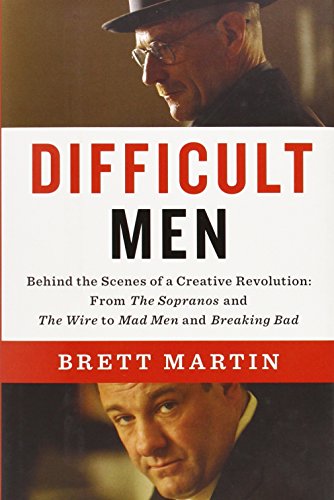
Difficult Men: Behind the Scenes of a Creative Revolution: From the Sopranos and the Wire to Mad Men and Breaking Bad - Hardcover
Inhaltsangabe
A riveting and revealing look at the shows that helped cable television drama emerge as the signature art form of the twenty-first century.
In the late 1990s and early 2000s, the landscape of television began an unprecedented transformation. While the networks continued to chase the lowest common denominator, a wave of new shows, first on premium cable channels like HBO and then basic cable networks like FX and AMC, dramatically stretched television’s narrative inventiveness, emotional resonance, and artistic ambition. No longer necessarily concerned with creating always-likable characters, plots that wrapped up neatly every episode, or subjects that were deemed safe and appropriate, shows such as The Wire, The Sopranos, Mad Men, Deadwood, The Shield, and more tackled issues of life and death, love and sexuality, addiction, race, violence, and existential boredom. Just as the Big Novel had in the 1960s and the subversive films of New Hollywood had in 1970s, television shows became the place to go to see stories of the triumph and betrayals of the American Dream at the beginning of the twenty-first century.
This revolution happened at the hands of a new breed of auteur: the all-powerful writer-show runner. These were men nearly as complicated, idiosyncratic, and ?difficult” as the conflicted protagonists that defined the genre. Given the chance to make art in a maligned medium, they fell upon the opportunity with unchecked ambition.
Combining deep reportage with cultural analysis and historical context, Brett Martin recounts the rise and inner workings of a genre that represents not only a new golden age for TV but also a cultural watershed. Difficult Men features extensive interviews with all the major players, including David Chase (The Sopranos), David Simon and Ed Burns (The Wire), Matthew Weiner and Jon Hamm (Mad Men), David Milch (NYPD Blue, Deadwood), and Alan Ball (Six Feet Under), in addition to dozens of other writers, directors, studio executives, actors, production assistants, makeup artists, script supervisors, and so on. Martin takes us behind the scenes of our favorite shows, delivering never-before-heard story after story and revealing how cable TV has distinguished itself dramatically from the networks, emerging from the shadow of film to become a truly significant and influential part of our culture.
In the late 1990s and early 2000s, the landscape of television began an unprecedented transformation. While the networks continued to chase the lowest common denominator, a wave of new shows, first on premium cable channels like HBO and then basic cable networks like FX and AMC, dramatically stretched television’s narrative inventiveness, emotional resonance, and artistic ambition. No longer necessarily concerned with creating always-likable characters, plots that wrapped up neatly every episode, or subjects that were deemed safe and appropriate, shows such as The Wire, The Sopranos, Mad Men, Deadwood, The Shield, and more tackled issues of life and death, love and sexuality, addiction, race, violence, and existential boredom. Just as the Big Novel had in the 1960s and the subversive films of New Hollywood had in 1970s, television shows became the place to go to see stories of the triumph and betrayals of the American Dream at the beginning of the twenty-first century.
This revolution happened at the hands of a new breed of auteur: the all-powerful writer-show runner. These were men nearly as complicated, idiosyncratic, and ?difficult” as the conflicted protagonists that defined the genre. Given the chance to make art in a maligned medium, they fell upon the opportunity with unchecked ambition.
Combining deep reportage with cultural analysis and historical context, Brett Martin recounts the rise and inner workings of a genre that represents not only a new golden age for TV but also a cultural watershed. Difficult Men features extensive interviews with all the major players, including David Chase (The Sopranos), David Simon and Ed Burns (The Wire), Matthew Weiner and Jon Hamm (Mad Men), David Milch (NYPD Blue, Deadwood), and Alan Ball (Six Feet Under), in addition to dozens of other writers, directors, studio executives, actors, production assistants, makeup artists, script supervisors, and so on. Martin takes us behind the scenes of our favorite shows, delivering never-before-heard story after story and revealing how cable TV has distinguished itself dramatically from the networks, emerging from the shadow of film to become a truly significant and influential part of our culture.
Die Inhaltsangabe kann sich auf eine andere Ausgabe dieses Titels beziehen.
Über die Autorinnen und Autoren
Brett Martin is a Correspondent for GQ and a 2012 James Beard Journalism Award winner. His work has appeared in Vanity Fair, Gourmet, Bon Appetit, The New York Times, The New Yorker, Esquire, Food and Wine, and multiple anthologies. He is a frequent contributor to This American Life. He is the author of The Sopranos: The Book (2007).
Brett Martin is a Correspondent for GQ and a 2012 James Beard Journalism Award winner. His work has appeared inVanity Fair, Gourmet, Bon Appetit, The New York Times, The New Yorker, Esquire, Food and Wine, and multiple anthologies. He is a frequent contributor toThis American Life. He is the author of The Sopranos: The Book (2007).
Auszug. © Genehmigter Nachdruck. Alle Rechte vorbehalten.
SPOILER ALERT:
IN THE FOLLOWING PAGES, I DISCUSS A GREAT MANY PLOT POINTS OF A GREAT MANY TV SHOWS.
Prologue
You think it’s easy being the boss?
TONY SOPRANO
One cold winter’s evening in January 2002, Tony Soprano went missing and a small portion of the universe ground to a halt.
It did not come completely out of the blue. Ever since The Sopranos had debuted in 1999, turning Tony—anxiety-prone dad, New Jersey mobster, suburban seeker of meaning—into a millennial pop culture icon, the character’s frustration, volatility, and anger had often been indistinguishable from those qualities of James Gandolfini, the actor who brought them to life. The role was a punishing one, requiring not only vast amounts of nightly memorization and long days under hot lights, but also a daily descent into Tony’s psyche—at the best of times a worrisome place to dwell; at the worst, ugly, violent, and sociopathic.
Some actors—notably Edie Falco, who played Tony’s wife, Carmela Soprano—are capable of plumbing such depths without getting in over their heads. Blessed with a near photographic memory, Falco could show up for work, memorize her lines, play the most emotionally devastating of scenes, and then return happily to her trailer to join her regular companion, Marley, a gentle yellow Lab mix.
Not so Gandolfini, for whom playing Tony Soprano would always require to some extent being Tony Soprano. Crew members grew accustomed to hearing grunts and curses coming from his trailer as he worked up to the emotional pitch of a scene by, say, destroying a boom box radio. An intelligent and intuitive actor, Gandolfini understood this dynamic and sometimes used it to his advantage; the heavy bathrobe that became Tony’s signature, transforming him into a kind of domesticated bear, was murder under the lights in midsummer, but Gandolfini insisted on wearing it between takes. Other times, though, simulated misery became indistinguishable from the real thing—on set and off. In papers related to a divorce filing at the end of 2002, Gandolfini’s wife described increasingly serious issues with drugs and alcohol, as well as arguments during which the actor would repeatedly punch himself in the face out of frustration. To anybody who had witnessed the actor’s self-directed rage as he struggled to remember lines in front of the camera—he would berate himself in disgust, curse, smack the back of his own head—it was a plausible scenario.
It did not help that the naturally shy Gandolfini was suddenly one of the most recognizable men in America—especially in New York and New Jersey, where the show filmed and where the sight of him walking down the street with, say, a cigar was guaranteed to seed confusion in those already inclined to shout the names of fictional characters at real human beings. Unlike Falco, who could slip off Carmela’s French-tipped nails, throw on a baseball cap, and disappear in a crowd, Gandolfini—six feet tall, upward of 250 pounds—had no place to hide.
All of which had long since taken its toll by the winter of 2002. Gandolfini’s sudden refusals to work had become a semiregular occurrence. His fits were passive-aggressive: he would claim to be sick, refuse to leave his TriBeCa apartment, or simply not show up. The next day, inevitably, he would feel so wretched about his behavior and the massive logistic disruptions it had caused—akin to turning an aircraft carrier on a dime—that he would treat cast and crew to extravagant gifts. “All of a sudden there’d be a sushi chef at lunch,” one crew member remembered. “Or we’d all get massages.” It had come to be understood by all involved as part of the price of doing business, the trade-off for getting the remarkably intense, fully inhabited Tony Soprano that Gandolfini offered.
So when the actor failed to show up for a six p.m. call at Westchester County Airport to shoot the final appearance of the character Furio Giunta, a night shoot involving a helicopter, few panicked. “It was an annoyance, but it wasn’t cause for concern,” said Terence Winter, the writer-producer on set that night. “You know, ‘It’s just money.’ I mean, it was a ton of money—we shut down a fucking airport. Nobody was particularly sad to go home at nine thirty on a Friday night.”
Over the next twelve hours, it would become clear that this time was different. This time, Gandolfini was just gone.
• • •
The operation that came to a halt that evening was a massive one. The Sopranos had spread out to occupy most of two floors of Silvercup Studios, a steel-and-brick onetime bread factory at the foot of the Queensboro Bridge in Long Island City, Queens. Downstairs, the production filmed on four of Silvercup’s huge stages, including the ominously named Stage X, on which sat an endlessly reconfigurable, almost life-size model of the Soprano family’s New Jersey McMansion. The famous view of the family’s backyard—brick patio and swimming pool, practically synonymous with suburban ennui—lay rolled up on an enormous translucent polyurethane curtain that could be wheeled behind the ersatz kitchen windows and backlit when needed.
A small army, in excess of two hundred people, was employed in fabricating such details, which added up to as rich and fleshed out a universe as had ever existed on TV: carpenters, electricians, painters, seamstresses, drivers, accountants, cameramen, location scouts, caterers, writers, makeup artists, audio engineers, prop masters, set dressers, scenic designers, production assistants of every stripe. Out in Los Angeles, a whole other team of postproduction crew—editors, mixers, color correctionists, music supervisors—was stationed. Dailies were shuttled back and forth between the coasts under a fake company name—Big Box Productions—to foil spies anxious to spoil feverishly anticipated plot points. What had started three years earlier as an oddball, what-do-we-have-to-lose experiment for a network still best known for rerunning Hollywood movies had become a huge bureaucratic institution.
More than that, to be at Silvercup at that moment was to stand at the center of a television revolution. Although the change had its roots in a wave of quality network TV begun two decades before, it had started in earnest five years earlier, when the pay subscription network HBO began turning its attention to producing original, hour-long dramas. By the start of 2002, with Gandolfini at large, the medium had been transformed.
Soon the dial would begin to fill with Tony Sopranos. Within three months, a bald, stocky, flawed, but charismatic boss—this time of a band of rogue cops instead of mafiosi—would make his first appearance, on FX’s The Shield. Mere months after that, on The Wire, viewers would be introduced to a collection of Baltimore citizens that included an alcoholic, narcissistic police officer, a ruthless drug lord, and a gay, homicidal stickup boy. HBO had already followed the success of The Sopranos with Six Feet Under, a series about a family-run funeral home filled with characters that were perhaps less sociopathic than these other cable denizens but could be equally unlikable. In the wings lurked such creatures as Deadwood’s Al Swearengen, as cretinous a character as would ever appear on television, much less in the role of protagonist, and Rescue Me’s Tommy Gavin, an alcoholic, self-destructive firefighter grappling poorly with the ghosts of 9/11. Andrew Schneider, who wrote for The Sopranos in its...
„Über diesen Titel“ kann sich auf eine andere Ausgabe dieses Titels beziehen.
Suchergebnisse für Difficult Men: Behind the Scenes of a Creative Revolution:...

Beispielbild für diese ISBN
Difficult Men: Behind the Scenes of a Creative Revolution: From the Sopranos and the Wire to Mad Men and Breaking Bad
Anbieter: World of Books (was SecondSale), Montgomery, IL, USA
Verkäuferbewertung 5 von 5 Sternen

Hardback. Zustand: Good. A riveting and revealing look at the shows that helped cable television drama emerge as the signature art form of the twenty-first centuryIn the late 1990s and early 2000s, the landscape of television began an unprecedented transformation. While the networks continued to chase the lowest common denominator, a wave of new shows, first on premium cable channels like HBO and then basic cable networks like FX and AMC, dramatically stretched television's narrative inventiveness, emotional resonance, and artistic ambition. No longer necessarily concerned with creating always-likable characters, plots that wrapped up neatly every episode, or subjects that were deemed safe and appropriate, shows such as The Wire, The Sopranos, Mad Men, Deadwood, The Shield, and more tackled issues of life and death, love and sexuality, addiction, race, violence, and existential boredom. Just as the big novel had in the 1960s and the subversive films of New Hollywood had in 1970s, television shows became the place to go to see stories of the triumph and betrayals of the American Dream at the beginning of the twenty-first century.This revolution happened at the hands of a new breed of auteur: the all-powerful writer-showrunner. These were men nearly as complicated, idiosyncratic, and difficult as the conflicted protagonists that defined the genre. Given the chance to make art in a maligned medium, they fell upon the opportunity with unchecked ambition.Combining deep reportage with cultural analysis and historical context, Brett Martin recounts the rise and inner workings of a genre that represents not only a new golden age for television but also a cultural watershed. Difficult Men features extensive interviews with all the major players, including David Chase (The Sopranos), David Simon and Ed Burns (The Wire), Matthew Weiner and Jon Hamm (Mad Men), David Milch (NYPD Blue, Deadwood), and Alan Ball (Six Feet Under), in addition to dozens of other writers, directors, studio executives, actors, production assistants, makeup artists, script supervisors, and so on. Martin takes us behind the scenes of our favorite shows, delivering never-before-heard story after story and revealing how cable television has distinguished itself dramatically from the networks, emerging from the shadow of film to become a truly significant and influential part of our culture. Artikel-Nr. 00090927425
Gebraucht kaufen
EUR 5,87
Versand gratis
Versand innerhalb von USA
Versand innerhalb von USA
Anzahl: 8 verfügbar
Beispielbild für diese ISBN
Difficult Men: Behind the Scenes of a Creative Revolution: From the Sopranos and the Wire to Mad Men and Breaking Bad
Anbieter: World of Books (was SecondSale), Montgomery, IL, USA
Verkäuferbewertung 5 von 5 Sternen
Hardback. Zustand: Very Good. A riveting and revealing look at the shows that helped cable television drama emerge as the signature art form of the twenty-first centuryIn the late 1990s and early 2000s, the landscape of television began an unprecedented transformation. While the networks continued to chase the lowest common denominator, a wave of new shows, first on premium cable channels like HBO and then basic cable networks like FX and AMC, dramatically stretched television's narrative inventiveness, emotional resonance, and artistic ambition. No longer necessarily concerned with creating always-likable characters, plots that wrapped up neatly every episode, or subjects that were deemed safe and appropriate, shows such as The Wire, The Sopranos, Mad Men, Deadwood, The Shield, and more tackled issues of life and death, love and sexuality, addiction, race, violence, and existential boredom. Just as the big novel had in the 1960s and the subversive films of New Hollywood had in 1970s, television shows became the place to go to see stories of the triumph and betrayals of the American Dream at the beginning of the twenty-first century.This revolution happened at the hands of a new breed of auteur: the all-powerful writer-showrunner. These were men nearly as complicated, idiosyncratic, and difficult as the conflicted protagonists that defined the genre. Given the chance to make art in a maligned medium, they fell upon the opportunity with unchecked ambition.Combining deep reportage with cultural analysis and historical context, Brett Martin recounts the rise and inner workings of a genre that represents not only a new golden age for television but also a cultural watershed. Difficult Men features extensive interviews with all the major players, including David Chase (The Sopranos), David Simon and Ed Burns (The Wire), Matthew Weiner and Jon Hamm (Mad Men), David Milch (NYPD Blue, Deadwood), and Alan Ball (Six Feet Under), in addition to dozens of other writers, directors, studio executives, actors, production assistants, makeup artists, script supervisors, and so on. Martin takes us behind the scenes of our favorite shows, delivering never-before-heard story after story and revealing how cable television has distinguished itself dramatically from the networks, emerging from the shadow of film to become a truly significant and influential part of our culture. Artikel-Nr. 00094597925
Gebraucht kaufen
EUR 5,87
Versand gratis
Versand innerhalb von USA
Versand innerhalb von USA
Anzahl: 3 verfügbar
Beispielbild für diese ISBN
Difficult Men : Behind the Scenes of a Creative Revolution: from the Sopranos and the Wire to Mad Men and Breaking Bad
Verlag:
Penguin Publishing Group, 2013
ISBN 10: 1594204195
ISBN 13: 9781594204197
Gebraucht
Hardcover
Erstausgabe
Anbieter: Better World Books, Mishawaka, IN, USA
Verkäuferbewertung 5 von 5 Sternen
Zustand: Good. 1ST. Former library copy. Pages intact with minimal writing/highlighting. The binding may be loose and creased. Dust jackets/supplements are not included. Includes library markings. Stock photo provided. Product includes identifying sticker. Better World Books: Buy Books. Do Good. Artikel-Nr. 4153278-6
Gebraucht kaufen
EUR 6,36
Versand gratis
Versand innerhalb von USA
Versand innerhalb von USA
Anzahl: 3 verfügbar
Beispielbild für diese ISBN
Difficult Men: Behind the Scenes of a Creative Revolution: From The Sopranos and The Wire to Ma d Men and Breaking Bad
Anbieter: Wonder Book, Frederick, MD, USA
Verkäuferbewertung 5 von 5 Sternen
Zustand: Good. Good condition. Good dust jacket. A copy that has been read but remains intact. May contain markings such as bookplates, stamps, limited notes and highlighting, or a few light stains. Artikel-Nr. U07O-00062
Gebraucht kaufen
EUR 6,43
Versand gratis
Versand innerhalb von USA
Versand innerhalb von USA
Anzahl: 1 verfügbar
Beispielbild für diese ISBN
Difficult Men: Behind the Scenes of a Creative Revolution: From The Sopranos and The Wire to Ma d Men and Breaking Bad
Anbieter: ThriftBooks-Dallas, Dallas, TX, USA
Verkäuferbewertung 5 von 5 Sternen
Hardcover. Zustand: Very Good. No Jacket. Former library book; May have limited writing in cover pages. Pages are unmarked. ~ ThriftBooks: Read More, Spend Less. Artikel-Nr. G1594204195I4N10
Gebraucht kaufen
EUR 7,30
Versand gratis
Versand innerhalb von USA
Versand innerhalb von USA
Anzahl: 1 verfügbar
Beispielbild für diese ISBN
Difficult Men: Behind the Scenes of a Creative Revolution: From The Sopranos and The Wire to Ma d Men and Breaking Bad
Anbieter: ThriftBooks-Atlanta, AUSTELL, GA, USA
Verkäuferbewertung 5 von 5 Sternen
Hardcover. Zustand: Very Good. No Jacket. May have limited writing in cover pages. Pages are unmarked. ~ ThriftBooks: Read More, Spend Less. Artikel-Nr. G1594204195I4N00
Gebraucht kaufen
EUR 7,30
Versand gratis
Versand innerhalb von USA
Versand innerhalb von USA
Anzahl: 1 verfügbar
Beispielbild für diese ISBN
Difficult Men: Behind the Scenes of a Creative Revolution: From The Sopranos and The Wire to Ma d Men and Breaking Bad
Anbieter: ThriftBooks-Dallas, Dallas, TX, USA
Verkäuferbewertung 5 von 5 Sternen
Hardcover. Zustand: Very Good. No Jacket. May have limited writing in cover pages. Pages are unmarked. ~ ThriftBooks: Read More, Spend Less. Artikel-Nr. G1594204195I4N00
Gebraucht kaufen
EUR 7,33
Versand gratis
Versand innerhalb von USA
Versand innerhalb von USA
Anzahl: 1 verfügbar
Foto des Verkäufers
DIFFICULT MEN: BEHIND THE SCENES
Anbieter: Goodwill Northern Illinois, Rockford, IL, USA
Verkäuferbewertung 5 von 5 Sternen
Zustand: good. The cover shows wear with possible indentations, creases, and small tears. The pages show wear that may include evidence of handling, smudges, and edge discoloration markings stains . The book may or may not have mild corner dings. The imagery is a stock photo of the item. Artikel-Nr. 4LFTY7000AHJ_ns
Gebraucht kaufen
EUR 8,26
Versand gratis
Versand innerhalb von USA
Versand innerhalb von USA
Anzahl: 2 verfügbar
Beispielbild für diese ISBN
Difficult Men: Behind the Scenes of a Creative Revolution: from the Sopranos and the Wire to Mad Men and Breaking Bad
Anbieter: WorldofBooks, Goring-By-Sea, WS, Vereinigtes Königreich
Verkäuferbewertung 5 von 5 Sternen
Paperback. Zustand: Very Good. The book has been read, but is in excellent condition. Pages are intact and not marred by notes or highlighting. The spine remains undamaged. Artikel-Nr. GOR005812286
Gebraucht kaufen
EUR 24,60
EUR 6,69 Versand
Versand von Vereinigtes Königreich nach USA
Versand von Vereinigtes Königreich nach USA
Anzahl: 1 verfügbar
Beispielbild für diese ISBN
Difficult Men: Behind the Scenes of a Creative Revolution: From The Sopranos and The Wire to Ma d Men and Breaking Bad
Anbieter: medimops, Berlin, Deutschland
Verkäuferbewertung 5 von 5 Sternen
Zustand: very good. Gut/Very good: Buch bzw. Schutzumschlag mit wenigen Gebrauchsspuren an Einband, Schutzumschlag oder Seiten. / Describes a book or dust jacket that does show some signs of wear on either the binding, dust jacket or pages. Artikel-Nr. M01594204195-V
Gebraucht kaufen
EUR 34,06
EUR 10,00 Versand
Versand von Deutschland nach USA
Versand von Deutschland nach USA
Anzahl: 2 verfügbar