
Verwandte Artikel zu The Art of Intelligence: Lessons from a Life in the...
Inhaltsangabe
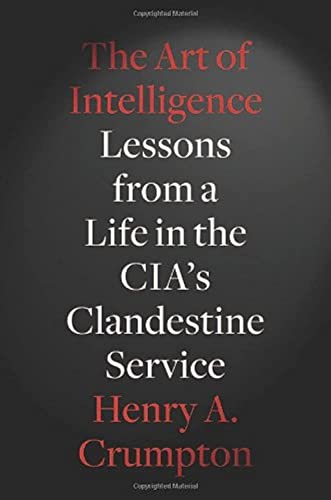
A legendary CIA spy and counterterrorism expert tells the spellbinding story of his high-risk, action-packed career while illustrating the growing importance of America's intelligence officers and their secret missions
For a crucial period, Henry Crumpton led the CIA's global covert operations against America's terrorist enemies, including al Qaeda. In the days after 9/11, the CIA tasked Crumpton to organize and lead the Afghanistan campaign. With Crumpton's strategic initiative and bold leadership, from the battlefield to the Oval Office, U.S. and Afghan allies routed al Qaeda and the Taliban in less than ninety days after the Twin Towers fell. At the height of combat against the Taliban in late 2001, there were fewer than five hundred Americans on the ground in Afghanistan, a dynamic blend of CIA and Special Forces. The campaign changed the way America wages war. This book will change the way America views the CIA.
The Art of Intelligence draws from the full arc of Crumpton's espionage and covert action exploits to explain what America's spies do and why their service is more valuable than ever. From his early years in Africa, where he recruited and ran sources, from loathsome criminals to heroic warriors; to his liaison assignment at the FBI, the CIA's Counterterrorism Center, the development of the UAV Predator program, and the Afghanistan war; to his later work running all CIA clandestine operations inside the United States, he employs enthralling storytelling to teach important lessons about national security, but also about duty, honor, and love of country.
No book like The Art of Intelligence has ever been written-not with Crumpton's unique perspective, in a time when America faced such grave and uncertain risk. It is an epic, sure to be a classic in the annals of espionage and war.
Die Inhaltsangabe kann sich auf eine andere Ausgabe dieses Titels beziehen.
Über die Autorinnen und Autoren
Henry A. Crumpton is chairman and CEO of Crumpton Group LLC, a strategic international advisory and business development firm. With the rank of ambassador at large, he served as the coordinator for counterterrorism at the U.S. Department of State from August 2005 until February 2007. Crumpton joined the Central Intelligence Agency in 1981 and spent most of his twenty-four-year career working undercover in the foreign field. He is the recipient of the Distinguished Intelligence Medal, the CIA's highest award for achievement. Crumpton received a B.A. from the University of New Mexico and a master's, with honors, from the Johns Hopkins School of Advanced International Studies.
Henry A. Crumpton is chairman and CEO of Crumpton Group LLC, a strategic international advisory and business development firm. With the rank of ambassador at large, he served as the coordinator for counterterrorism at the U.S. Department of State from August 2005 until February 2007. Crumpton joined the Central Intelligence Agency in 1981 and spent most of his twenty-four-year career working undercover in the foreign field. He is the recipient of the Distinguished Intelligence Medal, the CIA's highest award for achievement. Crumpton received a B.A. from the University of New Mexico and a master's, with honors, from the Johns Hopkins School of Advanced International Studies.
Auszug. © Genehmigter Nachdruck. Alle Rechte vorbehalten.
Introduction
In the summer of 2002, I embarked on a new mission. After two decades in the CIA's Clandestine Service, including the last ten months leading the CIA's Afghanistan campaign, it was time for a change.
This mission was a departure for me. There were no Mi-17 helicopters, unmanned aerial vehicle (UAV) Predators, M4 assault rifles, Glock model 19 pistols, ceramic-plated body armor, inoculations, polygraphs, disguises, cover, or even basic tradecraft. There was no surveillance to avoid, agents to run, or terrorists to nullify. The assignment did, however, require that I enter a strange culture, readjust my attitude, and assume a different identity.
I returned to university as a student.
The CIA granted me an academic sabbatical at the Paul H. Nitze School of Advanced International Studies (SAIS) at Johns Hopkins University. This new assignment, more sedate than some recent experiences, was nevertheless exciting. It was a full academic year of intellectual indulgence. I gorged on a feast of courses and books covering political thought, military strategy, China, history, foreign policy, terrorism, and philosophy.
I savored it all.
Searching the Spring Semester 2003 course catalog, I stumbled across something unexpected: a class on intelligence. The catchy title "The Art and Tradecraft of Intelligence" prompted me to research the background of the course's professor, Dr. Jennifer Sims. She had an impressive résumé, both in academia and government.
As a veteran intelligence professional still on the CIA payroll, I felt obliged to take the course. I also figured the class would be fun and easy.
It was a hoot. We explored how George Washington, one of America's great spymasters, ran agents with superb tactical tradecraft and then brilliantly exploited their intelligence for strategic value. We studied the advances of intelligence capabilities in the U.S. Civil War. We learned that
President Lincoln spent many of his days in the White House telegraph room, turning it into his de facto intelligence and command center. We followed how the advent of wireless telecommunications, airplanes, radar, satellites, and other technical marvels transformed intelligence throughout the twentieth century.
We observed how, unlike Washington and Lincoln, most political leaders forging national security policy and waging war failed to understand or appreciate intelligence. When they also failed to keep pace with geopolitical changes, it was in part because of the gaps among intelligence collection, intelligence analysis, and policy implementation. We reflected on how the government and the broader society perceived and treated intelligence professionals, with comments swinging from deep loathing to cartoonish fantasy. Uninformed and sometimes unreasonable expectations, low and high, of intelligence professionals have whipsawed these officers and their agencies throughout U.S. history. As a nation, our collective ignorance of intelligence has undermined not only our intelligence capabilities, but ultimately the policy makers and citizens served.
Although enjoyable, the class was not easy. Dr. Sims demanded far more study and thought than I anticipated. It was almost embarrassing to realize how much I did not know and how much I learned-even with my many years of experience in espionage, covert action, and war on several continents. Although chagrined by my own ignorance, I was enthralled by the learning experience.
I gained a broader perspective, well beyond the intelligence business, during this academic interlude. It was the first time in twenty years that I was not focused just on the immediate, operational tasks of intelligence. With the opportunity to study and reflect, I better appreciated that the world was transforming rapidly, not least in terms of the nature of conflict, risk, competition, and cooperation. But there was one common denominator: The value o
„Über diesen Titel“ kann sich auf eine andere Ausgabe dieses Titels beziehen.
Suchergebnisse für The Art of Intelligence: Lessons from a Life in the...

Beispielbild für diese ISBN
THE Art of Intelligence
Anbieter: World of Books (was SecondSale), Montgomery, IL, USA
Verkäuferbewertung 5 von 5 Sternen

Hardback. Zustand: Fair. A legendary CIA spy and counterterrorism expert tells the spellbinding story of his high-risk, action-packed career Revelatory and groundbreaking, The Art of Intelligence will change the way people view the CIA, domestic and foreign intelligence, and international terrorism. Henry A. Hank Crumpton, a twenty-four-year veteran of the CIA's Clandestine Service, offers a thrilling account that delivers profound lessons about what it means to serve as an honorable spy. From CIA recruiting missions in Africa to pioneering new programs like the UAV Predator, from running post-9/11 missions in Afghanistan to heading up all clandestine CIA operations in the United States, Crumpton chronicles his role--in the battlefield and in the Oval Office--in transforming the way America wages war and sheds light on issues of domestic espionage. Artikel-Nr. 00084937835
Gebraucht kaufen
EUR 4,45
Versand gratis
Versand innerhalb von USA
Versand innerhalb von USA
Anzahl: 8 verfügbar
Beispielbild für diese ISBN
THE Art of Intelligence
Anbieter: World of Books (was SecondSale), Montgomery, IL, USA
Verkäuferbewertung 5 von 5 Sternen
Hardback. Zustand: Good. A legendary CIA spy and counterterrorism expert tells the spellbinding story of his high-risk, action-packed career Revelatory and groundbreaking, The Art of Intelligence will change the way people view the CIA, domestic and foreign intelligence, and international terrorism. Henry A. Hank Crumpton, a twenty-four-year veteran of the CIA's Clandestine Service, offers a thrilling account that delivers profound lessons about what it means to serve as an honorable spy. From CIA recruiting missions in Africa to pioneering new programs like the UAV Predator, from running post-9/11 missions in Afghanistan to heading up all clandestine CIA operations in the United States, Crumpton chronicles his role--in the battlefield and in the Oval Office--in transforming the way America wages war and sheds light on issues of domestic espionage. Artikel-Nr. 00101630825
Gebraucht kaufen
EUR 4,45
Versand gratis
Versand innerhalb von USA
Versand innerhalb von USA
Anzahl: 16 verfügbar
Beispielbild für diese ISBN
The Art of Intelligence: Lessons from a Life in the CIA's Clandestine Service
Verlag:
Penguin Press (edition First Edition), 2012
ISBN 10: 1594203342
ISBN 13: 9781594203343
Gebraucht
Hardcover
Erstausgabe
Anbieter: BooksRun, Philadelphia, PA, USA
Verkäuferbewertung 5 von 5 Sternen
Hardcover. Zustand: Fair. First Edition. With dust jacket. The item might be beaten up but readable. May contain markings or highlighting, as well as stains, bent corners, or any other major defect, but the text is not obscured in any way. Artikel-Nr. 1594203342-7-1-29
Gebraucht kaufen
EUR 4,81
Versand gratis
Versand innerhalb von USA
Versand innerhalb von USA
Anzahl: 1 verfügbar
Beispielbild für diese ISBN
The Art of Intelligence: Lessons from a Life in the CIA's Clandestine Service
Verlag:
Penguin Press (edition First Edition), 2012
ISBN 10: 1594203342
ISBN 13: 9781594203343
Gebraucht
Hardcover
Erstausgabe
Anbieter: BooksRun, Philadelphia, PA, USA
Verkäuferbewertung 5 von 5 Sternen
Hardcover. Zustand: Very Good. First Edition. With dust jacket. It's a well-cared-for item that has seen limited use. The item may show minor signs of wear. All the text is legible, with all pages included. It may have slight markings and/or highlighting. Artikel-Nr. 1594203342-11-18-29
Gebraucht kaufen
EUR 5,20
Versand gratis
Versand innerhalb von USA
Versand innerhalb von USA
Anzahl: 1 verfügbar
Foto des Verkäufers
The Art of Intelligence: Lessons from a Life in the CIA's Clandestine Service
Anbieter: Dream Books Co., Denver, CO, USA
Verkäuferbewertung 5 von 5 Sternen
Zustand: very_good. Pages are clean with no markings. May show minor signs of wear or cosmetic defects marks, cuts, bends, or scuffs on the cover, spine, pages, or dust jacket. May have remainder marks on edges. Artikel-Nr. DBV.1594203342.VG
Gebraucht kaufen
EUR 5,73
Versand gratis
Versand innerhalb von USA
Versand innerhalb von USA
Anzahl: 1 verfügbar
Beispielbild für diese ISBN
The Art of Intelligence: Lessons from a Life in the CIA's Clandestine Service
Anbieter: ThriftBooks-Atlanta, AUSTELL, GA, USA
Verkäuferbewertung 5 von 5 Sternen
Hardcover. Zustand: Good. No Jacket. Pages can have notes/highlighting. Spine may show signs of wear. ~ ThriftBooks: Read More, Spend Less. Artikel-Nr. G1594203342I3N00
Gebraucht kaufen
EUR 5,96
Versand gratis
Versand innerhalb von USA
Versand innerhalb von USA
Anzahl: 6 verfügbar
Beispielbild für diese ISBN
The Art of Intelligence: Lessons from a Life in the CIA's Clandestine Service
Anbieter: ThriftBooks-Dallas, Dallas, TX, USA
Verkäuferbewertung 5 von 5 Sternen
Hardcover. Zustand: Very Good. No Jacket. Missing dust jacket; May have limited writing in cover pages. Pages are unmarked. ~ ThriftBooks: Read More, Spend Less. Artikel-Nr. G1594203342I4N01
Gebraucht kaufen
EUR 5,96
Versand gratis
Versand innerhalb von USA
Versand innerhalb von USA
Anzahl: 2 verfügbar
Beispielbild für diese ISBN
The Art of Intelligence: Lessons from a Life in the CIA's Clandestine Service
Anbieter: ThriftBooks-Dallas, Dallas, TX, USA
Verkäuferbewertung 5 von 5 Sternen
Hardcover. Zustand: Good. No Jacket. Missing dust jacket; Pages can have notes/highlighting. Spine may show signs of wear. ~ ThriftBooks: Read More, Spend Less. Artikel-Nr. G1594203342I3N01
Gebraucht kaufen
EUR 5,96
Versand gratis
Versand innerhalb von USA
Versand innerhalb von USA
Anzahl: 1 verfügbar
Beispielbild für diese ISBN
The Art of Intelligence: Lessons from a Life in the CIA's Clandestine Service
Anbieter: ThriftBooks-Phoenix, Phoenix, AZ, USA
Verkäuferbewertung 5 von 5 Sternen
Hardcover. Zustand: Very Good. No Jacket. Missing dust jacket; May have limited writing in cover pages. Pages are unmarked. ~ ThriftBooks: Read More, Spend Less. Artikel-Nr. G1594203342I4N01
Gebraucht kaufen
EUR 5,96
Versand gratis
Versand innerhalb von USA
Versand innerhalb von USA
Anzahl: 1 verfügbar
Beispielbild für diese ISBN
The Art of Intelligence: Lessons from a Life in the CIA's Clandestine Service
Anbieter: ThriftBooks-Atlanta, AUSTELL, GA, USA
Verkäuferbewertung 5 von 5 Sternen
Hardcover. Zustand: Good. No Jacket. Missing dust jacket; Pages can have notes/highlighting. Spine may show signs of wear. ~ ThriftBooks: Read More, Spend Less. Artikel-Nr. G1594203342I3N01
Gebraucht kaufen
EUR 5,96
Versand gratis
Versand innerhalb von USA
Versand innerhalb von USA
Anzahl: 1 verfügbar