Inhaltsangabe
“They carried the most valuable cargo ever brought to our shores.”—JAMES PHINNEY BAXTER III, Office of Scientific Research and Development
“The first cavity magnetron is displayed in the Science Museum as one of the most important technological objects of the twentieth century. As Stephen Phelps reveals in this much needed book, the United Kingdom’s decision to share its secrets with the United States was a key turning point in the Second World War.”—JOHN LIFFEN, Curator, Science Museum, London
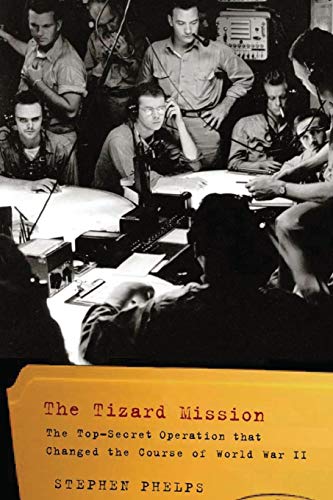
In August 1940, a German invasion of Britain looked inevitable. Luftwaffe bombers were pounding British cities, France had surrendered, and the Low Countries were under German control. Although sympathetic to Britain’s plight, the United States remained staunchly neutral. Unknown to the rest of the world, Britain’s brightest scientific and military minds had been working on futuristic technology for a decade, including radar and jet propulsion. While the great value of radar to locate and identify objects at long distance and at night or in bad weather was appreciated, at the time it was thought that practical radar required a room-sized device for generating an effective signal. Now, suddenly, British scientists had something extraordinary—the cavity magnetron, a generator hundreds of times more powerful than any other in use and small enough to be held in the hand. With the British economy and industry reeling from the war, Winston Churchill gambled on an unorthodox plan: a team of scientists and engineers would travel under cover to the United States and give the still-neutral Americans the best of Britain’s military secrets. It was hoped that in exchange the United States would provide financial and manufacturing support—which might even lead to their official entry into the war.
The Tizard Mission, named for its leader Sir Henry Tizard, steamed across the Atlantic carrying a suitcase-sized metal deed box. Designed to sink in the event the ship was torpedoed by a U-boat, the box contained details of the Whittle jet engine, research for an atomic bomb, and a precious cavity magnetron. The Americans proved to be astonished, receptive, and efficient: Bell Telephone produced the first thirty magnetrons in October 1940, and over a million by the end of the war. With this device, both warships and aircraft could carry war-winning radar. But Britain did not only give America military secrets, these same technologies would produce a fortune for postwar commercial industries, with the magnetron being the key component to the microwave oven. In The Tizard Mission: The Top-Secret Operation That Changed the Course of World War II, Stephen Phelps reveals how the Tizard Mission was the turning point in the technological war, giving Britain the weapons it desperately needed and laying the groundwork for both the Special Relationship and much of the United States’s postwar economic boom, an effect that still resonates today.
Die Inhaltsangabe kann sich auf eine andere Ausgabe dieses Titels beziehen.
Über die Autorin bzw. den Autor
STEPHEN PHELPS is a writer, producer, and broadcaster. After fifteen years in television investigative journalism for the BBC and Channel 4, he turned to writing and now specializes in history and radio drama. He lives in London and Italy.
„Über diesen Titel“ kann sich auf eine andere Ausgabe dieses Titels beziehen.
Weitere beliebte Ausgaben desselben Titels

Suchergebnisse für The Tizard Mission: The Top-Secret Operation That Changed...

Foto des Verkäufers
The Tizard Mission: The Top-Secret Operation That Changed the Course of World War II
Anbieter: WeBuyBooks, Rossendale, LANCS, Vereinigtes Königreich
Verkäuferbewertung 5 von 5 Sternen

Zustand: Very Good. Most items will be dispatched the same or the next working day. A copy that has been read, but is in excellent condition. Pages are intact and not marred by notes or highlighting. The spine remains undamaged. Artikel-Nr. wbs7006502193
Gebraucht kaufen
EUR 8,75
Versand:
EUR 7,85
Von Vereinigtes Königreich nach USA
Anzahl: 1 verfügbar
Beispielbild für diese ISBN
The Tizard Mission: The Top-Secret Operation That Changed the Course of World War II
Verlag:
Westholme Publishing, U.S., United States, Yardley, 2012
ISBN 10: 1594161631
ISBN 13: 9781594161636
Gebraucht
Paperback
Anbieter: WorldofBooks, Goring-By-Sea, WS, Vereinigtes Königreich
Verkäuferbewertung 5 von 5 Sternen
Paperback. Zustand: Very Good. "One of this book's many attractions is its emphasis on the importance of interrelationships among social, political, and technical worlds in bringing ideas to reality."--The Wall Street Journal "Erudite, literate, and thoroughly absorbing."--Booklist "As Stephen Phelps reveals in this much needed book, the United Kingdom's decision to share its secrets with the United States was a key turning point in the Second World War."--John Liffen, Science Museum London In August 1940, a German invasion of Britain looked inevitable. France had surrendered and Luftwaffe bombers were pounding British cities. However, Britain's brightest scientific minds had been secretly working on futuristic technology, including radar and jet propulsion. While the great value of radar to locate and identify distant objects in day or night was appreciated, it was thought that practical radar required a gigantic device for generating an effective signal. But Britain had something extraordinary--the cavity magnetron, a generator hundreds of times more powerful than any other and small enough to be held in the hand. Winston Churchill gambled on an unorthodox plan: a team of scientists and engineers led by Sir Henry Tizard would travel under cover to the United States and give Britain's military secrets to the Americans in order to secure manufacturing support--or even their entry into the war. The Tizard Mission handed their American counterparts details of the Whittle jet engine, research for an atomic bomb, and a precious cavity magnetron--described by one American scientist as "the most valuable cargo ever brought to our shores." The Americans proved to be astonished, receptive, and efficient: Bell Telephone produced the first thirty magnetrons in October 1940. With this device, both warships and aircraft could carry war-winning radar. In addition, these same technologies would produce a fortune for postwar commercial industries, with the magnetron being the key component of the microwave oven. In The Tizard Mission: The Top-Secret Operation That Changed the Course of World War II, Stephen Phelps reveals how this scientific exchange marked the turning point in the technological war, giving Britain the equipment it desperately needed and laying the groundwork for both the Special Relationship and the United States's postwar economic boom. The book has been read, but is in excellent condition. Pages are intact and not marred by notes or highlighting. The spine remains undamaged. Artikel-Nr. GOR011521233
Gebraucht kaufen
EUR 19,98
Versand:
EUR 6,42
Von Vereinigtes Königreich nach USA
Anzahl: 1 verfügbar
Beispielbild für diese ISBN
The Tizard Mission: The Top-secret Operation That Changed the Course of World War II
Anbieter: Revaluation Books, Exeter, Vereinigtes Königreich
Verkäuferbewertung 5 von 5 Sternen
Paperback. Zustand: Brand New. reprint edition. 326 pages. 9.00x6.00x1.00 inches. In Stock. Artikel-Nr. zk1594161631
Neu kaufen
EUR 36,27
Versand:
EUR 14,33
Von Vereinigtes Königreich nach USA
Anzahl: 1 verfügbar