
Verwandte Artikel zu The Mindful Way through Depression, First Edition,...
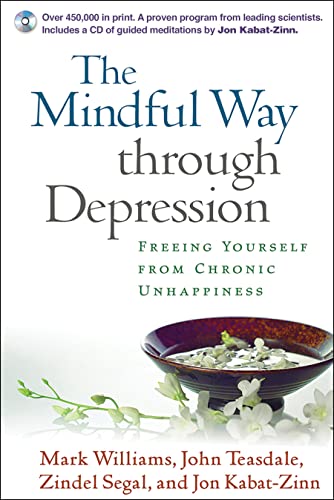
The Mindful Way through Depression, First Edition, Paperback + CD-ROM: Freeing Yourself from Chronic Unhappiness - Softcover
Inhaltsangabe
If you ve ever struggled with depression, take heart. Mindfulness, a simple yet powerful way of paying attention to your most difficult emotions and life experiences, can help you break the cycle of chronic unhappiness once and for all. In The Mindful Way through Depression, four uniquely qualified experts explain why our usual attempts to think our way out of a bad mood or just snap out of it lead us deeper into the downward spiral. Through insightful lessons drawn from both Eastern meditative traditions and cognitive therapy, they demonstrate how to sidestep the mental habits that lead to despair, including rumination and self-blame, so you can face life s challenges with greater resilience. Jon Kabat-Zinn gently and encouragingly narrates the accompanying CD of guided meditations (also available as free audio downloads for purchasers), making this a complete package for anyone seeking to regain a sense of hope and well-being.
See also the authors' Mindful Way Workbook, which provides step-by-step guidance for building your mindfulness practice in 8 weeks. Plus, mental health professionals, see also the authors' bestselling therapy guide: Mindfulness-Based Cognitive Therapy for Depression, Second Edition.
Association for Behavioral and Cognitive Therapies (ABCT) Self-Help Book of Merit
Die Inhaltsangabe kann sich auf eine andere Ausgabe dieses Titels beziehen.
Über die Autorinnen und Autoren
Mark Williams, DPhil, is Emeritus Professor of Clinical Psychology at the University of Oxford, having been Wellcome Principal Research Fellow at Oxford from 2003 to 2012 and at Bangor University from 1991 to 2002. He collaborated with John Teasdale and Zindel Segal in developing mindfulness-based cognitive therapy (MBCT) to prevent relapse and recurrence in major depression; together, they coauthored Mindfulness-Based Cognitive Therapy for Depression, Second Edition (for mental health professionals), as well as the self-help guides The Mindful Way Workbook and (with Jon Kabat-Zinn) The Mindful Way through Depression. Dr. Williams is also coauthor of Mindfulness-Based Cognitive Therapy with People at Risk of Suicide (for mental health professionals). He is a Fellow of the British Psychological Society, the Academy of Medical Sciences and the British Academy. Now retired, he continues to live near Oxford, to teach mindfulness to teachers-in-training across the world, and to explore, with colleagues, how mindfulness might be used in evidence-based public policy.
John Teasdale, PhD, held a Special Scientific Appointment with the United Kingdom Medical Research Council’s Cognition and Brain Sciences Unit in Cambridge. He is a Fellow of the British Academy and the Academy of Medical Sciences. He collaborated with Mark Williams and Zindel Segal in developing mindfulness-based cognitive therapy (MBCT) to prevent relapse and recurrence in major depression; together, they coauthored Mindfulness-Based Cognitive Therapy for Depression, Second Edition (for mental health professionals), as well as the self-help guides The Mindful Way Workbook and (with Jon Kabat-Zinn) The Mindful Way through Depression. Since retiring, Dr. Teasdale has taught mindfulness and insight meditation internationally. He continues to explore and seek to understand the wider implications of mindfulness and meditation for enhancing our way of being.
Zindel V. Segal, PhD, is Distinguished Professor of Psychology in Mood Disorders at the University of Toronto–Scarborough. He is Director of Clinical Training in the Clinical Psychological Science Program and is also Professor in the Department of Psychiatry. Dr. Segal has conducted influential research into the psychological processes that make certain people more vulnerable than others to developing depression and experiencing recurrent episodes. He actively advocates for the relevance of mindfulness-based clinical care in psychiatry and mental health. He collaborated with John Teasdale and Mark Williams in developing mindfulness-based cognitive therapy (MBCT) to prevent relapse and recurrence in major depression; together, they coauthored Mindfulness-Based Cognitive Therapy for Depression, Second Edition (for mental health professionals), as well as the self-help guides The Mindful Way Workbook and (with Jon Kabat-Zinn) The Mindful Way through Depression.
Jon Kabat-Zinn, PhD, is Professor of Medicine Emeritus at the University of Massachusetts Medical School, where he founded the Center for Mindfulness in Medicine, Health Care, and Society, as well as its world-renowned Mindfulness-Based Stress Reduction Clinic. Dr. Kabat-Zinn is internationally known for his work as a scientist, writer, and teacher, which has contributed to the growing movement of mindfulness into such mainstream institutions as schools, corporations, prisons, professional sports teams, government, and the legal profession, in addition to its influence in medicine and health care, psychology, and neuroscience. He teaches and conducts mindfulness retreats worldwide.
Mark Williams, DPhil, is Emeritus Professor of Clinical Psychology at the University of Oxford, having been Wellcome Principal Research Fellow at Oxford from 2003 to 2012 and at Bangor University from 1991 to 2002. He collaborated with John Teasdale and Zindel Segal in developing mindfulness-based cognitive therapy (MBCT) to prevent relapse and recurrence in major depression; together, they coauthored Mindfulness-Based Cognitive Therapy for Depression, Second Edition (for mental health professionals), as well as the self-help guides The Mindful Way Workbook and (with Jon Kabat-Zinn) The Mindful Way through Depression. Dr. Williams is also coauthor of Mindfulness-Based Cognitive Therapy with People at Risk of Suicide (for mental health professionals). He is a Fellow of the British Psychological Society, the Academy of Medical Sciences and the British Academy. Now retired, he continues to live near Oxford, to teach mindfulness to teachers-in-training across the world, and to explore, with colleagues, how mindfulness might be used in evidence-based public policy.
John Teasdale, PhD, held a Special Scientific Appointment with the United Kingdom Medical Research Council’s Cognition and Brain Sciences Unit in Cambridge. He is a Fellow of the British Academy and the Academy of Medical Sciences. He collaborated with Mark Williams and Zindel Segal in developing mindfulness-based cognitive therapy (MBCT) to prevent relapse and recurrence in major depression; together, they coauthored Mindfulness-Based Cognitive Therapy for Depression, Second Edition (for mental health professionals), as well as the self-help guides The Mindful Way Workbook and (with Jon Kabat-Zinn) The Mindful Way through Depression. Since retiring, Dr. Teasdale has taught mindfulness and insight meditation internationally. He continues to explore and seek to understand the wider implications of mindfulness and meditation for enhancing our way of being.
Zindel V. Segal, PhD, is Distinguished Professor of Psychology in Mood Disorders at the University of Toronto–Scarborough. He is Director of Clinical Training in the Clinical Psychological Science Program and is also Professor in the Department of Psychiatry. Dr. Segal has conducted influential research into the psychological processes that make certain people more vulnerable than others to developing depression and experiencing recurrent episodes. He actively advocates for the relevance of mindfulness-based clinical care in psychiatry and mental health. He collaborated with John Teasdale and Mark Williams in developing mindfulness-based cognitive therapy (MBCT) to prevent relapse and recurrence in major depression; together, they coauthored Mindfulness-Based Cognitive Therapy for Depression, Second Edition (for mental health professionals), as well as the self-help guides The Mindful Way Workbook and (with Jon Kabat-Zinn) The Mindful Way through Depression.
Jon Kabat-Zinn, PhD, is Professor of Medicine Emeritus at the University of Massachusetts Medical School, where he founded the Center for Mindfulness in Medicine, Health Care, and Society, as well as its world-renowned Mindfulness-Based Stress Reduction Clinic. Dr. Kabat-Zinn is internationally known for his work as a scientist, writer, and teacher, which has contributed to the growing movement of mindfulness into such mainstream institutions as schools, corporations, prisons, professional sports teams, government, and the legal profession, in addition to its influence in medicine and health care, psychology, and neuroscience. He teaches and conducts mindfulness retreats worldwide.
Mark Williams, DPhil, is Emeritus Professor of Clinical Psychology at the University of Oxford, having been Wellcome Principal Research Fellow at Oxford from 2003 to 2012 and at Bangor University from 1991 to 2002. He collaborated with John Teasdale and Zindel Segal in developing mindfulness-based cognitive therapy (MBCT) to prevent relapse and recurrence in major depression; together, they coauthored Mindfulness-Based Cognitive Therapy for Depression, Second Edition (for mental health professionals), as well as the self-help guides The Mindful Way Workbook and (with Jon Kabat-Zinn) The Mindful Way through Depression. Dr. Williams is also coauthor of Mindfulness-Based Cognitive Therapy with People at Risk of Suicide (for mental health professionals). He is a Fellow of the British Psychological Society, the Academy of Medical Sciences and the British Academy. Now retired, he continues to live near Oxford, to teach mindfulness to teachers-in-training across the world, and to explore, with colleagues, how mindfulness might be used in evidence-based public policy.
John Teasdale, PhD, held a Special Scientific Appointment with the United Kingdom Medical Research Council's Cognition and Brain Sciences Unit in Cambridge. He is a Fellow of the British Academy and the Academy of Medical Sciences. He collaborated with Mark Williams and Zindel Segal in developing mindfulness-based cognitive therapy (MBCT) to prevent relapse and recurrence in major depression; together, they coauthored Mindfulness-Based Cognitive Therapy for Depression, Second Edition (for mental health professionals), as well as the self-help guides The Mindful Way Workbook and (with Jon Kabat-Zinn) The Mindful Way through Depression. Since retiring, Dr. Teasdale has taught mindfulness and insight meditation internationally. He continues to explore and seek to understand the wider implications of mindfulness and meditation for enhancing our way of being.
Zindel V. Segal, PhD, is Distinguished Professor of Psychology in Mood Disorders at the University of Toronto'scarborough. He is Director of Clinical Training in the Clinical Psychological Science Program and is also Professor in the Department of Psychiatry. Dr. Segal has conducted influential research into the psychological processes that make certain people more vulnerable than others to developing depression and experiencing recurrent episodes. He actively advocates for the relevance of mindfulness-based clinical care in psychiatry and mental health. He collaborated with John Teasdale and Mark Williams in developing mindfulness-based cognitive therapy (MBCT) to prevent relapse and recurrence in major depression; together, they coauthored Mindfulness-Based Cognitive Therapy for Depression, Second Edition (for mental health professionals), as well as the self-help guides The Mindful Way Workbook and (with Jon Kabat-Zinn) The Mindful Way through Depression.
Jon Kabat-Zinn, PhD, is Professor of Medicine Emeritus at the University of Massachusetts Medical School, where he founded the Center for Mindfulness in Medicine, Health Care, and Society, as well as its world-renowned Mindfulness-Based Stress Reduction Clinic. Dr. Kabat-Zinn is internationally known for his work as a scientist, writer, and teacher, which has contributed to the growing movement of mindfulness into such mainstream institutions as schools, corporations, prisons, professional sports teams, government, and the legal profession, in addition to its influence in medicine and health care, psychology, and neuroscience. He teaches and conducts mindfulness retreats worldwide.
Auszug. © Genehmigter Nachdruck. Alle Rechte vorbehalten.
The Mindful Way through Depression
Freeing Yourself from Chronic Unhappiness
By Mark Williams, John Teasdale, Zindel Segal, Jon Kabat-ZinnThe Guilford Press
Copyright © 2007 The Guilford Press
All rights reserved.
ISBN: 978-1-59385-128-6All rights reserved.
Contents
Acknowledgments,
Introduction: Tired of Feeling So Bad for So Long,
PART I Mind, Body, and Emotion,
ONE. "Oh No, Here I Go Again": Why Unhappiness Won't Let Go,
TWO. The Healing Power of Awareness: Making a Shift to Freedom,
PART II Moment by Moment,
THREE. Cultivating Mindfulness: A First Taste,
FOUR. The Breath: Gateway to Awareness,
FIVE. A Different Way of Knowing: Sidestepping the Ruminative Mind,
PART III Transforming Unhappiness,
SIX. Reconnecting with Our Feelings-Those We Like, Those We Don't Like, and Those We Don't Know We Have,
SEVEN. Befriending Our Feelings,
EIGHT. Seeing Thoughts as Creations of the Mind,
NINE. Mindfulness in Everyday Life: Taking a Breathing Space,
PART IV Reclaiming Your Life,
TEN. Fully Alive: Freeing Yourself from Chronic Unhappiness,
ELEVEN. Bringing It All Together: Weaving the Mindfulness Program into Your Life,
Further Reading, Web Materials, and Retreat Centers,
Notes,
Index,
About the Authors,
About Guilford Publications,
Discover More Guilford Titles,
Online Audio Files of Guided Meditation Practices,
CHAPTER 1
"Oh No, Here I Go Again" Why Unhappiness Won't Let Go
Alice tossed and turned. She couldn't sleep. It was 3:00 in the morning, and she'd awakened with a jolt two hours earlier, her mind instantly buzzing with a rerun of the afternoon meeting with her supervisor. This time, though, there was a commentator. It was her own voice, chiding her with shrill questions:
"Why did I have to put it that way? I sounded like an idiot. What did he mean by 'satisfactory'—okay, but not nearly good enough for a raise? Kristin's department? What do they have to do with the project? That's my territory ... at least for now. Is that what he meant by evaluating how things go? He's planning to put someone else in charge, isn't he? I knew my work wasn't good enough—not for a raise and maybe not even to keep my job. If only I'd seen it coming.... "
Alice couldn't get back to sleep. By the time her alarm went off, her thoughts had moved on, from the hopelessness of her position at work to the dire straits she and the children would be in once she was out looking for a job again. As she wrenched her aching body out of bed and struggled toward the bathroom, she was already picturing herself being rejected by one new prospective employer after another.
"I can't blame them. I just can't understand why I feel so down so often. Why do I get so overwhelmed by everything? Everyone else seems to manage fine. I obviously don't have what it takes to cope with both a job and a home. What was it that he said about me?"
The tape loop in her head started over again.
Jim hadn't had any trouble sleeping. In fact, he just seemed to have a hard time being awake. There he was again, sitting in his car in the office parking lot, feeling the sheer weight of the day pinning him to his seat. His whole body felt leaden. It was all he could do just to unlatch his seat belt. And still he sat, immobile, stuck, unable to grab the door handle and just go to work.
Maybe if he mentally ran through his schedule for the day ... that always got him moving, started the ball rolling. But not today. Every appointment, every meeting, each phone call he had to return made him swallow what felt like an iron ball, and, with each swallow, his mind wandered away from the day's agenda to the nagging question that seemed to be with him every morning:
"Why do I feel so bad? I've got everything most men could ask for—a loving wife, great kids, a secure job, a nice house.... What's wrong with me? Why can't I pull myself together? And why is it always this way? Wendy and the kids are sick to death of my feeling sorry for myself. They are not going to be able to put up with me much longer. If I could figure it out, things would be different. If I knew why I felt so rotten, I know I could solve the problem and just get on with life like everyone else. This is really stupid."
Alice and Jim just want to be happy. Alice will tell you she's had good times in her life. But they never seem to last. Something sends her into a tailspin, and events she would have shaken off when younger now seem to plunge her into despair before she knows what's hit her. Jim says he's had good times too—but he tends to describe them as periods marked more by the absence of pain than by the presence of joy. He has no idea what makes the dull ache recede or return. All he knows is that he can't put his finger on the last time he spent an evening laughing and joking with family or friends.
As visions of being unemployed swirl through Alice's head, a deep fear of being unable to do what she needs to do for herself and her kids lurks around the edges of her mind. Not again, she thinks with a sigh. She remembers well what happened when she found out that Burt had been cheating on her and she kicked him out of the house. Naturally, Alice had felt sad and angry, but also humiliated by the way he had treated her. He had been unfaithful. She had wound up feeling that she had "lost" her battle to save the relationship. Then she felt trapped by her circumstances as a single mother. At first she had put up a good front for the sake of the children. Everyone was supportive, but there came a point when she thought that she should be over it by now. She couldn't continue to ask for help from family and friends. Four months later, she found herself feeling more and more tearful and depressed, losing interest in the children's choir she directed, unable to concentrate at work, and feeling guilty about what a "bad mother" she was. She couldn't sleep, she was eating "constantly," and eventually she went to her family physician, who diagnosed depression.
Alice's doctor prescribed an antidepressant, which made a big improvement in her mood. Within a couple of months she was back to her normal self—until nine months later, when she totaled her new car in an accident. She couldn't shake the feeling that she'd narrowly escaped death, even though she'd walked away with just a few bruises. She found herself repeatedly reviewing the accident, asking herself how she could possibly have been so reckless, how she could have exposed herself to a risk that might have robbed her kids of the only real parent they now had. As the dark thoughts got louder, she called her doctor for another prescription, and soon she felt better again. This pattern repeated itself a few more times over the next five years. Every time she noticed the signs of being pulled down into the vortex again, she felt increasing dread. Alice wasn't sure she could take it anymore.
Jim had never been diagnosed with depression—he had never even talked to his doctor about his bleak frame of mind or his persistently low moods. He was surviving, and everything in his life was fine; what right did he have to complain about it to anyone? He would just sit there in his car until something came to him that would move him to open that door and get going. He tried thinking about his garden and all the beautiful new tulips that would be sprouting up soon, but that just reminded him that he hadn't really done the fall cleanup...
„Über diesen Titel“ kann sich auf eine andere Ausgabe dieses Titels beziehen.
Suchergebnisse für The Mindful Way through Depression, First Edition,...

Beispielbild für diese ISBN
The Mindful Way Through Depres
Anbieter: World of Books (was SecondSale), Montgomery, IL, USA
Verkäuferbewertung 5 von 5 Sternen

Zustand: Good. Item in good condition. Textbooks may not include supplemental items i.e. CDs, access codes etc. Artikel-Nr. 00084133893
Gebraucht kaufen
EUR 3,66
Versand gratis
Versand innerhalb von USA
Versand innerhalb von USA
Anzahl: Mehr als 20 verfügbar
Beispielbild für diese ISBN
The Mindful Way Through Depres
Anbieter: World of Books (was SecondSale), Montgomery, IL, USA
Verkäuferbewertung 5 von 5 Sternen
Zustand: Acceptable. Item in good condition. Textbooks may not include supplemental items i.e. CDs, access codes etc. Artikel-Nr. 00066269850
Gebraucht kaufen
EUR 3,66
Versand gratis
Versand innerhalb von USA
Versand innerhalb von USA
Anzahl: 20 verfügbar
Beispielbild für diese ISBN
The Mindful Way Through Depres
Anbieter: World of Books (was SecondSale), Montgomery, IL, USA
Verkäuferbewertung 5 von 5 Sternen
Zustand: Very Good. Item in very good condition! Textbooks may not include supplemental items i.e. CDs, access codes etc. Artikel-Nr. 00110176304
Gebraucht kaufen
EUR 3,66
Versand gratis
Versand innerhalb von USA
Versand innerhalb von USA
Anzahl: 1 verfügbar
Foto des Verkäufers
The Mindful Way Through Depression: Freeing Yourself from Chronic Unhappiness (Book & CD)
Anbieter: Dream Books Co., Denver, CO, USA
Verkäuferbewertung 5 von 5 Sternen
Zustand: good. Gently used with minimal wear on the corners and cover. A few pages may contain light highlighting or writing, but the text remains fully legible. Dust jacket may be missing, and supplemental materials like CDs or codes may not be included. May be ex-library with library markings. Ships promptly! Artikel-Nr. DBV.1593851286.G
Gebraucht kaufen
EUR 3,85
Versand gratis
Versand innerhalb von USA
Versand innerhalb von USA
Anzahl: 1 verfügbar
Foto des Verkäufers
The Mindful Way Through Depression: Freeing Yourself from Chronic Unhappiness (Book & CD)
Anbieter: Dream Books Co., Denver, CO, USA
Verkäuferbewertung 5 von 5 Sternen
Zustand: acceptable. This copy has clearly been enjoyedâ"expect noticeable shelf wear and some minor creases to the cover. Binding is strong, and all pages are legible. May contain previous library markings or stamps. Artikel-Nr. 4EKGRJ007526_ns
Gebraucht kaufen
EUR 3,85
Versand gratis
Versand innerhalb von USA
Versand innerhalb von USA
Anzahl: 2 verfügbar
Beispielbild für diese ISBN
The Mindful Way Through Depression: Freeing Yourself from Chronic Unhappiness [With CD]
Anbieter: ThriftBooks-Reno, Reno, NV, USA
Verkäuferbewertung 5 von 5 Sternen
Paperback. Zustand: Good. No Jacket. Former library book; Pages can have notes/highlighting. Spine may show signs of wear. ~ ThriftBooks: Read More, Spend Less. Artikel-Nr. G1593851286I3N10
Gebraucht kaufen
EUR 5,76
Versand gratis
Versand innerhalb von USA
Versand innerhalb von USA
Anzahl: 1 verfügbar
Beispielbild für diese ISBN
The Mindful Way Through Depression: Freeing Yourself from Chronic Unhappiness [With CD]
Anbieter: ThriftBooks-Dallas, Dallas, TX, USA
Verkäuferbewertung 5 von 5 Sternen
Paperback. Zustand: Very Good. No Jacket. Former library book; May have limited writing in cover pages. Pages are unmarked. ~ ThriftBooks: Read More, Spend Less. Artikel-Nr. G1593851286I4N10
Gebraucht kaufen
EUR 5,76
Versand gratis
Versand innerhalb von USA
Versand innerhalb von USA
Anzahl: 1 verfügbar
Beispielbild für diese ISBN
The Mindful Way Through Depression: Freeing Yourself from Chronic Unhappiness [With CD]
Anbieter: ThriftBooks-Phoenix, Phoenix, AZ, USA
Verkäuferbewertung 5 von 5 Sternen
Paperback. Zustand: Good. No Jacket. Pages can have notes/highlighting. Spine may show signs of wear. ~ ThriftBooks: Read More, Spend Less. Artikel-Nr. G1593851286I3N00
Gebraucht kaufen
EUR 5,76
Versand gratis
Versand innerhalb von USA
Versand innerhalb von USA
Anzahl: 6 verfügbar
Beispielbild für diese ISBN
The Mindful Way Through Depression: Freeing Yourself from Chronic Unhappiness [With CD]
Anbieter: ThriftBooks-Atlanta, AUSTELL, GA, USA
Verkäuferbewertung 5 von 5 Sternen
Paperback. Zustand: Good. No Jacket. Pages can have notes/highlighting. Spine may show signs of wear. ~ ThriftBooks: Read More, Spend Less. Artikel-Nr. G1593851286I3N00
Gebraucht kaufen
EUR 5,76
Versand gratis
Versand innerhalb von USA
Versand innerhalb von USA
Anzahl: 6 verfügbar
Beispielbild für diese ISBN
The Mindful Way Through Depression: Freeing Yourself from Chronic Unhappiness [With CD]
Anbieter: ThriftBooks-Phoenix, Phoenix, AZ, USA
Verkäuferbewertung 5 von 5 Sternen
Paperback. Zustand: Very Good. No Jacket. May have limited writing in cover pages. Pages are unmarked. ~ ThriftBooks: Read More, Spend Less. Artikel-Nr. G1593851286I4N00
Gebraucht kaufen
EUR 5,76
Versand gratis
Versand innerhalb von USA
Versand innerhalb von USA
Anzahl: 2 verfügbar