
Verwandte Artikel zu The Moral Case for Fossil Fuels
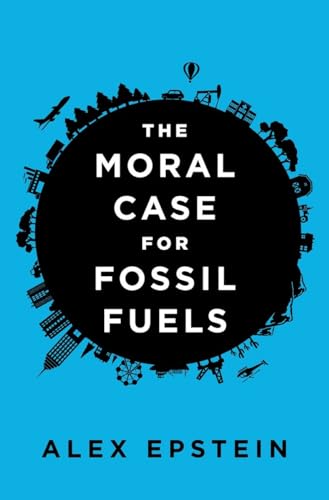
Inhaltsangabe
Could everything we know about fossil fuels be wrong?
For decades, environmentalists have told us that using fossil fuels is a self-destructive addiction that will destroy our planet. Yet at the same time, by every measure of human well-being, from life expectancy to clean water to climate safety, life has been getting better and better.
How can this be?
The explanation, energy expert Alex Epstein argues in The Moral Case for Fossil Fuels, is that we usually hear only one side of the story. We’re taught to think only of the negatives of fossil fuels, their risks and side effects, but not their positives—their unique ability to provide cheap, reliable energy for a world of seven billion people. And the moral significance of cheap, reliable energy, Epstein argues, is woefully underrated. Energy is our ability to improve every single aspect of life, whether economic or environmental.
If we look at the big picture of fossil fuels compared with the alternatives, the overall impact of using fossil fuels is to make the world a far better place. We are morally obligated to use more fossil fuels for the sake of our economy and our environment.
Drawing on original insights and cutting-edge research, Epstein argues that most of what we hear about fossil fuels is a myth. For instance . . .
Myth: Fossil fuels are dirty.
Truth: The environmental benefits of using fossil fuels far outweigh the risks. Fossil fuels don’t take a naturally clean environment and make it dirty; they take a naturally dirty environment and make it clean. They don’t take a naturally safe climate and make it dangerous; they take a naturally dangerous climate and make it ever safer.
Myth: Fossil fuels are unsustainable, so we should strive to use “renewable” solar and wind.
Truth: The sun and wind are intermittent, unreliable fuels that always need backup from a reliable source of energy—usually fossil fuels. There are huge amounts of fossil fuels left, and we have plenty of time to find something cheaper.
Myth: Fossil fuels are hurting the developing world.
Truth: Fossil fuels are the key to improving the quality of life for billions of people in the developing world. If we withhold them, access to clean water plummets, critical medical machines like incubators become impossible to operate, and life expectancy drops significantly. Calls to “get off fossil fuels” are calls to degrade the lives of innocent people who merely want the same opportunities we enjoy in the West.
Taking everything into account, including the facts about climate change, Epstein argues that “fossil fuels are easy to misunderstand and demonize, but they are absolutely good to use. And they absolutely need to be championed. . . . Mankind’s use of fossil fuels is supremely virtuous—because human life is the standard of value and because using fossil fuels transforms our environment to make it wonderful for human life.”
Die Inhaltsangabe kann sich auf eine andere Ausgabe dieses Titels beziehen.
Über die Autorin bzw. den Autor
Alex Epstein started the Center for Industrial Progress to offer an alternative environmental philosophy to America, one that is antipollution but prodevelopment. A popular speaker on college campuses, he has publicly debated leading environmentalists. He lives in Orange County, California.
Auszug. © Genehmigter Nachdruck. Alle Rechte vorbehalten.
1
THE SECRET HISTORY OF FOSSIL FUELS
“YOU MUST MAKE A LOT OF MONEY”
“You’re an environmentalist, right?” the girl, college age, asked me. It was 2009, in Irvine, California. I had stopped at a farmers’ market near my office for lunch, and she was manning a Greenpeace booth right next to it.
“Do you want to help us end our addiction to dirty fossil fuels and use clean, renewable energy instead?”
“Actually,” I replied, “I study energy for a living—and I think it’s good that we use a lot of fossil fuels. I think the world would be a much better place if people used a lot more.”
I was curious to see how she would respond—I doubted she had ever met anyone who believed we should use more fossil fuels. I was hoping that she would bring up one of the popular arguments for dramatically reducing fossil fuel use, and I could share with her why I thought the benefits of using fossil fuels far outweighed the risks.
But fossil fuels cause climate change, she might have said. I agree, I would have replied, but I think the evidence shows that climate change, natural or man-made, is more manageable than ever, because human beings are so good at adapting, using ingenuity and technology.
But fossil fuels cause pollution, she might have said. I agree, I would have replied, but I think the evidence shows that ingenuity and technology make pollution a smaller problem every year.
But fossil fuels are nonrenewable, she might have said. I agree, I would have replied, but I think the evidence shows that there are huge amounts of fossil fuels left, and we’ll have plenty of time to use ingenuity and technology to find something cheaper—such as some form of advanced nuclear power.
But fossil fuels are replaceable by solar and wind, she might have said. I disagree, I would have replied, because the sun and the wind are intermittent, unreliable fuels that always need backup from a reliable source of energy—usually fossil fuels, which is the only source of energy that has been able to provide cheap, plentiful, reliable energy for the billions of people whose lives depend on it.
But she didn’t say any of those things. Instead, when I said I thought that we should use more fossil fuels, she looked at me with wide-eyed disbelief and said, “Wow, you must make a lot of money.”
In other words, the only conceivable reason I would say that our use of fossil fuels is a good thing is if I had been paid off by the fossil fuel industry.
Even though this wasn’t true, I understood why she thought it. It is conventional wisdom that our use of fossil fuels is an “addiction”—a short-range, unsustainable, destructive habit.
Eighty-seven percent of the energy mankind uses every second, including most of the energy I am using as I write this, comes from burning one of the fossil fuels: coal, oil, or natural gas.1 Every time someone uses a machine—whether the computer I am using right now, the factory it was produced in, the trucks and ships that transported it, the furnace that forged the aluminum, the farm equipment that fed all the workers who made it, or the electricity that keeps their lights on, their phones charged, and their restaurants and hospitals open—they are using energy that they must be able to rely on and afford. And 87 percent of the time, that energy comes from coal, oil, or natural gas.2 Without exception, anyone who lives a modern life is directly or indirectly using large amounts of fossil fuel energy—it is that ubiquitous.
But, we are told, this cannot continue.
While it might be convenient to drive gasoline cars and get electricity from coal in the short run, and while we might have needed them in the past, the argument goes, in the long run we are making our climate unlivable, destroying our environment, and depleting our resources. We must and can replace fossil fuels with renewable, green, climate-friendly energy from solar, wind, and biomass (plants).
This is not a liberal view or a conservative view; it’s a view that almost everyone holds in one form or another. Even fossil fuel companies make statements like the one the former CEO of Shell made in 2013: “We believe climate change is real and time is running out to take real action to reduce greenhouse gas emissions.”3 President George W. Bush was the person who popularized the expression “addicted to oil.”4 The debate over our addiction to fossil fuels is usually over how dangerous the addiction is and how quickly we can get rid of it—not whether we have one.
And the most prominent groups say we must get rid of it very quickly.
For years, the Nobel Prize–winning Intergovernmental Panel on Climate Change (IPCC) has demanded that the United States and other industrialized countries cut carbon dioxide emissions to 20 percent of 1990 levels by 2050—and the United States has joined hundreds of other countries in agreeing to this goal.5
Every day, we hear of new predictions from prestigious experts reinforcing the calls for massive restrictions on fossil fuel use. As I write this, news about melting ice in West Antarctica is leading to dire predictions of sea level rises: “Scientists Warn of Rising Oceans from Polar Melt,” reports the New York Times; “Is It Too Late to Save Our Cities from Sea-Level Rise?” asks Newsweek, citing new research that “Miami and Manhattan will drown sooner than we thought.”6
The message is clear: Our use of fossil fuels is going to destroy us in the long run, and we should focus our efforts on dramatically reducing it as soon as humanly possible.
So when the girl at the Greenpeace booth implied that I had sold my soul, I didn’t get offended. I simply explained that, no, I wasn’t being paid off; I had just concluded, based on my research, that the short- and long-term benefits of using fossil fuels actually far, far outweigh the risks and was happy to explain why. But she wasn’t interested. Pointing me to the Greenpeace pamphlets giving all the reasons fossil fuels are bad, she said, “So many experts predict that using fossil fuels is going to lead to catastrophe—why should I listen to you?” She made it clear that this wasn’t a real question and that the conversation was over.
But if she had wanted an answer, I would have told her this: I understand that a lot of smart people are predicting catastrophic consequences from using fossil fuels, I take that very seriously, and I have studied their predictions extensively.
And what I have found is this: leading experts and the media have been making the exact same predictions for more than thirty years. As far back as the 1970s they predicted that if we did not dramatically reduce fossil fuel use then, and use renewables instead, we would be experiencing catastrophe today—catastrophic resource depletion, catastrophic pollution, and catastrophic climate change. Instead, the exact opposite happened. Instead of using a lot less fossil fuel energy, we used a lot more—but instead of long-term catastrophe, we have experienced dramatic, long-term improvement in every aspect of life, including environmental quality. The risks and side effects of using fossil fuels declined while the benefits—cheap, reliable energy and everything it brings—expanded to billions more people.
This is the secret history of fossil fuels. It changed the way I think about fossil fuels and it may change the way you think about them, too.
DÉJÀ VU
When I was twenty years old, I decided I wanted to write about “practical philosophy” for a living. Philosophy is the study of the basic...
„Über diesen Titel“ kann sich auf eine andere Ausgabe dieses Titels beziehen.
Suchergebnisse für The Moral Case for Fossil Fuels

Beispielbild für diese ISBN
The Moral Case for Fossil Fuel
Anbieter: World of Books (was SecondSale), Montgomery, IL, USA
Verkäuferbewertung 5 von 5 Sternen

Zustand: Good. Item in good condition. Textbooks may not include supplemental items i.e. CDs, access codes etc. Artikel-Nr. 00100863706
Gebraucht kaufen
EUR 3,59
Versand gratis
Versand innerhalb von USA
Versand innerhalb von USA
Anzahl: 9 verfügbar
Beispielbild für diese ISBN
The Moral Case for Fossil Fuel
Anbieter: World of Books (was SecondSale), Montgomery, IL, USA
Verkäuferbewertung 5 von 5 Sternen
Zustand: Good. Good condition ex-library book with usual library markings and stickers. Artikel-Nr. 00104608255
Gebraucht kaufen
EUR 3,69
Versand gratis
Versand innerhalb von USA
Versand innerhalb von USA
Anzahl: 1 verfügbar
Beispielbild für diese ISBN
The Moral Case for Fossil Fuel
Anbieter: World of Books (was SecondSale), Montgomery, IL, USA
Verkäuferbewertung 5 von 5 Sternen
Zustand: Very Good. Item in very good condition! Textbooks may not include supplemental items i.e. CDs, access codes etc. Artikel-Nr. 00036772323
Gebraucht kaufen
EUR 4,54
Versand gratis
Versand innerhalb von USA
Versand innerhalb von USA
Anzahl: 13 verfügbar
Beispielbild für diese ISBN
The Moral Case for Fossil Fuels
Verlag:
Portfolio (edition Illustrated), 2014
ISBN 10: 1591847443
ISBN 13: 9781591847441
Gebraucht
Hardcover
Anbieter: BooksRun, Philadelphia, PA, USA
Verkäuferbewertung 5 von 5 Sternen
Hardcover. Zustand: Very Good. Illustrated. With dust jacket. It's a well-cared-for item that has seen limited use. The item may show minor signs of wear. All the text is legible, with all pages included. It may have slight markings and/or highlighting. Artikel-Nr. 1591847443-8-6-29
Gebraucht kaufen
EUR 5,40
Versand gratis
Versand innerhalb von USA
Versand innerhalb von USA
Anzahl: 1 verfügbar
Beispielbild für diese ISBN
The Moral Case for Fossil Fuels
Anbieter: ThriftBooks-Atlanta, AUSTELL, GA, USA
Verkäuferbewertung 5 von 5 Sternen
Hardcover. Zustand: Very Good. No Jacket. May have limited writing in cover pages. Pages are unmarked. ~ ThriftBooks: Read More, Spend Less. Artikel-Nr. G1591847443I4N00
Gebraucht kaufen
EUR 5,76
Versand gratis
Versand innerhalb von USA
Versand innerhalb von USA
Anzahl: 1 verfügbar
Beispielbild für diese ISBN
The Moral Case for Fossil Fuels
Anbieter: ThriftBooks-Atlanta, AUSTELL, GA, USA
Verkäuferbewertung 5 von 5 Sternen
Hardcover. Zustand: Very Good. No Jacket. Former library book; May have limited writing in cover pages. Pages are unmarked. ~ ThriftBooks: Read More, Spend Less. Artikel-Nr. G1591847443I4N10
Gebraucht kaufen
EUR 5,76
Versand gratis
Versand innerhalb von USA
Versand innerhalb von USA
Anzahl: 1 verfügbar
Beispielbild für diese ISBN
The Moral Case for Fossil Fuels
Anbieter: ThriftBooks-Dallas, Dallas, TX, USA
Verkäuferbewertung 5 von 5 Sternen
Hardcover. Zustand: Very Good. No Jacket. Missing dust jacket; May have limited writing in cover pages. Pages are unmarked. ~ ThriftBooks: Read More, Spend Less. Artikel-Nr. G1591847443I4N01
Gebraucht kaufen
EUR 5,76
Versand gratis
Versand innerhalb von USA
Versand innerhalb von USA
Anzahl: 1 verfügbar
Beispielbild für diese ISBN
The Moral Case for Fossil Fuels
Verlag:
Penguin Publishing Group, 2014
ISBN 10: 1591847443
ISBN 13: 9781591847441
Gebraucht
Hardcover
Anbieter: Better World Books, Mishawaka, IN, USA
Verkäuferbewertung 5 von 5 Sternen
Zustand: Good. Pages intact with minimal writing/highlighting. The binding may be loose and creased. Dust jackets/supplements are not included. Stock photo provided. Product includes identifying sticker. Better World Books: Buy Books. Do Good. Artikel-Nr. 6403196-6
Gebraucht kaufen
EUR 5,98
Versand gratis
Versand innerhalb von USA
Versand innerhalb von USA
Anzahl: 4 verfügbar
Beispielbild für diese ISBN
The Moral Case for Fossil Fuels
Verlag:
Penguin Publishing Group, 2014
ISBN 10: 1591847443
ISBN 13: 9781591847441
Gebraucht
Hardcover
Anbieter: Better World Books: West, Reno, NV, USA
Verkäuferbewertung 5 von 5 Sternen
Zustand: Good. Pages intact with minimal writing/highlighting. The binding may be loose and creased. Dust jackets/supplements are not included. Stock photo provided. Product includes identifying sticker. Better World Books: Buy Books. Do Good. Artikel-Nr. 6403196-6
Gebraucht kaufen
EUR 5,98
Versand gratis
Versand innerhalb von USA
Versand innerhalb von USA
Anzahl: 1 verfügbar
Beispielbild für diese ISBN
The Moral Case for Fossil Fuels
Verlag:
Penguin Publishing Group, 2014
ISBN 10: 1591847443
ISBN 13: 9781591847441
Gebraucht
Hardcover
Anbieter: Better World Books, Mishawaka, IN, USA
Verkäuferbewertung 5 von 5 Sternen
Zustand: Good. Former library copy. Pages intact with minimal writing/highlighting. The binding may be loose and creased. Dust jackets/supplements are not included. Includes library markings. Stock photo provided. Product includes identifying sticker. Better World Books: Buy Books. Do Good. Artikel-Nr. 5572737-75
Gebraucht kaufen
EUR 5,98
Versand gratis
Versand innerhalb von USA
Versand innerhalb von USA
Anzahl: 2 verfügbar