
Verwandte Artikel zu The Smartest Guys in the Room: The Amazing Rise and...
Inhaltsangabe
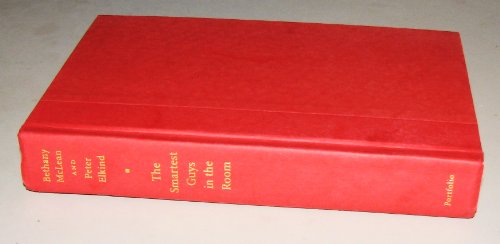
The definitive volume on Enron's amazing rise and scandalous fall, from an award-winning team of Fortune investigative reporters.
There were dozens of books about Watergate, but only All the President's Men gave readers the full story, with all the drama and nuance and exclusive reporting. And thirty years later, if you're going to read only one book on Watergate, that's still the one. Today, Enron is the biggest business story of our time, and Fortune senior writers Bethany McLean and Peter Elkind are the new Woodward and Bernstein.
Remarkably, it was just two years ago that Enron was thought to epitomize a great New Economy company, with its skyrocketing profits and share price. But that was before Fortune published an article by McLean that asked a seemingly innocent question: How exactly does Enron make money? From that point on, Enron's house of cards began to crumble. Now, McLean and Elkind have investigated much deeper, to offer the definitive book about the Enron scandal and the fascinating people behind it.
Meticulously researched and character driven, Smartest Guys in the Room takes the reader deep into Enron's past-and behind the closed doors of private meetings. Drawing on a wide range of unique sources, the book follows Enron's rise from obscurity to the top of the business world to its disastrous demise. It reveals as never before major characters such as Ken Lay, Jeff Skilling, and Andy Fastow, as well as lesser known players like Cliff Baxter and Rebecca Mark. Smartest Guys in the Room is a story of greed, arrogance, and deceit-a microcosm of all that is wrong with American business today. Above all, it's a fascinating human drama that will prove to be the authoritative account of the Enron scandal.
Die Inhaltsangabe kann sich auf eine andere Ausgabe dieses Titels beziehen.
Über die Autorin bzw. den Autor
Bethany McLean and Peter Elkind are both senior writers at Fortune magazine. McLean is a former analyst for Goldman Sachs. Elkind is the former associate editor of Texas Monthly.
Auszug. © Genehmigter Nachdruck. Alle Rechte vorbehalten.
Introduction
On a cool Texas night in late January, Cliff Baxter slipped out of bed. He stuffed pillows under the covers so his sleeping wife wouldnít notice he was gone. Then he stepped quietly through his large suburban Houston home, taking care not to awaken his two children. The door alarm didnít make a sound as he entered the garage; heíd disabled the security system before turning in. Then, dressed in blue jogging slacks, a blue T-shirt, and moccasin slippers, he climbed into his new black Mercedes-Benz S500 and drove out into the night.
At 43, John Clifford Baxter, the son of a Long Island policeman, had made it big in Texas. Before quitting his job eight months earlier, he had served as vice chairman of a great American corporation, capping a decade-long career as the companyís top deal maker. Baxter was rich, tooóthanks to a generous helping of stock options, a millionaire many times over. But as he cruised the empty streets of Sugar Land, Texas, Baxter was drowning in dark thoughts. Always given to mood swings, he had become deeply depressed in recent days, consumed by the spectacular scandal that had engulfed his old company.
Everyone seemed to be after him. A congressional committee had already called; the FBI and SEC would surely be next. Would he have to testify against his friends? The plaintiffsí lawyers had named him as a defendant in a huge securities-fraud suit. Baxter was convinced they were having him tailedóand rummaging through his familyís trash. Then there was the media, pestering him at home a dozen or more times a day: Did he know what had gone wrong? How could Americaís seventh-biggest company just blow up? Where had the billions gone? No one, at this early stage, viewed Baxter as a major player in the companyís crash. Yet he took it all personally. In phone calls and visits with friends, he railed for hours about the scandalís taint. Itís as if ìtheyíre calling us child molesters,î he complained. ìThat will never wash off.î
Desperate to get away, heíd spent part of the previous week sailing in the Florida Keys. Sailing was one of Baxterís passions. For years, heíd decompressed floating on Galveston Bay aboard his 72-foot yacht, Tranquility Base. But heíd sold the boat several months earlier. When Baxter returned from Florida, his doctor prescribed antidepressants and sleeping pills and told him to see a psychiatrist. Heíd called the shrinkís office that day to make an appointment. But when the receptionist explained that the schedule was booked until February, Baxter hung upóhe wasnít going to wait that long.
Less than 48 hours later, at about 2:20 a.m. on January 25, 2002, Baxter stopped his Mercedes on Palm Royale Boulevard, a mile and a half from his home. It was cloudy and a bit chilly that evening by Texas standardsóabout 48 degreesóbut the sedan was tuned to an interior temperature of precisely 79. An open package of Newport Lights sat in the center console, a bottle of Evian water in the cup holder. Baxterís black leather wallet lay on the passenger seat. Baxter parked the car in the middle of the street, with the doors locked, the engine running, and the headlights burning. Then he lifted a silver .357 Magnum revolver to his right temple and fired a bullet into his head.
Seven days later, Cliff Baxterís friends from Enron gathered to mourn. The Houston energy giantís collapse into bankruptcy had already become the biggest scandal of the new century. Baxterís death had stoked the media bonfire and tossed a fresh element of tragedy into a bubbling stewpot of intrigue. Enronís influence ranged widelyófrom Wall Street to the White House. So feared was this company, so powerful were its connections, so much was at stake that there was open speculation Baxter had actually been murderedóthe target of a carefully staged hit, aimed at silencing him from spilling Enronís darkest secrets. The rumblings had forced the Sugar Land police department to treat an open-and-shut caseóBaxter had even left a suicide note in his wifeís carólike a capital-murder investigation, requiring DNA testing, handwriting experts, ballistics studies, and blood-spatter tests.
The Texas memorial service took place after Baxter was buried in a private ceremony in his hometown on Long Island. He was laid to rest in a plot he had secretly purchased there just a few weeks earlier, in the throes of his deepening funk. An Enron corporate jetóa remaining vestige of the companyís imperial waysóflew Cliffís family and a few others east for the funeral.
Now it was Houstonís turn. The precise location of the serviceóthe ballroom of the St. Regis, the cityís swankiest hotelóremained a secret until noon that day, at the insistence of Carol Baxter. Cliffís widow was bent on avoiding the press. She blamed reportersí intrusions for pushing her husband over the edge. So the 100 hand-picked guests who pulled up to the valet-parking station on this Friday afternoon had been summoned by furtive phone calls just two hours earlier.
For 90 minutes, those who knew Baxterófamily members, fellow ìboat peopleî from his beloved yacht club, and Enron friendsóheard warm stories about his gentler side. There were images of Cliff with his family, Cliff sailing, Cliff fronting his rock band. Baxter was a gifted musician. When police found his body, there were two guitar picks in his wallet. Everyone left the service with a compact disc of his favorite songs, prepared with the help of J. C. Baxter, Cliffís 16-year-old son. The opening track was perhaps Cliffís favorite: a bouncy pop tune called ìPerfect Day.î
On this perfect day
Nothingís standing in my way
On this perfect day
Nothing can go wrong
Itís a perfect day
Tomorrowís gonna come too soon
I could stay
Forever as I am
On this perfect day
It was a tragedy layered on tragedy, but there wasnít much talk about the companyís Icarus-like fall among the former Enron executives thrust together again that afternoon. This wasnít the time for such grim shoptalk; whatís more, their lawyers had pointedly instructed them to avoid such conversations. Ken Lay, Enronís founding father, was conspicuously absent. At the insistence of the companyís creditors, he had finally yielded his job as CEO and chairman just two days before Baxterís death; Lay sent his wife, Linda, to attend the service instead. Enronís deposed chief financial officer, a onetime whiz kid named Andrew Fastow, was missing, too; he and Baxter had fought bitterly.
But former chief executive officer Jeffrey Skillingóonce touted as a brilliant visionary and the man who shaped Enron in his own imageówas very much in evidence. Baxter had been his closest confidant at Enron, the nearest thing Skilling, who kept his own counsel, had to a sounding board. Widely feared during his reign at Enron, known for his unflinchingly Darwinist view of the world, Skilling spent the service in tears.
In the months after Cliff Baxterís memorial service, Jeff Skilling could often be found in an otherwise empty hole-in-the-wall Houston bar called Muldoonís, downing glasses of white wine. A short, fit man of 48 with slicked-back hair and cool blue eyes, Skilling typically appeared in faded jeans, a white T-shirt, and a two-day growth of beard. This is where he came to brood over what had happened at Enronóoften for hours at a time.
More than anyone else, Skilling had come to personify the Enron scandal. Part of it was his audacious refusal, in the face of a dozen separate investigations, to run for cover. Alone among Enronís top executives summoned before a circuslike series of congressional hearings, Skilling had ignored his lawyersí advice to take the Fifth and defiantly spoken his piece. The legislators were convinced that Skilling had abruptly resigned as CEO of the companyójust four months before Enron went belly upó because he knew the game was over. But Skilling wouldnít...
„Über diesen Titel“ kann sich auf eine andere Ausgabe dieses Titels beziehen.
Suchergebnisse für The Smartest Guys in the Room: The Amazing Rise and...

Beispielbild für diese ISBN
Smartest Guys in the Room : The Amazing Rise and Scandalous Fall of Enron
Verlag:
Penguin Publishing Group, 2003
ISBN 10: 1591840082
ISBN 13: 9781591840084
Gebraucht
Hardcover
Anbieter: Better World Books, Mishawaka, IN, USA
Verkäuferbewertung 5 von 5 Sternen

Zustand: Good. Former library copy. Pages intact with minimal writing/highlighting. The binding may be loose and creased. Dust jackets/supplements are not included. Includes library markings. Stock photo provided. Product includes identifying sticker. Better World Books: Buy Books. Do Good. Artikel-Nr. GRP95661580
Gebraucht kaufen
EUR 6,37
Versand gratis
Versand innerhalb von USA
Versand innerhalb von USA
Anzahl: 1 verfügbar
Beispielbild für diese ISBN
Smartest Guys in the Room : The Amazing Rise and Scandalous Fall of Enron
Verlag:
Penguin Publishing Group, 2003
ISBN 10: 1591840082
ISBN 13: 9781591840084
Gebraucht
Hardcover
Anbieter: Better World Books: West, Reno, NV, USA
Verkäuferbewertung 5 von 5 Sternen
Zustand: Good. Pages intact with minimal writing/highlighting. The binding may be loose and creased. Dust jackets/supplements are not included. Stock photo provided. Product includes identifying sticker. Better World Books: Buy Books. Do Good. Artikel-Nr. 3775430-6
Gebraucht kaufen
EUR 6,37
Versand gratis
Versand innerhalb von USA
Versand innerhalb von USA
Anzahl: 1 verfügbar
Beispielbild für diese ISBN
Smartest Guys in the Room : The Amazing Rise and Scandalous Fall of Enron
Verlag:
Penguin Publishing Group, 2003
ISBN 10: 1591840082
ISBN 13: 9781591840084
Gebraucht
Hardcover
Anbieter: Better World Books, Mishawaka, IN, USA
Verkäuferbewertung 5 von 5 Sternen
Zustand: Good. Pages intact with minimal writing/highlighting. The binding may be loose and creased. Dust jackets/supplements are not included. Stock photo provided. Product includes identifying sticker. Better World Books: Buy Books. Do Good. Artikel-Nr. 3775430-6
Gebraucht kaufen
EUR 6,37
Versand gratis
Versand innerhalb von USA
Versand innerhalb von USA
Anzahl: 8 verfügbar
Beispielbild für diese ISBN
Smartest Guys in the Room: The Amazing Rise and Scandalous Fall of Enron
Anbieter: ThriftBooks-Atlanta, AUSTELL, GA, USA
Verkäuferbewertung 5 von 5 Sternen
Hardcover. Zustand: Fair. No Jacket. Missing dust jacket; Readable copy. Pages may have considerable notes/highlighting. ~ ThriftBooks: Read More, Spend Less. Artikel-Nr. G1591840082I5N01
Gebraucht kaufen
EUR 6,43
Versand gratis
Versand innerhalb von USA
Versand innerhalb von USA
Anzahl: 1 verfügbar
Beispielbild für diese ISBN
Smartest Guys in the Room: The Amazing Rise and Scandalous Fall of Enron
Anbieter: ThriftBooks-Atlanta, AUSTELL, GA, USA
Verkäuferbewertung 5 von 5 Sternen
Hardcover. Zustand: Fair. No Jacket. Readable copy. Pages may have considerable notes/highlighting. ~ ThriftBooks: Read More, Spend Less. Artikel-Nr. G1591840082I5N00
Gebraucht kaufen
EUR 6,43
Versand gratis
Versand innerhalb von USA
Versand innerhalb von USA
Anzahl: 1 verfügbar
Beispielbild für diese ISBN
Smartest Guys in the Room: The Amazing Rise and Scandalous Fall of Enron
Anbieter: ThriftBooks-Dallas, Dallas, TX, USA
Verkäuferbewertung 5 von 5 Sternen
Hardcover. Zustand: Good. No Jacket. Former library book; Missing dust jacket; Pages can have notes/highlighting. Spine may show signs of wear. ~ ThriftBooks: Read More, Spend Less. Artikel-Nr. G1591840082I3N11
Gebraucht kaufen
EUR 6,43
Versand gratis
Versand innerhalb von USA
Versand innerhalb von USA
Anzahl: 1 verfügbar
Beispielbild für diese ISBN
Smartest Guys in the Room: The Amazing Rise and Scandalous Fall of Enron
Anbieter: ThriftBooks-Reno, Reno, NV, USA
Verkäuferbewertung 5 von 5 Sternen
Hardcover. Zustand: Very Good. No Jacket. Missing dust jacket; May have limited writing in cover pages. Pages are unmarked. ~ ThriftBooks: Read More, Spend Less. Artikel-Nr. G1591840082I4N01
Gebraucht kaufen
EUR 6,43
Versand gratis
Versand innerhalb von USA
Versand innerhalb von USA
Anzahl: 1 verfügbar
Beispielbild für diese ISBN
Smartest Guys in the Room: The Amazing Rise and Scandalous Fall of Enron
Anbieter: ThriftBooks-Dallas, Dallas, TX, USA
Verkäuferbewertung 5 von 5 Sternen
Hardcover. Zustand: Very Good. No Jacket. Missing dust jacket; May have limited writing in cover pages. Pages are unmarked. ~ ThriftBooks: Read More, Spend Less. Artikel-Nr. G1591840082I4N01
Gebraucht kaufen
EUR 6,43
Versand gratis
Versand innerhalb von USA
Versand innerhalb von USA
Anzahl: 1 verfügbar
Beispielbild für diese ISBN
Smartest Guys in the Room: The Amazing Rise and Scandalous Fall of Enron
Anbieter: ThriftBooks-Atlanta, AUSTELL, GA, USA
Verkäuferbewertung 5 von 5 Sternen
Hardcover. Zustand: Good. No Jacket. Pages can have notes/highlighting. Spine may show signs of wear. ~ ThriftBooks: Read More, Spend Less. Artikel-Nr. G1591840082I3N00
Gebraucht kaufen
EUR 6,43
Versand gratis
Versand innerhalb von USA
Versand innerhalb von USA
Anzahl: 1 verfügbar
Beispielbild für diese ISBN
Smartest Guys in the Room: The Amazing Rise and Scandalous Fall of Enron
Anbieter: ThriftBooks-Dallas, Dallas, TX, USA
Verkäuferbewertung 5 von 5 Sternen
Hardcover. Zustand: Good. No Jacket. Pages can have notes/highlighting. Spine may show signs of wear. ~ ThriftBooks: Read More, Spend Less. Artikel-Nr. G1591840082I3N00
Gebraucht kaufen
EUR 6,43
Versand gratis
Versand innerhalb von USA
Versand innerhalb von USA
Anzahl: 1 verfügbar